How virtual reality pushed AR Rahman towards ‘multi-sensory’ filmmaking
 Now it’s Rahman’s turn to make his directorial debut with Le Musk, which is being touted as the world’s first virtual reality “multi-sensory” feature film. Unsurprisingly, it is technology that drew Rahman to films. “The (VR) technology is evolving and everybody is doing experimental stuff with it. I found the technology exciting and I had a story. I felt that my story would come out beautifully in this technology,” explains Rahman.
This time, though, he’s gone beyond music. “I had the right partners for the film, including Grace Boyle of Feelies, who is helping with the set design by providing the element of smell, and Intel helping with the technology and also the Voyager (VR) chair; for the cameras I have tied up with Radiant Images of LA.
Marry a great story with high technology, and you have Baahubali 2, the film that is making box-office history.
See the full story here: http://economictimes.indiatimes.com/magazines/panache/how-virtual-reality-pushed-ar-rahman-towards-multi-sensory-filmmaking/articleshow/58662010.cms
Why The Aim Controller Is PSVR’s Secret Weapon
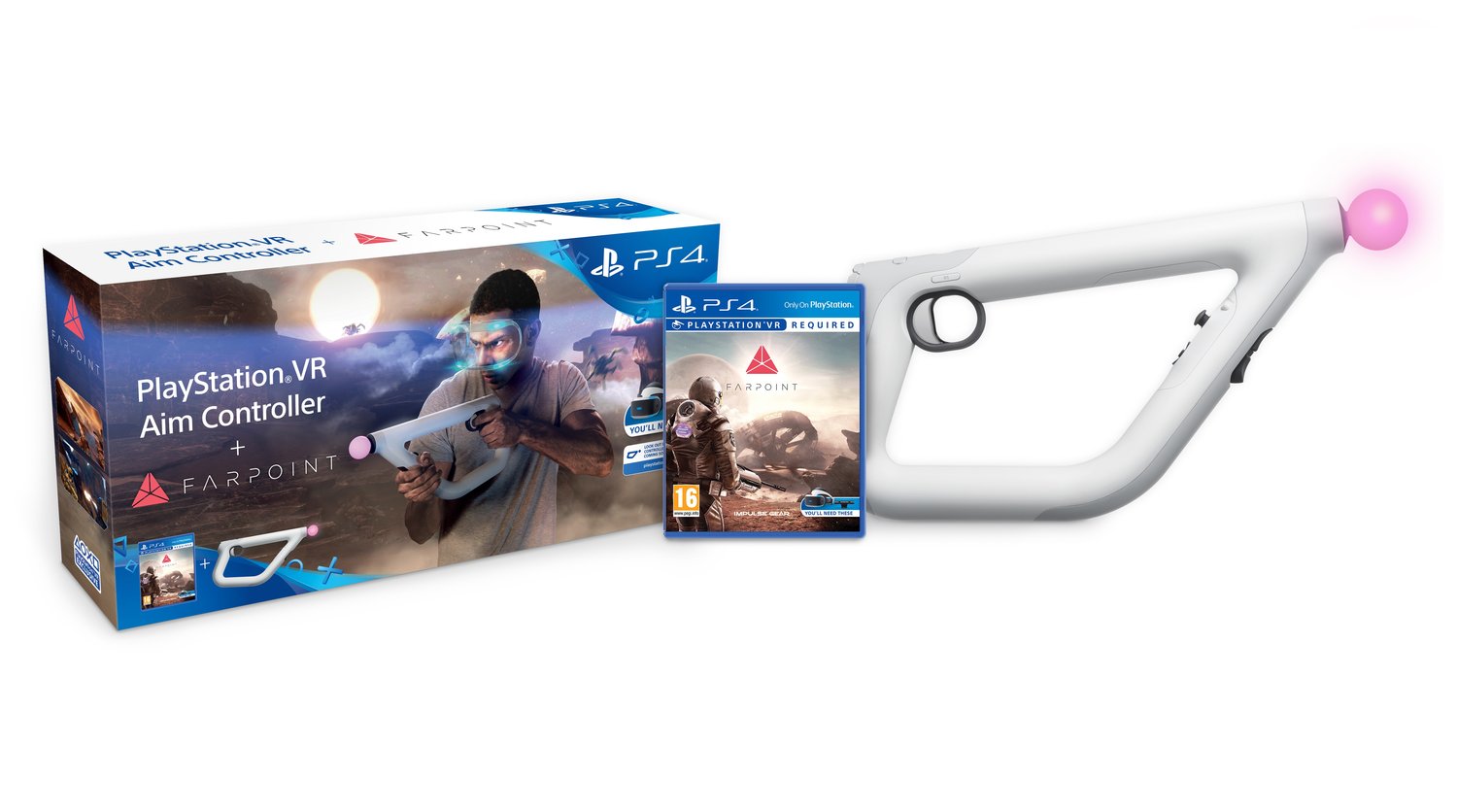 Sony is doubling down on the first-person shooter (FPS) genre with its first PSVR peripheral, the Aim Controller. This new device, shipping next week, is shaped like an assault rifle, and has you holding it with both hands. A PlayStation Move-like light at the front end tracks its position and a trigger lets you fire.
See the full story here: https://uploadvr.com/field-view-aim-controller-psvrs-secret-weapon/
Report: VR And AR Developers Aren’t Making Enough Money To Justify Investments
 According to the 34-page survey, 50 percent of VR and AR developers indicated that they will require more financing in the future, stating they will need additional rounds of more than $1 million. In order to raise this level of investment, companies typically need to have the ambition to achieve at least $10 million in revenue within five years. However, the average developer in the survey expects their firm to generate “only” $1.3 million.
“When the financials are not compelling enough, developers will have to show other reasons why investors should invest in them,” Coen Sanderink, business developer at BOM, told VentureBeat. “Investors will be looking for potential market leaders with focus and strong client relationships because it allows them to create additional revenue models and value.”
That wide gap between the needs of each business and their revenue-generating opportunity is a warning sign.
In addition to the funding gap, the study details the current sales of VR and AR displays, forecasts future sales, profiles the industry and its employees, and provides insight into how developers will spend their budgets. And while the survey focuses on the Netherlands, Belgium, and Germany, the data is relevant to most markets. The Netherlands, for example, is a popular mobile app “soft launch” location, due to its consumers having a similar profile to those in the U.S.
See the full story here: https://uploadvr.com/vr-ar-developers-investment/
Do We Have a Right to Mental Privacy and Cognitive Liberty?
 The rapid expansion of neuroimaging and related technologies suggests that we'd better answer that question—quickly
This question has particular social relevance since many neurotechnologies have moved away from a solely clinical setting and into the commercial domain, where they are no longer subject to the strict ethical guidelines of clinical research. Today, companies like Google and Verizon use neuroimaging technology and other neuromarketing research services to detect consumer preferences and hidden impressions on their advertisements or products.
According to a new article, as neurotechnology disseminates outside the clinical setting, we are facing a societal challenge: determining what rights individuals are entitled to exercise in relation to their mental dimension. According to the authors—myself from the University of Basel and Roberto Andorno from the University of Zürich—this challenge might require the reconceptualization of existing human rights and even the creation of new neurospecific human rights.
A right to cognitive liberty, widely discussed among neurolawyers, would entitle individuals to make free and competent decisions regarding their use of neurotechnology. A right to mental privacy would protect individuals against the unconsented intrusion by third parties into their brain data as well as against the unauthorized collection of those data. Breaches of privacy at the neural level could be more dangerous than conventional ones because they can bypass the level of conscious reasoning, leaving individuals without protections from having their mind involuntarily read.
Last week Facebook unveiled a plan to create brain-computer speech-to-text interface to translate thoughts directly from brain signals to a computer screen, bypassing speech and fingertips.
With interconnected neurotools becoming potentially ubiquitous, novel possibility for misuse will arise—cybersecurity breaches included.
In addition, research shows that connected medical devices are vulnerable to sabotage. Neuroscientists at Oxford University suggest that the same vulnerability affects brain implants, a phenomenon labeled “brainjacking.” Such possibilities of misuse might urge a reconceptualization of the right to mental integrity. This right, recognized by international law (Article 3 of the EU's Charter of Fundamental Rights) as a right to mental health,
Finally, a right to psychological continuity might preserve people’s personal identity and the continuity of their mental life from unconsented external alteration by third parties.
See the full story here: https://blogs.scientificamerican.com/observations/do-we-have-a-right-to-mental-privacy-and-cognitive-liberty/
Scott Trowbridge – the future of storytelling
 See the full story with 5 minute video here: https://futureofstorytelling.org/speaker/scott-trowbridge
In-car entertainment startup takes a backseat ride to success
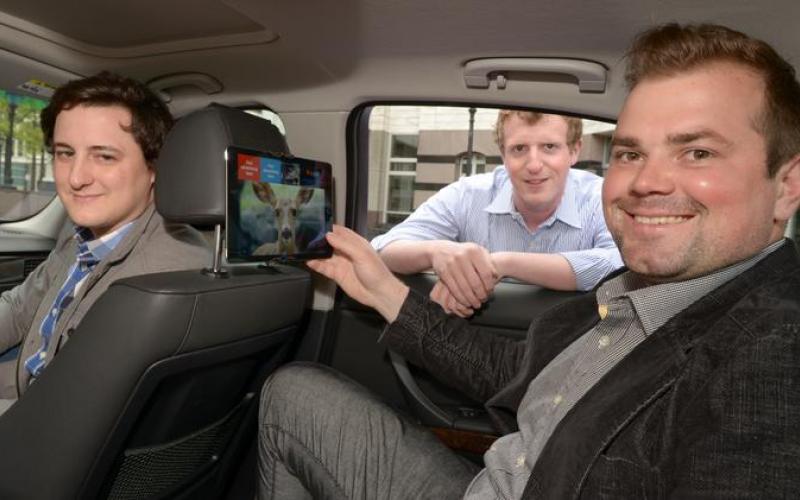 Vugo, an advertising platform launched in 2015 to geotarget consumers via a tablet installed in the back of a ridehailing car, has grand plans. As the vehicle fleet goes autonomous, Vugo expects to dominate its competition by doing what it already does: calibrating content to passengers. The Minnesota-based startup, piloted in ridehail-dense Los Angeles, may leave the big car manufacturers to grapple over driver-oriented features rather than the entertaining of passengers.
Although there is nothing to stop a passenger from watching content from their own phone or tablet, Vugo has an algorithm that generates ads based on chosen content and location. With the ability to target a demographic baked in to message delivery, the benefits to advertisers are obvious. For content providers, they get sold on using Vugo with audience data, so even the entertainment content that could one day run ad-free goes to a researched audience.
See the full story here: http://www.crains.com/article/news/car-entertainment-startup-takes-backseat-ride-success
AR has the potential to provide a workplace dynamic that is unlike anything we’ve ever seen, and the results could be a net gain for everybody.
 AR will help transition displaced workers.

Thanks to recent developments in AR, jobs that once required years of training and practice can now be completed without prior knowledge or experience, and workers can do these jobs equipped with as little as their smartphone.
One worker can have many jobs.
This just-in-time knowledge will allow workers in the new economy to jump between different fields, working with clients and customers in a wide variety of industries. What’s more, someone can learn practical skills on the job while being paid to perform them. This means the investments made in time or money to learn new skills can be reduced to near zero -- giving those workers career track potential as they move up to remote support or other roles. In a similar manner, AR can even be used as a powerful tool for training workforces more efficiently -- providing opportunities for certifications and diversifying a job portfolio like never before.
Local services will go global.
A plumber in Florida, for example, could be guiding a client directly in Colorado or working with a partnered field agent in Saskatoon.
Knowledge is no longer a limiting factor.
providing AR maintenance solutions that allow skilled work to be completed by a wide range of parties, even customers themselves.
See the full story here: https://www.entrepreneur.com/article/294074
IMAX Boosts Plan for Pilot VR Centres to 10 Locations By Year End
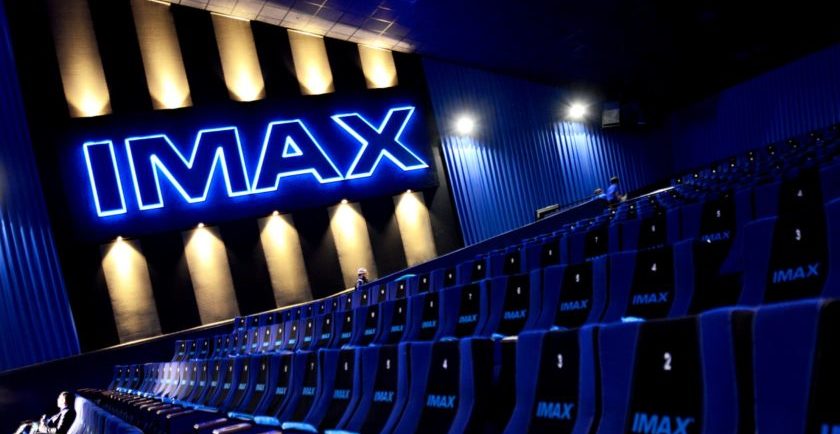 Previously, IMAX said it would next open a pilot location at the AMC Kips Bay multiplex theatres in New York City. The company had also said prior to May 11 that the New York Centre would be the second location and would be followed by additional locations in Shanghai, Tokyo and Manchester, U.K., as well as –—depending on what published report one looked at — either another location in Los Angeles or one in New York.
The additional pilot locations this year will include locations in Houston, Texas and Canada, Welton said May 11. An additional location in New York will be done at a Regal theatre, he said.
The Kips Bay theatre in New York was chosen because it’s a “high-traffic” multiplex that about 1 million moviegoers visit each year, Welton said. Construction started there May 10 and it will open Memorial Day weekend this month, with about 12 VR pods, he said. IMAX will be testing different configurations at the new pilot Centres, including at least one with less than 10 pods, he said.
See the full story here: http://www.mesalliance.org/2017/05/12/imax-boosts-plan-pilot-vr-centres-10-locations-year-end/