Improbable developed simulation technology for video games that’s turned out to be just as useful in real-world scenarios.
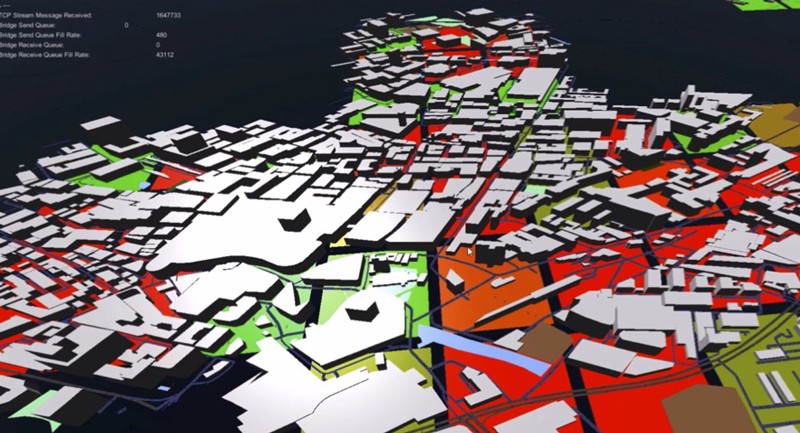 Improbable uses the combined power of thousands of public servers to create real-time simulations of vast and detailed virtual worlds.
In the past 12 months, Improbable has scaled up its operation, increasing the number of public cloud infrastructure services that any one simulation can draw upon. This enables finely detailed simulations including, for example, the creation of a digital 1:1 replica of a real-world city, including all of its roads, buildings, and power and Web networks.
It has allowed Immense Simulations to create a full simulation of Manchester, a city in the north of England with more than 100,000 residents and a spaghetti tangle of roads.
“Improbable’s technology allows us to run city-scale scenario simulations with a level of detail not previously possible,” says Robin North, CEO of Immense Simulations. “We can represent individual travelers and vehicle operations and their interactions within a living city.”
The model of Manchester is based on licensed real-world data.
Disney’s projection tech turns actors’ faces into nightmare fuel
 Makeup Lamps tracks an actor's movements without using the facial markers common in motion capture, then it displays any color or texture the actor wants by adjusting the lighting. It can make someone appear older by creating "wrinkles" on their face, for example, or it can paint their face in creepy clown makeup, à la Heath Ledger in The Dark Knight. And all of it is done in real-time.
A similar technology was used earlier this year during Lady Gaga's performance at the Superbowl.
See the full story here: https://www.engadget.com/2017/04/24/disney-makeup-lamps/
Augmented and Virtual Reality Tracking Technology from uSens Now Needs Only One Stereo Camera Module
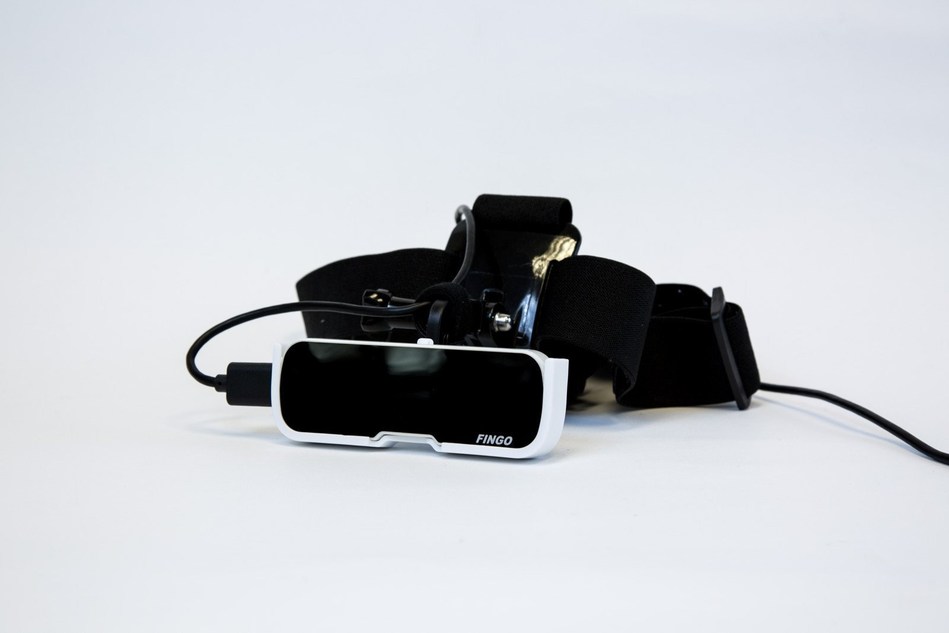
The uSens Fingo module provides advanced 3D human-computer interaction capability on PC-based VR systems as well as mobile AR and VR platforms. (PRNewsfoto/uSens, Inc.)
At the Augmented World Expo (AWE) in Silicon Valley May 31-June 2, uSens will demonstrate its new combined inside-out 6DOF (degrees of freedom) head tracking and 26DOF hand-tracking technology. This is an industry-first achievement in that it uses only a single camera module with an embedded dual-lens (stereo) camera.
Until now, making both inside-out 6DOF head tracking and 3D hand tracking a reality has required three or even four cameras: one depth-sensing camera or two IR cameras for hand tracking, and one or two mono cameras for head tracking. With uSens' new technology (see video), only one stereo camera module is needed, reducing the system size, complexity, power consumption and, as a result, overall cost.
See the full story here: http://www.prnewswire.com/news-releases/augmented-and-virtual-reality-tracking-technology-from-usens-now-needs-only-one-stereo-camera-module-300454915.html
New Salix virtual reality film gives doctors an ‘insider’ tour of the human GI tract
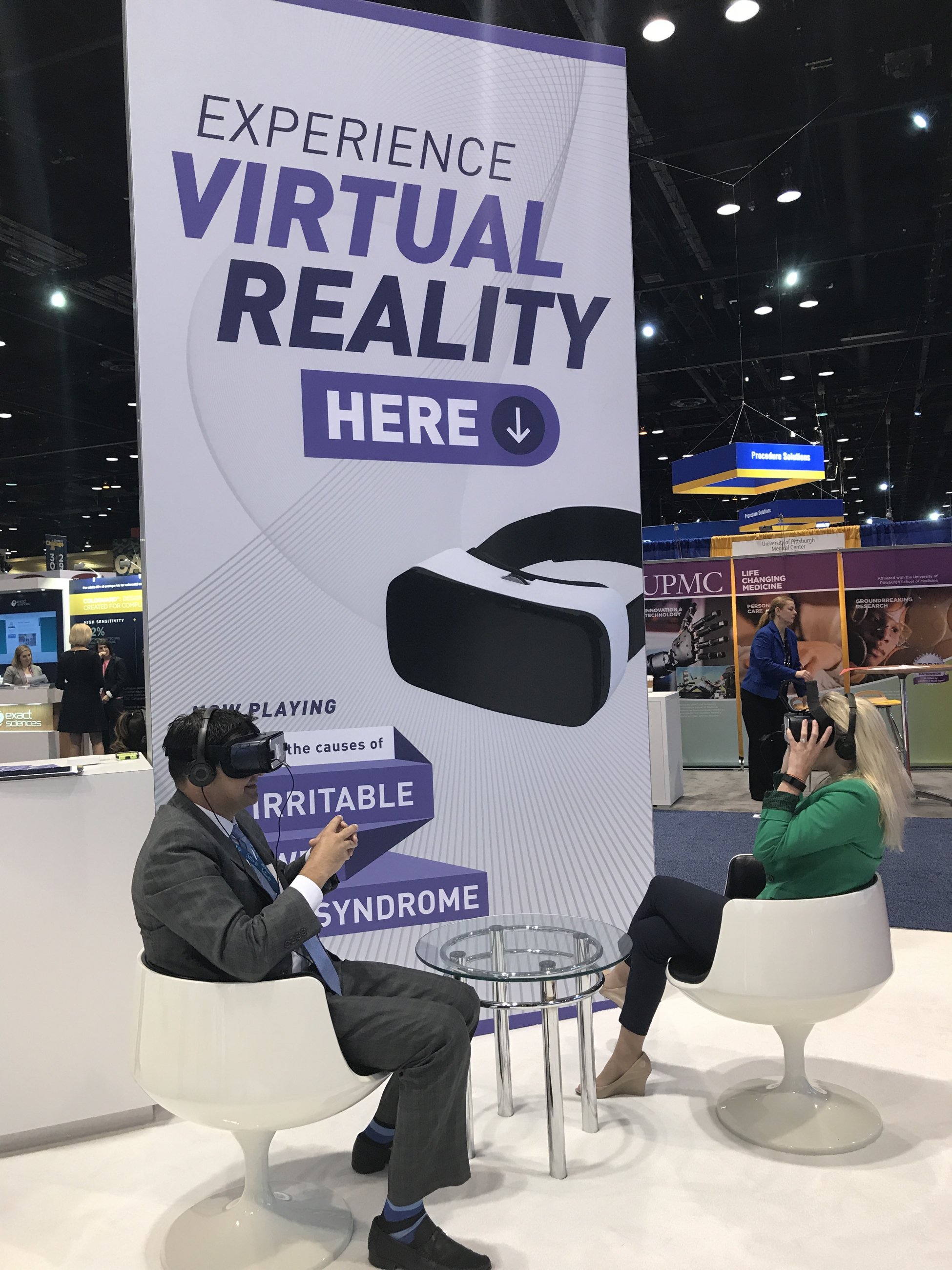 Ready for a 3D tour of the human gastrointestinal tract? Valeant's Salix Pharmaceuticals has a new virtual reality tool that aims to offer doctors who diagnose irritable bowel syndrome not only a new perspective, but also an educational experience.
The virtual reality film is viewed through a VR headset as a 3D tour through the human digestive system. Along the way, the possible causes of IBS—such as food intolerance, history of gastrointestinal infections, and altered microbiomes—are discussed.
Primary care doctors are second only to gastroenterologists in discovery of the condition. Salix-funded research—a survey that will be published in next month’s issue of The American Journal of Gastroenterology—found that 45% of IBS patients were diagnosed by a gastroenterologist, while 42% were diagnosed by a primary care physician.
Salix sales reps will now begin to take the VR film on office visits.
See the full story here: http://www.fiercepharma.com/marketing/salix-new-virtual-reality-film-gives-literal-insider-tour-human-gi-tract
Dreamworld (China) Is Making AR Glasses That Connect To Your Phone For Under $350
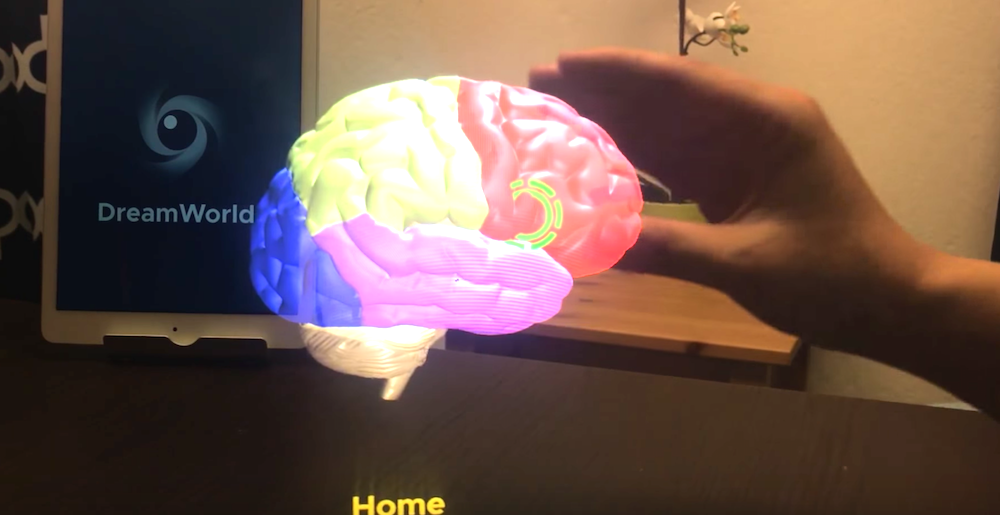 Dreamworld Vision has 10 employees say raised only $2 million in funding — a pittance when compared to the cash that the big name AR companies like Magic Leap, Microsoft and Meta have. And yet, despite these limited resources, the Dreamworld team created something aimed at rattling the cages of its biggest competitors: a pair of AR glasses with abilities that compare to these $1000 + units that will be sold for less than $350. (No pictures of the glasses were allowed)
The Glass we demoed came in two form factors. The first was a smaller, lighter model that was used primarily to show off the headset’s large field of view and basic head tracking. The second was significantly larger and was outfitted with “over the counter” depth sensors and cameras to achieve basic positional tracking. A Dreamworld representative explained that the final version will be comprised of custom-designed components and will be much more similar to the form factor of the smaller unit.
Yes and no. On certain fronts the Glass was more impressive than its big name rivals, but there was one area where it really struggled: Tracking.
See the full story here: https://uploadvr.com/thes-ar-glasses-connect-smartphones-keep-prices-350/
High Fidelity is Architecting for VR Privacy with Self-sovereign Identity – Voices of VR Podcast – Episode #533
 His new metaverse venture, High Fidelity, is taking a much more distributed approach with how it’s being developed openly in open source using Worklist.net contractors, how it plans on distributing hosting and compute resources to user’s computers, as well as using a decentralized identity based upon blockchain technology. Rather than having a centralized authority for tracking and data mining an individual’s identity, they’re planning on using what’s called “Self-sovereign Identity”, which Christopher Allen explains in great detail in his comprehensive essay titled A Path to Self-Sovereign Identity.
See the full story here: http://www.roadtovr.com/high-fidelity-architecting-vr-privacy-self-sovereign-identity/