‘Bigscreen’ Social Computing Space Metrics Show Big Value for VR Power Users
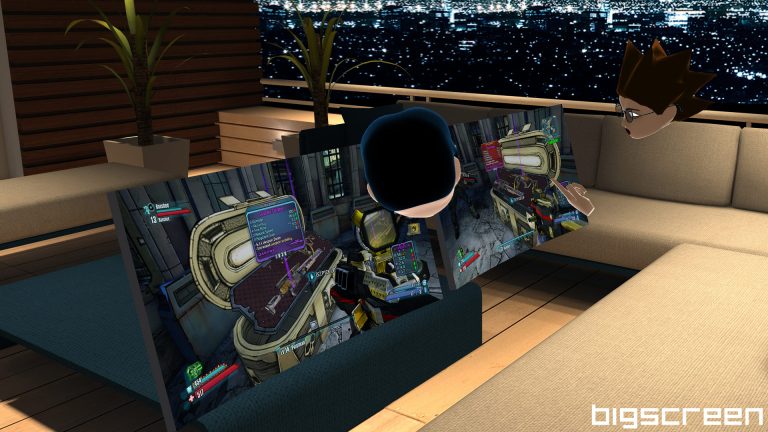
 Bigscreen VR is definitely the leading contender to becoming one of the first killer applications of VR.
Bigscreen VR announced that they raised $3 million dollars for their “social utility” VR application. Bigscreen gives you access to your computer screen in VR, which is a deceptively simple idea but one that is unlocking new ways of working on your computer and enabling collaborative social environments that range from virtual 2D video game LAN parties to productive work meetings.
I had a chance to catch up with founder Darshan Shankar at Oculus Connect 3 last October to talk about his founding story, and how he’s designed Bigscreen with privacy in mind through encrypted peer-to-peer networking technology that he developed. It’s a formula that seems to be working since he reports that “power users spend 20–30 hours each week in Bigscreen,” making it what Shankar calls, “one of the most widely used ‘killer apps’ in the industry.”
The latest release of Bigscreen enables you to have up to three monitors in VR, which could provide an even better experience of working on your computer than in real life. You can stream Netflix or YouTube on a giant movie screen while playing a video game, designing an electrical circuit, browsing Reddit, or creating a 3D model in Maya. In Bigscreen, you can basically do anything that you can do on your computer screen, but in VR.
The limited resolution of today’s headsets for comfortably reading text is the biggest constraint for now, but there are plenty of other tasks that people have found are more enjoyable in VR than in real life. It’s not just the immersive nature, improved focus, and unlocking the spatial thinking potential of your brain, but in Bigscreen you can do it with friends.
You can use Bigscreen by yourself without anyone else; you can create a private room using peer-to-peer technology such that what you’re actually doing in Bigscreenisn’t even being passed through any servers on Bigscreen’s side. And if you want to have a public cafe experience and connect with hardcore VR enthusiasts from around the world, then create a public room and see who comes through.
See the full story here: http://www.roadtovr.com/bigscreen-vrs-social-computing-space-may-vrs-first-killer-productivity-app/
VR maps the unmapped – 360 films from the favelas
 More than 1.5 million Rio residents live in the favelas—equivalent to one in every five people in the city. But for many locals and tourists alike, the favelas remain an unmapped and mysterious area.
In an attempt to breakdown this invisible wall that divides Rio, Google’s Beyond the Map video experience uses 360-degree footage and a virtual host who’s a favela resident to take viewers on a tour to explore the favelas and tell some of the stories of the individuals who live there.
She later says, “When you aren’t on the map, you don’t exist. But we do exist.”
Beyond the Map is just one example of how technology like VR can amplify otherwise unheard voices and stories from around the world.
See the full story here: https://singularityhub.com/2017/03/10/how-google-is-revealing-unmapped-areas-of-the-world-in-virtual-reality/
The Legal Reality of VR and AR
1. Issues Relating to Disputes Over Ownership of VR IP.
2. Issues Relating to the Content of VR.
3. Claims by Users Against VR Companies.
4. Claims by Third Parties Against VR Companies.
5. Claims by VR Companies Against Users.
6. Claims by Users Against Users.

See the full story here: https://www.forbes.com/sites/schuylermoore/2017/03/10/the-legal-reality-of-virtual-reality/#5001c0612049
Virtual Reality Makes Hirshhorn Museum Infinity Mirrors Exhibit Accessible For Wheelchair Users
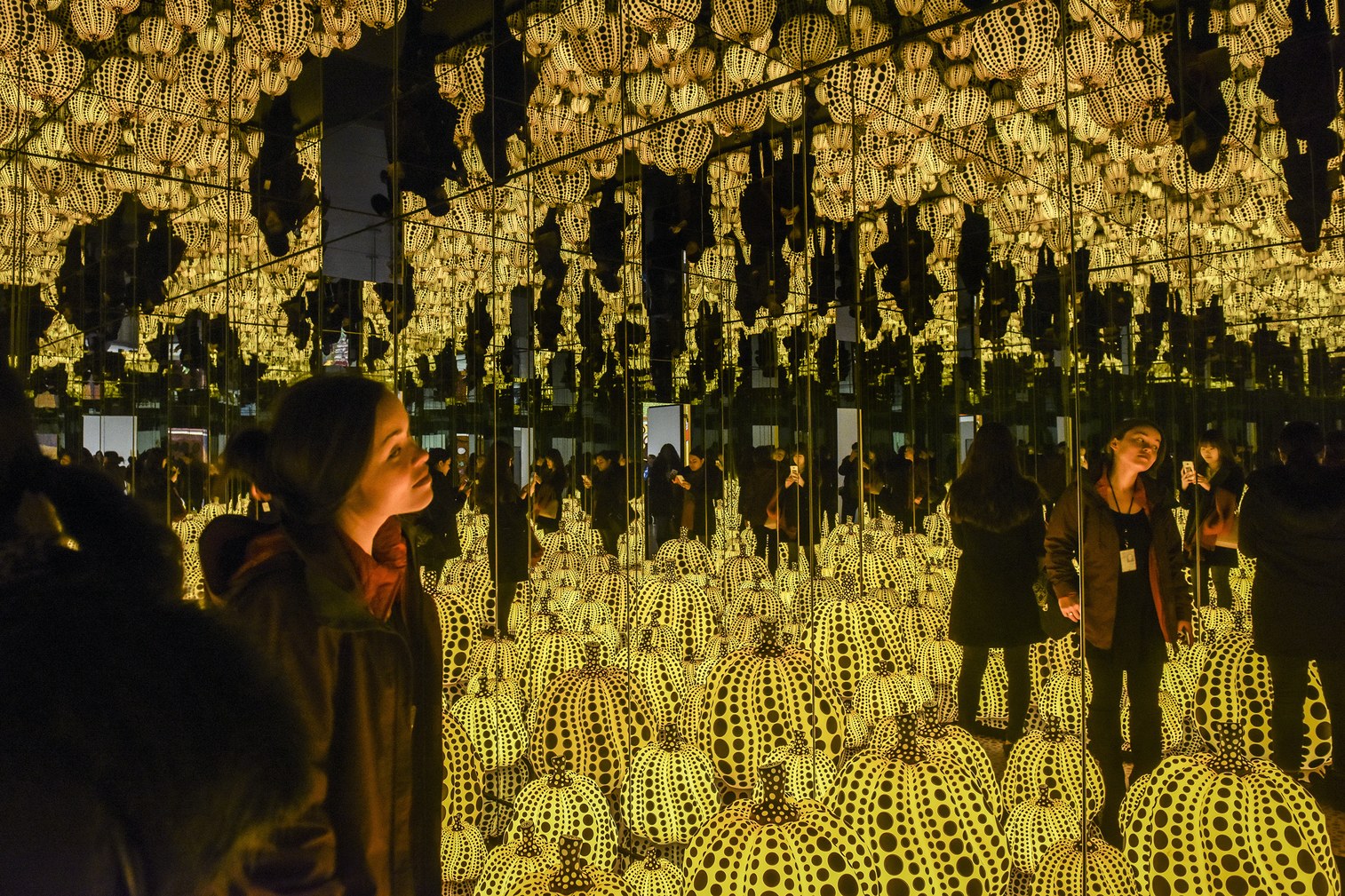 The problem, though, is the exhibit isn’t accessible for visitors in wheelchairs. People moving through the exhibit have to go through 30-inch doorways and onto narrow platforms (less than four feet wide), according to the Washington Post. And the 180-degree turn that the Americans With Disabilities Act dictates people in wheelchairs must be able to make inside a room just isn’t possible.
Ultimately, the engineer digitally recreated the room as it appears to visitors in real life — without designing actual mirrors, but rather the illusion of mirrors (like black lines where the seams between each mirror would be).
The museum has six Samsung virtual reality headsets available to visitors with disabilities (only people who can’t physically go through the actual exhibit are allowed to use them), and Drew Doucette, who oversees multimedia and technology initiatives at the Hirshhorn, told Washington Post he believes virtual reality “has a home in museums now.”
See the full story here: http://www.teenvogue.com/story/hirshhorn-museum-virtual-reality-yayoi-kusama-infinity-room
Valve Talks ‘OpenXR’, the Newly Revealed Branding for Khronos Group’s Industry-backed VR Standard
 In my Voices of VR interview with Ludwig, he talks about the OpenXR standardization process from Valve’s perspective and how they want to see VR become an open of a platform just as the PC has.
The OpenXR working group has just completed it’s exploratory process and there are still numerous open debates, and the Khronos Group is making this announcement of a name and logo at GDC in order to encourage more VR headset and peripheral companies to get involved in this standardization process.
But in order to know what APIs should be available for developers, then this standardization process requires the participation from as many VR companies as possible. Part of the announcement at GDC is to say that the working group has finished their preliminary exploration, and that they’re ready for more companies to get involved.
As to whether or not this OpenXR will mean that any VR headset will work with any VR software, that’s one of the theoretical technical goals but there are many constraints to making this happen. Ludwig said that while technically this could be made possible with OpenXR, there will still be a layer of business decisions around platform exclusives.
See the full story here: http://www.roadtovr.com/valve-talks-openxr-newly-revealed-branding-khronos-groups-industry-backed-vr-standard/
This startup’s AR headset can hold its own against the HoloLens
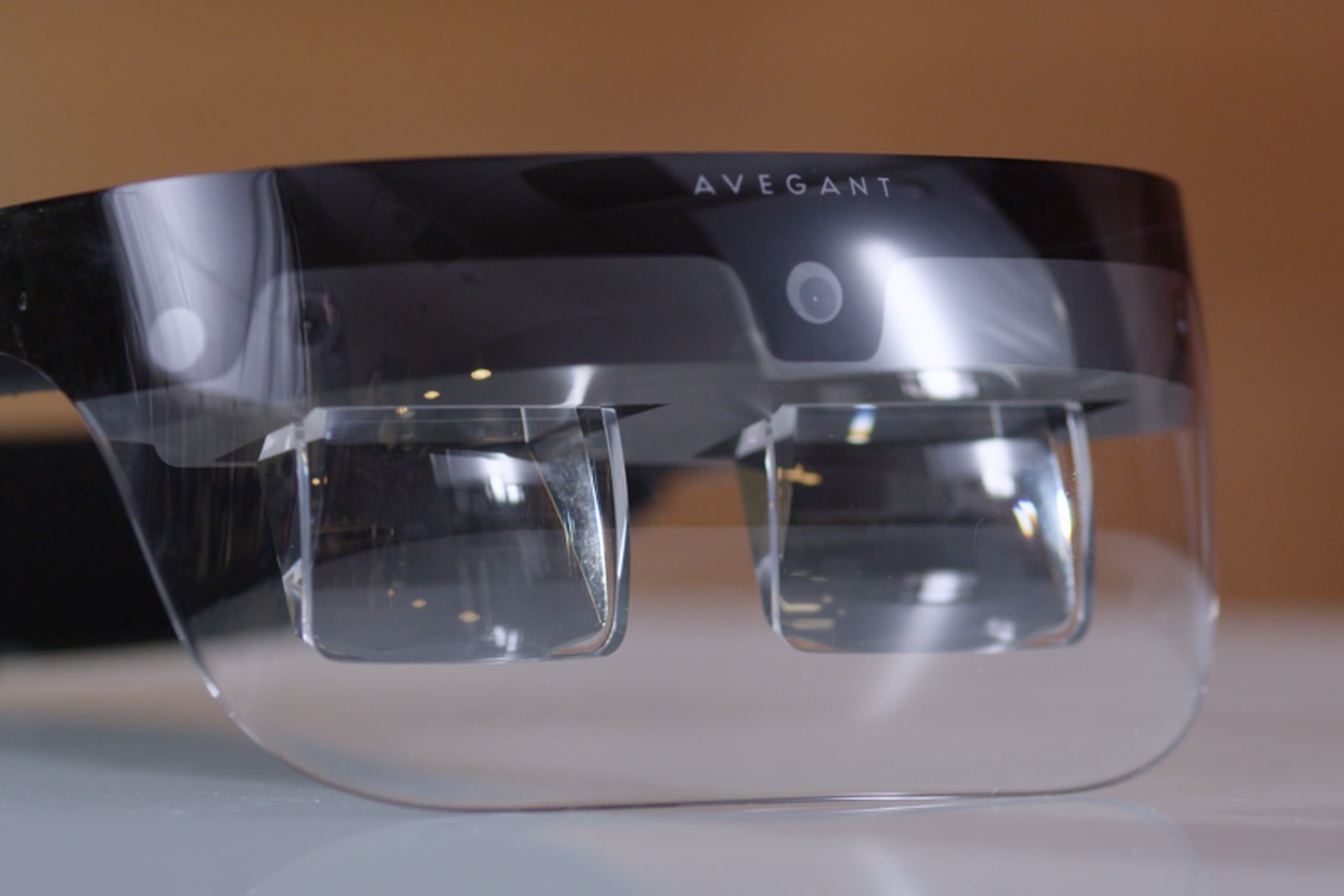 Avegant, a Silicon Valley startup that sells a pair of headphones equipped with a VR-like portable screen, is breaking into augmented reality. The company today announced that it’s developed a new type of headset technology powered by a so-called light field display.
In a demo shown exclusively to The Verge last month, the company’s wired prototype proved to be superior in key ways to the developer version of the HoloLens. Avegant attributes this not to the power of its tethered PC, but to the device’s light field display — a technology Magic Leap also claims to have developed, yet has never been shown off to the public.
Yet with that said, Avegant’s prototype managed to expand the field of view, so you’re looking through a window more the size of a Moleskine notebook instead of a pack of playing cards. The images it produced also felt sharper, richer, and more realistic.
Avegant constructed its demo to show off how these objects could exist at different focal lengths in a fixed environment — in this case a converted conference room at the company's Belmont, California office. So I was able to stand behind the Sun and squint until the star went out of focus in one corner of my vision and a virtual Saturn and its rings became crystal clear in the distance.
The demo also used off-the-shelf cameras to let the headset do positional tracking and understand where objects like tables and chairs were in the room. But Avegant says it ultimately wants to build a headset similar to Microsoft’s that can do inside-out tracking with cameras and sensors built into the device.
What it’s more excited about is its light field display. Light field technology, with regards to AR headsets, works by replicating how the human eye perceives light and then structuring virtual images that can be placed at different, fixed distances in an environment. The human eye can also look at them in the same way as physical objects.
Because these objects are not made of traditional pixels, and instead constructed out of light and essentially blasted onto your retinas, they can behave more organically than 2D VR images being warped to fit a 3D screen, as is the case with the Oculus Rift.
By investing in retinal imaging and mirror-based projection, the company discovered a more ideal way to work with human sight.
But what Avegant and its light field tech prove is that the market for mixed reality is no longer just for the world’s biggest corporations or its most well-funded (and secretive) startups.
Avegant has neither the wealth of expertise and massive head count of Microsoft Research, nor the more than $1.3 billion in funding of Magic Leap. Yet it has nonetheless produced a remarkably capable AR prototype all the same.
See the full story here: http://www.theverge.com/2017/3/9/14869310/avegant-ar-headset-microsoft-hololens-magic-leap-mixed-reality
This AR-enhanced globe would be a fun addition to any iPad-equipped classroom
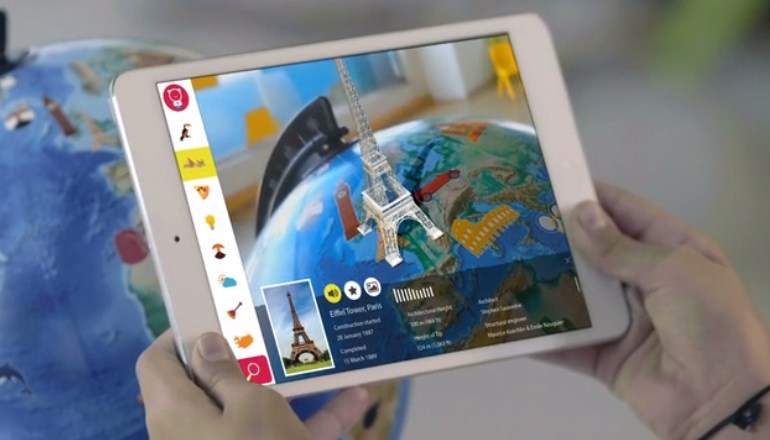 Orboot is a special 10-inch globe and companion app (iOS or Android) that lets kids check out the world and do little activities in a little AR environment. Sure, you could just have an app with a globe in it, but that’s boring. Seriously. Having a real globe is a great idea, and turns it into a hands-on activity rather than yet another swipe-fest.
See the full story here: https://techcrunch.com/2017/03/07/this-ar-enhanced-globe-would-be-a-fun-addition-to-any-ipad-equipped-classroom/