Porn fans exposed to virtual reality — the industry’s ‘next big thing’
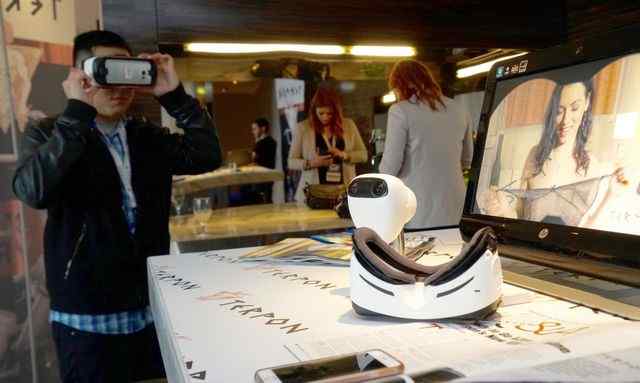 Industry leaders who gathered this week at the five-day XBIZ 2017 conference at the Andaz Hotel in West Hollywood declared themselves bullish on the economic potential of virtual reality.
“The current revenue being generated from VR isn’t huge. But across the industry, people are looking at it as something that really is going to develop into the dominant medium for adult entertainment,” Stabile said.
But there are technological hurdles that have kept some consumers from adopting VR.
“The headset is uncomfortable so you really can’t put on a headset and spend hours watching porn,” noted Brian Shuster, CEO of Utherverse, which creates online virtual environments. “Hopefully we’re going to be able to push the headset manufacturers to be able to produce lighter, easier, more durable headsets.”
See the full story here: http://www.dailynews.com/arts-and-entertainment/20170113/porn-fans-exposed-to-virtual-reality-the-industrys-next-big-thing
Students push storytelling boundaries using virtual reality
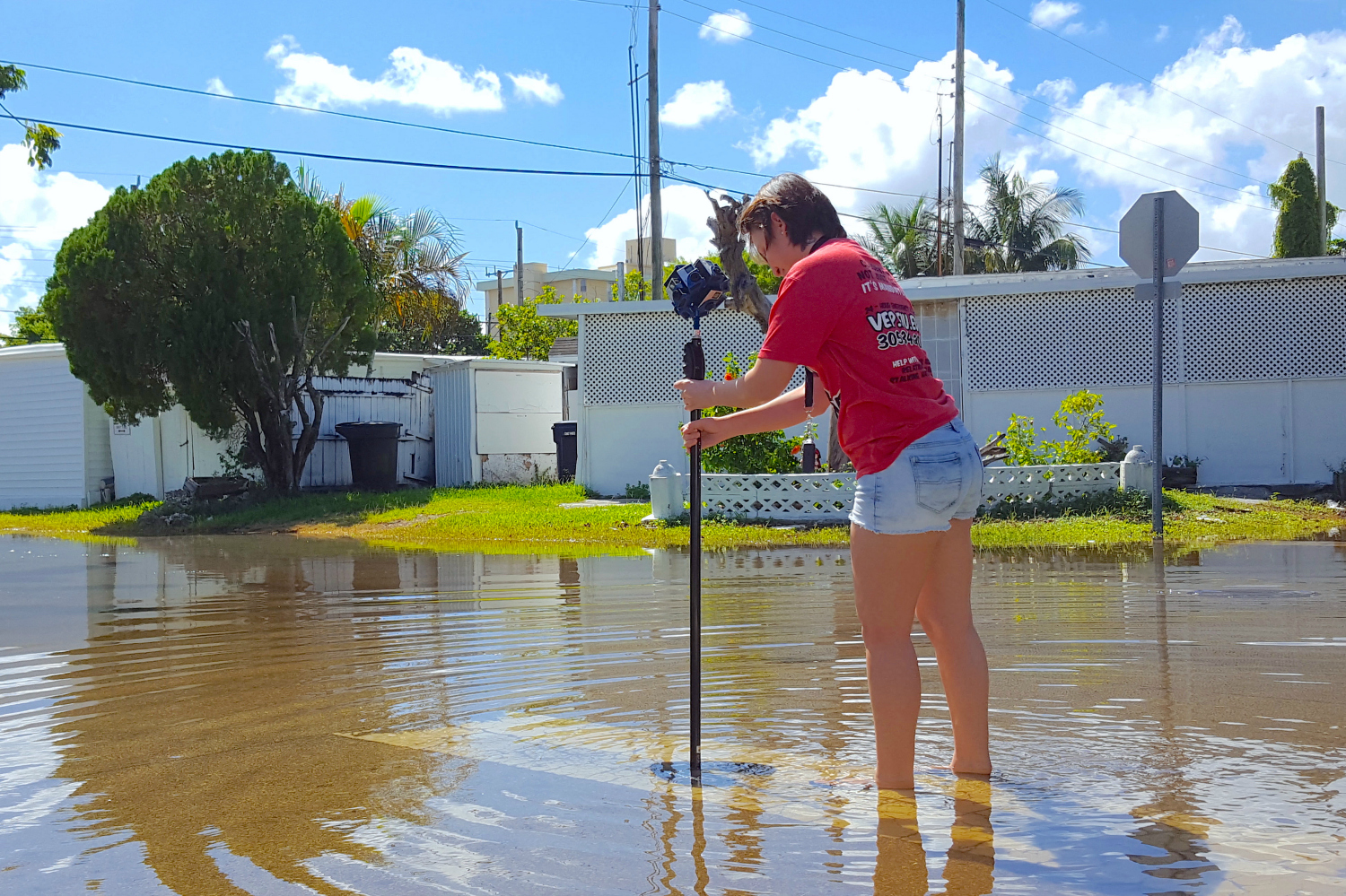 FIU is on a shortlist of universities nationwide using VR in journalism classrooms, including the University of Southern California and Syracuse University.
The students’ work has attracted national attention, prompting a partnership with graduate business students from Massachusetts Institute of Technology’s Sloan School of Management to document sea level rise in South Florida using virtual reality.
In the classroom, students discuss the ethics of using virtual reality – which requires editors stitch together multiple feeds of video to create a continuous, 360-degree view – in journalism, where cutting raw footage can imply it’s been doctored, and thus unreliable.
Students also examine the effect of the digital divide, a lack of reliable internet and computer access in low-income communities, on the content they create using new technology.
See the full story here: https://news.fiu.edu/2017/01/students-push-storytelling-boundaries-using-virtual-reality/107743
Hands-on: PiMAX’s 8K Headset Proves that High FOV VR is Coming
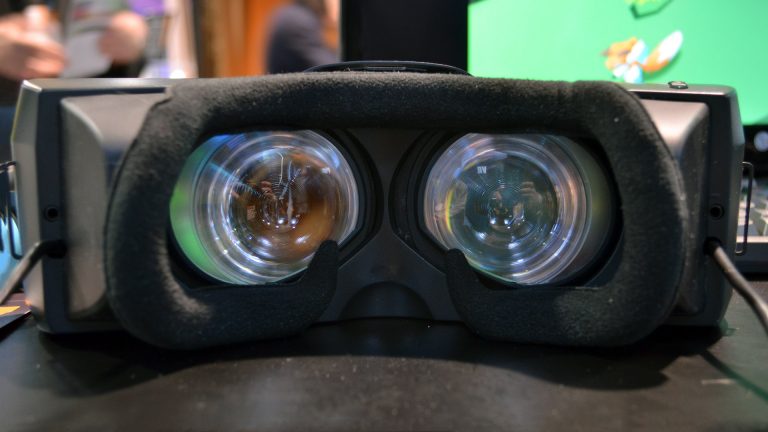 While there were many perhaps questionable Chinese VR headsets shown off at CES this year, Pimax’s new 8K, 200 degree prototype actually stood out from the crowd. Moreover, Pimax perhaps even showed both some of the potential that high spec headsets might provide along with the challenges associated with getting the details right.
The exterior of Pimax’s new prototype bears some resemblance to Starbreeze’s 210 degree StarVR headset (and the InfinitEye before it) but uses a PlayStation VR (PSVR) style mounting mechanism.
Pimax are also using fresnel lenses in this new headset, but interestingly, the ‘godray’ artifacts usually associated with these type of optics were actually very subtle. It’s entirely possible however that the low brightness of the displays may have played a part in that.
So alas, presence was non existent for me. However, playing Lucky’s Tale and Radial-G: Racing Revolved on the headset I could see how, once distortion is reduced and that binocular overlap increased, it might truly represent a new jump in visual quality for VR.
Brain-warp is a technique where you render and display an image to one eye only, and then render and display for the other eye, in a sequence such that one eye is seeing an image and the other isn’t at any given moment in time. This way, they’re actually rendering a single 4K image at 120 times a second, but the user perceives it as a complete 8K image at 120Hz. How? Because that frequency is high enough that we don’t perceive that one eye is blind while the other isn’t, at least for a tiny fraction of a second.
How to Use Snapchat’s Virtual Reality “Lenses”
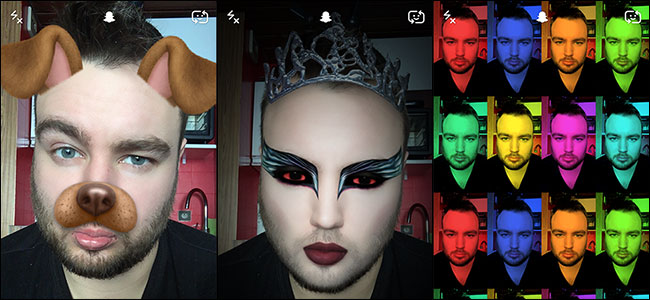 At any one time, there are between about ten and fifteen different lenses available in Snapchat. New Lenses are constantly being added and old ones removed and then brought back. Theme lenses are often added for special events and companies can pay Snapchat to have a lens included to promote their product.
Despite being one of the best things about Snapchat, Lenses are hidden behind a touch gesture. While almost everything else in Snapchat’s interface is handled by buttons, there isn’t one for Lenses.
See the full story here: http://www.howtogeek.com/288093/how-to-use-snapchats-virtual-reality-“lenses”/
Market Research: How Big Is the Installed Base for Virtual Reality?
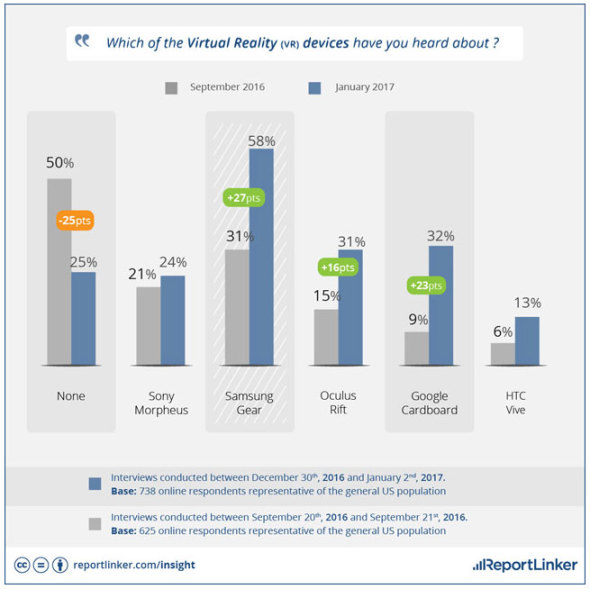 The most expansive view of the market comes from IDC, which counts all types of 360-degree viewing devices in its tally. The firm figures 10.3 million units were shipped in 2016. That number doesn't include "simplistic" headsets like Google Cardboard, but it does count standalone HMDs (like Microsoft's Hololens and Epson's Moverio) as well as screenless viewers like Google's Daydream View and Samsung's Gear VR — the latter a powerhouse in this emerging market. At CES last week, Samsung America announced that it sold 5 million of the headsets in 2016, putting it on top of the heap.
Sony seems to be in second place, with its PlayStation VR (PSVR) widely thought to have rocketed out of the gate in the last three months of 2016, despite struggling with shortages of AMOLED panels — which are becoming popular for smartphones, putting the squeeze on supplies to makers of HMDs. But while there's general agreement that Sony had a good holiday season, nobody is sure just how many PSVR units the company has managed to ship.
Researcher Trendforce said it expected Sony to come out of 2016 with about 1.5 million units shipped into retail, giving it a comfortable lead over rivals Oculus (which shipped an estimated 650,000 Oculus Rifts) and HTC (an estimated 460,000 Vive shipments). But another analyst, Canalys, is more bearish. It figures trouble sourcing OLED displays limited Sony to just 800,000 PSVR units shipped. Further, Canalys says the HTC Vive is the number three headset, with about 500,000 shipments in 2016, followed by the Oculus Rift with just under 400,000.
Either way, all of the other vendors seem to be swamped right now by the Gear VR. (The other obvious big player in mobile VR, Google's Daydream View, didn't begin shipping until November, limiting its numbers for the year.) Samsung's success in the nascent VR market has been driven by in-store demos and bundled sales with the company's smartphones, and that bodes well for the PSVR, which will similarly benefit from increased awareness and, presumably, bundling deals with the PlayStation console — at least once Sony gets to a position where it has plenty of units in retail channels and ramps up promotion of the device.
See the full story here: http://www.studiodaily.com/2017/01/how-big-is-the-installed-base-for-virtual-reality/
Three Award-Winning International Virtual Reality Companies Merge to Launch ‘Virtual Content Group’
 Virtual Content Group (VCG), a conglomerate of international Virtual Reality (VR) companies, formed recently from the merger of France’s Cow Prod, Germany’s INVR.SPACE and Australia’s 3D Content Hub...
VCG has operations spanning thirteen countries and a rights library of nearly eighty VR titles, positioning it to rival the scale of leading American VR companies on the international stage. To date, the company has produced and co-produced more than 150 VR projects. The three respective entities have clients in over 40 countries, including BMW, Mercedes-Benz, Disney, Huawei, Unicef, Sky, Netflix, NBC Universal, Samsung, LG Electronics, Sony and Deutsche Telekom.
The merger allows VCG to scale faster and serve larger clients with a regional focus on Europe and Asia-Pacific. “VCG is as an international leader in VR,” said Torsten Hoffmann, VCG co-founder and CEO, who has licensed 3D content since 2011. “Building our own IP is core to our business model.” The business, already profitable, will seek Round-A investment in early 2017 and intends to add more partners later this year.
See the full story here; https://globenewswire.com/news-release/2017/01/12/905312/0/en/Three-Award-Winning-International-Virtual-Reality-Companies-Merge-to-Launch-Virtual-Content-Group.html
After a rocky year, enterprise virtual reality startup Envelop VR is shutting down
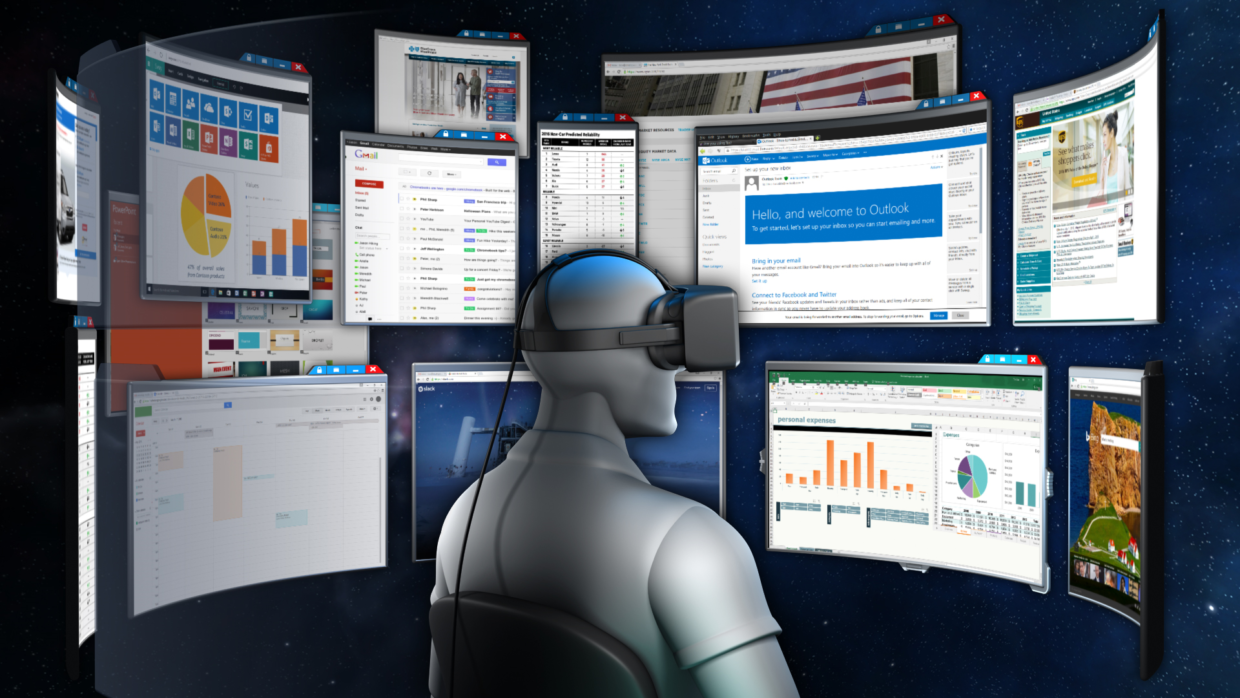 See the full story here: http://www.geekwire.com/2017/rocky-year-enterprise-virtual-reality-startup-envelop-vr-shutting/
Lumus Augmented Reality Uses F-16 Display Technology for DK-50
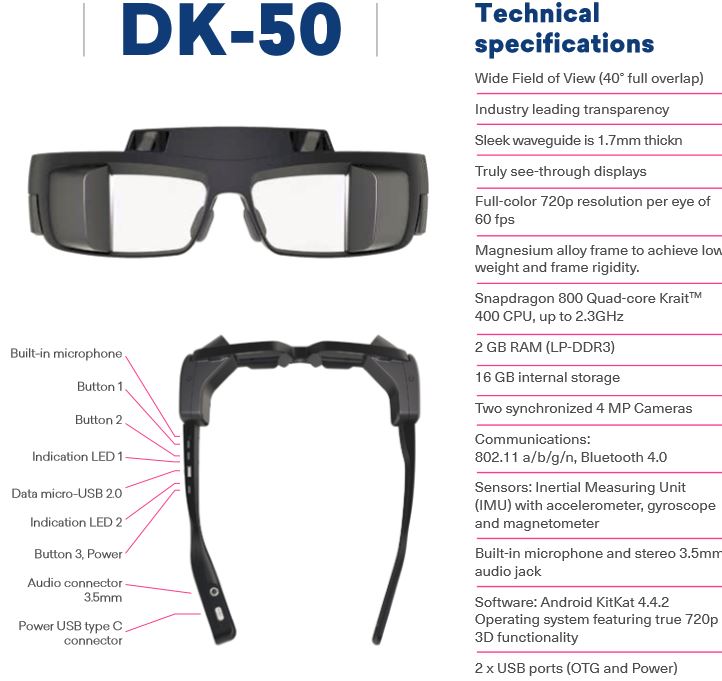 See the full story here: http://www.nanalyze.com/2017/01/lumus-augmented-reality-sdk/