A logo of Alibaba Group is pictured at its headquarters in Hangzhou, Zhejiang province, China, October 14, 2015. REUTERS/Stringer/File photo
In an internal email seen by Reuters and confirmed by an Alibaba group spokeswoman, the affiliate's new CEO Yu Yongfu pledged to invest in content, saying "he didn't come to play."
According to Alexis Macklin, VR analyst at research firm Greenlight Insights, Microsoft's approach is different from what top VR and AR companies are doing. Microsoft is starting to position its VR and AR product suites as business tools that help deliver digital transformation for enterprises.
This newsletter contains links to interesting articles, business info, etc. Below is one response from the Q&A portion.
Q: What is the biggest misconception people have about virtual reality right now?
Answer: The biggest misconception that I see about VR is that higher graphical fidelity will yield a deeper sense of presence, but this can actually break presence. Photorealism raises your expectations for realistic audio and haptics, but the current VR tech is no where close enough to match the level of graphic fidelity and falls into the uncanny valley. It’s counter-intuitive, but multi-modal coherence at a lower fidelity can actually yield a deeper sense of presence than striving for photorealistic graphics while ignoring spatialized audio & haptic feedback. It’s a pretty universal misconception, and so I’d encourage you to learn more from Voices of VR podcast episodes #130 & #478.
A good kicking off point is “PlayStation VR Worlds,” which is essentially a compilation of tech demos that Sony used to demonstrate the potential of its machine. In this title, those demos have been polished and expanded.
The highlight of the “PlayStation VR Worlds” is the “London Heist,” a first-person experience that’s stationary. Players work for a crime family and are tasked with stealing a diamond. Unfortunately, the burglary goes awry. The demo shows how intuitive VR can be and how the concept of shooters can translate to the new medium.
Personally, I prefer the stationary type of gameplay...I recommend titles such as “Surgeon Simulator: Experience Reality,” “Job Simulator,” “I Expect You to Die” and “Werewolves Within.”
“Werewolves Within” is all about deceit and trying to lie your way to victory if you’re a monster. If you are human, it’s about trying to sift through the facts and figure out who is fibbing. The game works in VR because there’s a sense of presence. Having the headset on makes players feel as if they’re sitting around a crystal ball trying to divine who is friend and foe. It’s an unexpected but a smart take on VR.
See the full story here: http://www.mercurynews.com/2016/12/27/so-you-got-a-virtual-reality-headset-now-what/
Everything I’ve played in virtual reality so far that’s been a developer jamming VR into an existing thing, I’ve hated. Fallout 4, Doom 4, you name it. This idea that virtual reality is triple-A franchises plus headsets feels all wrong.
Games like Drool’s Thumper are the opposite of this. I play that game in VR, and it’s a rhythm-racer that demands insane concentration, and I’m topping leaderboards. I play it outside VR, and I’m a twitchy, offbeat mess. There’s a focus and perspective thing going on there that the headset clearly enhances.
To your question about VR’s language, it seems like a chicken-egg of inputs wrestling with outputs. Today’s optically wraped, screen-driven VR uses all these ancient input ideas. Like your neck is now your wrist, and your eyes are your mouse pointer.
The argument goes that Google Maps is already a form of augmented reality—call it version 1.0. The question, thinking about silent running ventures like HoloLens or Magic Leap or the next version of Google Glass, is what 2.0 looks like.
Today, the Tokyo-based company announced the release of the FUJITSU Manufacturing Industry Solution 3D Superimposed Product Design Diagnostic, a PLM solution that uses augmented reality and 3D modeling to virtually inspect products and manufacturing components. Rather than having to manually examine every manufactured item, users simply take a picture of each component with a smartphone or tablet, then overlay that picture with the 3D CAD file of the component, enabling them to quickly spot any differences or inconsistencies.
The system is easy to operate and allows manufacturers to easily and quickly detect flaws and defects at an early stage, eliminating the need to send components back during a later phase in the manufacturing process. In addition, the diagnostic results are saved, allowing companies to keep a record of quality, share information and improve overall management.
One of the most interesting but also low profile is Osterhout Design Group’s headset, which actually look like glasses someone fashion forward may wear on the street, but which hides quite a bit of tech.
Because the field of Augmented Reality is still very immature we find it helpful to keep our readers updated on Microsoft’s competitors in the field.
One of the most interesting but also low profile is Osterhout Design Group’s headset, which actually look like glasses someone fashion forward may wear on the street, but which hides quite a bit of tech.
Industry follower James Mackie has had an opportunity to look at the company’s latest prototype, the ODG R9, which features dual 1080P lightfield transparent glasses and a 50 degree field of vision, which due to the design of the glasses appear to cover most of the field of view of a user. Due to the large field of view offered and the good opacity of lightfield glasses VR experiences are also possible from the same glasses.
The glasses are self-contained, running Android and ODG’s custom layer on top on an ARM processor and features a large number of sensors, but it appears not the same environment-scanning sensors as the HoloLens, though it still appears to work quite well in tracking the environment for mixed reality experiences. It however lacks the ability to read hand gestures like the HoloLens, but supports a number of modular accessories.
ODG is considered a foundational company in AR and a major patent holder, with Microsoft purchasing a large number of patents for $150 million from the company in 2012. Like Microsoft they are also targeting enterprise, with their R7 headset costing $2700.
According to a report from NDTV, the Chinese tech manufacturer, Xiaomi, is now reportedly interested in expanding its VR capabilities through a new partnership with Chinese content provider, Jaunt China. The report reveals that Xiaomi has teamed up with the content provider for them to develop apps and content for Xiaomi's own VR headset.
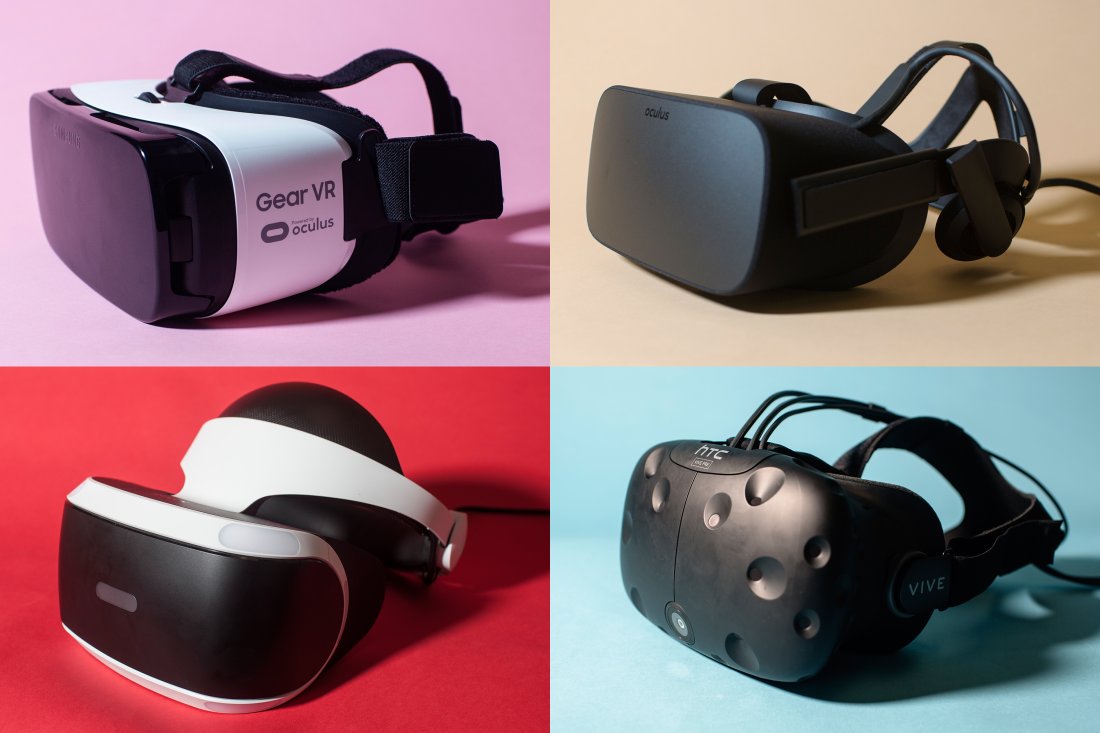
The partnership will likely be a deal that will be similar to Oculus and Samsung's partnership, where the former developed a proprietary app that ran on Samsung's Galaxy Gear VR headset. However, according to the state-run news agency, Xinhua, the partnership between Xiaomi and Jaunt may involve other types of media as Jaunt is currently involved in creating VR video shooting, editing, and distribution in the United States.
The PlayStation VR just got some additional content via the recently announced app launch by Jaunt. The platform will have instant access to 150 cinematic titles from the startup. The app includes videos like the award-winning animation Invasion, CBS' JPL Mars 2020, Shaq Goes to Cuba, Zombie Purge and the Pure McCartney Experience from the former Beatle.
With this news Jaunt is now available on every major VR platform including; PlayStation VR, iOS, Android, Gear VR, Google Daydream, Oculus Rift, HTC Vive and major desktop browsers. That's a whole lot of folks putting on face computers and spinning in circles.