The Best Gadgets for 2016: A Year for Virtual Reality
 All the usual suspects, plus this...
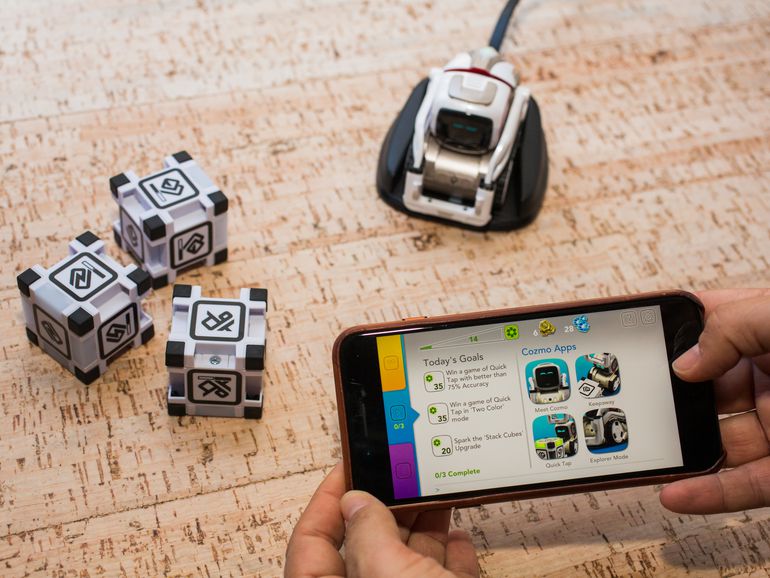
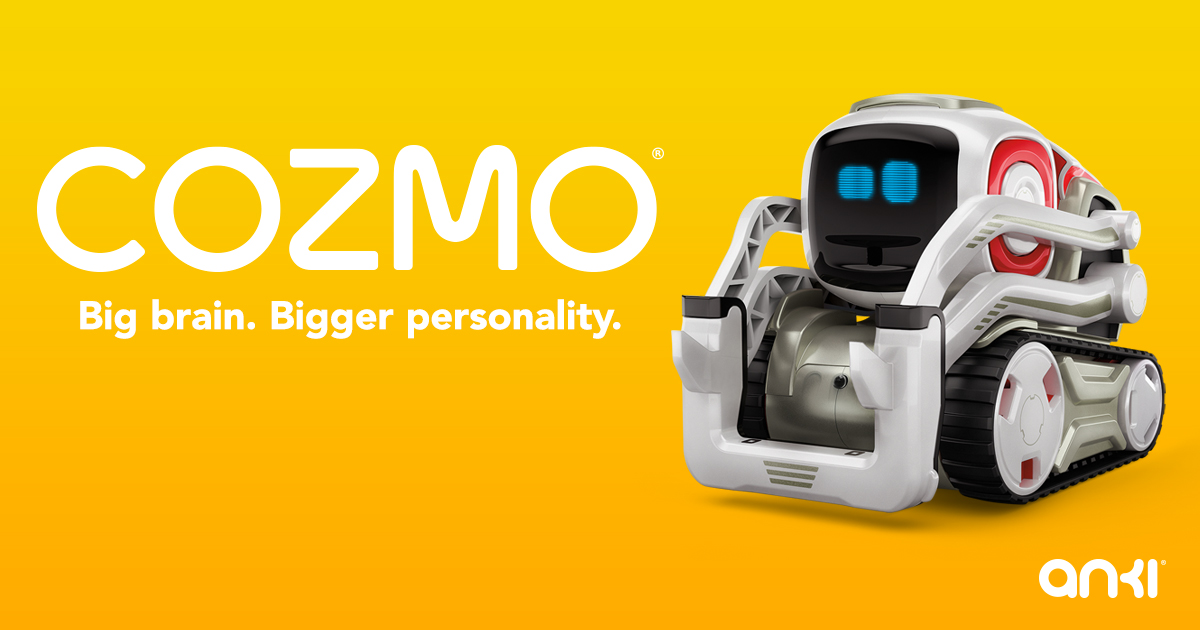
Anki Cozmo
A Wall-E lookalike, it is cute and naughty, a palm-sized tiny bot that can be at the desk for companionship. Learns through time and has facial recognition.
See the full story here: http://www.mobilenapps.com/articles/25877/20161225/best-gadgets-2016-year-virtual-reality.htm
Inside GoMeta’s Plan to Build a Thousand Pokemon Gos
 Metaverse is an app that works similar to Pokemon Go in that it lets users discover characters ranging from Burgundy to talking aliens in the real world simply by going to places and pointing their phone camera at the world around them. But unlike Pokemon Go, Metaverse wants to be more than a game. Shapiro’s ambitious plan is to allow anyone to build their own phone-based augmented reality experiences.
FOX Sports’ Michael Davies: Virtual Reality Has ‘Graduated From Experimental Phase’
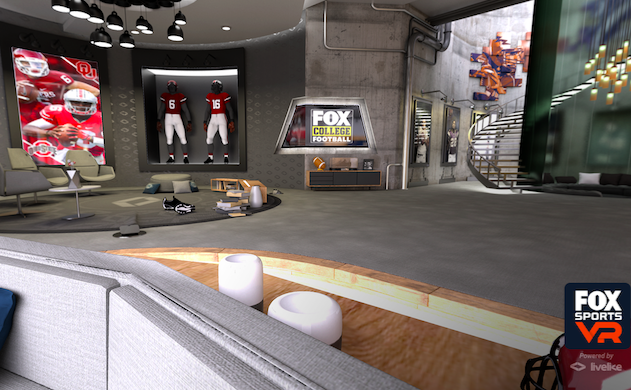 Michael Davies, Senior Vice President of Field and Technical Operations, spoke at the 2016 SVG Summitearlier this month about the state of virtual reality, its production quality, improvements toward headsets and where the industry is headed over the next calendar year.
“What I’d submit is that VR is becoming what I would call Second Screen 2.0’ in that it winds up being a much more intriguing companion product than the types of things that we figured out when we were doing the second screen in the traditional way,” said Davies, adding that anyone who claims virtual reality gives viewers the “best seat in the house probably hasn’t seen it.”
He further elaborated on how virtual reality adds another element of storytelling to any live broadcast. Even with the virtual feel, the production still needs to do more to engage viewers, according to Davies. If not, fans will spend a minimal amount of time watching the virtual reality content.
“You also need to give the audience something else to do. VR, in and of itself, isn’t enough yet to compel an audience to really look at it for more than a minute or two,” he said. “Whether you’re doing VR replay, you’re doing some VOD or you’re doing augmented reality graphics in VR, you need to give the audience something more. Interestingly, and to my first point, that also helps us think about some different things about how we can combine VR and the linear experience to make them all swim in the same direction.”
See the full story here; http://www.sporttechie.com/2016/12/22/virtual-reality/fox-sports-michael-davies-virtual-reality-has-graduated-from-experimental-phase/
A VIRTUAL REALITY ‘THEME PARK’ IS COMING TO LAS VEGAS IN 2017
 The currently unnamed venue, intended for an October 2017 opening in a Strip-adjacent location that Bricklin can’t yet reveal, will have at its heart a lounge that features vintage arcade games and individual VR sets playing music videos and other short-form content. The lounge will serve food, cocktails and—why not?—liquid nitrogen ice cream: “It’s kinda nerdy, but I like it,” Bricklin says.
Radiating outward will be several themed tunnels, each one leading you “to a virtual reality world.” One will be military-themed; another will lead to “the world’s greatest remote-control race course,” featuring state-of-the-art motion rigs connected to one-tenth scale cars with mounted cameras. “The cars have unbelievable power—they can go over 100 miles per hour,” Bricklin says.
Other worlds are still forming, as Bricklin watches emerging VR technologies and conceives of new ways to use them for entertainment. We’ll have to wait until next fall to find out just how far into the future those tunnels go.
See the full story here: http://lasvegasweekly.com/intersection/2016/dec/21/virtual-reality-theme-park-jonathan-bricklin/
Virtual reality is new career path for actors
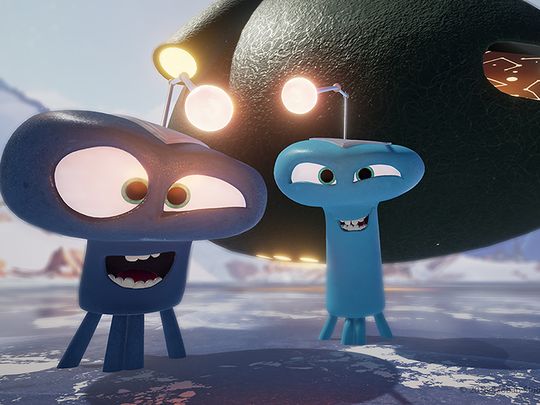 Elizabeth Banks has landed another fantastical role: an alien in an animated virtual reality film.
In that VR adventure, Mac and Cheez land on Earth and encounter two rabbits -- VR viewers take the point of view of one rabbit. Asteroids! puts you in the action, too, as a bot who must help Mac and Cheez make it through the asteroid field. Also along for the ride is Peas, "a little bot (that) acts almost like a pet," Banks said.
In addition to providing the voice for Cheez, Banks also had her facial movements recorded, "so when you do inflection and everything they can match it with everything you are doing with your face at that time."
Oh, and about the voice, it's not totally intelligible, she says. "We sort of created a language and then we sped it up," said Banks, who also voiced the character Wyldstyle in The Lego Movie. "It does make sense if it were translated for you and you saw it written out. It’s a little like pig Latin in a way."
See the full story here: http://www.usatoday.com/story/tech/news/2016/12/22/elizabeth-banks-gets-animated-vr/95696338/
Virtual reality, one year out: What went right, what didn’t
 But the biggest problem for the Rift was that even at launch its days already felt numbered—not a vibe you want from $600 hardware. The Rift was designed primarily as a seated VR experience, with a controller in your hands. By the time it launched on March 28, enthusiasts and industry press had already spent time playing with the SteamVR-powered HTC Vive, which used made-for-VR controllers and dedicated tracking stations to enable room-scale VR experiences that let you wander around and actually touch things. After trying Vive, going back to the Rift’s sedentary experience felt far less satisfying.
...we recommend passing on the Rift and the Vive, and for very good reason. While VR can be nothing short of awe-inspiring, these first-gen products also have some obvious flaws.
Man, virtual-reality headsets are expensive.
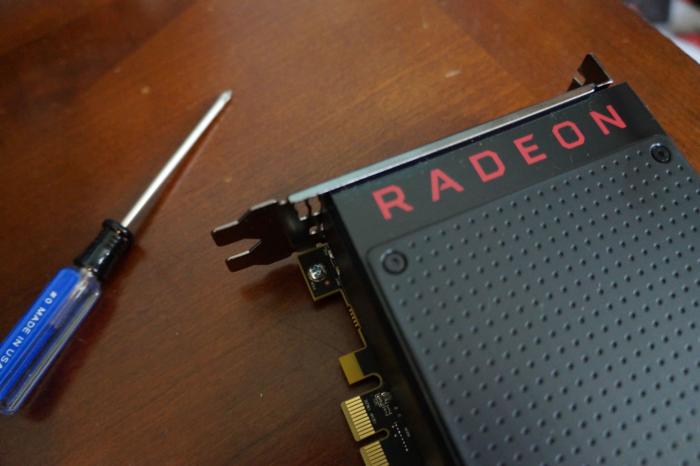
The plunge began with the launch of AMD’s Radeon RX 480, which revolutionized what’s possible with a $200 graphics card. Before its release, VR-capable graphics cards cost nearly twice that amount. (Nvidia quickly followed suit with the $250 GeForce GTX 1060.) Jumping forward two full technological generations paid major dividends for graphics cards.
Software tricks helped democratize VR just as much. At the Oculus Connect conference in October, the company revealed a new feature dubbed “Asynchronous Spacewarp” that used technical tricks to drive the barrier to entry for Rift VR way, way down—all the way to an AMD AM4 or Intel Core i3-6100 processor, and a GeForce GTX 960 graphics card. In March, a Rift-ready PC cost at least $1,000; after Oculus Connect, Rift-ready PCs started at $500, and as I write this there’s a Best Buy promotion offering a full PC and the Rift itself for $999.
Hot damn, prices plunged fast. And another pesky PC VR problem is already in everybody’s sights.
Wired woes
...headsets need to be physically tethered to your PC in order to work.
And you can already see that wireless future on the horizon, with Oculus testing a fully self-contained mobile Rift prototype pictured above and HTC backing a $220 add-on kitthat makes the Vive wireless.
Beyond PCs
While powerful PC-based VR experiences may be tethered, the more modest world of phone-driven mobile VR has already left cords far behind.
The Future
Intel and Microsoft’s Project Evo partnership aims to change how computers “think, see, and hear,” with a specific goal of driving mixed reality forward.
The cost of VR-capable PCs will only keep going down. Expect augmented reality to continue making inroads in car tech.
See the full story here: http://www.pcworld.com/article/3148754/virtual-reality/the-messy-magical-birth-of-virtual-reality.html
5 Ways Companies Can Incorporate Augmented Reality In 2017
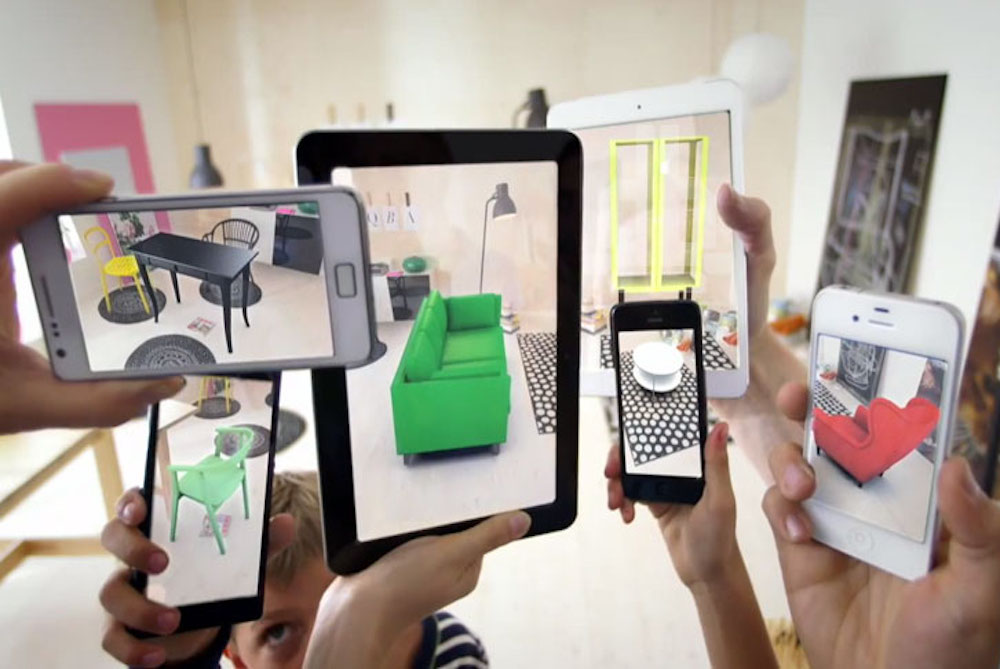 Better Customer Service
Visualize Objects
Remote Guidance
Relationship Building
Innovative Working Methods
Join us in NYC on Jan 17 for our Future of Retail 2017 launch event. The event is geared for any retailers, brands, agencies, technology companies and service providers looking to translate the trends included in our flagship report in actionable business practices.
See the full story here: http://www.psfk.com/2016/12/abhinav-girdha-ceo-appy-pie-5-ways-companies-can-incorporate-augmented-reality-in-2017.html
How virtual reality could help Congress understand the issues
 The advocacy technology space needs a renaissance to advance itself into the modern era where private enterprise and companies have been for a few years now. The stage is set with mobile applications designed for lobby days and year-round advocacy campaigns. I would expect this to be a key innovation in the advocacy technology space next year and beyond as organizations look to position themselves with the 115th Congress and the Trump administration.
Short-form communication and digital storytelling will continue to be the gold standard, but the mechanisms for action need to improve and advance.
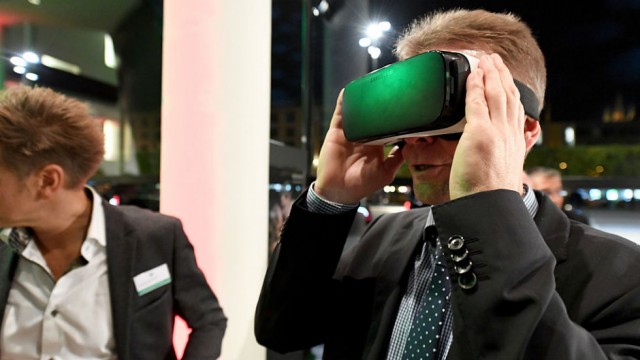
Human rights and public health organizations can amplify their advocacy messaging with virtual and augmented reality technology. If you are unable to arrange a factory visit or have a member of Congress tour your school, hospital or company, you can bring that same experience to them through a headset or even a mobile application.
Allow them to scroll through and see firsthand the public policy concerns facing your organization or why they should care about your cause. If you are able to get them to your school, hospital or company, why not leverage an augmented reality experience to overlay key facts and issues. Seeing a statistic or clip about the negative effects of funding cuts to a school program while in the classroom with a group of 2nd-graders is more compelling than a white paper.
See the full story here: http://thehill.com/blogs/pundits-blog/technology/311423-how-virtual-and-augmented-reality-could-help-congress
Jason Rubin: ‘The Next 12 to 24 Months Are Where the Real Creativity is Going to Happen’ for VR Content
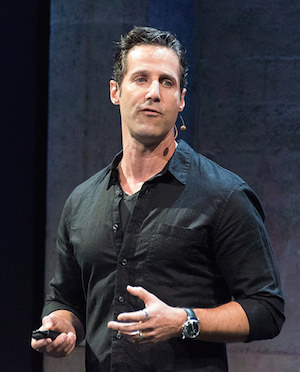 “I don’t think we’ve quite struck gold yet when it comes to the content that consumers want to buy for VR,” Rubin explained. “The next 12 to 24 months are where the real creativity is going to happen in VR. These are the experiences that will truly strike the consumer and that’s where greater [hardware] adoption starts to happen.”
Rubin elaborated that at Oculus they subscribe to a “hockey stick” outlook for the VR industry, meaning that they fully expect the industry to scale very slowly at first, if at all, before rocketing to extreme mass market success in the future. However, this timeline may be less optimistic than some might think.
See the full story here: http://uploadvr.com/rubin-tease-months-vr-content/