Virtual Reality Headset Sales Projections Unveiled by Consumer Tech Association
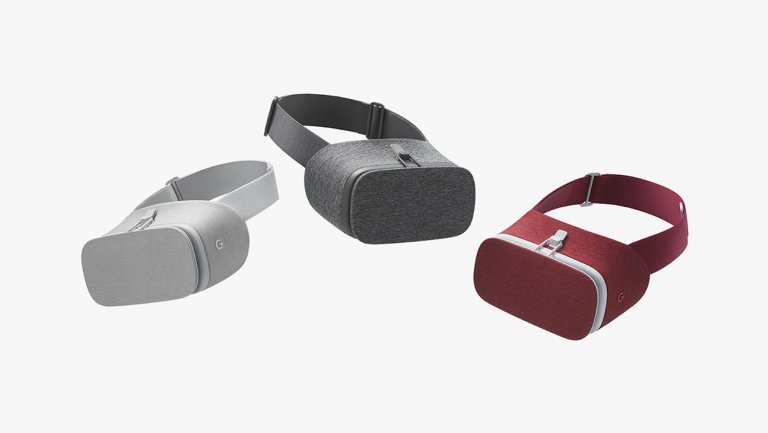 CTA’s Pre-Black Friday Survey projects sales of 1.2 million drones and 700,000 virtual reality headsets during the course of the fourth-quarter holiday season.
“On average, half of the unit volume of newer, emerging categories sells in the fourth quarter alone — a promising indicator for these new and innovative products.”
The "Pre-Black Friday Survey" was designed by CTA and is the result of a sample of 1,011 U.S. adults who were polled between Nov. 10 and 13.
See the full story here: http://www.hollywoodreporter.com/behind-screen/virtual-reality-headset-sales-projections-unveiled-by-consumer-tech-association-947806
We’re in a Virtual Reality Bubble
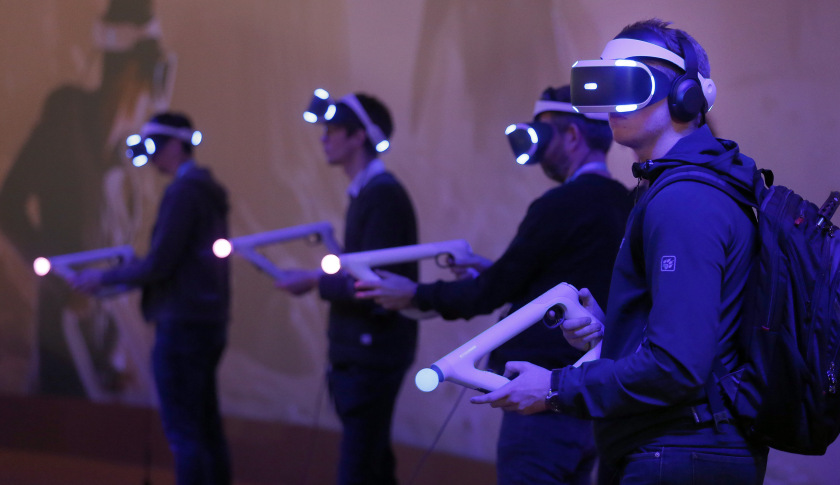
PARIS, FRANCE - OCTOBER 26: Visitors play the game "Farpoint" with the virtual reality head-mounted 'Playstation VR' developed by Sony Interactive Entertainment during the "Paris Games Week" on October 26, 2016 in Paris, France. "Paris Games Week" is an international trade fair for video games to be held from October 26 to October 31, 2016. (Photo by Chesnot/Getty Images)
As of November, shoppers can buy any of the big three “first-generation” headsets: Oculus VR’s Rift, HTC’s Vive, and Sony’s PlayStation VR. But there’s no sign of a mass frenzy to scoop them up. That’s in part because they lack a “killer app” to justify spending hundreds of dollars on yet another gadget.
See the full story here: http://fortune.com/2016/11/15/virtual-reality-gaming-entertainment-tech/
NASA Gives a Glimpse of Mars, Outerspace via Microsoft HoloLens
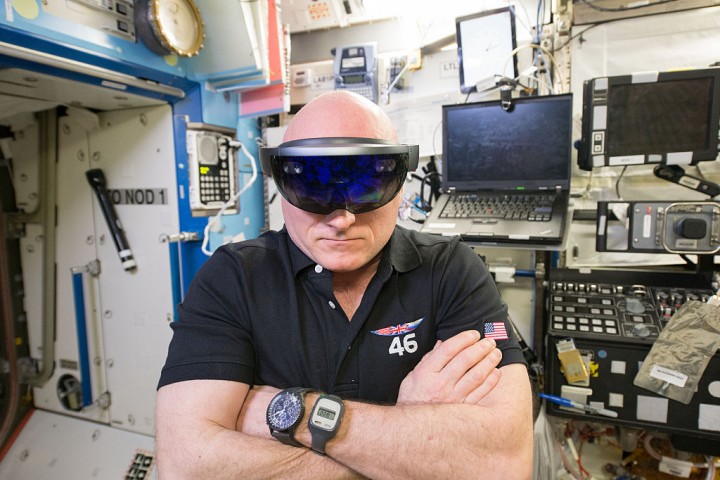 JPL Ops Lab Creative Director Matthew Clausen, and intern and NYU graduate student Marijke Jorritsma showcased the impressive research and exploration features of the Microsoft HoloLens, a headset specially designed to project virtual images from the surface of Mars over the real world.
Wearing HoloLens headsets to project on screen their virtual viewpoint, Clausen and Jorritsma presented to the audience three applications of the Microsoft HoloLens: Onsight (a virtual reconstruction of the Martian surface that can help researchers work collaboratively and allow a more accurately measurement of angles and distances among specific Martian locations), Project Sidekick (a feature enabling experts to assist astronauts on the International Space Station by walking them through complex procedures, providing guidance, diagrams, and additional information), and Protospace (which allows mechanical engineers to visualize and explore details modeled of spacecraft and machinery in a true-to-scale manner as a group).
See the full story here: http://www.natureworldnews.com/articles/31987/20161115/nasa-gives-glimpse-outerspace-through-microsoft-powered-virtual-reality.htm
The Fuzzy Future of Virtual Reality and Augmented Reality
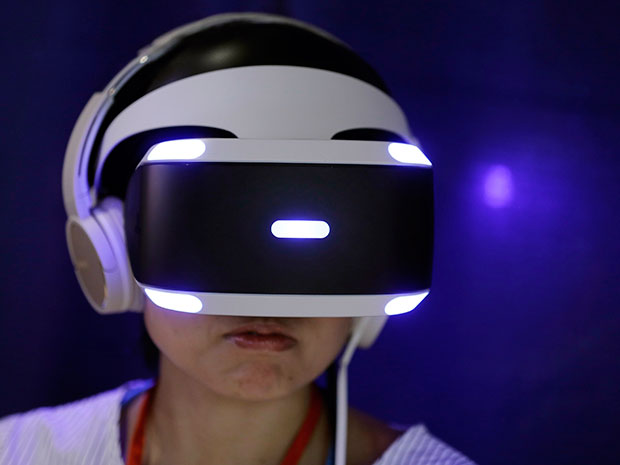 Already, several experts said, too many VR startups and developers are putting out shoddy or nauseating demos, thereby shooting themselves—and potentially the whole industry—in the foot. Customers turned off by those demos may never return, leaving VR to go the way of 3-D TV.
Natacha Merritt, director of VR for WestSummit Capital, adds that startups in this highly-competitive space hoping to boost their chances of funding should recruit candidates that reflect the diversity of their potential users. Her firm, which counts only three female co-founders in a pipeline of 200 companies, has begun to prioritize meetings with female founders. “It’s a big red flag when I see a [presentation] screen with a board of 10 white males,” she said.
However, there is a downside—eye tracking adds 8 milliseconds to motion-to-photon latency, or the time it takes to update a screen following a user’s movements. VR requires a motion-to-photon latency of under 20 ms to keep users from getting sick or disoriented, so an 8 ms delay would eat up nearly half of that time.
John Hancock insurance is subsidizing the cost of the new Apple Watch
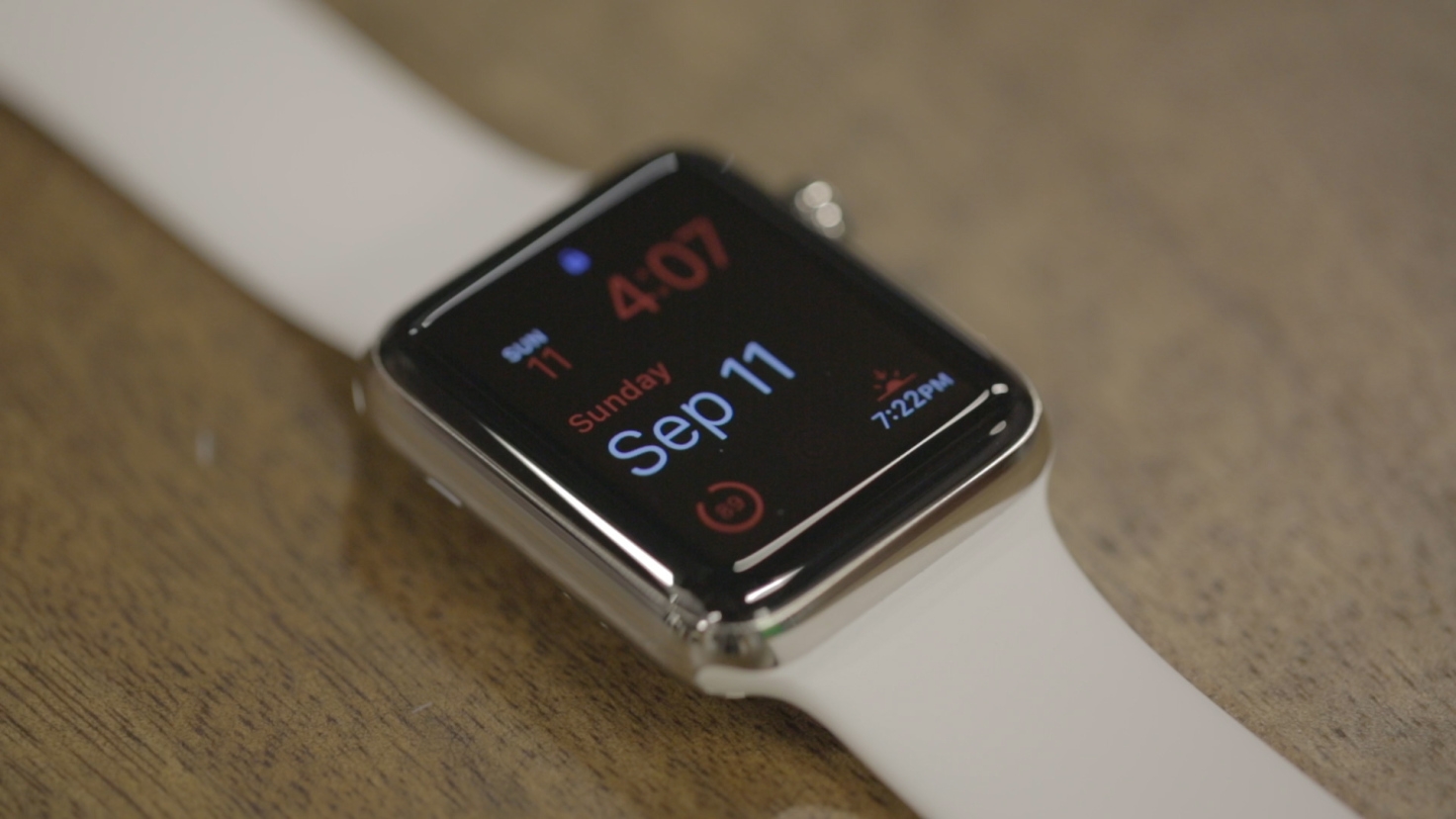 A number of health insurance companies have embraced wearables as a way to get their subscriptions to be more activity, including Aetna, which recently announced a major plan to subsidize the Apple Watch. Canada-based financial group John Hancock is getting on-board as well, announcing a subsidy program that offers up the Apple Watch Series 2 for as little as $25 to active members, through its Vitality program.
ENABLING WIRELESS VIRTUAL REALITY
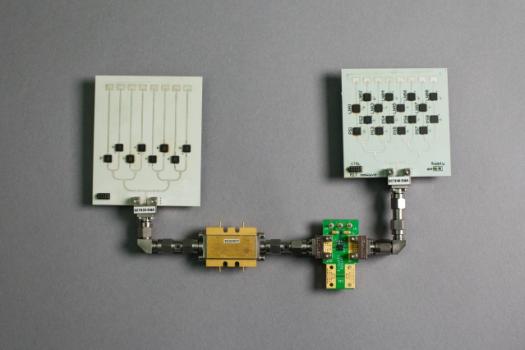 Fortunately, researchers from MIT’s Computer Science and Artificial Intelligence Laboratory (CSAIL) have recently unveiled a prototype system called “MoVR” that allows gamers to use any VR headset wirelessly.
In tests, the team showed that MoVR can enable untethered communication at a rate of multiple Gbps, or billions of bits per second. The system uses special high-frequency radio signals called “millimeter waves” (mmWaves) that many experts think could someday help deliver blazingly-fast 5G smartphones.
“Replacing the HDMI cable with a wireless link is very challenging...requires sustaining data rates of more than 6 Gbps while the user is moving and turning,...
...systems also can’t use compression to accommodate lower data rates.
The CSAIL team instead turned to mmWaves, ...the team developed MoVR to act as a programmable mirror that detects the direction of the incoming mmWave signal and reconfigures itself to reflect it toward the receiver on the headset.
Abari says that future versions of MoVR’s hardware could be as small as a smartphone, allowing for users to put several devices in a single room. This would enable multiple people to play a game at the same time without blocking each others’ signals.
See the full story here: http://www.csail.mit.edu/enabling_wireless_virtual_reality
Jaguar uses virtual reality to unveil I-PACE electric concept car
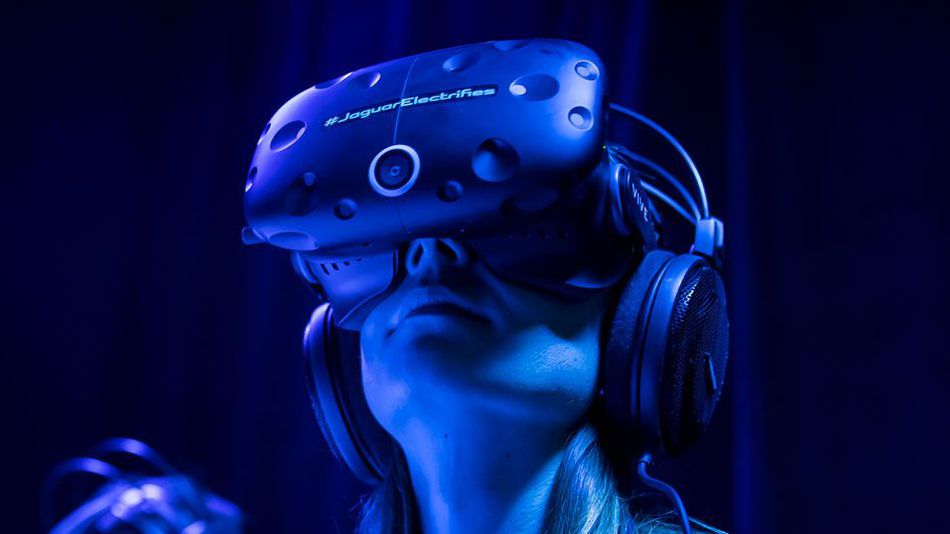 On Sunday, Jaguar's electric I-PACE concept car was unveiled simultaneously to an audience in Los Angeles and London through VR using HTC Viveheadsets and Dell Precision PCs.
"We only have one concept car and it is in LA for the reveal. For the first time, VR has allowed us share it across the globe in the most immersive way possible."
See the full story here: http://mashable.com/2016/11/14/jaguar-concept-virtual-reality/#WWpOVH6HJqq0
Sony Pictures Partners With Nokia on Virtual Reality Content
Sony Pictures has teamed up with Nokia to produce and distribute virtual reality content, both companies announced Monday. This will include live streaming of 360-degree video to get fans a virtual front row seat at Sony Pictures events.
See the full story here: 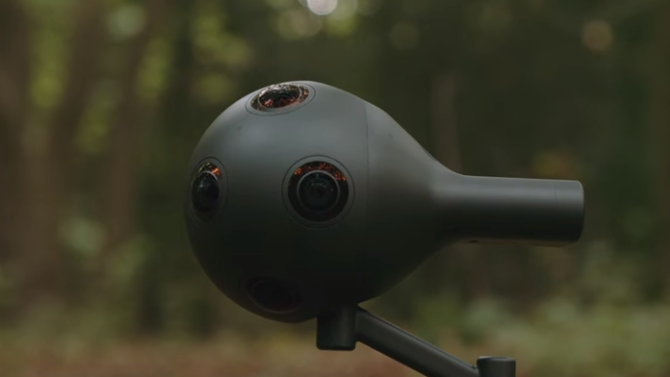 http://variety.com/2016/digital/news/sony-pictures-nokia-ozo-1201917664/