Project explores how virtual reality can help students learn
 A multi-disciplinary research team, led by Alexander Klippel, associate professor of geography, and including members from the departments of Geography and Geosciences, the Stuckeman Center for Design Computing, and the John A. Dutton e-Education Institute, received a Research Initiation Grant from Penn State's Center for Online Innovation in Learning (COIL). Their proposal is titled "Immersive Virtual Reality (iVR): The Printing Press of the 21st Century and How Learning About Place and Space will Never be the Same."
Here's how it works: You slip on the display goggles and enter a virtual launching chamber, defined by a blue grid. Say you're going to explore the dormant Iceland volcano, Thrihnukagigur,in a project developed by co-PI Peter La Femina, associate professor of geosciences. First, you can walk around a miniature three-dimensional scale model. Next, it expands to a full-size replica of the 700-foot-deep magma chamber—a little more than twice the height of the Statue of Liberty. This replica shows the true three-dimensional structure of the volcano, as measured using a Terrestrial Laser Scanner (TLS). Look and move up, down, sideways. Crawl into a side conduit. Thanks to the millimeter precision of TLS, you can explore and experience every surface and perspective, essentially as if you were there. You can even activate tools that measure diameters of the structures and volumes of the spaces you see.
See the full story here: http://phys.org/news/2016-11-explores-virtual-reality-students.html
When Pottermore went on a Fantastic Beasts virtual reality experience

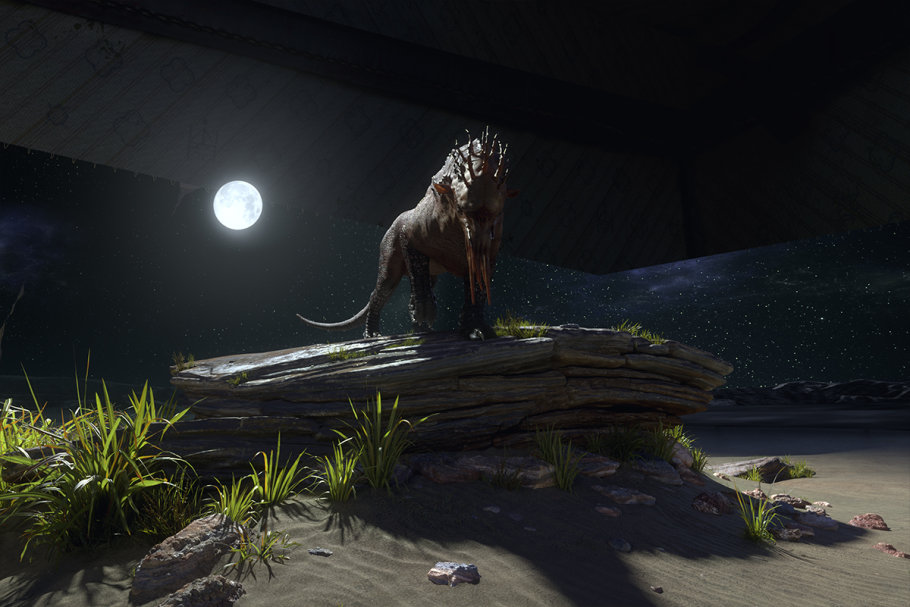 The new ground-breaking technology was announced at the Made by Google event in October and the Fantastic Beasts VR Demo debuted at London Comic Con, allowing users to immerse themselves in a virtual world with a 360 degree view. In this case, fans were able to sample a bit of Fantastic Beasts and Where to Find Them before the film’s release on 18 November, and visit a fantastically realistic virtual version of Newt Scamander’s shed.
The process works by using Google’s Pixel phone, and inserting it into the Google Daydream View VR headset. You control your surroundings using a small hand-controller, which doubles up as a wand. YES, you will be using an actual wand. Remain calm.
Pop on a pair of headphones, and the real voice of Eddie Redmayne as Newt Scamander will talk to you, and guide you around a cyber-realisation of his rather messy shed, which will emulate the setting and style from the film perfectly.
Newt will teach you a few useful spells, before taking you out back to meet some Fantastic Beasts in the (virtual) flesh. At one point, we found ourselves feeding a simply ginormous Graphorn, and let’s just say the moment is far more magnificent than feeding your old Tamagotchi.
See the full story here: https://www.pottermore.com/news/when-pottermore-went-on-a-fantastic-beasts-virtual-reality-experience
Groundbreaking Virtual Reality Research Showcases Strong Emotional Engagement for Brands, According to YuMe and Nielsen
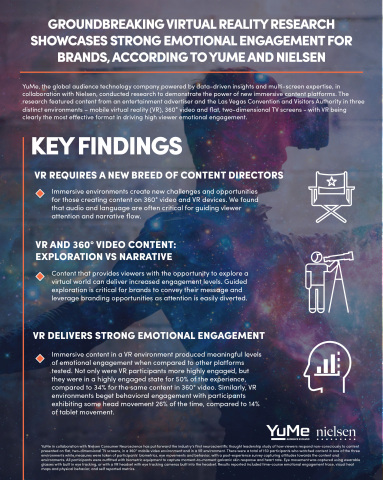 Key takeaways from the study include:
- With content optimized for the platform, VR can deliver higher emotional engagement than flat environments, including 2D and 360-degree experiences
- VR elicited 27% higher emotional engagement than in a 2D environment and 17% higher emotional engagement than a 360-degree video on a flat screen.
- VR viewers are emotionally engaged 34% longer than when they view the same content in 2D and 16% longer than when they view the same content in 360-degree video on a flat screen.
- Immersive content in VR and 360-degree experiences needs to balance freedom of exploration and flow to convey the narrative
- Content that provides viewers with the opportunity to explore a virtual world can deliver increased engagement, but storyline flow is critical for effectiveness. Since viewers are in control of their own experience, attention is easily diverted to aspects in view (scenery, landmarks) apart from the primary storyline.
- Guided exploration is critical for brands to convey their message and leverage branding opportunities.
- VR requires a new breed of content directors
- Immersive environments offer viewers the opportunity to play ‘director’ of their experience. This creates new challenges and opportunities for those directing content creation; they must leverage new techniques while re-considering what may not translate well from linear environments.
- The use of audio and language are critical for guiding viewer attention and narrative flow.
Study Background
150 study participants’ emotional responses were gauged by Nielsen’s neuroscience team, with eye tracking identifying their gaze and eye movements and a biometric monitoring device measuring electrodermal response and heart rate changes, as well as behavioral-coding methods. Participants were monitored while watching a scene from an entertainment advertiser and two short clips from LVCVA on mixology and an aerial helicopter tour of the Las Vegas strip. Consumers viewed these clips in three different environments: an immersive VR experience on a headset, a 360-degree video on a tablet, and video on a conventional, flat screen TV.
See the full story here: http://www.businesswire.com/news/home/20161109005274/en/Groundbreaking-Virtual-Reality-Research-Showcases-Strong-Emotional
Imax Completes Round Of Virtual Reality Funding
 Imax has completed the first phase of a $50M virtual reality fund between the global cinema format provider and other strategic investors to bankroll at least 25 interactive VR content experiences over the next three years in Imax VR centres. The monies will aid in the creation of higher-quality VR content that can be leveraged across the burgeoning VR industry. The group will focus their VR efforts on event-style productions with its major studio and filmmaker partners that complement Imax’s film slate. Other strategic investors include Acer, CAA, China Media Capital, Enlight Media, The Raine Group, Studio City and WPP.
The first Imax VR centres are opening in Los Angeles and at ODEON & UCI Cinemas Group’s Printworks multiplex location in Manchester, England. Other test facilities are being eyed in China, Japan, the U.S., the Middle East and Western Europe in the coming months. Imax will assess various factors at these pilot locations including overall customer experience, pricing and the types of content featured. If successful, the intent is to ultimately roll out these centres around the world at movie theaters, tourist destinations and shopping locations.
See the full story here: http://deadline.com/2016/11/imax-virtual-reality-1201852232/
Using Augmented Reality On The Factory Floor
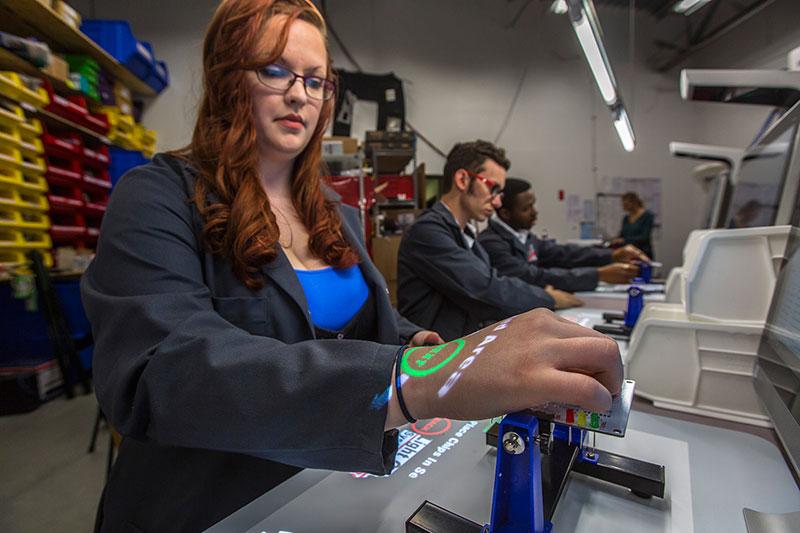 Some of the most advanced augmented reality systems utilize a digital projection technology that overlays a virtual operating “canvas” onto the work surface. When combined with visual and audio cues, no-faults-forward functionality (a particularly desirable feature at a time when consistency, quality-control and customization challenges challenges can lead to troubling and potentially costly legal liabilities), and specialized tools that work in concert with equipment already in place such as machine vision cameras and torque wrenches, it is easy to see why augmented reality is being adopted so enthusiastically by growing numbers of organizations.
Augmented reality enables manufacturing professionals to receive sophisticated instruction, detailed direction, and organized mechanisms that ensure appropriate pacing and sequencing. The right materials. The right tools. The right steps–completed the right way and in the right sequence. The right augmented reality platform is like having an interactive and adaptive guide walking you through every step of the process–and checking your work as you go.
See the full story here: http://www.mbtmag.com/article/2016/11/using-augmented-reality-factory-floor
Scope AR and Caterpillar Deliver First Augmented Reality-Based Remote Support Platform for Heavy Industry
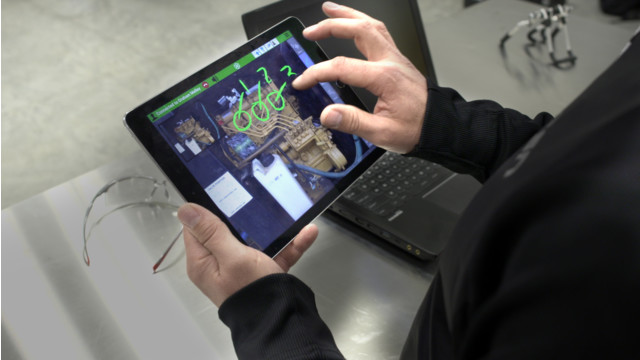 Scope AR, the creator of the first-ever true augmented reality smart instructions and live support video calling solutions, today announced a license with Caterpillar Inc., the world’s leading manufacturer of construction and mining equipment, to provide an augmented reality-based live support video calling platform built specifically for the unique remote assistance needs of industries using heavy machinery.
“This is about delivering an entirely new, interactive interface for remote workers to more effectively and efficiently communicate with experts in real-time, wherever they are,” said Scott Montgomerie, CEO and co-founder of Scope AR.
See the full story here: http://www.forconstructionpros.com/news/12277866/scope-ar-and-caterpillar-deliver-first-augmented-reality-based-remote-support-platform-for-heavy-industry
Snapchat Update: Augmented Reality Lenses Released; Not Just For Human Faces Anymore
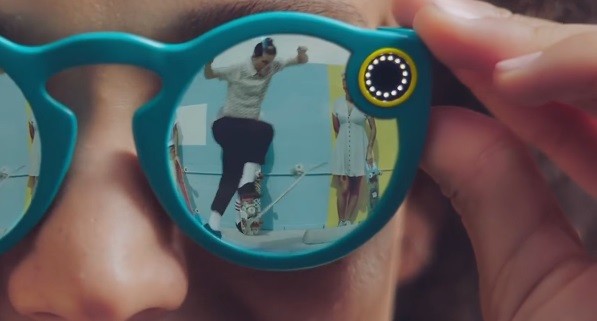 The Snapchat update introduces augmented reality: the "World Lenses."
The filters will not only change the look of your face but also augment it to reality. This function may also apply to your environment
Snapchat also allows you to see snow around; surround yourself with classic designs, butterflies or filters which you can turn off and on. The lenses will focus on user's face and you can choose different options to decorate not only a person's face but the entire photo or video.
See the full story here: http://www.gamenguide.com/articles/64975/20161109/snapchat-update-augmented-reality-lenses-released-not-just-for-human-faces-anymore.htm
Augmented Reality to Debut on GE’s Factory Floors
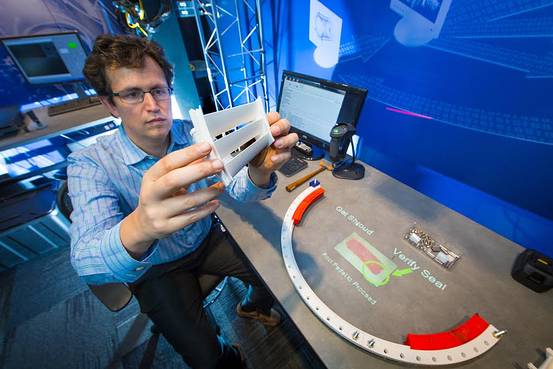 General Electric Corp. says it plans to roll out augmented reality in the supply chains of three business divisions next year. The company says the technology, which superimposes computer-generated images onto a factory floor worker’s view of the real world through a mobile device, will help in assembling complex machinery components.
By January 2017 workers at a GE Oil & Gas turbomachinery facility in Florence, Italy will be using AR that superimposes visuals needed to collect dozens of precise measurements in the manufacturing of gas turbine nozzles. The AR technology — a series of sensors, software and tablets with cameras — is expected to then be applied in similar ways in factories at GE’s Power and Aviation businesses later next year.
...
About 14.4 million U.S. workers will wear smart glasses in 2025, up from 400,000 this year, according to Forrester Research Inc. Enterprises will spend $3.6 billion on smart glasses in 2025, up from $6 million in 2016.
Because safety regulations make it challenging for workers to use AR smart glasses in GE factories, Dr. Bellucci will have workers place a computer tablet on a stand over the nozzle, which will superimpose visuals such as highlighted areas and dots.