Virtual Reality In The Music Industry Needs To Be A Tool, Not Just An Experience
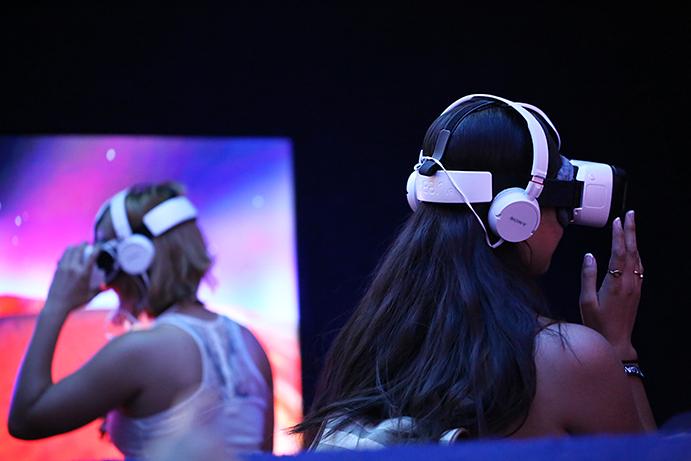 Would it be possible to create a VR experience around metadata, both to educate and inspire consumers and to empower creators? Behind every music file is a complex ecosystem of singers, songwriters, session musicians, producers, publishers and other stakeholders, and it may be more effective to visualize this ecosystem in a digital, 360-degree field of vision, rather than just talk and complain about it as many industry professionals often do. Rights holders could collaborate on visualizations and implementations of metadata to ensure not only that viewers are receiving the right information, but also experiencing (yes, inevitably bringing that word back) the information in a compelling way.
See the full story here: http://www.forbes.com/sites/cheriehu/2016/04/23/virtual-reality-in-the-music-industry-needs-to-be-a-tool-not-just-an-experience/#19f78a76308d
How Victorian-Era Tech Can Make Virtual Reality Clearer
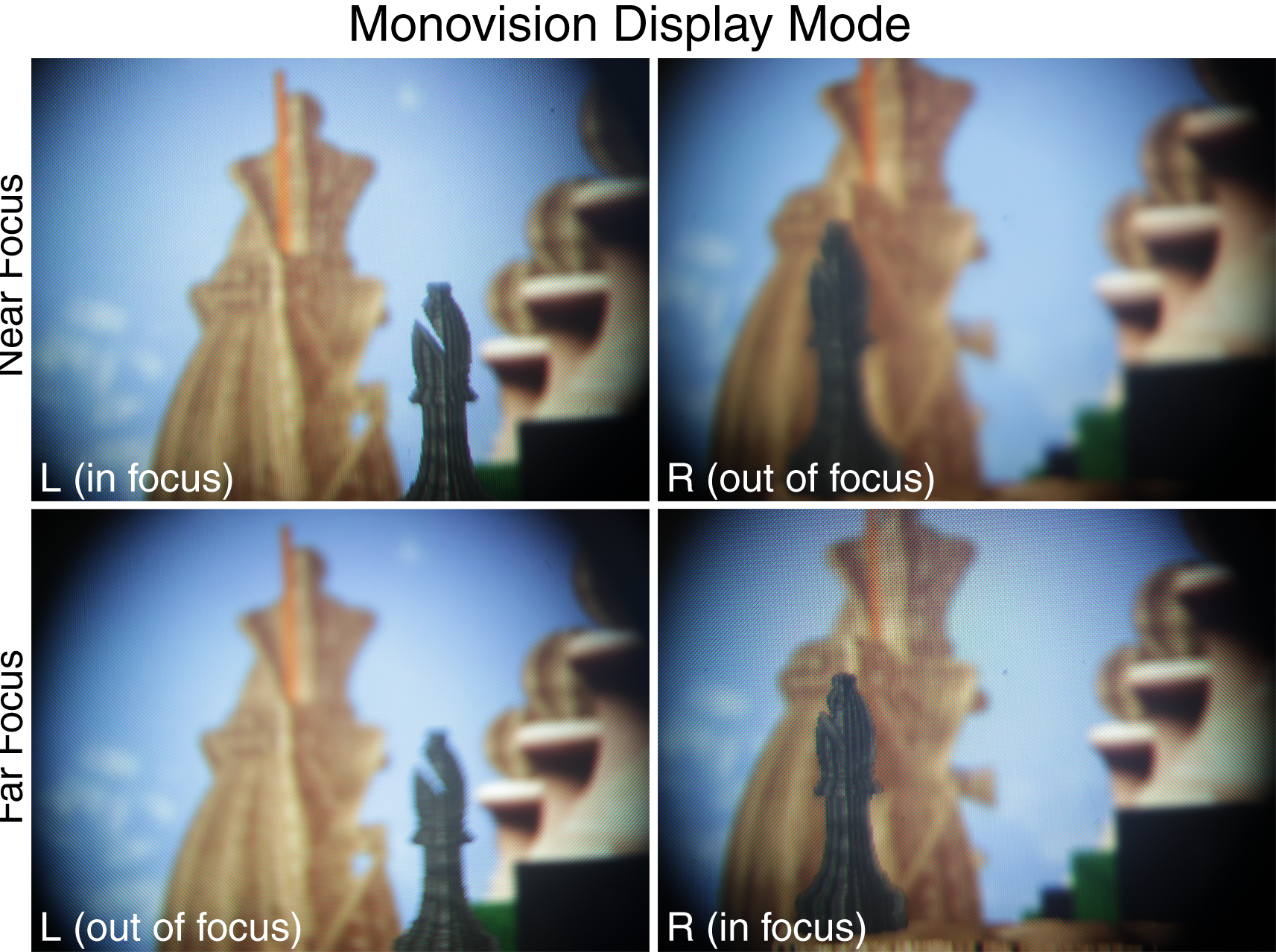 The Dartmouth and Stanford researchers applied this insight to an Oculus and Google Cardboard VR headset by adding a pair of focus tunable liquid lenses to the set up. The resulting contraption is elegant in its simplicity: it’s just a 3D-printed custom mount that houses the adjustable liquid lenses and can be attached directly to the viewing area of the headset. These lenses can then be set to two different fixed optical lengths (one far, one near) for the duration of a VR experience, or manually adjusted in real time by the user as needed.
The end result is the user is able to mitigate the vergence accommodation conflict by using the team’s lenses to manually accomplish the adjustments our eyes do naturally when they’re not a few inches away from a VR screen.
While the manually adjusted lenses are a start, this innovation could really blossom in conjunction with eye tracking software, which would allow the lenses to automatically adapt their focal lengths in real time without the user needing to manually adjust them. By tracking the user’s eye motions, the software would be able to tell which object the eye is trying to focus on and its distance from the eye as rendered in the virtual environment. The eye tracking software could then make adjustments to the focal length of each eye’s tunable lenses in real time as the user looks around the environment.
Based on the feedback the team received from users who tried their modified Oculus headsets, monovision corrected VR is a definite improvement.
See the full story here: http://motherboard.vice.com/read/how-victorian-era-tech-can-make-virtual-reality-clearer
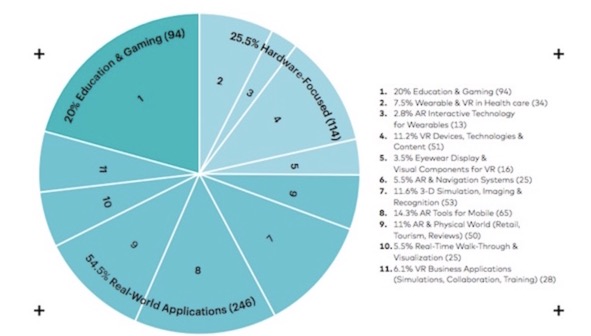
454 VR companies grouped by markets
 See the full post here: http://www.niemanlab.org/2016/03/report-2016-will-be-critical-for-growth-of-vr-in-journalism/
Can You Commit a Real Crime in Virtual Reality?
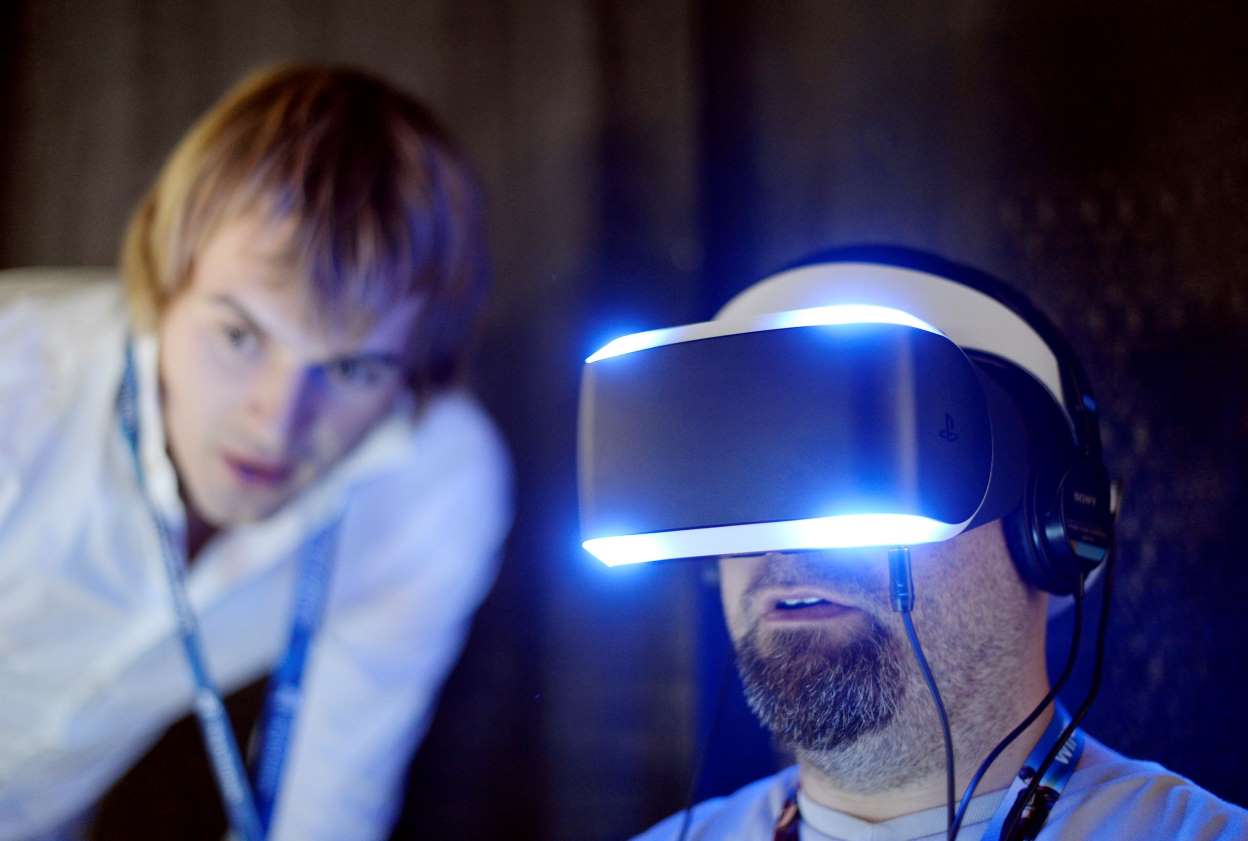 ...what happens when virtual reality crosses into unethical territory? In a new play, The Nether, that opened this month at the Woolly Mammoth Theater in Washington, D.C., playwright Jennifer Haley explores the troubling questions that arise when the main character known as Papa uses advanced software to create a fantasy environment where adult clients molest young children and then kill them.
For those concerned about a Frankenstein future of misguided technology, the production raises a number of thorny questions. Should there be limits on human fantasies involving heinous thoughts? Do fantasies that remain in the private realm of someones brain warrant any rules or regulations by society as a whole?
More complex is the relationship between fantasy and reality. Even if the bad behavior rests solely in one individuals private thoughts, does that thinking pose a danger to other people?
For example, there is some evidence that repeated exposure to pornography is associated with harmful conduct towardwomen and that it legitimizes violent attitudes and behaviors.
For privacy buffs, ...should those suspected of engaging in questionable activities be compelled to reveal the location and contents of their computer file servers?
Currently, there are limits on children purchasing violent games but not adults. For the latter, the societal norm remains libertarian in nature.
See the full story here: http://www.msn.com/en-nz/news/other/can-you-commit-a-real-crime-in-virtual-reality/ar-BBs9N1P?li=BBqdg4K
Finally, you can eat cereal in virtual reality with a dead Egyptian queen
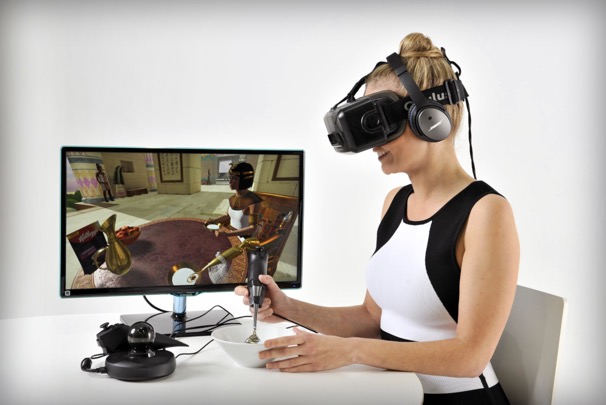 Users are taken back to via Oculus' Rift headset, showing Cleo's 3D breakfast chamber complete with table, bowl, milk jug, and semi-naked guard. It's not an entirely visual experience, though, as participants will have a real bowl of cereal in front of them, as well as a spoon strapped to one of Razer's Hydra controllers to translate real-world shoveling motions to virtual reality. It's a strange combination, but this isn't even the first time Kellogg's has cashed in on the virtual boom to sell cereal.
See the full post here: http://www.theverge.com/2016/4/20/11376224/vr-cereal-eating-cleopatra-finally
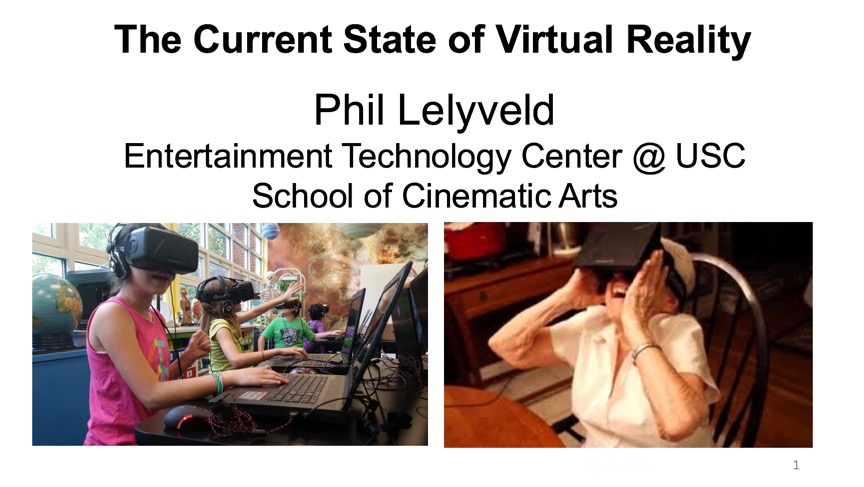
My NAB deck – The Current State of VR
The deck that I presented at NAB to kick off the VR Summit on April 20, 2016 can be found here: The Current State of VR Email me if your organization would like me to give a slower, more in-depth, and more comprehensive version of the presentation, and/or consult on strategic planning for the emerging business opportunities, art/language, and technology of VR and AR.
The Google I/O 2016 schedule is packed with virtual reality talks
 "VR" is an entire content track at Google I/O this year, with seven sessions dedicated to virtual or augmented reality. The most ominous session is titled "Google's Vision for VR." The session description is a single sentence, promising to cover "what we have built, what we have learned, and where we are headed." Google I/O session descriptions are usually a full paragraph, so the ones with really vague, short session descriptions suggest that Google is trying to avoid spoilers. Clay Bavor, the head of Google's new "Virtual Reality" division, will lead the talk.
Google is slowly building up a large presence in VR. The company already makes a VR painting app called "Tilt Brush," which our own Sam Machkovech called a "killer app" for the HTC Vive. It supports "VR Videos" on YouTube with 3D, 360-degree video formats. Google Cardboard is the company dipping its toes into the VR space with the cheapest possible platform—a smartphone in a cardboard box. It acquired Thrive Audio, a positional 3D audio company, and has integrated some VR features into the latest version of Android N. Inside the company, some of the most important employees have moved to the VR team, like the former lead designer of Google Search, Jon Wiley, and Alex Faaborg, the former lead designer for Firefox, Google Now, and Android Wear. And supposedly this is just the tip of the iceberg. Google is rumored to be building a VR interface for Android, a standalone VR headset, a Gear VR competitor, and custom SoCs aimed at VR and AR.
Besides the "Vision for VR" talk, there's also talks on "VR & Cinema" featuring "Google’s Principal Filmmaker for VR," Jessica Brillhart. Google already has a few 360-degree videos under its belt with Google Spotlight Stories. There's also a talk with a gaming-focus called "Live coding: Make a virtual reality game."
Several other sessions are dedicated to Project Tango, Google's 3D-sensing augmented-reality capable smartphone. The company already announced the Lenovo would be building the first consumer Project Tango device, with a release in "Summer 2016." Judging by the I/O schedule, we'll take a guess and say that Lenovo's Project Tango phone will be the I/O freebie device that all the developers get to take home.
See the full story here: http://arstechnica.com/gadgets/2016/04/the-google-io-2016-schedule-is-packed-with-virtual-reality-talks/
‘The Jungle Book’: Creating Virtual Reality Experiences with VFX Supervisor Keith Miller
In September, Disney invested over $60 million in the Virtual Reality start-up company Jaunt, another sign that the once-dormant format was back on the upswing. It wasn’t too long ago that VR was considered a joke, a relic from the 90s as kitschy and outdated as The Lawnmower Man. But the VR movement has now come back full circle into the limelight. Last year, ILM released the ‘Trials on Tatooine’, a short VR piece in conjunction with Star Wars: The Force Awakens and just this month, Disney released two short The Jungle Book VR experiences. In King Louie: Cold Lairs, you see through Mowgli’s eyes as he comes face to face with titular Great Ape.
See the lengthy interview here: http://collider.com/the-jungle-book-vfx-supervisor-keith-miller-interview/
IS VIRTUAL REALITY THE FUTURE OF MUSIC VIDEOS?
But one experience might spearhead an entirely new genre: the virtual reality music video. In “Old Friend,” creator Tyler Hurd, who cut his teeth as a video game animator, drops you into the center of a psychedelic dance circle set to Future Islands' song of the same name. As the tune’s high-pitched synth hook kicks in on your headphones, you’re confronted by an almost psychotically happy drum major who twirls his baton, lip syncs, dances like a madman, and makes it all but impossible for you not to do the same.
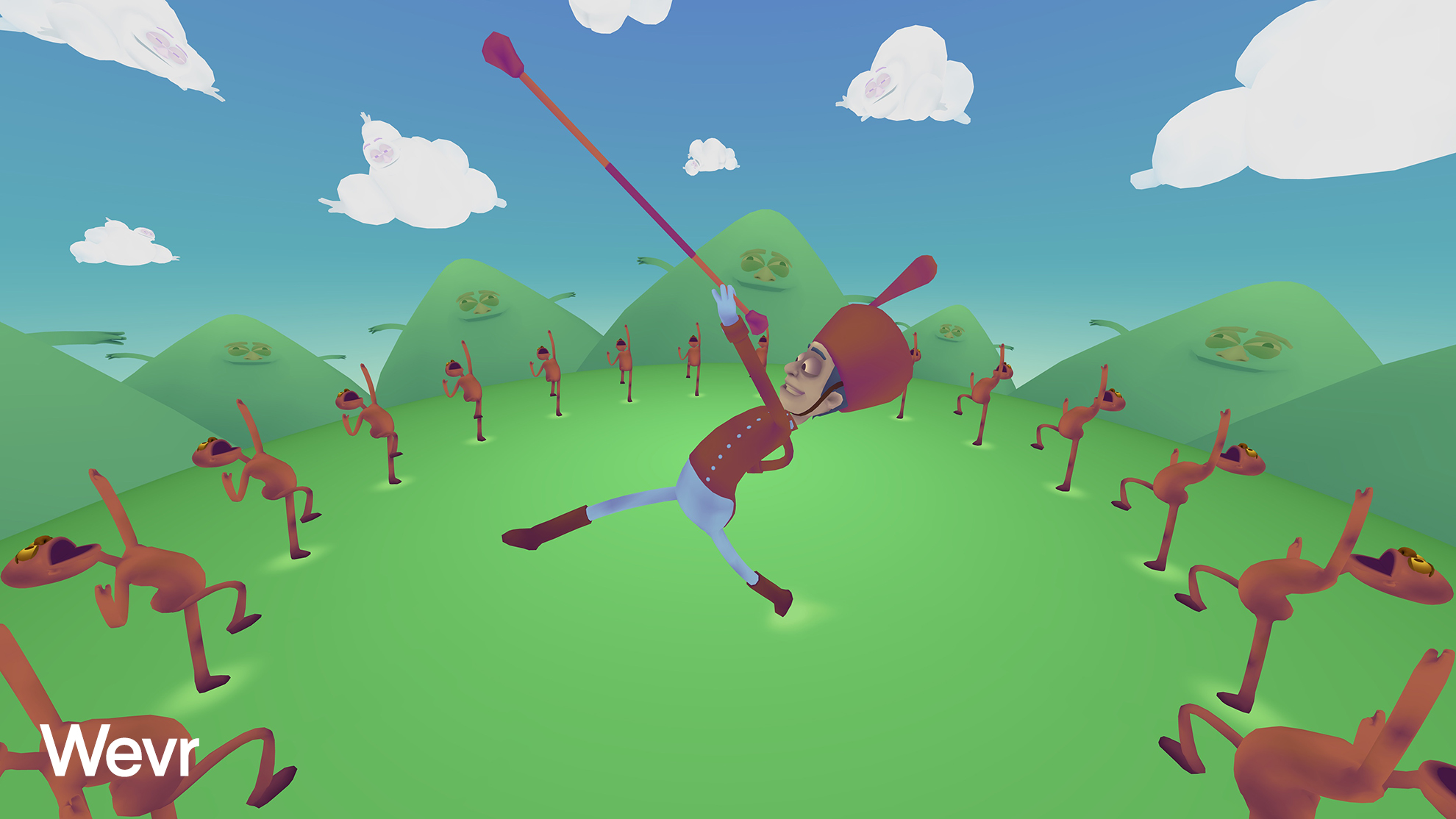
All around you are colorful elastic characters shaking their colorful elastic limbs with the kind of liberated abandon that’s only possible on a virtual dance floor in an imaginary universe hidden behind an actual, real-world curtain. Beyond your dance circle, big anthropomorphic mountains shake and shimmy, and every cloud smiles the instant you look at it. And, what’s this? Your own arms (which move via the HTC Vive’s controllers) are long and wavy and seem re-designed for the sole purpose of indiscriminate virtual dancing! Look down, and your feet are wiggling in uncontrollable joy. In other words, you’re not just listening to the music; you are the music.
By the time the video ends, just about everybody who exits those curtains looks like they just got a free trip to space—and when they got there it was just one giant rave, thrown in their honor.
“I modeled all the dance moves after my friends,” says Hurd. “I was like, ‘Just come over and we’ll all get wasted and make some videos!’” Once he had his material, Hurd played the videos back frame by frame and made his virtual dance troupe pull off the same moves. “Old Friend” took Hurd nine months to complete (he did all the animations and coding himself). But it was a labor of love, he says, because once he got a glimpse of what was possible with VR, the one-time 2D-only animator was hooked.
See the full story here: http://www.popsci.com/is-virtual-reality-future-music-videos
Verizon’s AOL Buys Virtual Reality Video Specialist RYOT

Verizon Communications Inc.’s AOL has agreed to acquire virtual reality and 360-degree video company RYOT Corp., the companies announced Wednesday. Financial terms of the deal were not disclosed.
The acquisition comes as marketers and digital media organizations are investing heavily in virtual reality and 360-degree video to publish to platforms such as Facebook, YouTube and Snapchat in addition to their owned-and-operated properties.
RYOT and its 25 staffers will form a new unit under AOL’s The Huffington Post, and will also work with other publications across AOL’s portfolio of properties including TechCrunch, Engadget and Autoblog. RYOT’s capabilities and services will also be offered to clients of AOL’s Partner Studio division, which creates branded content for marketers.
“RYOT will work on big editorial projects, but also with brands. It will work across everything we’re doing at The Huffington Post,” said Arianna Huffington, co-founder and editor-in-chief of The Huffington Post.
See the full story here: http://www.wsj.com/articles/verizons-aol-buys-virtual-reality-video-specialist-ryot-1461153651