Augmented reality baseball app shown off by Joe Girardi
 [Philip Lelyveld comment: with all the stories today about VR in Football, its nice to see one story about another sport.]
Joe Girardi, the New York Yankee’s manager, typically makes headlines for guiding his team to hold the first place, but recently he was in the spotlight as he showed off his new augmented reality science-fiction baseball game app, called Portalball.
The application was launched mobile app development company Appetizer Mobile. It provides the user with the ability to use the smartphone camera to allow them to take part in a virtual baseball game. Within it, they need to hit balls that have been pitched to them, throw the ball, or catch it. The balls come from and are sent into portals that appear in augmented reality over the 360 degree view of the real world, which is used as the game’s playing field. This game can be played wither in solo mode, or as a multiplayer experience.
See the full story here: http://www.qrcodepress.com/augmented-reality-baseball-app-shown-off-by-joe-girardi/8530774/
Vice Sports Uses YouTube’s 360-Degree Virtual Reality for New Series
 Vice Sports has teamed up with lead sponsor Reebok for The Moment, which will spotlight athletes and give viewers a first-hand experience of extreme sports. The Moment uses YouTube's 360-degree virtual reality functionality.
The series launched today with Parkour athlete and stuntman Ronnie Shalvis as he performs, jumps and flips through Goblin Valley State Park. The 360-degree virtual view kicks in around the four-minute mark of the six-minute video. Each episode can be watched either in standard definition or using a 360-degree view on the YouTube player.
"The Moment really captures the focus and preparation required of some of the best athletes in non-traditional sports," said Will Kiersky, Vice Sports publisher. "What's even better is that we can leverage the 360-degree view on YouTube to really provide our audience with a fully immersive and interactive experience from wherever they want to watch."
And this all comes as the editorial staff at Vice voted last week to unionize, joining the Writers Guild of America, East.
See the full story here: http://www.adweek.com/news/television/vice-uses-youtube-s-360-degree-vr-new-sports-series-166305
How VR Filmmakers Can Make Classics in Their All-New Medium
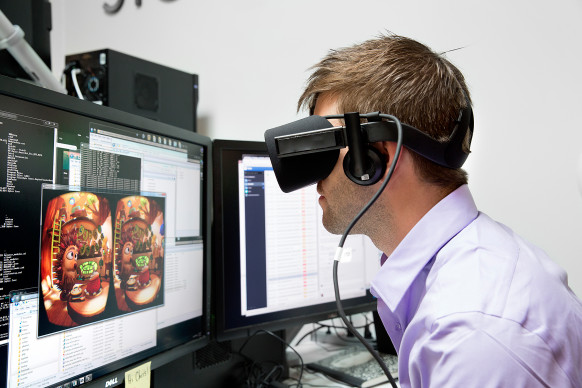 Virtual reality is clearly different than film, but it might need to emulate it for a while in order to catch on, Georgia Tech media scholar Jay Bolter says.
Currently VR is caught in a dance between genuflection to—and disruption of—cinematic storytelling. Chris Milk’s experimentation with documenting protests in the streets of New York and Syrian refugee camps via VR, for example, is both in dialogue with and in defiance of cinéma vérité.
The Naïve Spectator Phase
And not only should we expect VR to stand on the shoulders of storytelling giants as it strives to earn legitimacy, we should also expect the self-consciousness of VR to subside as audiences adapt to its conventions. Like the first forays into VR storytelling we’ve seen in recent months, early cinema was obsessed with its proximity to reality, and even carried this obsession over to its plot lines by placing a “naive spectator” in those preliminary films.
Milk even pays homage to this in his work. In his Evolution of Verse, a train is shown rushing towards your retinas, begging you to flinch the way theater audiences did during 1895’s L’arrivée d’un train en gare de La Ciotat.
As Denise Mann, a media professor at UCLA, points out, television really began to take off when it figured out how to create stories that fit into the daily lives—and physical spaces—audiences occupy.
...television actually adapted to the contemporary structure of the American home. Soap operas, for instance, featured predictable plot lines that allowed a housewife to ignore the show for a while and complete a domestic duty without losing the thread.
Where VR finds its viewing “space” will also influence how it develops story. ... Real success, though, may depend on creating stories that really fit the activities audiences tend to do in those spaces.
Dan Archer, a graphic novelist and fellow at the University of Missouri School of Journalism, meticulously recreated the suburban St. Louis scene and police evidence from the Michael Brown shooting to create the interactive and VR experience “Ferguson Firsthand.” But then he faced an even bigger issue: What role would the audience play?
Good animators are obsessed with this “in-betweening,” Saschk Unseld says, because “they understand the emotional impact of changing these.”
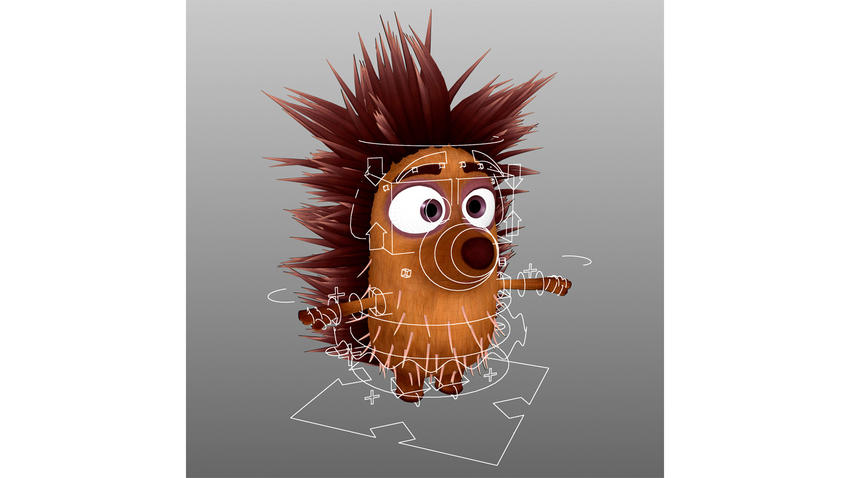
This simple understanding, which Unseld is using as a demonstration of how his team is trying to get the main character in their new film Henry to react to your (virtual) presence in his story, may be emblematic of a larger moment in VR storytelling history.
“We’re currently labeling it ‘audience-aware storytelling’ or ‘audience-aware acting,'” Unseld says. Every story requires that you relate to its hero (or antihero), but rarely—if ever—have they met your gaze while doing it. The effect is gripping. You’re still a naive spectator in Henry’s story, but the first time he looks you in the eyes (and he does), you’re also an empathetic one too.
If you believe that Roger Ebert was right when he said that films were “empathy machines” (he was), then immersing yourself in a world where a lonely hedgehog looks at you before popping his new balloon animal friend with a hug might be the starting point for some of the greatest movies we’ll ever see.
See the full story here: http://www.wired.com/2015/08/virtual-reality-storytelling-essay/?curator=MediaREDEF
Virtual Reality Isn’t Just About Games
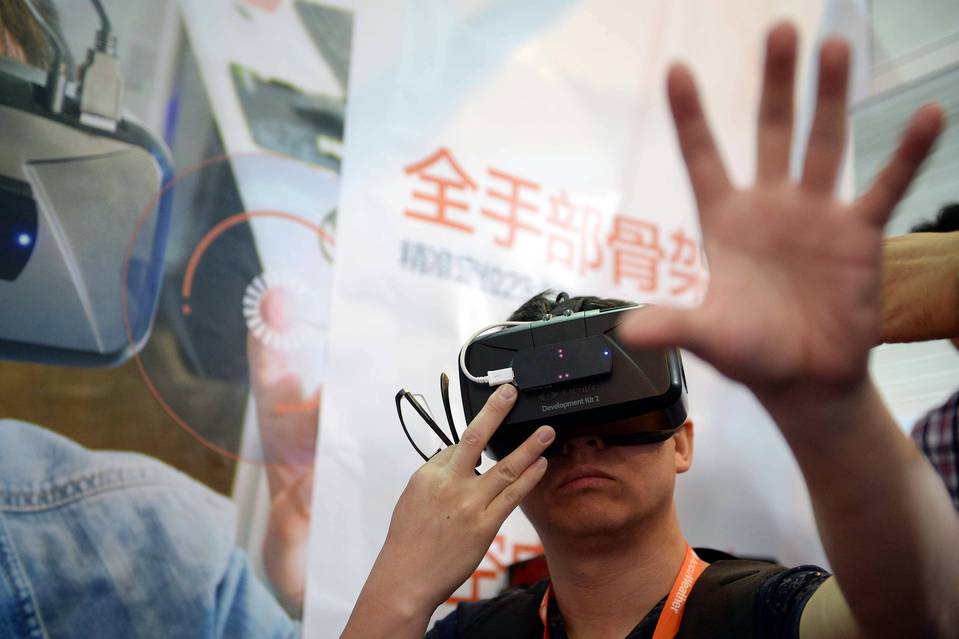 The thing that’s especially difficult to convey about “room-scale” VR—the kind enabled by the HTC Vive, where you can actually walk around with a headset on, exploring a virtual environment in exactly the same way you would experience a real one—is just how compelling it is. “Any VR experience is so much more engrossing than any you’d have on a flat screen,” says Patrick Hackett, senior user interface designer at Google for the Google Cardboard VR headset.
That has potentially huge implications for education.
“Any application that has high liability, where teaching students has a high cost of insurance, and is high risk, we’re seeing people ask for VR training,” says Mr. Rubin.
But the ultimate goal is much bigger than that, says CEO Bill Brown. “Two-dimensional photography and video is going to cease to exist,” says Mr. Brown, adding that they will be replaced by immersive captures of entire spaces and events, gathered by conventional and 3-D cameras.
See the full story here: http://www.wsj.com/articles/virtual-reality-isnt-just-about-games-1438558372
VFX Studio Hive Division Shows off Their Custom VR Camera Rig ‘Panoptikon’
 The Panoptikon rig not only creates quality stereoscopic videos, but does it in a unique way that lets them power the device and transfer video through two centrally located USB hubs—completely eliminating the time-consuming need to remove the cameras’ SD cards or charge them separately.
Although there are third-party stitching solutions available, VFX Supervisor Erik Caretta says that they “…prefer to go with a manual approach [because it] allows us to reach a far better quality.” CEO Giacomo Talamini told us that the processes of stitching the videos, which at times even involves rotoscoping elements as they cross the stitches, is a delicate and time-consuming process that must be handled on a case-by-case basis to get the best results.
Hive Division’s next step is to create a short sci-fi film with Panoptikon, an effort that will ultimately show what is possible when a small and flexible team come together to create film for VR. Talamini maintains that Panoptikon is an internal project only at this point, but support for it may persuade the team to potentially create a limited run for a hypothetical crowdfunding campaign.
See the full story here: http://www.roadtovr.com/vfx-studio-hive-division-shows-off-custom-vr-camera-rig-panoptikon/
Virtual reality, cryotherapy chamber highlights new tech Saints use during training camp
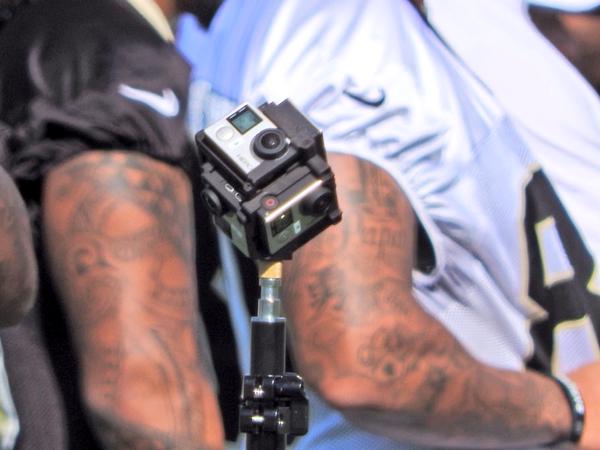 The cameras don’t interfere with the plays. The technology is small, lightweight and easy to take on and off the field.
“If you wanted to take any of the young Mike linebackers, you can put that headset on and they can see every one of those formations just like it was at their eye level,” he said. “They can turn to their right and actually see the outside linebacker. They could turn around and see the safeties.”
Payton said the team used it on the offense, too.
Players who have worn the gear, including Luke McCown, said the cameras and headset are unique tools that can help shape a player better than looking at traditional 2D film.
“The game is about visualization from a practice standpoint, especially for quarterbacks,” McCown said. “What virtual reality allows you to do is visualize in real time and how it feels in real space. …
See the full story here: http://www.wdsu.com/sports/saints/virtual-reality-cryotherapy-chamber-highlights-new-tech-saints-use-during-training-camp/34476498
With ‘Henry,’ a cinematic leap into world of virtual reality
 On a recent afternoon in sparsely chic offices here, the people making the virtual-reality animated short "Henry" convened to watch footage of their cutting-edge film.
The group of about a dozen — mostly young and many of them with Pixar backgrounds — gathered in a semicircle as the director, a gregarious filmmaker named Ramiro Lopez Dau, engaged in what appeared to be a tribal ritual. He dropped to the floor, strapped on a headset and began crawling around an area rug, extending his head this way and that in the manner of a disoriented cat.
A heartfelt piece of animation that would fit nicely on any Pixar slate, "Henry" is notable as much for what it isn't as what it is. VR content to date has mostly steered clear of traditional narrative — it's tended instead to be a marketing offshoot of a studio movie, a snippet of live-event footage or a branded "experience" mainly designed to produce a sensation in the viewer. Or it's been a video game.
"Henry," on the other hand, tells a clear story with a conventional beginning, middle and payoff-y end. The difference is that it does so in the new medium of virtual reality. Rather than see a traditional frame, the headset-clad viewer occupies the entire space, able to swivel his or her head all the way around and see every corner of the world, as in real life.
"A lot of comedy in animated movies, like slapstick, is actually based on sad things — you know, someone falls on their face or gets a bad break," said Story Studio Chief Saschka Unseld. "When that sad thing happens in a traditional film, it can be funny, because there's some distance. But when you have as much empathy as you do in a VR film, it can be super sad."
"The experience of going from Pixar to making this film is really similar to moving from Germany to the U.S.," he said. "In the beginning, you miss all the stuff you used to have — in the case of filmmaking, the camera editing and everything else. And then once you start living somewhere else, you find things you never had before and begin to embrace them."
"In VR, we're learning you don't need a character to do as much to be interesting."
The effect is paradoxical. Digital culture is making everything move faster as it begins to match the speed of real time. But this technology is becoming so lifelike that it now has to slow down again.
(A similar dynamic, incidentally, is at work with how a character moves in VR. The conventional wisdom has been that, without the edits of traditional filmmaking, you can't go from one place to another in the bat of an eye. The truth is, you can--technically. But when "Henry" filmmakers tried it, putting Henry in one part of the house and then quickly in another, they realized it looked like teleportation. They quickly scrapped it.)
Part of why virtual reality feels so different is because viewers themselves can move — certainly with their heads and, within limits, their bodies, walking or crawling toward various spots of an environment. That has a kind of democratizing effect, turning film from its long-held status as a director's medium, with well-curated shots, to something looser and more participatory.
short video here: https://vimeo.com/134754691?utm_source=VR+Digest&utm_campaign=75337a97f4-VR_Digest&utm_medium=email&utm_term=0_54068a0706-75337a97f4-74843441