8 Eye-Opening Things We Learned About Virtual Reality This Week
3) Samsung is getting better at selling VR.
4) VR’s killer app might not arrive immediately.
6) Yes, there will be ads … eventually.
8) Holy crap, eye tracking kind of works.
 See the full story here: http://recode.net/2015/05/20/8-eye-opening-things-we-learned-about-virtual-reality-this-week/
Tinkle turns the page
 The popular children’s comic, which debuted in 1980, is keeping up with the times 35 years later. Its latest issue embraces new technology that makes Tinkle the first augmented reality enhanced magazine for children.
From its May 2015 issue onwards, Tinkle will be India’s first augmented reality enhanced magazine for children. Its young subscribers will now be able to not only read the adventures of their favourite characters like Suppandi, but also “click selfies” with him, access games and bonus material and a whole lot more. The “new and improved” Tinkle is the result of a collaboration between publishers Amar Chitra Katha and Blippar India.
“On starting the app and pointing it at the page the extra content pops up on your phone (or tablet) screen, and you can interact with it in different ways. The content actually walks out of the page in a 3D avatar on your phone screen, maybe in the form of a jigsaw puzzle or a walk through the page or maybe a game; very much an extension of the story,” says Arnav Ghosh, regional director of Blippar India.
See the full story here: http://www.asianage.com/ideas/tinkle-turns-page-477
Virtual reality may rule video games. Here’s who will rule VR
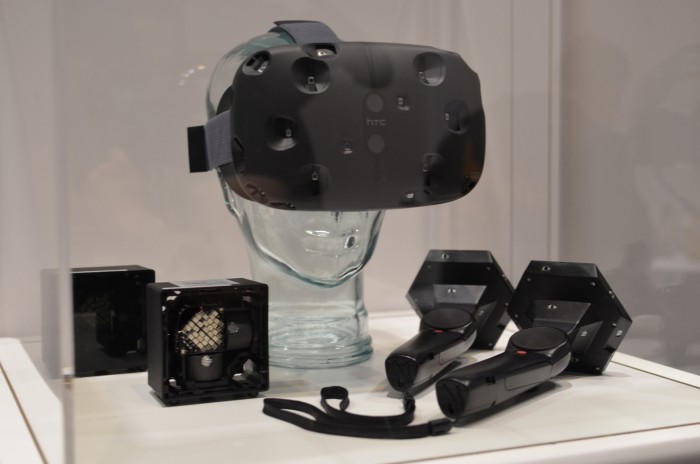 Developers, meanwhile, are struggling to decide whose device to build games for because Valve and Oculus use different technologies.
Valve has impressed developers with new wand-like controllers designed to be held in a player's hands to manipulate the game world. Reaching out with the controller and pressing a button in the real world may translate into picking up an object, such as a book, inside a game.
Oculus doesn't have any of that. It relies on a standard video game controller, with joysticks and buttons, designed by Microsoft for the Xbox video game console. The controller is held with two hands, not one like a typical motion controller, and is used more as a way to send commands to a game than to interact with it. While it hasn't publicly shown any motion controllers, it is developing them. A person familiar with Oculus' plans say they may be unveiled this summer.
In March, Valve also introduced a new technology some developers say could be, pun intended, game changing. It's codenamed Lighthouse and consists of twin lasers set on opposite sides of a room. Lighthouse lasers help HTC's headset sense an entire room, interpreting the light to pinpoint a player's location and movements. HTC and Valve are also hoping Lighthouse will be capable of tracking moving objects, such as another person or a pet. That could help signal to people wearing the goggles of an impending collision.
Some developers have opted to focus on creating programs for HTC's hardware because it's slated to launch this holiday season. Oculus, in contrast, won't release its flagship Rift headset for computers until next year. Oculus has told developers their programs should work with as many devices as possible, even if Oculus' headset won't be the first to arrive on store shelves.
See the full story here: http://www.cnet.com/news/virtual-reality-may-rule-video-games-heres-who-will-rule-vr/
Golden State Warriors experiment with VR
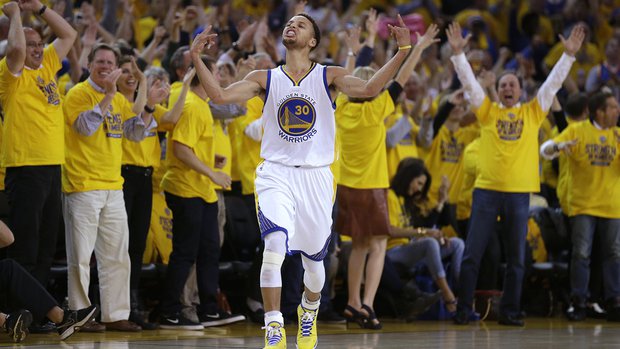 The NBA is exploring the idea of harnessing virtual reality technology to improve the game experience for their fans. Commissioner Adam Silver met with Stanford virtual reality expert Jeremy Bailenson this spring to exchange ideas. But the NBA has also experimented with virtual reality on its own.
In February, the league filmed the NBA All-Star Game in virtual reality and made the content available to fans through Samsung’s Milk VR application that allows anyone with a Samsung Gear VR headset and a Samsung Galaxy Note 4 smart phone to download and experience virtual reality content.
In March, the Warriors tried an experiment with Orange County-based Next VR to broadcast a game in virtual reality from cameras mounted on the scorer’s table.
The virtual reality live stream from the Warriors-Mavericks game was available only to a select number of Golden State executives involved in the test, but the experiment was successful enough that Lauer said they’re going to continue testing from a variety of camera angles and viewpoints.
...“One, we have to make sure the technology works, and two, there’s a lot of media rights issues. We’re not allowed to just stream a game,”...
See the full story here: http://www.utsandiego.com/news/2015/may/21/virtual-reality-golden-state-warriors-kenny-lauer/
RYOT to Premiere Nepal Virtual Reality Film This Weekend
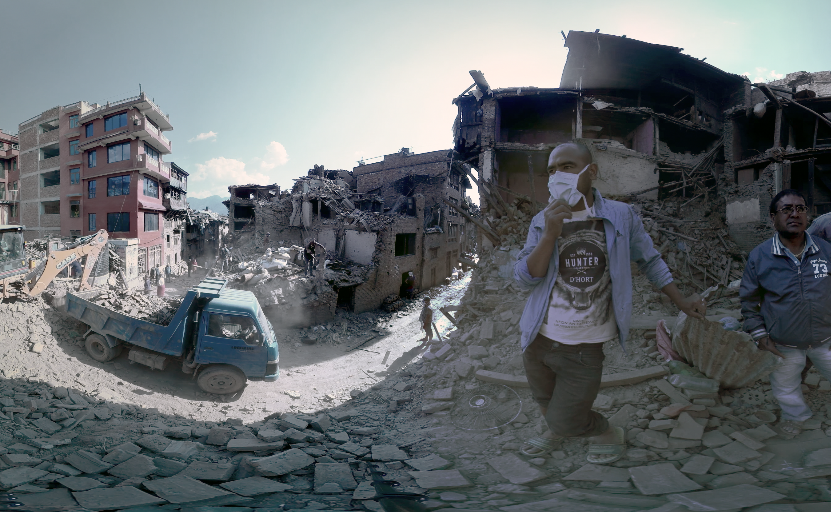 This weekend RYOT will unveil the latest development in the evolution of disaster reporting, bringing a mobile Nepal virtual reality video to global audiences for the very first time.
Narrated by Susan Sarandon, the film, titled “The Nepal Quake Project,” uses Virtual Reality technology to immerse users in the aftermath of the Nepal earthquake. The film not only marks the first in natural disaster VR, but it represents the future of news and action.
The Nepal Quake Project will premiere this weekend at Mountainfilm Festival in Telluride, Colorado, and thanks to a partnership with immersive video platform, Vrideo, the film will become available for the public online by the middle of next week.
See the full story here: http://www.ryot.org/nepal-earthquake-virtual-reality-video-film-susan-sarandon/932858
Virtual Reality Can Make You Feel. Can It Also Make You Think?
 “When I’m making these VR pieces, I’m trying to educate a population that may not read the newspaper, to [help them] be informed about their world,” said Emblematic Group CEO Nonny de la Peña.
See the full story here: http://recode.net/2015/05/21/virtual-reality-can-make-you-feel-can-it-also-make-you-think/
Facebook teams with researchers to transfer your smiles and frowns into virtual reality.
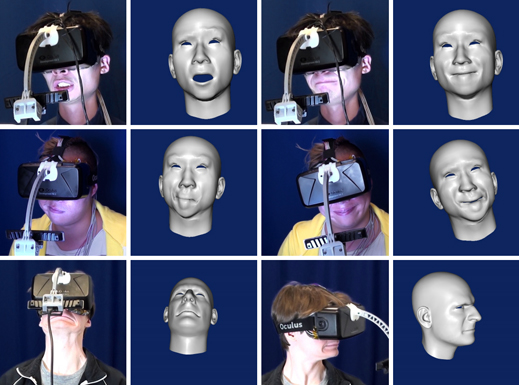 The system tracks the motion of a person’s mouth using a 3-D camera attached to the headset with a short boom. Movements of the upper part of the face are measured using strain gauges added to the foam padding that fits the headset to the face. After the two data sources are combined, an accurate 3-D representation of the user’s facial movements can be used to animate a virtual character, whether that’s an ersatz person or something other than human (see video).
That could make inhabiting and interacting in virtual worlds more compelling, says Hao Li, an assistant professor at the University of Southern California who led the project. “To get a virtual social environment, you want to convey this behavior to other people,” he says. “This is the first facial tracking that has been demonstrated through a head-mounted display.” Li was named one of MIT Technology Review’s Young Innovators in 2013.
Li recently made a system that tackles the more challenging task of making a realistic 3-D re-creation of a person’s hairstyle. His software can do it using only a single photo. That project and the face-tracking research will both be presented at the Siggraph computer graphics conferencein Los Angeles this August.