Is Virtual Reality the Next Big Form of In-Bar Entertainment?
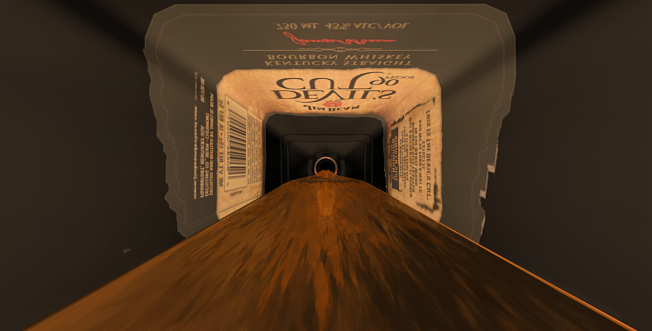 Jim Beam, Dos Equis and Fire Eater are all examples of brands that are using technology like Oculus Rift and Samsung Gear to win over consumers at the moment when they're most likely—and perhaps under the influence—to try out new liquors, particularly with of-age millennials.
To show that experience first hand, the brand is setting up Samsung Gear headsets at 250 bars in 16 U.S. markets like New York, Chicago, San Francisco and Orlando this year that will be used during 750 sampling events.
a minute-long video transports bar goers into a flowing river of bourbon inside of a barrel. The video then swirls folks around to replicate the aging process, ending in eventually being catapulted out of the barrel. Meanwhile, Jim Beam representatives waif a piece of paper soaked in bourbon under people's noses to further hammer home the product.
For Dos Equis, lead agency Havas Worldwide set up virtual reality activations in 21 bars in eight markets last year as part of a Halloween-themed masquerade campaign.
Sales of Dos Equis shot up 18 percent during the Masquerade campaign, and the live events and online video generated 27 million views.
… Brown-Forman's decision to set up virtual big top circuses in English bars last year. Working with Critical Mass, the company used Oculus Rift to launch a cinnamon-flavored liquor called Fire Eater.
See the full story here: http://www.adweek.com/news/technology/virtual-reality-next-big-form-bar-entertainment-163963
Adding Greater Realism to Virtual Worlds
A startup is borrowing techniques used in high-frequency trading to make virtual worlds more realistic.
 What new possibilities might open up in video game design—and beyond—when an unlimited number of people can inhabit a truly realistic virtual world simultaneously? Improbable has developed techniques that make it possible to share large amounts of information between multiple servers nearly instantaneously.
Virtual worlds will no longer feel as if they’re built of “cardboard,” says Improbable’s CEO and cofounder, Herman Narula. Moreover, using Improbable’s technology, objects and entities will be able to remain in the virtual world persistently, even when there are no human players around (currently, most virtual worlds essentially freeze when unoccupied). And actions taken in one corner of a game could have implications later or in another place.+
Large-scale online games are usually built using several “shards”—identical instances of the world that no more than about 10,000 people inhabit at any one time before the computational complexity becomes too great. Theoretically, with Improbable’s technology an unlimited number of players will be able to occupy the same world, and “everyone will see the same things happening on screen at the same precise moment,” he says.+
The technology could also be used to create real-world simulations that reveal, for instance, the effect that closing a major railway station would have during a disease epidemic, or how a radical change in a government’s housing policy might affect a country’s infrastructure.+
Virtual reality app store Wear VR secures $1.5M in funding
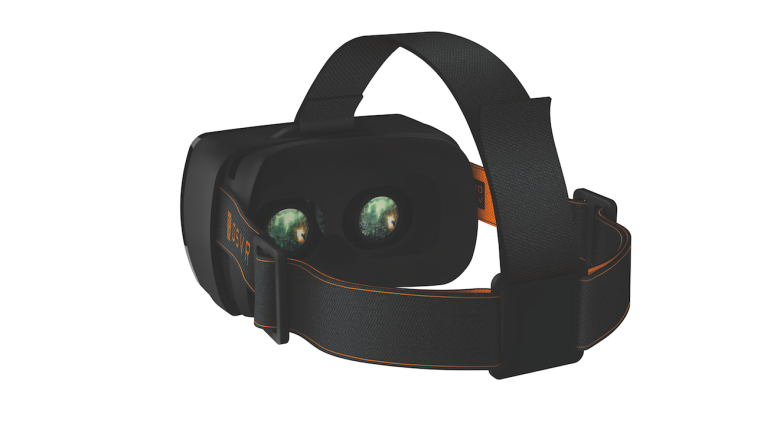 Coming up on a year on the market, Wear VR now has 900 unique virtual reality apps. Collectively, consumers have downloaded that software more than 200,000 times. And all of this comes even though no major VR company is selling their devices to consumers yet.
Wear VR is trying to establish itself now so that content-hungry early adopters have a place to go when they’re looking for something new. That might include 360-degree videos, which is something that Wear VR is investing in.
The company also says that it will continue to operate agnostic of the various VR platforms. Even as Oculus and the other companies release their consumer hardware and official stores, Wear VR will operate independently.
See the full story here: http://venturebeat.com/2015/04/07/virtual-reality-app-store-wear-vr-secures-1-5m-in-funding/
Wearality SKY: Limitless Virtual Reality (VR)
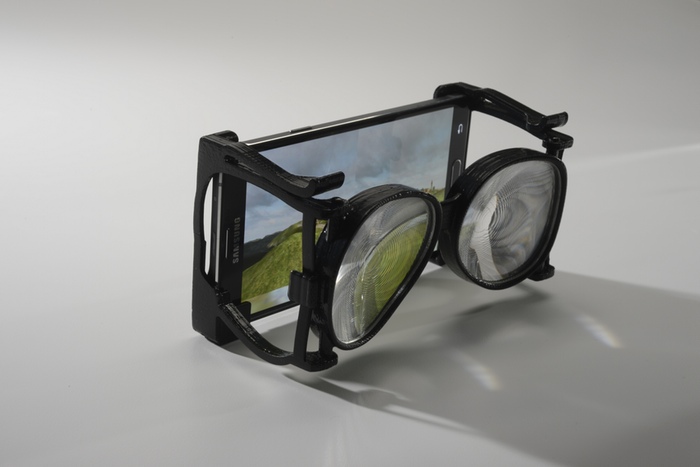 Wearality. demo'd at the ETC's first VR event. They offer 150 degree field of view, high quality lenses, and a simple foldable form factor that fits in your pocket.
See the video and kickstarter campaign here: https://www.kickstarter.com/projects/wearality/wearality-sky-limitless-vr
HDTVs Left Behind in Samsung’s 4K Push
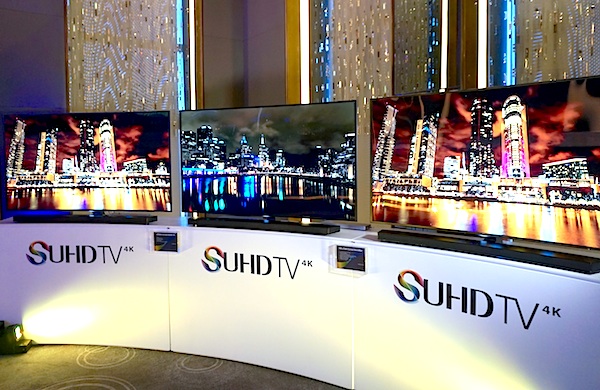
Samsung really wants you to buy a UHD TV — which has four times as many pixels as HD — because that's where the money is. UHD sets account for 60 percent of Samsung's TV revenue, Lee said, even though they are a small fraction of the total number of TVs sold.
Samsung is also happy to sell you an HDTV, though. "As long as there is a need for that technology …we're going to address that market demand," Lee said. Don't expect Samsung's HDTVs to be cutting edge, though. "Are we going to continue to pile resources and R&D [into HDTV]?" Lee asked. "It's going to go into this," he said, pointing to Samsung's flagship JS9500 curved Ultra HD TV, which starts at $6,499 for a 65-inch screen.
However, with just a trickle of 4K content available, TV makers need another enticement. New technologies also include a wider color palette using so-called nanocrystals, which produce more saturated primary colors for making up an image. (Hence Samsung introducing its new TVs at the Rainbow Room.) Samsung brands its UHD televisions with all the tech accouterments as SUHD.
An organization called the UHD Alliance -- which includes Samsung, most other major TV makers such as Sharp and Sony, and content providers such as Technicolor, Netflix and 20th Century Fox -- is developing new standards for video that uses the wider, more lifelike colors and higher contrast that new TVs from Samsung and others can produce.
Read the full story here: http://www.tomsguide.com/us/samsung-pushes-4k-uhd-tvs,news-20739.html
Carnegie Mellon and CalTech Researchers Develop New 3D Measurement Tool
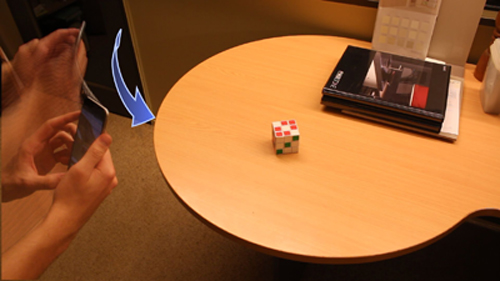 Simon Lucey, associate research professor at the Robotics Institute, tells Carnegie Mellon News, “these ‘noisy’ IMUs are good enough that, when the user waves the camera around a bit, they can calibrate 3D models as they are created and enable the phone to get accurate measurements from the models.”
With future improvements, the technology has the potential to be of common use for online shoppers buying products and goods that typically require measurements, such as furniture and eyewear.
“‘The amazing thing is that we can turn any smartphone into a ruler — no special hardware, no depth sensors, just your regular smart device,’” Lucey says of the new measurement technology.
In related research, a team at Caltech has developed a tiny high-resolution 3D imager that could potentially be used by smartphones to enable users to take a photograph, send it to a 3D printer, and quickly and easily create a replica that is accurate to within microns of the object.
“The new chip utilizes an established detection and ranging technology called LIDAR, in which a target object is illuminated with scanning laser beams,” reports Caltech. “The light that reflects off of the object is then analyzed based on the wavelength of the laser light used, and the LIDAR can gather information about the object’s size and its distance from the laser to create an image of its surroundings.”
See the full story here http://www.etcentric.org/carnegie-mellon-researchers-develop-new-3d-measurement-tool/
AUGMENTED REALITY GLASSES FROM SONY, SMARTEYEGLASS, HIT THE SHELVES
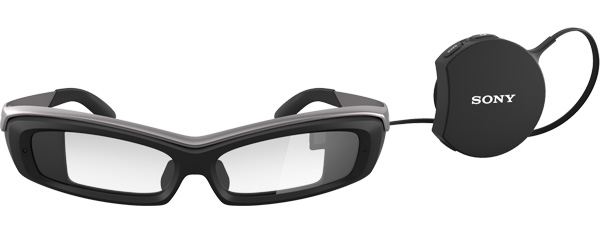 At the moment, what is available is the Sony SmartEyeglass Developer Edition (SED-E1). Those augmented reality glasses also include an additional controller and come with a price tag of $840.
They use hologram optics tech in order to be able to superimpose images, symbols, and text overtop of the natural field of view of the wearer.
At the moment, these AR glasses are available only in the United States, the United Kingdom, Japan, France, Spain, the Netherlands, Sweden, Italy, Germany, and Belgium. Consumers in the United States, the United Kingdom, Japan and Germany are able to buy these wearables, no matter who they are. However, in the other countries in which the devices are being sold, there are certain limitations, such as the fact that only business customers will be allowed to buy them, at least for the first wave of the rollout.
Kickstarter raises £16,500 for South Kilworth film-maker Dan Smith’s new VR project
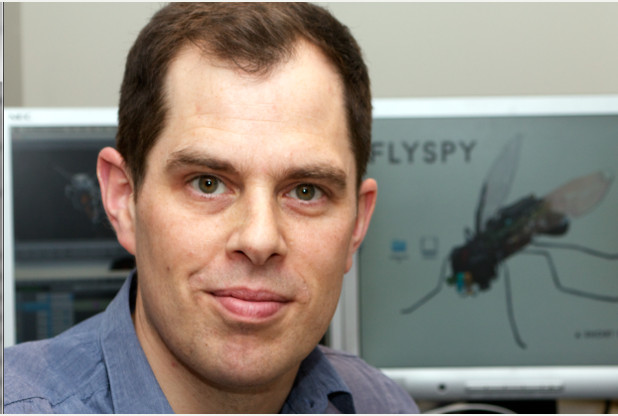 A film-maker has managed to raise more than £16,000 to make an ambitious virtual reality film.
Dan hopes that his story about technology, blackmail and revenge, will one day become a full-length feature film but the first step has been raising a minimum of £15,000 through Kickstarter to make the short.
Dan, who went to Lutterworth Grammar School, made his name in the world of documentary film-making, winning a Bafta for his work on Sir David Attenborough's Natural History Museum Alive.
Dan explained: "The idea is that you can watch the film on a headset and some of the time you'll see a square screen with the film on it.
"But when it goes to the fly's point of view you will be able to see everything in all directions - you'll be able to look around.
See the full story here: http://www.leicestermercury.co.uk/Kickstarter-raises-16-500-South-Kilworth-film/story-26277868-detail/story.html