Some companies see virtual and augmented reality as a way to make money from a new type of ads.
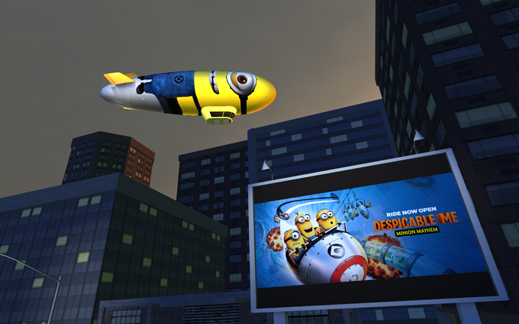 Founder and CEO Kevin Hart describes what the company has been showing off at the SXSW festival this week: a computer-generated drone seemingly hovering in the air about 20 feet away, with a banner flying below it, visible only when viewed through the camera lens of an iPad. As you move closer to the virtual drone, he says, it will get appropriately larger by taking into account motion sensors on the iPad to determine your location and position, allowing you to walk under and around it.+
A company that has already had some success merging virtual ads with the real world is Blippar. A smartphone app created by the company can be used to view sponsored augmented-reality content, such as virtual footballers on Pepsi cans, or virtual nail polish shades from Maybelline.
The director of Creative Control explains his augmented reality nightmare
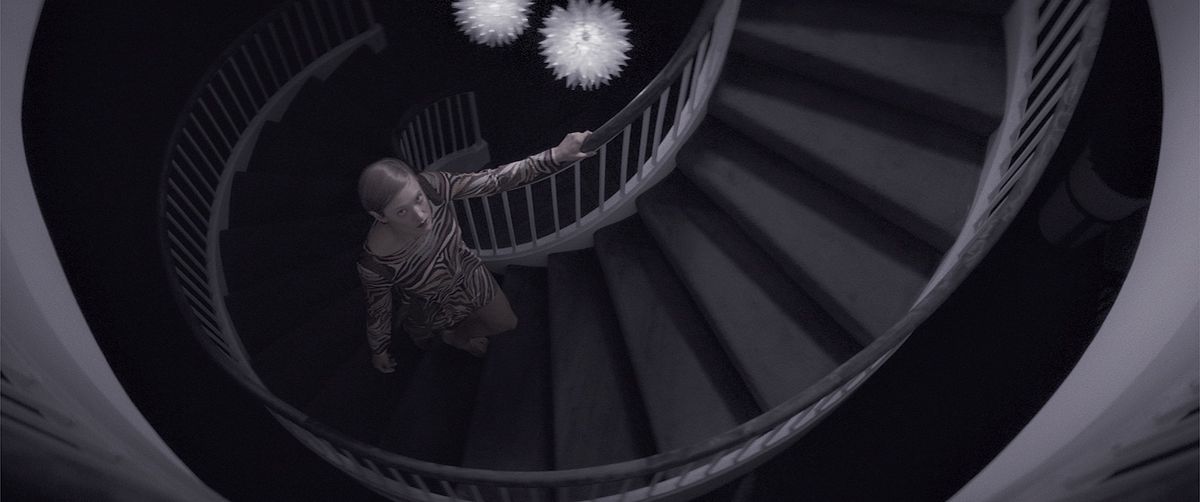 Emily Yoshida: There are so many tech-oriented films this year at SXSW, and a lot of tech-nightmare films. But then you walk outside after watching of one of these dark visions of technology, and the overall SXSW vibe is "Everything about the future is going to be amazing! Lets get even MORE internet!"
Benjamin Dickinson: "This is gonna change everything! After this, there will be no more human suffering, because we'll all be able to play video games on our glasses! We'll never have to deal with the confusing aspects of life, like death, or overly complicated emotions!" That narrative's ridiculous. Have you seen the ad that Microsoft did for the HoloLens?
But the idea of "hipsters" being a counter-culture, or somehow outside the mainstream seems silly to me. I feel like it all converged years ago.
It converged in 1971. That's what's so funny about it to me; this idea that hipsters are not authentic. Basically what people are saying is that they're counterculture consumers, which is an oxymoron. Again, the disinformationist Reggie Watts prefers to call hipsters "aesthetic bohemians." Which is a more accurate term.
See the full interview here: http://www.theverge.com/2015/3/17/8231381/sxsw-creative-control-benjamin-dickinson-interview-vr-movie
Usens Pi: Headset offers virtual reality you can control with your hands
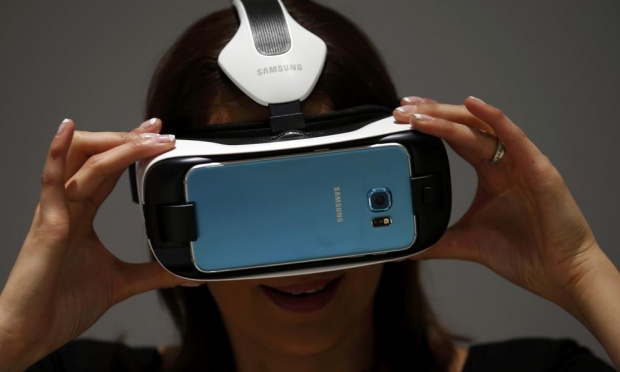
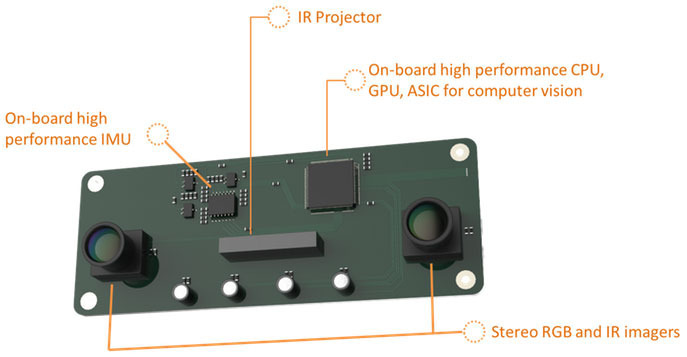 For $279 you can buy a version of the headset (which has about two hours of battery life) that allows you to place your iPhone 6 or Android phone into the headset for VR functionality (much like the Samsung Gear VR). And for $359 you get the all-in-one version of the device (with about one and a half hours of battery life), which has its own built-in display (no mobile phone necessary).
"AR is not the main focus with Oculus," says Fei. "Compared to the HoloLens, we are more similar, but we have a solution that is much cheaper and more realistic from a technology point of view. And we are more open to supporting Android and iOS."
Fei believes that delivering AR through the Impression Pi's video display is better than having someone place a lens over their eyes, as with the HoloLens or Google Glass.
"[AR lens overlays] always have a dark grey cover, making the real world harder to see," says Fei. "The other drawback is that the viewing angle is extremely small and needs to be adjusted to the viewer's eyes carefully." (Fei claims the viewing angle on the Impression Pi is 90 degrees.)
See the full story here: http://mashable.com/2015/03/16/impression-pi/
Vive by Value – The Best Virtual-Reality Experience So Far
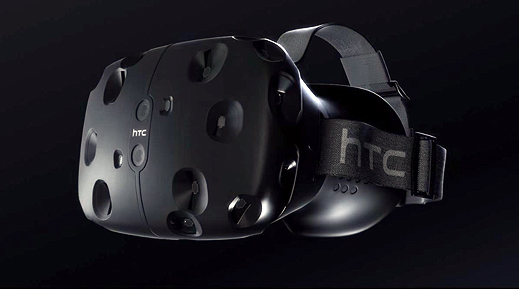 Vive is distinguished from its two major rivals in a key way: it comes with two 6-by-6-inch laser tracking boxes that track your body as you move around a room. In this way you’re able to physically wander the simulated scene. Draw near to a wall in your home and phantom barriers shimmer into view within the virtual world to warn you of impending collision.
...
You interact with the simulated worlds via two remote controls, which appear as virtual devices inside the game, mapping to your own gestures and movements. In an extraordinary art demo, a virtual palette of paints sticks to one of your hands, while the other holds a brush.
....
In another of the demos you must cook a meal as if you were a chef in a restaurant: walking between the fridge and the cooker, breaking eggs into a saucepan, chopping up tomatoes, and so on.
...
The freedom of movement Vive affords its user within the simulation separates it from Oculus Rift and Morpheus, in which you can, at most, lean for a better view of the virtual world. Of course, in a conference setting within a specially built room, free of clutter and furniture, the technology was shown in its best light. How well the design will translate to the untidiness of the home is unclear. Nevertheless, Vive is an astonishing development in the rapidly evolving virtual-reality landscape, one that lends early credence to Yoshida’s bold claim of an emerging medium.
Read the full story here: http://www.technologyreview.com/view/535941/the-best-virtual-reality-experience-so-far/
Archaeologists See and Smell the Past With Augmented Reality
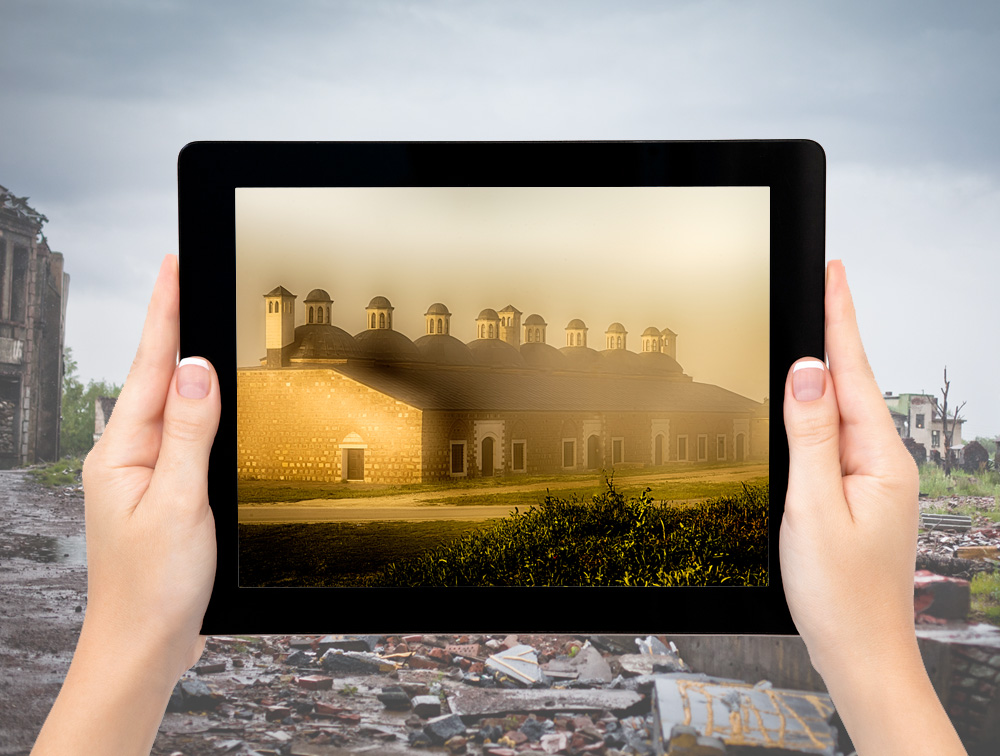 Eve built the augmented reality system with a smartphone, an open-source microcontroller, and a video game development software. He scouted historic sites, filming his path and recording all his observations. Then, he recreated the landscape in a coordinate-based mapping program. Finally, using video-game building software, he created the structures and placed them into their proper locations on the map.
He could not only see the huts from an ancient tin-mining village, he could actually walk inside and see what the view from their front door was.
Seeing is just a part of the experience Eve wants to create. He also developed Dead Man’s Nose, a prototype device that emits odors, like the smell of a campfire and roasting meat, as you pass by specific locations. When you pass a pinpointed smell location, it fires up a small fan that wafts the odors in your direction. The device is a little noisy and clunky (it accompanies you in a camera bag slung around your neck), but some 300 different scent formulas can be loaded into the device, from woodsmoke to farmyard.
Eve has also pinned sounds to specific GIS locations, which play more loudly the closer the user walks toward their source. So when you pass a virtually rendered hut, for example, you might hear the murmurs of its occupants, or the sounds of the sheep in the distance. When all these sensory elements work together, history takes an amazingly tangible form.
See the full story with video here: http://blogs.discovermagazine.com/crux/2015/03/13/archaeologists-augmented-reality/#.VQT-KUJiBrg
Step into the Cube: Virginia Tech’s giant virtual reality room
An interdisciplinary research project is keeping VR weird
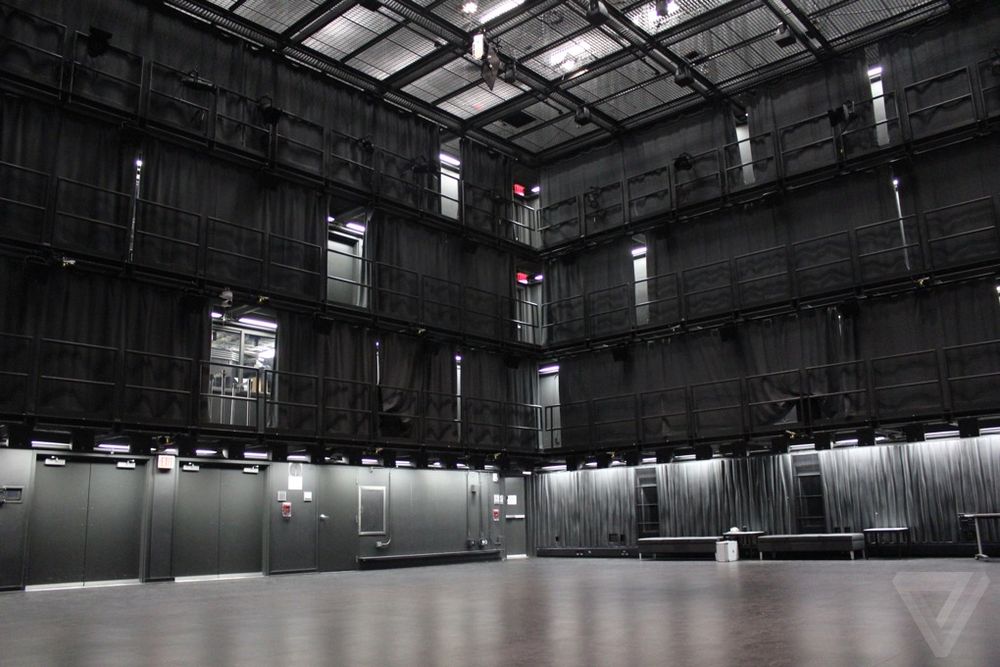 A 50 x 40-foot box isn’t even big enough to fit the scoreboard in Virginia Tech’s Lane Stadium. But for me, the room looks like the giant venue, full of 60,000 spectators in the midst of evacuating. The audience is represented by tiny boxes, torrents of them streaming through a simple replica of one wing, mixing and jostling each other as they pass. If I walk slowly, I can match their pace. A little faster, and my speed multiplies, until walking briskly in the Cube shoots me through the stadium and straight into empty blue space.
Originally built as a black-box theater, the Cube is shared between ICAT and Virginia Tech’s Center for the Arts, used for both art projects and scientific research. This doesn’t necessarily have to involve VR; in 2013, the Cube theater hosted a live performance called Operacraft, where K-12 students used Minecraftavatars — projected onto a wall — to perform an opera sung by Virginia Tech musicians.
One of the Cube’s biggest selling points is its sound system, which creates deafening 360-degree audio with 124 standard speakers, four subwoofers, and nine additional speakers that project hyper-targeted sound, like the aural equivalent of a spotlight. It’s possible to create things that could never be replicated with an ordinary sound system, like an experimental composition by ICAT media engineer Tanner Upthegrove that sends metal and chainsaws whirling around the room and wouldn’t feel out of place in Hellraiser. Close your eyes in another demo — a recording from inside a tornado — and you can almost feel the tremors as wind rips away nails and wood.
See the full story, and a 5 minute movie, here: http://www.theverge.com/2015/3/13/8204193/virginia-tech-icat-vr-research-oculus-rift
Crytek’s 50 Person VR Dev Team Can Only Mean One Thing
At GDC 2015, Crytek showed a new virtual reality experience built with CryEngine 3. Back to Dinosaur Island, as it’s called, took 20 members of Crytek’s VR team some 45 days to make, Esteves told me. What’s more, the company showed the experience using Oculus’ latest ‘Crescent Bay’ prototype—which is not released to the public—a clear indicator that the company is close with Oculus.
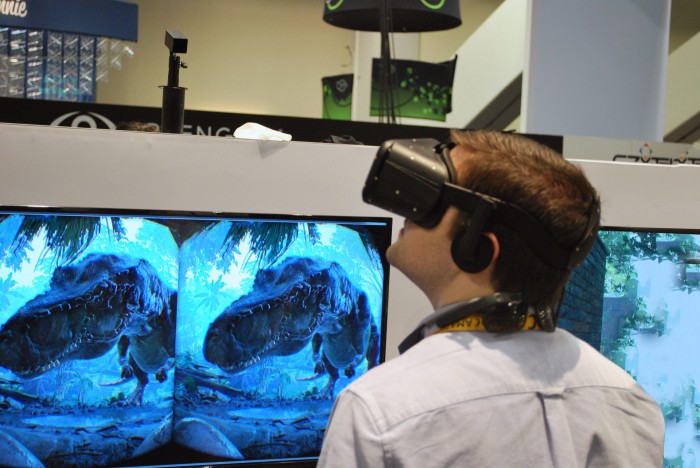 Rather than just a pretty experience, Crytek used the demo to explore means of interaction in VR.
First was the ability to dodge a giant insect who hovered around my head and would swoop in for a sting. It seems obvious when you can actually step around within a VR space, but the ability to dodge does require significant design considerations, like hitboxes, timing, and a proper signal from the enemy that an attack is coming.
The second method of interaction came when a T. rex appeared from the depths of the prehistoric forest and approached me after a cliche roar. With every stomp, the world around me shook and the foliage reacted convincingly. Initially it seemed like the beast was going in for the kill—after all, I was standing in its nest—but eventually it backed off a bit and just stared at me. As I moved my head, it mirrored my movements with its own head, as though it was watching and reacting. It was an interesting take on a similar but more subtle mechanic which we’ve seen before where virtual characters will track you with their gaze.
In the T. rex nest, I was surrounded by eggs. I could literally headbutt the eggs and see them react with proper physics. Esteves told me that people were enjoying this level of interaction, but to me it appeared as a hint of a desperate desire of some form of hand input.
See the full story here: http://www.roadtovr.com/crytek-virtual-reality-50-person-development-team-gdc-2015-back-to-dinosaur-island/
‘Godmother of VR’ sees journalism as the future of virtual reality
 “There’s huge investment going into merging 3D and CGI technology so I’m not worried about the technology aspect,” De la Peña says. Rather, she believes, it’s going to take new skills to master the form. Immersive journalism, like journalism in general, can be highly subjective and subject to manipulation.
See the full story here: http://www.theguardian.com/technology/2015/mar/11/godmother-vr-news-reporting-virtual-reality
Disney is considering re-creating its theme parks for virtual reality
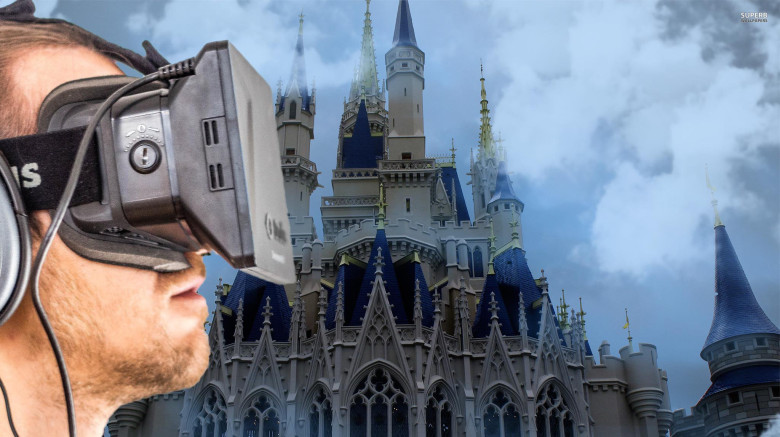 I love Space Mountain, but I’m a thousand miles from the nearest Disney theme park. Soon, that distance might not pose a problem.
Disney is considering showcasing its theme parks in head-mounted virtual reality displays like the Oculus Rift. That’s according to the company’s Imagineering creative technical design lead Bei Yang, who didn’t have any concrete examples of how this would work. He’s the guy in charge of figuring out how to get VR concepts working in the parks (which we talk about in-depth here), but we wanted to know if he was OK with things going the other way.
As for Yang’s primary job, he is hoping to bring more simulated experiences into Disney parks, but those are more likely to come in the form of projected video experiences rather than head-mounted displays. He thinks that people will always want to come and try these very unique attractions in person, so he’s not interested in preventing people from attending simulated Disneyland.
“So yes, we are thinking about bringing the parks into VR,” said Yang. “But in the end, we’re really just excited that there is another paint brush that we can use to tell our stories.”
See the full story here: http://venturebeat.com/2015/03/11/disney-is-considering-re-creating-its-theme-parks-for-virtual-reality/
NASA Will Be Taking The ODG Augmented Reality Glasses Into Space
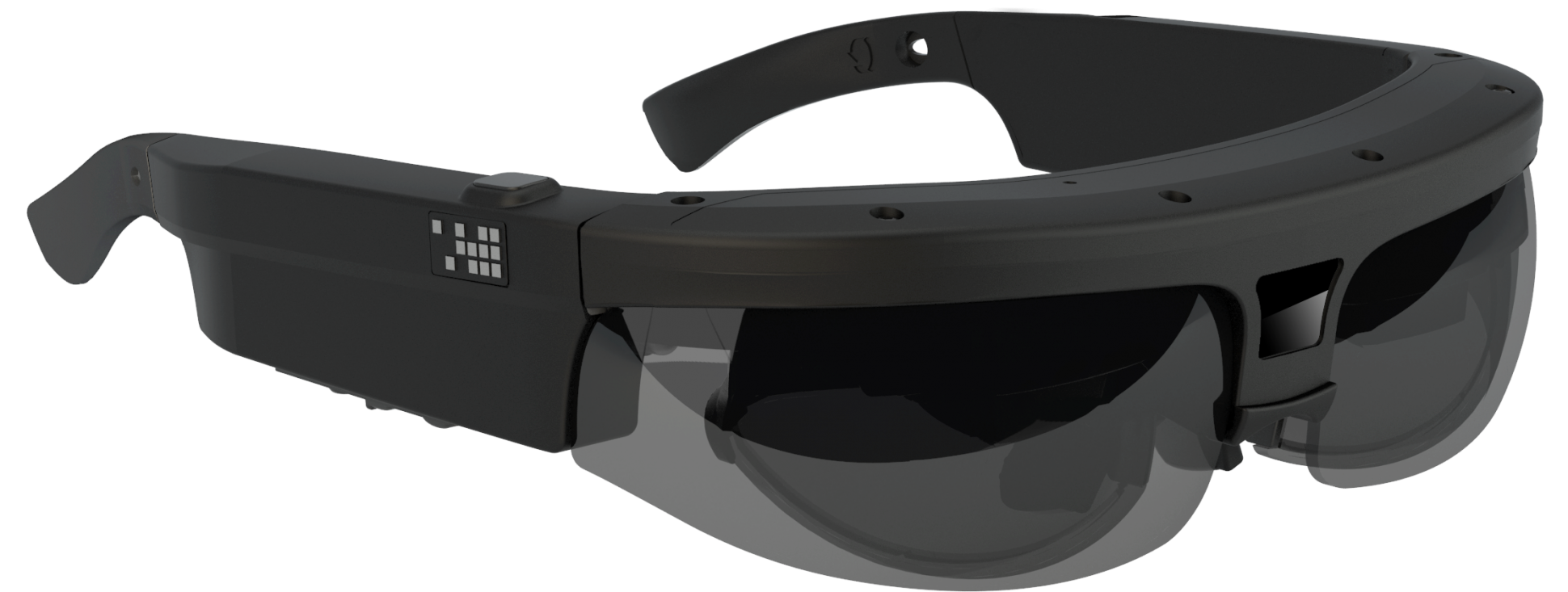 [Phil Lelyveld comment: ODG is visiting the ETC, and may loan us some of their AR glasses for demonstration and experimentation.]
NASA is teaming up with military tech company Osterhout Design Group (ODG) to bring augmented reality into space.
ODG’s glasses include a Qualcomm Snapdragon processor, Wi-Fi, Bluetooth and sensors for figuring out where the user is looking.
The main use would be sending instructions straight to the user’s eye for maintaining and repairing equipment on space shuttles instead of having to carry around stacks of index cards. That would free up the astronaut’s hands. The glasses could also send live video feed back to someone who is knowledgable about a piece of equipment and send audio or visual instructions to the wearer of the smart glasses. Doing this could potentially cut down on the enormous amount of time astronauts have to spend on the ground training for missions to space.
*** Several years ago, NASA even approached Google about using Glass for space exploration when the headworn device was first launched but was turned away by the project lead then, Babak Parviz, a former Google X director now at Amazon. Instead, Google told NASA it was focusing exclusively on the consumer market. ***
NASA also recently announced a partnership with Microsoft’s own augmented reality specs, HoloLens. But at this point, the partnership is more around remotely controlling the Mars Curiosity rover from Earth. It looks like ODG may beat Microsoft into space.
Read the full story here: http://www.forbes.com/sites/aarontilley/2015/03/11/nasa-odg-augmented-reality-in-space/