Crytek’s 50 Person VR Dev Team Can Only Mean One Thing
At GDC 2015, Crytek showed a new virtual reality experience built with CryEngine 3. Back to Dinosaur Island, as it’s called, took 20 members of Crytek’s VR team some 45 days to make, Esteves told me. What’s more, the company showed the experience using Oculus’ latest ‘Crescent Bay’ prototype—which is not released to the public—a clear indicator that the company is close with Oculus.
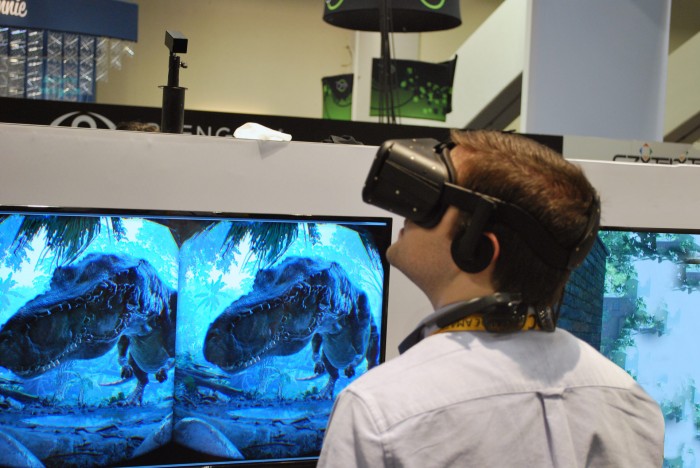 Rather than just a pretty experience, Crytek used the demo to explore means of interaction in VR.
First was the ability to dodge a giant insect who hovered around my head and would swoop in for a sting. It seems obvious when you can actually step around within a VR space, but the ability to dodge does require significant design considerations, like hitboxes, timing, and a proper signal from the enemy that an attack is coming.
The second method of interaction came when a T. rex appeared from the depths of the prehistoric forest and approached me after a cliche roar. With every stomp, the world around me shook and the foliage reacted convincingly. Initially it seemed like the beast was going in for the kill—after all, I was standing in its nest—but eventually it backed off a bit and just stared at me. As I moved my head, it mirrored my movements with its own head, as though it was watching and reacting. It was an interesting take on a similar but more subtle mechanic which we’ve seen before where virtual characters will track you with their gaze.
In the T. rex nest, I was surrounded by eggs. I could literally headbutt the eggs and see them react with proper physics. Esteves told me that people were enjoying this level of interaction, but to me it appeared as a hint of a desperate desire of some form of hand input.
See the full story here: http://www.roadtovr.com/crytek-virtual-reality-50-person-development-team-gdc-2015-back-to-dinosaur-island/
‘Godmother of VR’ sees journalism as the future of virtual reality
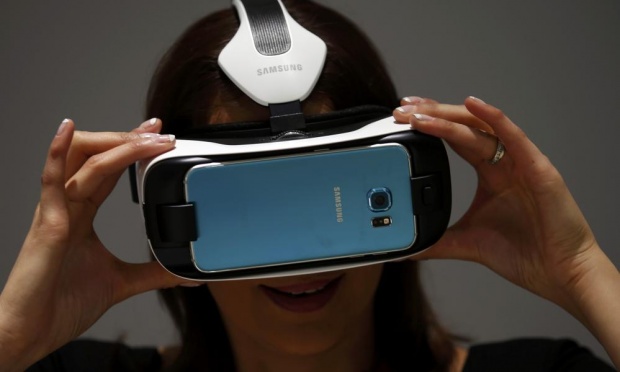 “There’s huge investment going into merging 3D and CGI technology so I’m not worried about the technology aspect,” De la Peña says. Rather, she believes, it’s going to take new skills to master the form. Immersive journalism, like journalism in general, can be highly subjective and subject to manipulation.
See the full story here: http://www.theguardian.com/technology/2015/mar/11/godmother-vr-news-reporting-virtual-reality
Disney is considering re-creating its theme parks for virtual reality
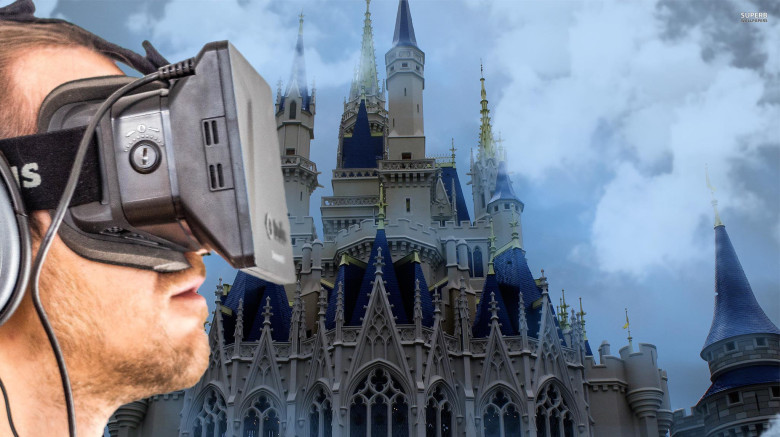 I love Space Mountain, but I’m a thousand miles from the nearest Disney theme park. Soon, that distance might not pose a problem.
Disney is considering showcasing its theme parks in head-mounted virtual reality displays like the Oculus Rift. That’s according to the company’s Imagineering creative technical design lead Bei Yang, who didn’t have any concrete examples of how this would work. He’s the guy in charge of figuring out how to get VR concepts working in the parks (which we talk about in-depth here), but we wanted to know if he was OK with things going the other way.
As for Yang’s primary job, he is hoping to bring more simulated experiences into Disney parks, but those are more likely to come in the form of projected video experiences rather than head-mounted displays. He thinks that people will always want to come and try these very unique attractions in person, so he’s not interested in preventing people from attending simulated Disneyland.
“So yes, we are thinking about bringing the parks into VR,” said Yang. “But in the end, we’re really just excited that there is another paint brush that we can use to tell our stories.”
See the full story here: http://venturebeat.com/2015/03/11/disney-is-considering-re-creating-its-theme-parks-for-virtual-reality/
NASA Will Be Taking The ODG Augmented Reality Glasses Into Space
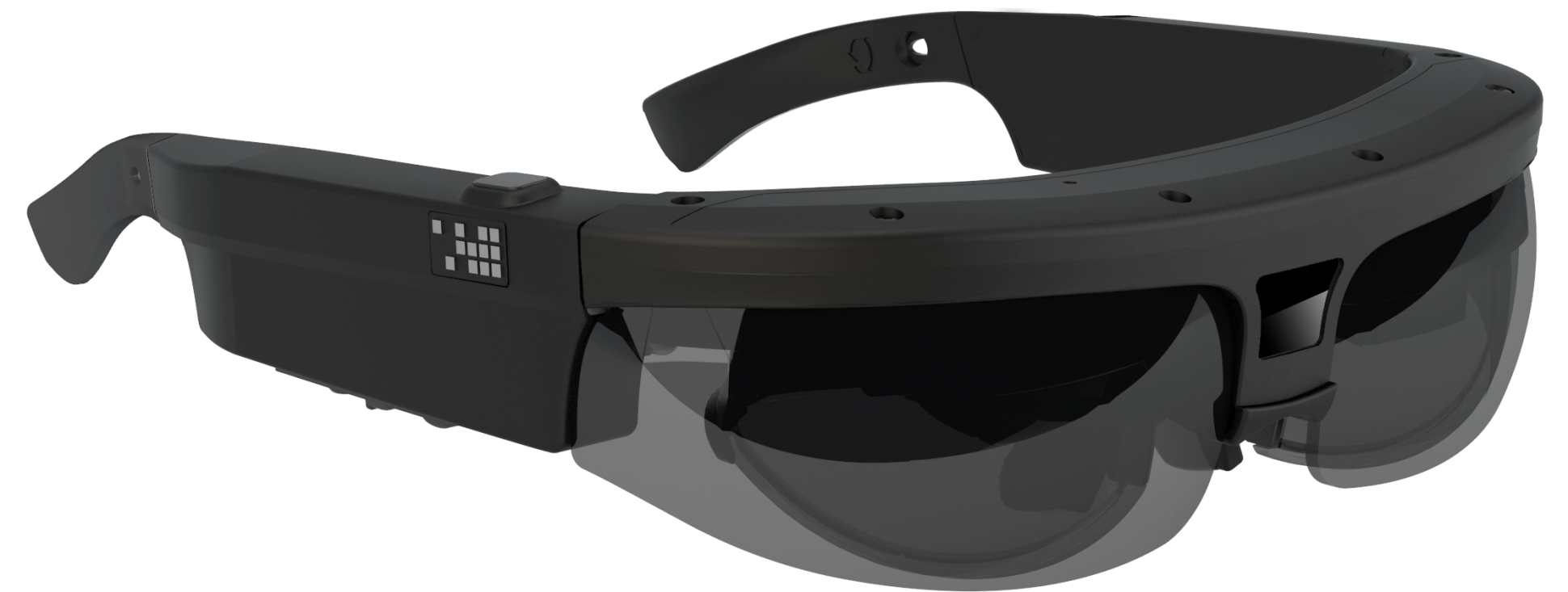 [Phil Lelyveld comment: ODG is visiting the ETC, and may loan us some of their AR glasses for demonstration and experimentation.]
NASA is teaming up with military tech company Osterhout Design Group (ODG) to bring augmented reality into space.
ODG’s glasses include a Qualcomm Snapdragon processor, Wi-Fi, Bluetooth and sensors for figuring out where the user is looking.
The main use would be sending instructions straight to the user’s eye for maintaining and repairing equipment on space shuttles instead of having to carry around stacks of index cards. That would free up the astronaut’s hands. The glasses could also send live video feed back to someone who is knowledgable about a piece of equipment and send audio or visual instructions to the wearer of the smart glasses. Doing this could potentially cut down on the enormous amount of time astronauts have to spend on the ground training for missions to space.
*** Several years ago, NASA even approached Google about using Glass for space exploration when the headworn device was first launched but was turned away by the project lead then, Babak Parviz, a former Google X director now at Amazon. Instead, Google told NASA it was focusing exclusively on the consumer market. ***
NASA also recently announced a partnership with Microsoft’s own augmented reality specs, HoloLens. But at this point, the partnership is more around remotely controlling the Mars Curiosity rover from Earth. It looks like ODG may beat Microsoft into space.
Read the full story here: http://www.forbes.com/sites/aarontilley/2015/03/11/nasa-odg-augmented-reality-in-space/
Welcome to the new VR
Philip Lelyveld summary:
 The author of this article, Beau Cronin, recognizes that VR is in the process of transforming from a specialty technology where innovation is driven by small groups of experts, to a general-purpose technology that will tap into a huge, broader market of users and hackers. He postulates that VR today is where the internet was in 1993; just before Netscape. At that time there was a re-evaluation of all the rules; often done by outsiders. Some elements were set aside as better solutions emerged (table-based page layouts gave way to CSS), while others were left intact for good reasons but later suffer from unintended consequences (easily spooked “From: addresses” in email). Simple numbers dictate that most of the innovations will come from newcomers, and not the VR “lifers” who currently dominate the field. He sees the Oculus Rift as the transformative platform; the “Crossing the Chasm” device. He wonders how standards will evolve; will they be extensions of existing standards, will new standards efforts be initiated, or will major players open up their platforms enough so formal standards will not be necessary. Finally, he notes that Oculus recently pivoted from supporting VR game app development to funding narrative VR entertainment. What the killer app for VR will be is anyone’s guess. “VR is at that thrilling fleeting moment when its imminent arrival seems assured, and yet every important question about the shape and nature of its adoption and socioeconomic impact remains unanswered.”
Read the full article here: http://radar.oreilly.com/2015/03/welcome-to-the-new-vr.html#
Breakthrough for Augmented Reality? – Route-n-Fuel app
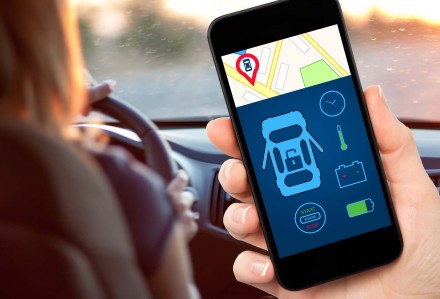 This all sounds highly practical – except for the fact that German law forbids people from operating their cellphones while driving a car. Legally speaking, apps like Route-n-Fuel cannot be used by the driver. And stopping often to check the display is of course out of the question. Inventive minds from across the globe however have come up with a solution – augmented reality (AR), i.e. the use of digital technology to widen our perception of reality. In the automotive scenario this means using a "head-up display", one which projects the relevant information onto the windshield. Among other carmakers, BMW is offering this feature in its latest 3 series and Mercedes in its C series cars.
See the full story here; http://www.cebit.de/en/news-trends/trends/internet-of-things/article/breakthrough-for-augmented-reality.xhtml
Hollywood looks to bring virtual-reality cinema to life
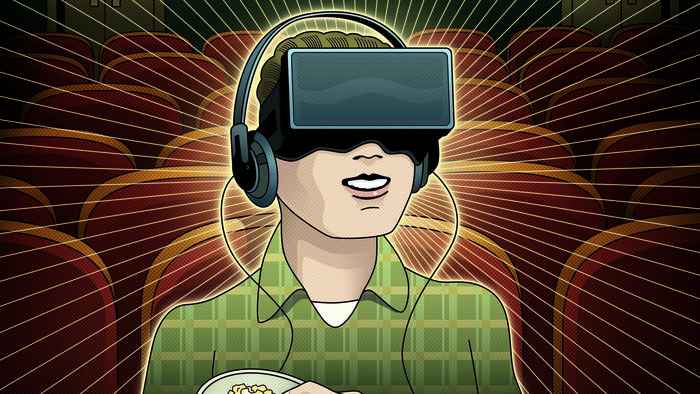 Buried deep inside the postproduction facilities on the 20th Century Fox lot, beyond where executives decide how best to sharpen Wolverine's claw and make Alvin sound like a chipmunk, sits a space with a more mysterious purpose.
Filled with multiple screens and piles of headsets, it is here that a select few executives, including the official Fox "futurist" Ted Schilowitz, are investigating all manner of digital possibilities. The area is called the Fox Innovation Lab, though it's informally known simply as "The Bunker."
Read the full story here: http://www.latimes.com/entertainment/la-et-mn-ca-vr-future-virtual-reality-cinema-20150308-story.html#page=2