... Today, Singapore-based Brilliant Labs announced its new product, Frame, a pair of lightweight AR glasses powered by a multimodal AI assistant called Noa. The glasses have captured the attention and investment of John Hanke, CEO of Niantic, theaugmented reality platform behind games like Pokemon Go. ...
In a video demo seen by TechCrunch, one of Brilliant Labs’ founders asked Noa through voice for a self-introduction. After about three seconds, the agent generated and projected an answer in text onto the lenses.
In addition to voice commands, Noa is capable of visual processing, image generation and translation, thanks to the handful of AI models it has integrated: conversational search engine Perplexity AI; Stability AI’s text-to-image model Stable Diffusion; OpenAI’s latest text generation model GPT4; and the speech recognition system Whisper. Frame’s lenses have a resolution of 640 x 400 for displaying videos and photos. ...
Brilliant Labs’ Bluetooth-enabled devices rely on a smartphone to access the various AI models today. Eventually, though, the founders want to do away with the phone host and embed lightweight machine-learning models directly into the glasses. ...
Frame will be available for pre-order starting today and will retail at $349, the same as Monocle’s price tag. The devices will begin shipping in April. ...
See the full story here: https://techcrunch.com/2024/02/08/ar-glasses-with-multimodal-ai-attracts-funding-from-pokemon-go-founder
The National Film and Television School (NFTS) is launching the inaugural Sean Connery Talent Lab as part of the expansion of NFTS Scotland.
The 12-month programme is aimed at developing emerging filmmakers across Scotland and the UK and is open to writers/directors, producers, cinematographers, editors and production designers. ...
See the full story here: https://www.tvbeurope.com/production-post/nfts-launches-sean-connery-talent-lab-for-cinematographers-editors?utm_source=MESA+Newsletters&utm_campaign=cf6e7159ae-EMAIL_CAMPAIGN_2024_02_02_11_39&utm_medium=email&utm_term=0_5534b41342-cf6e7159ae-%5BLIST_EMAIL_ID%5D
Eggscape Entertainment is a new venture founded by the creative minds behind 3DAR, an animation powerhouse out of Buenos Aires, Argentina. They are best known for Little Dicky's viral music video EARTH with over a decade of creating immersive VR experiences like Gloomy Eyes featuring Colin Farrell, and Paper Birds featuring Edward Norton. ...
"Eggscape isn't just a single game; we believe that the Eggscape team is helping define the future of social gameplay for mixed reality," said Andrew Sheppard, a partner at Transcend Fund. "The fusion of mixed reality, Pixar quality animation, and social interactions that Eggscape brings to the table create a new gaming experience we have not seen before. We are beyond excited to support Eggscape Entertainment in this venture." ...
"Entertainment in mixed reality requires a fresh and novel approach to combine spatial awareness with fun and engaging gameplay. The Eggscape team has already demonstrated a compelling vision to build such a platform" said Tipatat Chennavasin, co-founder and General Partner at The Venture Reality Fund. ...
See the full story here: https://www.gamespress.com/en-US/Eggscape-Entertainment-Secures-425M-Investment-to-Build-the-Future-of-
“If you’re a private company building nuclear weapons or bioweapons, it’s definitely more dangerous if you’re making them available to everyone — but a lot of the danger is building them in the first place,” Cotra said. “Most systems that are too dangerous to open source are probably too dangerous to be trained at all given the kind of practices that are common in labs today, where it’s very plausible they’ll leak, or very plausible they’ll be stolen, or very plausible if they’re [available] over an API they could cause harm.”
But there’s one thing everyone agreed on: As we address today’s challenges in the form of Taylor Swift deepfakes and bot spam, we should expect much larger challenges to come. ...
See the full story here: https://www.vox.com/future-perfect/2024/2/2/24058484/open-source-artificial-intelligence-ai-risk-meta-llama-2-chatgpt-openai-deepfake
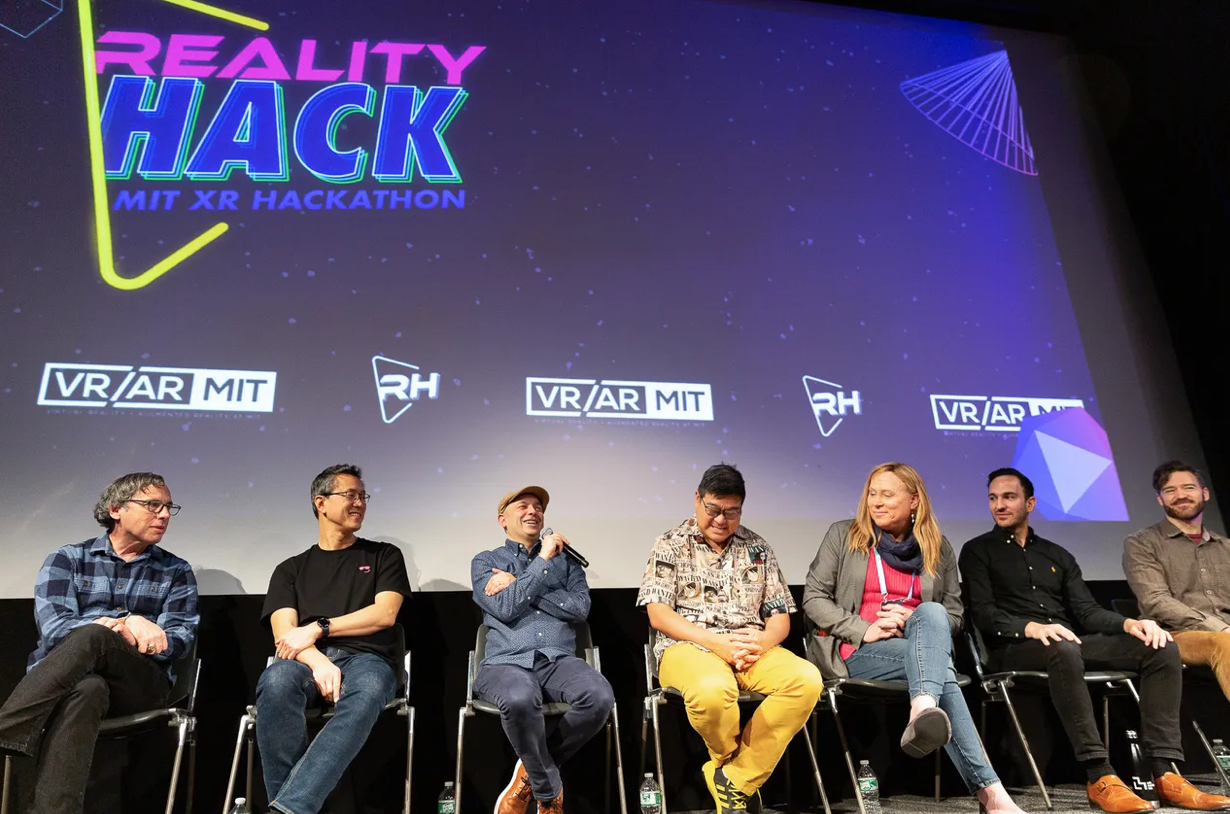
About 50% of participants were students from a wide range of universities and the other 50% were professors, entrepreneurs, and working professionals (many of them recent graduates). About half were women and the group represented a broad range of nationalities and perspectives.
The organizers of the event, Reality Hack, Inc., which is a non-profit run by volunteers, told me that around 2,000 people applied to participate and around 600 were chosen to come to MIT to take part in the 7th annual version of the event. Much of the event took place at the MIT Media Lab, itself a nexus of innovation and experimentation in AI, robotics, VR, and so many other cutting-edge technologies. ...
See the full story here: https://www.zdnet.com/article/mit-reality-hack-revealed-the-momentum-building-in-vr-ar-and-xr/
A start-up called Perplexity shows what’s possible for a search engine built from scratch with artificial intelligence. ...
Hundreds of searches later, I can report that even though Perplexity isn’t perfect, it’s very good. And while I’m not ready to break up with Google entirely, I’m now more convinced that A.I.-powered search engines like Perplexity could loosen Google’s grip on the search market, or at least force it to play catch-up.
I’m also scared that A.I. search engines could destroy my job, and that the entire digital media industry could collapse as a result of products like them. But I’m getting ahead of myself. ...
See the full story here: https://www.nytimes.com/2024/02/01/technology/perplexity-search-ai-google.html?fbclid=IwAR2XhNh7JLmorX1KleLqcNe6pr8NvS8-BNsrqeqqKQ0cKnyocBI4AGQe7K0
PONY Ma, chief executive and co-founder of Tencent Holdings, has said that the company’s video games business faces great challenges from competitors but is catching up in artificial intelligence (AI) development.
Ma, speaking at Tencent’s annual meeting in a stadium in Shenzhen on Monday (Jan 29), said that the company has been resting on its laurels in gaming while competitors have delivered new hits. Video games account for more than 30 per cent of Tencent’s revenue.
Chinese media outlet Jiemian published parts of Ma’s speech online. A source with direct knowledge of the matter, who declined to be named because they are not permitted to speak to the media, confirmed the contents. ...
“WeChat is our most robust platform regarding daily user amount and its ecosystem. But it is 12 years of age… Now how we can find new sprouts from the old tree that is WeChat is the big question for us,” Ma said.
See the full story here; https://www.businesstimes.com.sg/companies-markets/telcos-media-tech/tencent-chief-says-gaming-business-under-threat-catching-ai?utm_medium=social-organic&utm_source=facebook&fbclid=IwAR2OcujlkviP-Hr3r4XDZuVAmt7lPE7qkkty7tdAG7SufBi5jU4P_K8oqPM
Autonomous artificial intelligence (AI) is a branch of AI in which systems and tools are advanced enough to act with limited human oversight and involvement. The actions an autonomous AI system can perform range from automating basic, repetitive tasks to analyzing data sets. Autonomous AI takes artificial intelligence systems a step closer to AI as it's often depicted in works of fiction.
Through various components working together, an autonomous AI system brings advanced capabilities to businesses and other organizations. Some of these components, such as algorithms, are used to perform tasks like data analysis, while others, such as sensors, are strategically placed to collect the data needed for analysis.
See the full story here: https://www.techtarget.com/searchenterpriseai/definition/autonomous-artificial-intelligence-autonomous-AI
PhilNote: It creates a digital twin, hides the physical object from view, and then manipulates the digital twin. It allows you to see the physical object just before you interact with it. It is a mystery how this would be used.
... Researchers at Meta Reality Labs Research and University of Duisburg-Essen devised a method for making real objects virtual so they can be interacted with in real-time. By not only digitizing the objects, but also seamlessly erasing their real counterparts, the method creates a mind-bending blend between the real and virtual worlds. The video below with examples explains it better than I possibly could with text alone: