Photos Trusted but Verified
 Izitru (pronounced: “is it true”) allows users to upload images that they are skeptical of, and puts the images through six forensic tests to create a “trust rating” in return.
Although Dr. Farid intended the service to be used by citizen journalists to verify whether a source is accurate or not, Izitru has great potential beyond that.
Insurance companies could verify that claimants’ accident photos are real, and could use Izitru in their online claim forms. Internet auction businesses such as eBay, could use the service to add credibility to the images of items offered for sale.
“Nobody would deny there is a need to authenticate photos,” said Dr. Farid. “More and more photojournalists are putting images out there. This is a way of getting people into the habit of bypassing the doubt.”
See the full story here: http://lens.blogs.nytimes.com/2014/05/07/photos-trusted-but-verified/?_php=true&_type=blogs&_r=0
We take flight with Parrot’s new Oculus-friendly Bebop drone
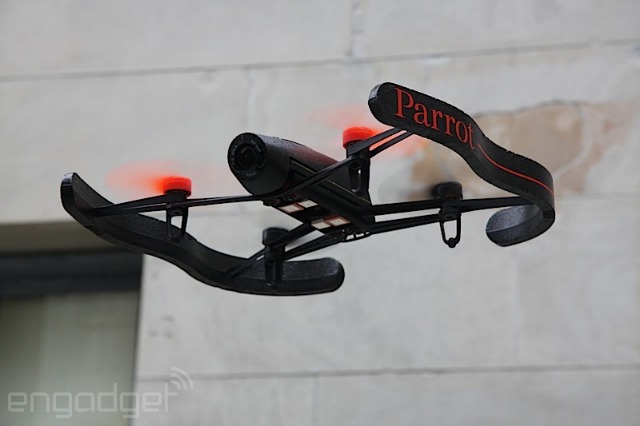 Moving your head around with Oculus controls the drone's camera, but not its movement. Using a VR headset means you'll need to practice up with the Skycontroller beforehand, since you won't be able to see it with something covering your eyes.
See the full story here: http://www.engadget.com/2014/05/11/parrot-bebop/
OMsignal’s version of wearable tech is a T-shirt with knitted electrodes to sense your heart and breathing rates.
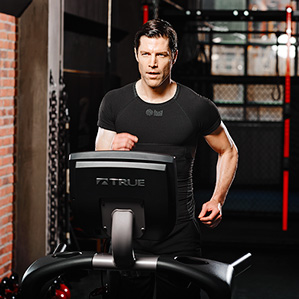 On Thursday, OMsignal unveiled four shirts that sense your heart and breathing levels via electrodes knitted into the fabric. These signals, plus details of your movements, are recorded by a gadget that snaps into a pocket on the side of the shirt; an accompanying iPhone app shows stats like calories burned and steps moved and aims to tell you things like how much energy you have left before you’ll feel spent. ...
Lucy Dunne, an associate professor of apparel design and wearable technology at the University of Minnesota, says that taking clinically accurate readings of physiological signals is hard with textiles because it’s difficult to get good contact with the body. “But it seems as if they’re aiming more at a lifestyle, quantified-self application,” she says. “From that, you can extrapolate if there’s a little bit of consistency in the signal you can still get an estimate, which can be really useful as well.”
As far as durability, Marceau says the shirt has held up through 50 wash cycles so far. It has made it through the dryer, although OMsignal recommends air drying. Though the black box is water-resistant, it’s not meant to be washed with the shirt.
Even if the shirts hold up in the wash, Becky Stern, director of wearable electronics at DIY electronics company Adafruit Industries, points out that sweat could eventually prove harmful. That’s because there’s salt in sweat, and salt corrodes silver, which could reduce the conductivity of the metal in the shirt.
USC Games director Tracy Fullerton pushes boundaries, touts diversity
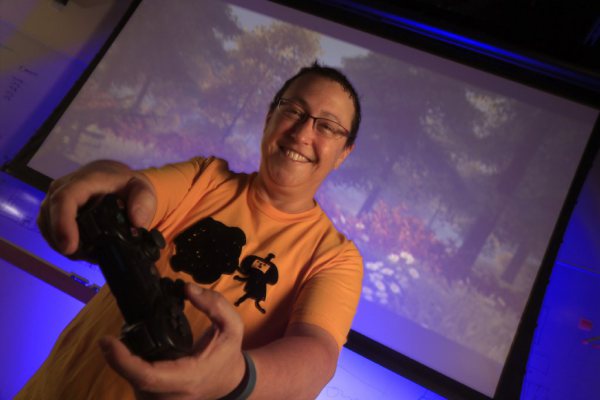 [Philip Lelyveld comment: Tracy Fullerton gets much-deserved recognition for 10+ years of stretching the boundaries of the gaming experience and building the USC SCA gaming program. ]
Players of the forthcoming “Walden” have the abstract goal of discovering how to live a life of balance somewhere between society and nature. “Walden” may not represent what we regularly see on home video game systems, but it does bear a similarity to one particular game we’re all rather familiar with.
“This is a game in the way that life is a game,” said its creator, professor Tracy Fullerton. The 48-year-old was once a full-time game designer but now runs USC’s Interactive Media & Games division within the School of Cinematic Arts, which has a staff of more than 20, including part-time lecturers.
See the full story here: http://herocomplex.latimes.com/games/uscs-game-changer-tracy-fullerton-at-it-again/
The Movie Experience in a Broadway Theater
 To deepen the sense of intimacy in the Palace Theatre, "Holler's" creators decided to radically change its seating, spending $200,000 to reposition the ground-level orchestra seats into the kind of stadium seating common in movie theaters.
Rows A-J now rise in a direct line from the edge of the stage up to the front mezzanine, a change that has the added effect of focusing performers' delivery upward, fitting for a show that includes the Shakur song "Keep Ya Head Up."
See the full story here: http://online.wsj.com/news/articles/SB10001424052702304279904579515591521063088
British TV Producer Creating Virtual Reality Narratives for Sony and Oculus Rift
 “VR will be a game-changer,” said Anthony Geffen, CEO and creative director of Atlantic Productions. “The point of entry [for consumers] is cheaper than a mobile phone, and content distribution will be global. VR is known for gaming, but what it needs is quality narrative content, and that’s where we come in.”
“Material for one Oculus Rift project was shot by Atlantic at the same time but separately to its forthcoming 3D Ultra HD documentary ‘Conquest of the Skies,’” notes Pennington. Both projects will feature Sir David Attenborough, who is no stranger to natural-history documentaries.
Atlantic is working on a variety of productions, including content created fully in CG and shooting with multiple GoPro cameras. The team is also getting ready to produce VR content in 4K. Each new step includes its own set of production and post-production challenges.
“There are a whole range of potential new shots that are not possible on conventional 16×9 TV screens,” said Geffen. “Do you focus on 360-degrees or on immersive 3D or on a huge 180 degree shot? All these are now feasible. We are at a stage of imaging history where the rules are being rewritten.”
See the full story here: http://www.hollywoodreporter.com/behind-screen/british-tv-producer-creating-virtual-698974
Dimenco No-Glasses 3D TV: in your home for €899
 [Philip Lelyveld comment: Dimenco, founded by four researchers from Philips’ shuttered 3D TV R&D group, have turned to Kickstarter to fund manufacture of the displays they’ve been working on for a couple of years. (The video is semi-corporate cute, and derivative of DollarShaveClub (https://www.youtube.com/watch?v=ZUG9qYTJMsI))
Dimenco, the leading technology company in the field of No-Glasses 3D, unveiled that it will launch a 39” No-Glasses 3D Consumer TV via crowdfunding platform Kickstarter, which will go live 29th of April.
“Since its beginning, Dimenco wanted to make No-Glasses 3D technology available to everyone. With the support of the ‘crowd’, we are convinced that we can bring FHD 3D No-Glasses to the consumer market at an incredible price,” said Bas Ploeger, CMO of Dimenco.
See the video here: https://www.kickstarter.com/projects/996026139/dimenco-no-glasses-3d-tv-in-your-home-for-899?ref=live