FROM THE NAB SPROCKIT STAGE: CREATING WATCH ABC PRODUCT
April 8, 2014
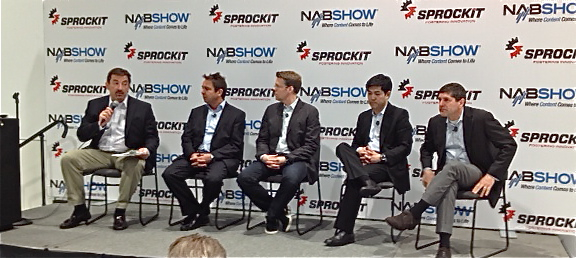 Ken Williams, executive director and CEO of ETC@USC, moderated a Disney/ABC Television Group panel at NAB called “Creating the Watch ABC Product.” From the SPROCKIT stage Monday in Las Vegas, the panel included Albert Cheng and Skarpi Hedinsson of the Disney/ABC Television Group, Ralf Jacob of upLynk and Doug Knopper of FreeWheel. The discussion focused on content creation, advertising, distribution workflow, technology integration and vendor relationships.
In 2005, Albert Cheng understood that Disney’s primary competitor for content delivered over the Internet was piracy. He, along with Skarpi Hedinsson and the Disney team envisioned a world with multiple platforms, formats, and devices, and worked to develop the content creation and distribution workflow to realize that vision. Early on they decided to integrate the best vendor solutions for the various components of that vision, rather than build them internally. Skarpi understood that technology integration was a complex problem, so he worked to standardize their content file format in order to smooth the workflow process.
See the full story here: http://www.etcentric.org/from-the-nab-sprockit-stage-creating-watch-abc-product/#more-77596
STARTUPS FROM SPROCKIT PROGRAM DELIVER PITCHES DURING NAB
April 8, 2014
 In partnership with the National Association of Broadcasters and the World Series of Startups, SPROCKIT is a program that shines a spotlight on interesting startups through the NAB Show and SPROCKIT Sync, the exclusive community of entertainment and media decision-makers that meets three times a year. The July 2014 meeting will take place at ETC@USC. The other meetings are October 2014 in conjunction with NY TV week, and January 2015 in Silicon Valley.
Fourteen SPROCKIT startups gave 5-minute pitches at NAB on Monday. The following are three that we felt would be of interest to the ETC membership.
See the full story here:
CHRIS COOKSON SPEAKS AT NAB’S TECHNOLOGY SUMMIT ON CINEMA
April 7, 2014
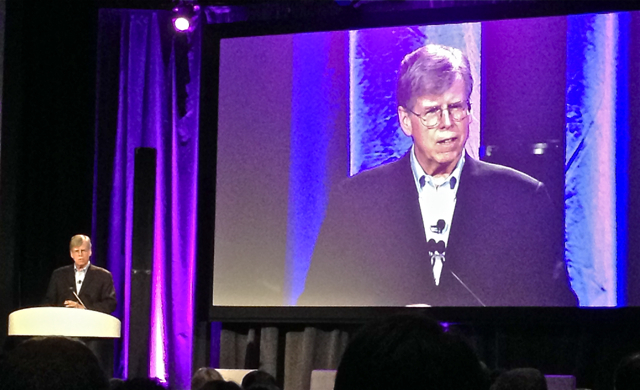 “It’s all about the story” was the message of Chris Cookson’s keynote address, and a recurring theme throughout the first day of the NAB Show’s Technology Summit On Cinema: The Future of Motion Imaging and Sound (TSC), produced in partnership with SMPTE. The essence of cinema is storytelling, he said. Cinema is the canvas for storytellers to convey their ideas to the audience. Throughout his talk, Cookson used cinema in the broadest sense, to include content viewed in theaters, on TVs, and on laptops, tablets and phones.
See the full story here: http://www.etcentric.org/chris-cookson-speaks-at-nabs-technology-summit-on-cinema/
SMPTE TECH SUMMIT AT NAB: THE TRIALS OF GLOBAL DISTRIBUTION
April 7, 2014
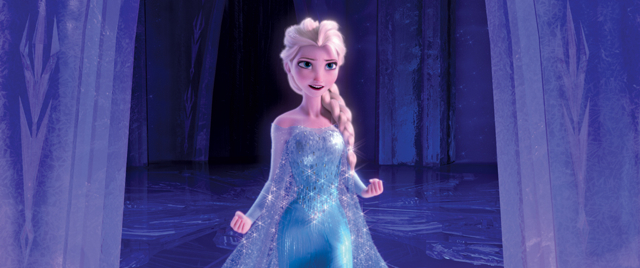 The first day of SMPTE’s Technology Summit On Cinema at NAB featured a session called “From Camera to Consumer — the New Post Production.” Digital Studio GM for Walt Disney Studios, Leon Silverman, gave a funny and animated presentation during the session about the many versions of a movie that Disney must produce for international audiences. In the case of the animated feature “Planes,” not only did Disney create dozens of native language dubs and subtitled versions, but it also changed details in the animation to please the local audience.
See the full story here: http://www.etcentric.org/smpte-tech-summit-at-nab-the-trials-of-global-distribution/
Facebook Looks to Ace With DeepFace
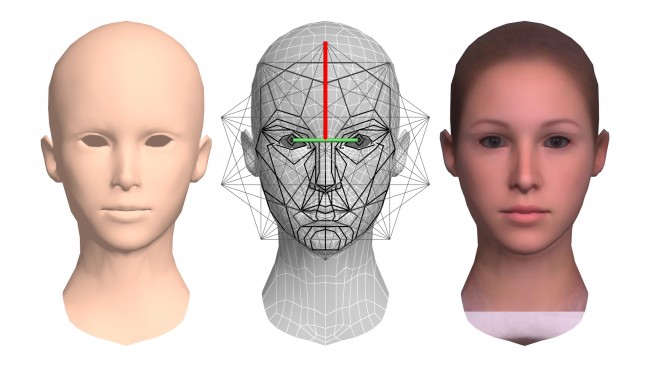 A recently published paper by Facebook’s R&D explicitly detailed the internet
 giant’s exploits in this arena. Christened as DeepFace, researchers have claimed that this technology has the capability of identifying faces accurately up to 97.25% of the time it was put to test. For this, two mutually exclusive photographs were scanned by DeepFace before it delivered the results to the researches. In comparison, human capability is as high as an estimated 97.53% on an average and even higher for people with an eidetic memory.
DeepFace’s accuracy is derived from its ability to create a three-dimensional model of any human facial structure and then scanning Facebook’s network to complete the identification process. This generation of 3D model created from an available photograph has been designed by the programmers at Facebook and aptly named DeepLearning.
Facebook, although, is currently using an advanced facial recognition technology which was also developed by its researchers. The same can be seen in action regularly by the patrons of the social networking website when it suggests names from the user’s network for tagging immediately after an upload is initiated. However, DeepLearning’s algorithm to identify facial features is being touted as far more advanced than what is being used by any company at this point in time, which also includes Google’s G+.
See the full story here: http://guardianlv.com/2014/04/facebook-looks-to-ace-with-deepface/
Uberification of the US Service Economy
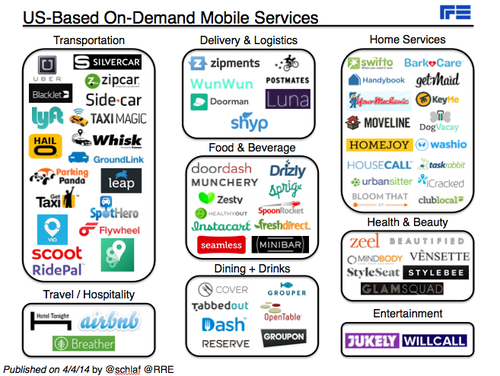 As you can see from the market map, we now have on demand services for:
- Transportation: black cars, taxis, rideshares, scooters, buses,parking, private jets, bikes and rental cars
- Home Services: veterinarians, cleaners, baby sitters, handymen,movers, auto mechanics, locksmiths, laundry, iPhone repair, flowers,errands, dog walkers, and dog sitters
- Delivery & Logistics: package delivery, messengers, and local + long distance shipping
- Hospitality: hotel rooms, bed and breakfasts, and quiet spaces
- Food & Beverage: groceries, healthy food, fast food, and booze
- Dining & Drinks: reservations, deals, dating, and payments
- Entertainment: ticketing
- Health & Beauty: spa appointments, massages, fitness classes, and beauty services
See the full story here: http://schlaf.me/post/81679927670?curator=MediaREDEF
NAB Preview: Who Is Betting on Ultra HD?
 A new report from market research firm Park Associates projects that in 10 to 12 years, at least 80 percent of U.S. households will have 4K TVs. Even so, skeptics -- including technology leaders in Hollywood and the broadcast television world -- worry that 4K isn't a significant enough leap to justify the cost to both consumers and content providers.
"There's got to be a compelling enough reason to move the whole consumer marketplace, distribution chain and postproduction chain completely over to 4K," says Society of Motion Picture and Television Engineers standards director Howard Lukk, who also serves as vp production technology at Walt Disney Studios. "And that's why I think most people are saying we need more than more pixels."
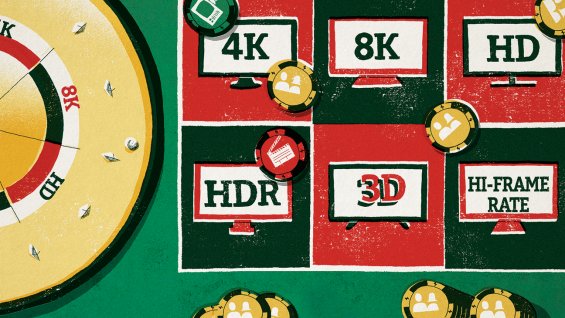
The loudest buzz in Hollywood surrounds high dynamic range (HDR) imagery, which expands the range between the darkest and brightest images a TV can produce. HDR proponents contend it is a more noticeable upgrade for less cost than 4K. Groups such as SMPTE and MovieLabs (a nonprofit research and development venture started by the six major studios) have begun work on HDR standards, though the technology still is in early development.
Then there's 8K, which produces a picture with resolution a whopping 16 times greater than HD, and glasses-free 3DTV, which proponents hope will restart the home 3D market. There's also a sizable group of engineers from both manufacturers and Hollywood who argue the best option is a combination of upgrades, including HDR, high frame rates and a wider range of colors.
As for HDR, Dolby and Technicolor are among the early proponents that will show this technology at NAB. Rob Marshall's best picture winner Chicago (2002) recently was remastered in a new HDR format called Dolby Vision, and sources confirm that multiple studios are considering completing new movies in Dolby Vision this year.
"People are trading immediacy over definition," says Zeebox co-founder and CTOAnthony Rose, the former BBC exec widely credited with the design of the BBC iPlayer. He believes "4K is as inevitable as HD" but -- at least for now -- "I think people will choose the show that's available when and where they want it over the one that is available in super-duper quality that needs a whole chain of new devices to watch."
Read the full story here: http://www.hollywoodreporter.com/behind-screen/nab-preview-who-is-betting-693484