Almost 60 percent of polled Internet users don't believe it is possible to remain completely anonymous on the Web, according to a recent Pew Research Center study. More than 85 percent of those surveyed, in fact, have taken steps to remove or mask their digital footprints—such as clearing cookies, encrypting their email, not using their real names online, cloaking their IP addresses, and more. A majority of respondents also said they'd taken even more proactive steps in an attempt to avoid being targeted by hackers, advertisers, and other unwanted online attention.
"Asked whether they think current privacy laws provide reasonable protections for people's privacy in their online activities, 66 percent of all adults said the laws are 'not good enough,'" Pew said. About 24 percent said legal safeguards in place provide reasonable protection.
Even with fears of Big Brother breathing down our online necks, only 5 percent of those surveyed said they are trying to hide activities from the government; 4 percent said the same of law enforcement. Most Web users, in fact, are simply trying to protect themselves from criminals, marketers, and people from their past.
See the full story here: http://www.pcmag.com/article2/0,2817,2424034,00.asp
The first commercial installation of a laser movie projector is scheduled for early next year at Seattle Cinerama, a theater owned by Microsoft co-founder Paul Allen. The theater will be the first to acquire Christie Digital’s laser projector, as the technology has just been approved by the FDA. While laser projectors are more expensive than current systems, they are expected to improve 3D projection and eliminate the need to replace bulbs and cool projection booths.
Read the full story here: http://www.etcentric.org/first-commercial-installation-of-laser-projector-scheduled/
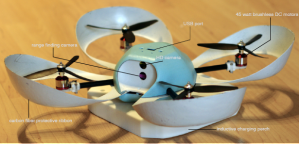 The device is called Spiri and it is an autonomous quadrotor with a few extras on it. Spiri its self is made with reinforced carbon fiber ribbons that protect the four blades and then a reinforced shell around the electronics. Under the reinforced shell Spiri there are many different components. Some of the different components that Spiri has are accelerometers, gyroscope and magnetometer, a GPS, a downward-facing acoustic sensor, a downward-facing camera, a forward-facing camera and a forward-facing range finder. In order to use all of these components it has a dual core 1 GHz processor which is accompanied with 4 GB of onboard storage.
See the full story here: http://www.brightsideofnews.com/news/2013/8/27/kickstarter-weekly-5---august-27th.aspx
There will be a lot to see at IBC around 4K. It is certainly reminiscent of the rush of broadcast and production providers to add stereoscopic support to their products 3 years ago, so I will be anxious to hear what these companies think of 4K vs. 3D.
(Submitted comment: "Thank you for an interesting article. I would rather hope that IBC 2013 is instead remembered for the start of the High Dynamic Range (HDR)revolution in broadcasting.")
Read the full story here: http://www.display-central.com/free-news/display-daily/4k-will-be-a-key-highlight-of-ibc-2013/?utm_source=Insight+Media+Subscribers&utm_campaign=8e979ed157-Weekly_news_07_09_20127_9_2012&utm_medium=email&utm_term=0_8e331e0181-8e979ed157-10886373
DOTS was originally developed by Eastman Kodak in the 1990s at a cost of more than $80 million, but was eventually abandoned in 2002, according to Rob Hummel, the CEO of Group 47. In 2010, Group 47 was founded and acquired the technology, including patents and related intellectual property.
The archiving of film and historical material is a global issue that goes beyond the entertainment industry. “Group 47 is also working with some government agencies who are very supportive [of DOTS],” notes Hummel.
Read the full story here: http://www.etcentric.org/dots-technology-could-solve-hollywood-archiving-challenges/
and the original story here: http://www.hollywoodreporter.com/behind-screen/digital-archiving-technology-dots-could-612674
[Philip Lelyveld; this is more of a recognition of lifetime achievement that a discovery of older innovators, but it is still a good list.]
To complement our list of young innovators, here are several who have been at it for decades.
For over a decade, we’ve celebrated innovators under the age of 35. We choose to write about the young because we want to introduce you to the most promising new technologists, researchers, and entrepreneurs. But I often hear: You really think older people can’t innovate?
Of course they can. We meet extraordinary older innovators all the time, who after a lifetime of creativity are still solving big problems, generating wealth, or expanding our conception of what it means to be human. Below, in reverse alphabetical order, are seven innovators over the age of 70, chosen arbitrarily, because I am attracted to their lives, work, and character, and not according to the formal nomination and judging process that selected the 35 Innovators Under 35.
Read the full story here: http://www.technologyreview.com/fromtheeditor/518386/seven-over-70/?utm_campaign=newsletters&utm_source=newsletter-daily-all&utm_medium=email&utm_content=20130823
In a story making the rounds on the internet, a Georgetown professor lost a bunch of books he’d downloaded from Google when he traveled to Singapore. But this isn’t an example of DRM run amok.
At Boing Boing, Cory Doctorow picked up the story under the headline “Cross a border, lose your ebooks,” writing that the episode “points out just how totally, irretrievably broken the idea of DRM and region-controls for ebooks is.” And the story is still getting play today.
Except…DRM had nothing to do with this episode, and in fact, O’Donnell hadn’t actually bought the books in question. They were all public-domain titles, which he had downloaded from Google for free.
In addition, Google reached out to Gizmodo to “explain that this is not normal or intended behavior for the Google Books app, but instead the result of a bug. Google Play stores will not allow additional purchases while in territories where they do not operate, but this active removal of content was apparently an isolated issue unrelated to normal Google Books DRM behavior.”
Boing Boing hasn’t corrected its story.
Read the full story here: http://gigaom.com/2013/08/22/chill-out-drms-not-the-reason-that-guy-lost-his-public-domain-google-ebooks/?utm_source=General+Users&utm_campaign=90f8cc4063-c%3Amed+d%3A08-23&utm_medium=email&utm_term=0_1dd83065c6-90f8cc4063-99147229
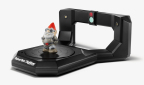 What's black and white and has lasers? The MakerBot(R) Digitizer(TM) Desktop 3D Scanner! The MakerBot Digitizer Desktop 3D Scanner is a fast and easy way for anyone to create 3D models. MakerBot, the leader in Desktop 3D Printing, announced the availability of the MakerBot Digitizer on its website. The MakerBot Digitizer is for sale worldwide on makerbot.com/digitizer. Pre-orders are being taken now, with shipping expected mid-October. Current price is $1,400 plus an optional $150 for MakerBot Digitizer MakerCare, a service and support program.
See the full story here:
By Philip Lelyveld
I spent an hour with Richard Radden, cofounder of Zefr (www.zefr.com, formerly MovieClips), a Venice, CA company that is “connecting fans and franchises for the good of all.”
MovieClips was cofounded by Rich Radden and Zack James about 3 years ago. MovieClips developed proprietary technology that allowed them to identify content on YouTube even if the video was distorted before uploading. They were able to license clips from studios and networks by making the case that, rather than taking down illegal content, they could flag it, help YouTube place appropriate ads against it, and send revenue back to the studios and networks.
Over time they added metadata to the clips and developed a UI so that the clips could be easily searched. As they were doing this, Rich, Zack, and their 30-person team discovered that there was a population of ‘superfans – people who created and uploaded content about the Studio and Network content – that was up to 10 times the size of the population that viewed the content on the authorized site.
In August, 2012, MovieClips changed its name to Zefr and pivoted to focus on helping movie studios, sports, TV, and music videos collect and monetize fan and professional postings on YouTube. Their clients include Warner Bros, Universal, UMG, Paramount, Columbia, Lionsgate, MGM, Sony Music, NASCAR, Miramax, The Weinstein Company, Dick Clark Productions, and SNL.
As they expanded into monitoring other types of content, they found that the same ‘superfan’ relationship applied to branded content; fans of a brand would make and upload content about the brand at a much higher rate than the number of people who interacted directly with the brand’s official online presence. Zefr started marketing their customer relationship management services to brands. Brand clients now include Audi, Canon, Mars, and T-Mobile.
Zefr is developing a new suite of SAS (Software As a Service) tools that will move them closer towards being able to help any type of content or brand to reach their creator-fan community. Rich showed me a prototype of a system that will allow any company to identify and communicate – on a massive one-to-one basis - with this larger population of fans. The software can also use YouTube data and proprietary Zefr applications to development extensive metric tools. It can compare the activities of the fans of their clients to the activities of their clients’ competitors, so that the client can interact more effectively with the entire population of potential customers. For example, they can determine which brand ‘owns’ a keyword in the unofficial culture within a superfan community.
With a staff that now tops 230 people, Zefr has taken over the warehouse off Abbott Kinney Blvd. in Venice that was previously the art studio of Ed Ruscha. The staff is composed on software developers, data scientists, and metadata entry personnel. Zefr is able to hire the low-pay metadata entry people from a large pool of local talent, rather than outsourcing overseas, by offering them a wide range of workplace perks. Aside from the usual basketball court, dog-friendly environment, and free food, they offer a hip location, a full health plan, monthly movies, and all-staff field/party trips. If a metadata entry person stays for a full year, Zefr management works to move him/her into a higher skilled, higher pay position.
I’ve asked Rich to let me know when they launch their SAS product so we can see its full range of capabilities. If the final product can produce all of the metrics that Rich demonstrated, and maintainthe well designed graphic interface that I saw, then this tool could be very useful to the ETC member’s efforts to market more effectively to Millennials.
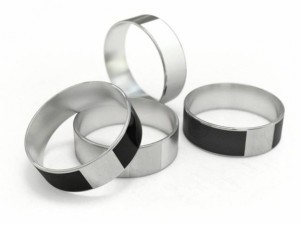 That company’s product is called the NFC Ring, and the Kickstarter campaign ended yesterday, raising just under £241,000 (almost $380 million). The ring has contactless, or RFID, technology built in and can be used to automatically unlock an NFC-capable phone when a person picks it up, or to operate other RFID devices such as door locks. One side of the ring stores “personal” data such as passwords, the other is intended for “public” data such as contact information. Pricing hasn’t been released for the ring, but getting the male size required a $43 donation to the Kickstarter campaign.
See the full story here: http://www.technologyreview.com/view/518526/kickstarter-campaign-beats-google-to-password-jewelry/?utm_campaign=newsletters&utm_source=newsletter-daily-all&utm_medium=email&utm_content=20130821
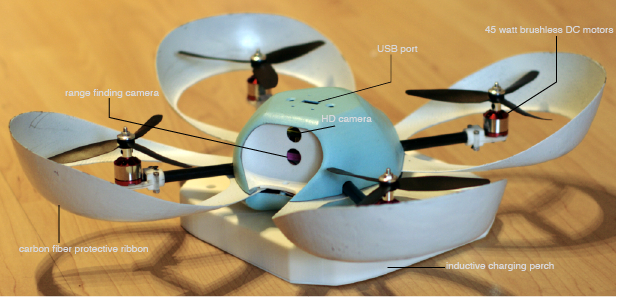 The device is called Spiri and it is an autonomous quadrotor with a few extras on it. Spiri its self is made with reinforced carbon fiber ribbons that protect the four blades and then a reinforced shell around the electronics. Under the reinforced shell Spiri there are many different components. Some of the different components that Spiri has are accelerometers, gyroscope and magnetometer, a GPS, a downward-facing acoustic sensor, a downward-facing camera, a forward-facing camera and a forward-facing range finder. In order to use all of these components it has a dual core 1 GHz processor which is accompanied with 4 GB of onboard storage.
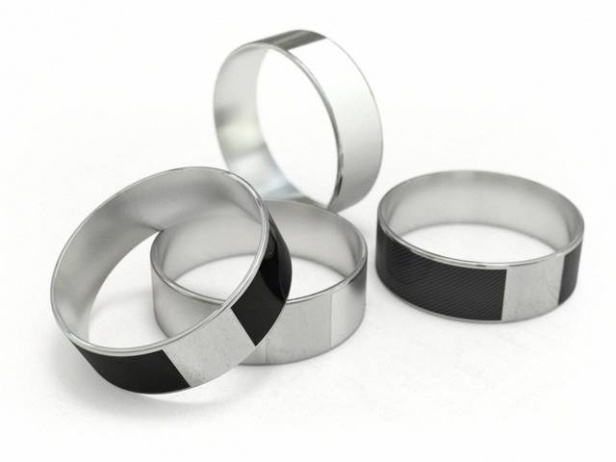 That company’s product is called the NFC Ring, and the Kickstarter campaign ended yesterday, raising just under £241,000 (almost $380 million). The ring has contactless, or RFID, technology built in and can be used to automatically unlock an NFC-capable phone when a person picks it up, or to operate other RFID devices such as door locks. One side of the ring stores “personal” data such as passwords, the other is intended for “public” data such as contact information. Pricing hasn’t been released for the ring, but getting the male size required a $43 donation to the Kickstarter campaign.