Reputation.com says it’s ready to unveil a place where people can offer personal information to marketers in return for discounts and other perks. ...
Green cites the date that a person’s car lease expires as an example of a piece of personal data with an established value that people control themselves. “There’ll only be one car company that knows that,” he says. “But companies will pay hundreds of dollars, if you are seriously going to buy a car, to incent you to do that.”
...
Green says that he intends to develop infrastructure so people can selectively share data with another company, perhaps in return for discounts or other benefits. Similar to how a person might use a Facebook or Google account to log into a website, he might use a Personal account to connect with a company. He could then control exactly what data that company could access, and for how long. An early iteration of this idea can be seen on the website Car and Driver, where its already possible to log in with a Personal account. Doing so leads to a permissions screen where the site requests access to details including the make, model, and year of a person’s vehicle. “[Data] marketplaces are going to be incredibly valuable, but we’re focused on portability,” says Green.
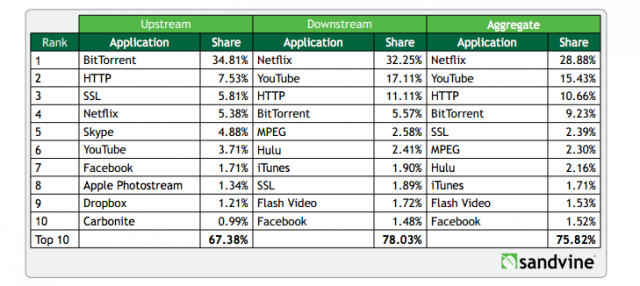
But behind the scenes, in negotiations that almost never become public, the world's biggest Internet providers and video services argue over how much one network should pay to connect to another. When these negotiations fail, users suffer. In other words, bad video performance is often caused not just by technology problems but also by business decisions made by the companies that control the Internet.
...network operators can degrade traffic by failing to upgrade connections without severing them entirely. The public won't realize that's what's going on unless negotiations become so contentious that one party makes them public—or a government decides to investigate.
Degraded connections disproportionately affect the quality of streaming video because video requires far more bits than most other types of traffic.
In making the announcement, Sony and Panasonic pointed to the versatility of optical discs for long-term data storage, noting the format’s dust resistance and water-resistance as well as the ability to withstand changes in temperature and humidity when stored. Their ability to allow inter-generational compatibility among different formats ensures “that data can continue to be read even as formats evolve,” the companies said.
YouTube has long been pushing for more professional content, with a wide variety of tools: The site has given out free equipment to some of its producers, invited others to classes to learn more about video production and given sizable advances to select partners. There’s some dispute about the effectiveness of these measures, especially since YouTube chose not to renew more than 60 percent of its premium channels.
Of course, traditional TV networks cancel shows all the time — and YouTube increasingly seems to take its cues from the studios. Case in point: The video service opened a sizable production facility in Los Angeles earlier this year that’s open to YouTube producers to shoot their shows.
The primary technologies that we saw showcased the most were 3D printing, Augmented Reality, Virtual Reality and 4K. The latter is no surprise when you consider how long 4K has been slowly filtering into the film industry and would inevitably make its way into the professional graphics industry where most of the VFX artists are already doing a lot of work in 4K. Naturally, we saw a plethora of 4K displays ranging from arrays of 4K monitors, to extra large 4K TVs and even 120 Hz 4K 3D Projectors from Christie.
[Philip Lelyveld comment: Is the quote "creativity loves constraints?" The new challenge for the creative industries may be developing innovative experiences that fit within both the isolated interests of the target populations and the analyzed elements of what works in the entertainment that they seek out.]
You fired up your Netflix device a couple Fridays ago, happened across Orange is the New Black in your Netflix recommendations, started watching the first episode and then wondered why you’d never heard of it. Netflix’s other original programming — House of Cards and Arrested Development— received huge preavailability marketing, and they weren’t even this good.
The answer to your question, like the answer to so many other questions these days, is data. Netflix didn’t have to spend millions of dollars advertising the new show hoping you would tune in — it knew you’d see it in the recommendations, it knew you’d give it a try and it knew you’d like it. According to the company during its earnings call on Monday, “Orange is the New Black” actually had more viewers watching more hours than during its first week than its predecessors had.
Infinity though, seems to be all about the possibilities presented by these characters and stories. It is like mainlining Disney magic.
Infinity uses the same basic recipe: you buy the game as a starter kit, with a USB plinth – or Infinity Base – and a collection of three figures: Captain Jack Sparrow from Pirates of the Caribbean, Mr Incredible from The Incredibles and Sulley from Monsters University. Each figure opens up a different narrative adventure within the game – and buying more Playsets gets you access to new quests. Plus, as in Skylanders, each action figure toy retains the player's data, so they're handy save files too.
The responsibility for Disney is in ensuring that each purchase provides plenty of playability. So in Infinity, when you buy a Playset from a new franchise, it opens up a dedicated adventure in the game.
And really, Infinity seems to be what Disney games should always have been – an imaginative platform that is genuinely for the whole family. It is filled with fun little ideas and features that my kids probably won't even get; for example, the Wreck It Ralph cherry bombs in the Toy Box mode that generate 2D sprite-based explosions like old school shoot-'em-ups. While most previous Disney games have reduced the franchises into conventional, boring action adventures, Infinity appears to be infused with the Pixar spirit of 'plussing' – adding new features, gestures and elements at every stage of production.
This will probably be the best Disney game since the Mega Drive era, since the brilliant Castle of Illusion and Dave Perry's wonderful Aladdin tie-in. But standing as it does, at a crossroads between LittleBigPlanet, Skylanders and Minecraft, it has the potential to be much, much more.
[Philip Lelyveld comment; Innovation is never stifled, it is only (re)directed by business, legal, tech, and social influences. This expiring patent that 'held back innovation' was the largest source of revenue for a group at UT Austin, hardly a patent troll org.]
In February 2014, key patents that currently prevent competition in the market for the most advanced and functional 3D printers will expire, says Duann Scott, design evangelist at 3D printing company Shapeways.
These patents cover a technology known as “laser sintering,” the lowest-cost 3D printing technology. Because of its high resolution in all three dimensions, laser sintering can produce goods that can be sold as finished products.
The User Experience of an IP Broadcasting System: developing user-centred services across multiple platforms to help advance public service broadcasting in the digital age
Designing for New Interaction: Moving beyond gesture and voice to develop new ways of controlling and displaying digital content for more natural and engaging interfaces
Sustainable Approaches to User Capability: Allowing the industry to meet the changing needs of older users, young children and people with disabilities in accessing digital media
New Production Interface Technologies: Using novel interface and interaction technologies in new ways to give production teams the most creative and effective ways to craft new forms of content
 In making the announcement, Sony and Panasonic pointed to the versatility of optical discs for long-term data storage, noting the format’s dust resistance and water-resistance as well as the ability to withstand changes in temperature and humidity when stored. Their ability to allow inter-generational compatibility among different formats ensures “that data can continue to be read even as formats evolve,” the companies said.
 The primary technologies that we saw showcased the most were 3D printing, Augmented Reality, Virtual Reality and 4K. The latter is no surprise when you consider how long 4K has been slowly filtering into the film industry and would inevitably make its way into the professional graphics industry where most of the VFX artists are already doing a lot of work in 4K. Naturally, we saw a plethora of 4K displays ranging from arrays of 4K monitors, to extra large 4K TVs and even 120 Hz 4K 3D Projectors from Christie.