The 3D Experiential Training Company (3-D ETC)
 This company uses head mounted displays and 3D for health and safety training.
Cost-Effective, Immersive 3D Training Solutions
3-D ETC provides unique training solutions that immerse your employees into natural, realistic 3D experiences that enhance learning and retention.
- The 3-D Solution
- Eliminates potential obstacles that inhibit effective learning, such as interruptions
- Incorporates the use of immersive 3D video, utilizing 3-D ETC's proprietary Wearable, Immersive Video Displays (WIVD), enabling trainees to focus their attention on critical elements during instruction and enhance training outcomes, by providing realistic, life-like experiences that have a measurable, durable impact.
- Utilizes a proprietary process of scenario-based learning and immersive 3Dstereoscopic video and audio technologies, to deliver high-impact educational experiences resulting in increased comprehension and retention.
- See the company website here
The CNET 100 end of the year list special!
3D TV is their #1 disappointment of 2011 for all the usually-reported reasons. Their comments are at minutes 18-20 in the 50 minute video.
Watch the video here:
Other CNET end-of-year lists can be found here:
5 Disruptive Technologies Happening Now: 3D Printing
 c
c
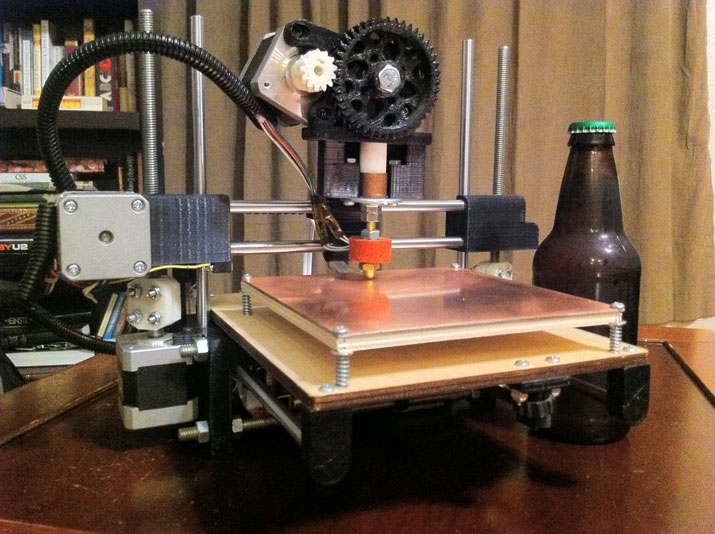
Locally made: Pictured is the Printrbot, developed by inventor Brook Drumm. It’s a 3-D printer, designed for home use, that could be priced under $300. What industries will cease to exist when anyone can print from a device next to the coffee maker at home, and when the formulas for common designs are available online? Among those affected could be toy companies, makers of costly replacement parts, and even the shipping companies that currently transport manufactured goods.
Read about all 5 disruptive technologies by clicking on their pictures here:
Newspaper creates 3D martial law DVD
 Photographs of the brutal suppression of striking miners at the Wujek coal mine have been rendered in 3D by a regional newspaper to coincide with Tuesday's 30th anniversary of martial law.
The pacification of the Wujek Coal Mine in Katowice, Silesia, took place just three days after martial law was declared by the communist authorities on 13 December 1981.
A DVD with 3D images related to the incident was distributed on Tuesday byDziennik Zachodni, Silesia's largest regional newspaper, accompanied by a complimentary pair of 3D spectacles. ...
As part of the 'Week in Three Dimensions” cycle, Dziennik Zachodni will be publishing some photographs related to the massacre that have never been released before.
See the original post here
Wim Wenders’ ‘Pina’ dances to a 3-D beat
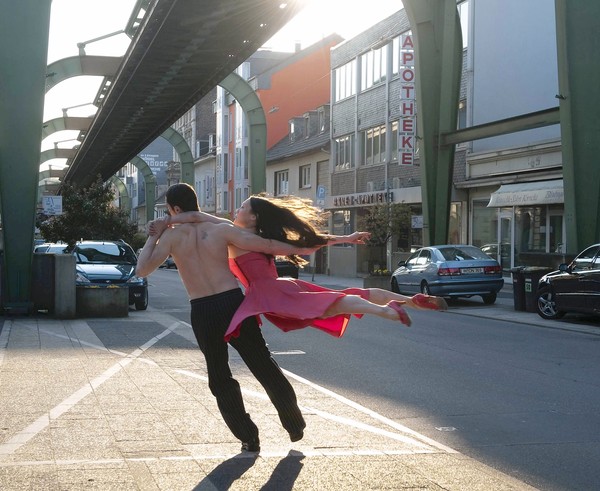 "Pina" follows the release earlier this year of the documentary "Cave of Forgotten Dreams," which used 3-D technology to explore the ancient Chauvet cave in France. It was directed byWerner Herzog, who like Wenders, was a key filmmaker of the German New Wave period in the 1970s.
The movies are part of a nascent wave of 3-D documentaries to hit the market, encompassing subjects as diverse as pop music ("Justin Bieber: Never Say Never") to the historical epic ("Fields of Valor: The Civil War," a documentary miniseries airing this month on 3net, a 3-D channel backed by Imax, Sonyand Discovery.)
Read the full review here:
Digital reshapes prod’n budgeting, billing
 Pixomondo adapted f/x process for 'Hugo'
Holdouts and traditionalists may be sticking with 35mm film, but the digital revolution has triumphed.
You probably knew that, even if you don't like it. What you may not have fully grasped yet, though, is that this revolution means more than doing the same things you've always done but now with digital gear. It means changing the way you think about your work, the way you do your work, and, in many cases, the way your work is billed and paid for.
Consider Martin Scorsese's 3D pic "Hugo" and visual effects company Pixomondo.
In the analog world, f/x were "post." The editor and director locked their cut and handed it over to visual effects, hoping they'd have no regrets when they saw the result. Changes late in the game were difficult and expensive. Most visual effects studios still charge on a flat-bid model left over from those days, based on cost per shot.
Digital editing is more fluid, though. It starts earlier -- on some pics rough cutting starts before a scene is done shooting -- and continues later. That shift thrown the vfx business model for a loop. Since the cut isn't locked early, vfx studios are coping with continuous adds and changes that weren't in their flat bid. ...
Read the full story here
Apple 3D display & Kinect-style tracking system still in labs
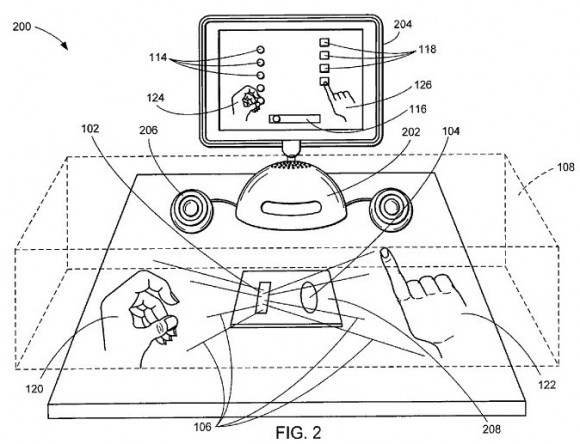 A newly filed Apple patent application suggests the company is still working on a Kinect-style 3D motion tracking system, that could create a virtual desktop responding to a user’s hand and finger movements rather than keyboard and mouse actions. The application, Three-dimensional imaging and display system, describes a system where “user input is optically detected in an imaging volume”: in short, both of a user’s hands are tracked in the space around an Apple computer, and on-screen or projected virtual controls – such as dials, buttons or pens – can be manipulated as if touching them in real life.
Read the full story here:
3D surface anatomy guide could revolutionise medical education
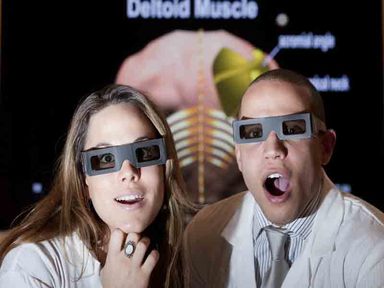 Set to revolutionise medical education globally, Irish researchers are the creative brains behind the world’s first 3D surface anatomy online guide. By using movement, colour, illustration and 3D technology, the guide will aim to make it possible for anatomists, engineers and artists to teach the body to students from the outside in, all online. ...
The project was a partnership between anatomists Dr Valerie Morris and Prof Clive Lee from RCSI, engineers David Corrigan and Academy Award-winner Anil Kokaram from Trinity College Dublin (TCD) and artists Mick O’Dea, Royal Hibernian Academy (RHA), and Una Sealy ARHA, from the Royal Hibernian Academy.
The collaborators combined artistic representation, engineering expertise and anatomical accuracy into a four-hour teaching programme and will shortly be part of the curriculum/training for medical students in Dublin, Bahrain and Kuala Lumpur. ...
Read the full story here