Norwegian boy cross-eyed after watching 3D movie
 Shocked cinema manager considers warning cinema-goers about possible effects of watching 3D movies.
Julian saw doctors and opticians following the ordeal, and they agree that the boy must have had a latent visual defect all along that was triggered by the 3D images on screen.
"You can get different kinds of ailments from this. Julian's case is extreme. However, diplopia, migraine, nausea and discomfort may occur," said Hans Torvald Haugo, Chief Advisor for theNorwegian Opticians Association. ...
Apple Wins Secret Patent for High-End 3D Object Recognition
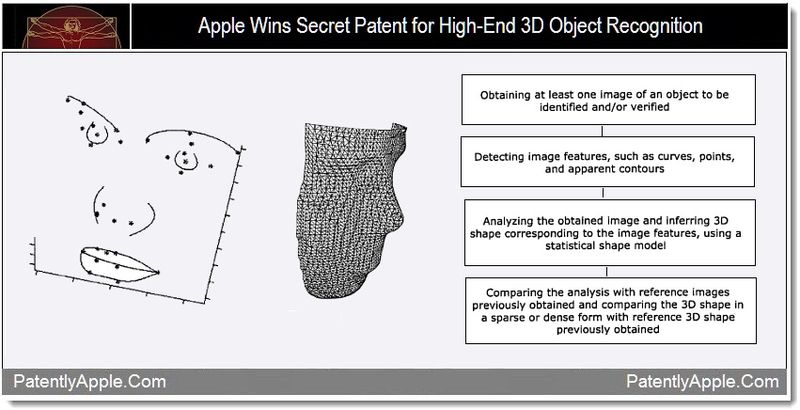
The US Patent and Trademark Office officially published a series of newly granted patents for Apple Inc. today and one of them was a real surprise. Apple has been granted a major patent for 3D object recognition that will allow future iPads to advance graphics like MRI images for use in hospitals and other enterprise and military applications covering high-end security systems using advanced biometrics. Apple secretely acquired this patent at some point in the past from Swedish inventors. When the connections to this patent unfold, you'll be both surprised and excited about what this means for future iOS devices.
Advancing Identification Systems ...
Security Systems ...
Surface Fitting to the 3D Data: MRI Application ...
Other Possible Applications ...
Future PowerVR Processors for iOS Devices & Those Behind Today's Important Patent ...
Read the full article here
To 3D Or Not To 3D: Buy The Right Hugo Ticket
Final Verdict: This is the only perfect score I've given in To 3D or Not To 3D, and I don't imagine I'll be giving another one any time soon. The 3D in Hugo isn't just masterfully executed, and it doesn't just enhance every beautiful shot in the film. It's integral to understanding the film, the way it hearkens back to the earliest days of cinema, the way it talks about magic tricks and new technology as new ways of telling cinematic stories. Martin Scorsese probably understands movies better than anyone on earth, and he's proven that 3D can be as important as color or CGI. You owe it to yourself to see how well he proves it.
Read the full review here
$99 3D HD camcorder and $99 3D digital camera both heading to Target from Vivitar

As for the Vivitar DVR 790HD 3D camcorder it’s product page lists a 5.1MP CCD sensor, 4x digital zoom from it’s two fixed-focus lenses, 2.7″ LCD screen (flip-out), face detection, anti-shake, 720p HD (1280×720) video with 3D capture support, TV output ports, HDMI output port, LED light, Analog Mic, 16MB of buffer memory, SD card support with up to 32GB of expansion supported –once again you’ll need to use an SD card for storing all your captures, Vivitar doesn’t include an SD card out-of-box for the DVR 790HD camcorder–, and there is a rechargeable lithium battery. ...
Read the full story here;
Printrbot: an all-in-one 3D printer kit for $499
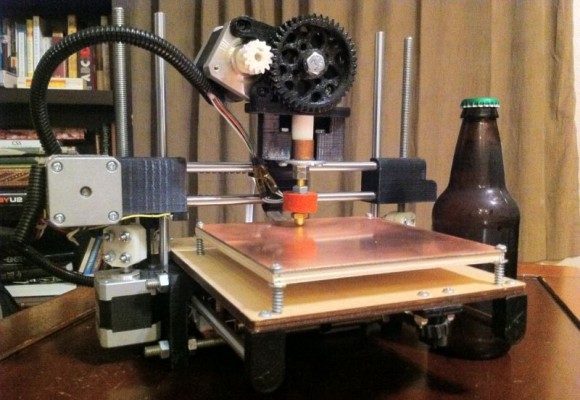 ... Brook Drumm aims to change that with a new Kickstarter project for his 3D printer called the Printrbot. The project managed to collect 100% of the funding he required in just 46 hours, ...
The Printrbot is desirable because a full kit will only cost you $499. There’s also a Bare Bones Kit for $199 where you supply the electronics yourself, or for the really adventurous a $75 option that gives you the printed parts, but leaving the hardware up to you. ...
Read the full story and watch the video here
Martin Scorsese Talks ‘Hugo,’ Recurring Nightmares and How His 12-Year-Old Rules the Roost
...
HOW SCORSESE'S $100 MILLION-PLUS 3D HUGO HAPPENED
Scorsese was quite drawn to a film adaptation of Brian Selznick's 2007 novel The Invention of Hugo Cabret. Ostensibly a family film, the 3D Hugo is just as much an exploration of the power of cinema and the lost legacy of seminal artist George Melies. Producer Graham King, who financed the movie through his GK Films, first optioned the novel with Johnny Deppwhen both had production deals at Warner Bros., months before Scholastic Press even published the book in January 2007. (The project eventually migrated to Sony, then Paramount, in search of a Thanksgiving holiday slot; it opens Nov. 23). Scorsese and King already were talking about turning it into a feature together when they won Oscars for The Departed, the same weekend that Cabret hit No. 1 on The New York Times best-seller list. While John Logan, who had written The Aviator for Scorsese, worked to nail down a script, Scorsese went off to make Shutter Island for Paramount. Other filmmakers were interested inHugo, but King waited. When Scorsese had completed Shutter Island and was finally free to tackle Hugo in the summer of 2010, he told King that he wanted to try shooting in 3D for the first time. Although the cameras and extra tech crew would add 15 percent to the $100 million-plus budget, King felt the 3D would also create an intriguing marketing hook: a vaunted old-school filmmaker taking on the newest of technologies. ...
See the full article here
LG 3D illusion projection on building (7 1/2 min video)
Philip Lelyveld comment: this extended video by LG from Germany includes a wide range of very well done images and illusions.
Watch it here
The new dimension of holography
... Unlike the materials available at present, these photopolymer films require no subsequent chemical or thermal treatment, which make them suitable for the cost-effective mass-production of volume holograms. ... Unlike traditional holograms, the background of volume holograms need not be metallic. ...The color of the portrait or logo does not change depending on the angle at which it is viewed, meaning there is no rainbow effect. ...
See the original post here:
SFU Gallery celebrates Jerry Pethick’s ventures into photoarrays
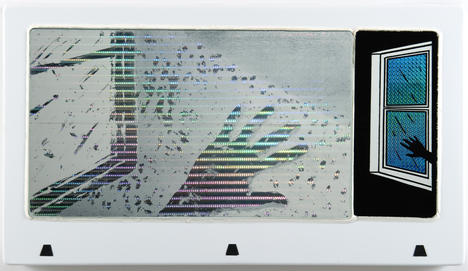 The arrays involve the creation of an integral, three-dimensional image by mounting rows of serial photos behind corresponding rows of Fresnel lenses (plastic lenses with concentric grooves on their surfaces). Because of their low resolution and dreamily “defocused” quality, Pethick wrote in a 1999 artist’s statement, these images lend themselves to metaphors of memory and imagined space. They are a low-tech exploration of the high-concept realm of optics—of the physical laws that govern the way we visually perceive the world. ...
Read the full story here