3D TV Display Technology Shoot-Out (Active vs Passive)
Read the full study here: http://www.displaymate.com/3D_TV_ShootOut_1.htm
3D TV Display Technology Shoot-Out
Dr. Raymond M. Soneira
President, DisplayMate Technologies Corporation
----
from Crave . com
... If you're at all interested in 3D TV or 3D imaging in general, the entire article is worth a read. Here's the main conclusion:
Based on our extensive lab measurements and visual test comparisons between 3D TVs with FPR Passive Glasses versus 3D TVs with Active Shutter Glasses, we found that the Passive Glasses TVs delivered substantially and demonstrably better all around 3D imaging, 3D Contrast and sense of 3D depth, better 3D sharpness, better overall 3D picture quality, immersion and realism, and freedom from 3D ghosting, image Crosstalk, and flicker. This was true in all but a small number of situations, all of which we document [in the report].
From the passive camp Soneira tested an LG 47LW6500 and a Vizio E3D470VX, while from the active camp he chose a Samsung UN46D7000 and a Sony KDL-46HX729. All are LCDs, and all but the Vizio use LED backlights. He did not test any plasma TVs but writes that "they all use Active Shutter Glasses that are virtually identical to the LCD models, so our conclusions regarding their flicker, comfort, convenience, and cost apply to them as well."
The meat of the article is devoted to breaking down the observations and measurements of the various 3D picture quality factors, among them image brightness, flicker, crosstalk/ghosting (both straight on and from various viewing angles, positions, and head tilts), resolution, and sharpness. In every category Soneira found passive superior to active, and he backs up his findings extensively with lab tests, charts, and precise descriptions of program material complete with time stamps. The idea is that interested parties can check the shoot-out's findings for themselves. ...
Read the full article here
Andrew Woods, a subject matter expert, posted comments to the LinkIn Stereoscopic Displays and Applications (SD&A) group here
Coming Soon To Schools: Dissecting Frogs in 3-D
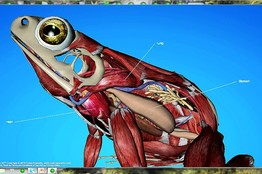 In one of the industry-funded studies, the Rock Island-Milan school district in Illinois exposed two groups of sixth-grade students to a ninth-grade-level earth-science lesson. One used 2-D projection, while the other used 3-D. The students were tested before and after the lesson. Test scores for the 2-D group increased 9.7%, on average, while the scores of the students who saw the lesson in 3-D increased an average of 35%.
Financial concerns can be an obstacle for some schools. Cyber-Science 3D, an educational software line, costs $10,000 for a package that includes software, a computer, a projector and about 30 pairs of 3-D glasses. The company's 3-D materials include a periodic table, dissectible fetal pigs and a deconstructable V-8 engine. A single, "stereo" copy of the software retails for $1,500. A single pair of active glasses from pilot participant XpanD, which differs from passive 3-D movie glasses, can cost $129.
Roughly 650 elementary schools and 100 colleges have purchased the company's products, says Rich Lineback, president of Cyber-Science 3D parent Cyber-Anatomy Corp.
...
Read the full story here
Sony’s Head-Mounted 3-D Display
What if you could wear a 3-D IMAX theater on your face?
That idea, or something like it, is what animates Sony's forthcoming device, "the HMZ Personal 3-D Viewer," a headset that runs from ear to ear and delivers a 3-D viewing experience to an audience of one. The almost ostentatiously futuristic device--it "looks like it could have been created and worn by Daft Punk," in IGN's assessment--goes on sale in Japan on November 11, where it will retail at the equivalent of $780.
...Gizmodo waxes rhapsodic: "Not only did this sell me on the concept of wearable TV," says Mat Honan, "it was one of my better experiences with 3DTV which I've likewise been skeptical of." ...
"Before, watching a movie on a big screen was a pastime for the whole family," Sony vice president Shigeru Kato recently told Reuters, "but now there is a growing demand from people who want to enjoy videos on large-sized screens alone." ...
Read the full story here: http://www.technologyreview.com/blog/helloworld/27136/?nlid=nldly&nld=2011-09-07
Watch a video presentation of the glasses here
New Zealand Post launches first 3D stamp for Rugby World Cup
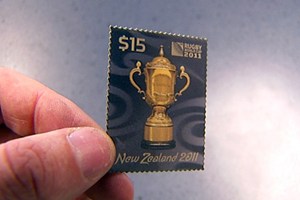 New Zealand Post is about to release its first three dimensional stamp.
Like so many other companies, it's cashing in on all the hype surrounding the Rugby World Cup. ...
“It's a special cup and it's a special event and we wanted to reflect that with a special stamp. The stamps cost $15 each and were created in Auckland,” says Simon Allison, sales and marketing manager for New Zealand Post.
The illusion of depth comes from photographs of the real trophy being taken from every angle then spliced together. ...
Read the full story here
3D Cinema and Television Technology: The First 100 Years Selected Papers on Stereoscopy from the Society of Motion Picture and Television Engineers (SMPTE)
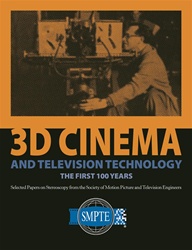 Editors: Michael D. Smith, Peter Ludé and Bill Hogan with Introductions by Ray Zone
This compendium contains over 50 papers published in the SMPTE Journal during the past century. These historic SMPTE papers provide a foundation for understanding the current innovations in 3D stereoscopic areas, including acquisition, content creation, exhibition, distribution, and display technology. Edited by Michael D. Smith, Peter Ludé, and Bill Hogan, the papers in this book contain a wealth of information on the transformation of 3D from its early days of experimentation to current applications in media and entertainment. This book will serve as an important reference tool in any technical library. (Hard Copy)
This book can be purchased at the SMPTE store here
Subaru’s New EyeSight helps drivers watch road
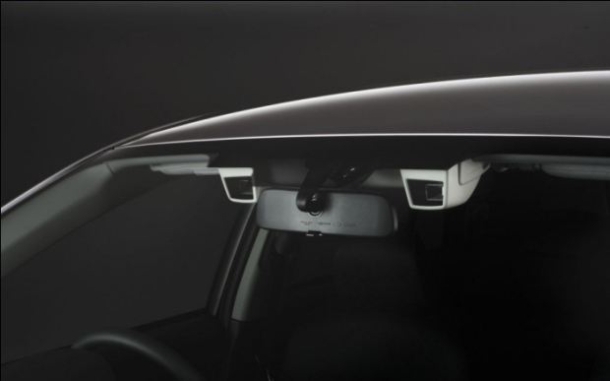
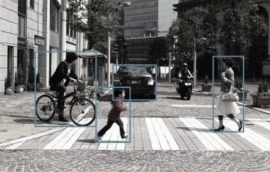
....
The New EyeSight setup is based on Subaru's current EyeSight system, which debuted in May 2008 and has been available since then in Japanese Subaru vehicles; it features dual forward-facing cameras to give the vehicle stereoscopic vision for pedestrian detection. The new rig integrates with the other driver assist systems to improve overall vehicle safety. How come we never see this sort of tech in Subaru's North American offerings?
...
See the full story here
Norma Kamali, Nicola Formichetti to Present Clothes in 3D
 Of course, the idea of using technology to amp up one's fashion presentations isn't exactly new -- Burberry streamed its Fall 2010 show in 3D over the Web, and Ralph Lauren recent posted a "4D" Fashion Show outside its Madison Avenue outpost. But while some in the industry might have regarded 3D technology as more of a flash in the pan reserved for summer blockbusters and holiday season showmanship, it would seem that others are looking to make it part of business as usual -- all in an effort to connect with their consumers in new and captivating ways.
Read the full story here:
Newly Digitized Film Shows Ed Catmull’s 3D Graphics From 1972
From Slashdot (here): "In 1972, Ed Catmull, then at the University of Utah, put together a film showcasing many of the 3D computer graphics techniques he and others had developed while working as students in Ivan Sutherland's lab. That film has been digitized and is available. All kinds of modern techniques like Gouraud shading, deformed meshes, and z-buffering are shown in the film. There is a segment showing Catmull digitizing a plaster model of his hand. Catmull later founded Pixar, but at the time the Utah lab pioneered many of the graphics techniques we take for granted today."
See the original post here
c
40 Year Old 3D Computer Graphics (Pixar, 1972) from Robby Ingebretsen on Vimeo.
Movie Mount Is the iPad Filmmaker’s Dream
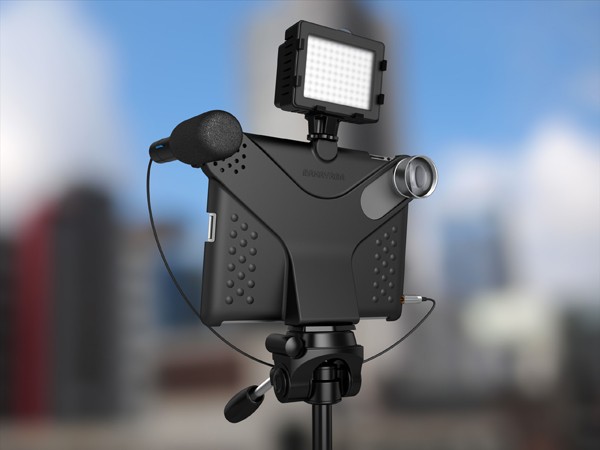
The Movie Mount by Makayama lets you do a bunch of things only a true filmmaker will appreciate: you can attach a tripod to it for those pan & tilt shots, use 37 mm conversion lenses, including wide angle and zoom, add a video light or shotgun microphones, or use an optical viewfinder when shooting in bright sunlight.
Watch the video and see the full story here
just-style management briefing: 3D technology in the fashion business
"[3D technology] is still something relatively new in the marketing side of the fashion world," says Kyle Fitzgibbons, the US-based designer behind Native Son. ...
... "The Japanese love information and details, so the 3D will allow them to really study products from all angles in the same way they would be able to in shops. It will be a big asset in terms of really seeing the material and textures of a product." ...
American swimsuit designer Lori Coulter, for example, has clients step into the TrueTailor digital body scanner in her shop, which creates a 3D model of the customer's body in less than a minute, with tailor-made bathing suits ready within two weeks' time. ...
Read the full story here