INSERT COIN: This Week in Kickstarter
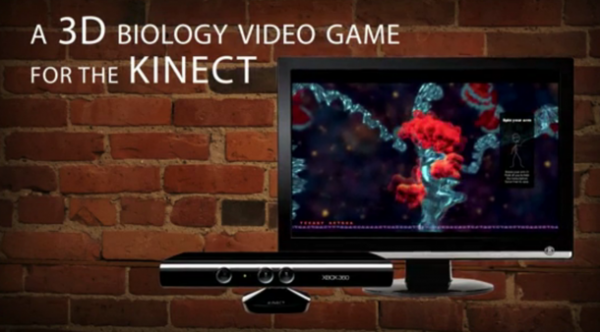 A 3D Biology Video Game for the Kinect by Blair, Laura Lynn, & Rachel
Fundraising Deadline: Wednesday May 30, 2012 @ 8:47 PM EDT
Fundraising Goal: $27,500
Project Type: Educational Video Game (Cellular Biology, Motion Control)
Platform(s): PC, Mac
Estimated Project Completion: January 2013
Project Description:
We are scientific animators and game developers and we’re making a biology game that could revolutionize high school science learning. We’ve begun one level of the game, and you can see us playing it in our video. With your help, we’re going to turn this demo into a game that will be used in science classrooms around the world to teach students in a visual and kinesthetic way.
This game will also be totally fun for our fellow science nerds to play!
We’re planning on spending 3-6 months creating a game that contains a fully-immersive world inside a cell with at least five distinct mini-games. As we’re working, we’re going to test the game with local teachers and students to get feedback that will help us make the game as useful (and as fun!) as possible for biology education.
Why is it on our radar?
Personnel is a very important consideration when deciding whether to back a Kickstarter project. In this case, what this one lacks in creative nomenclature, it makes up for in sheer credibility. All three members of the team are professional scientific animators working with museums and educational institutions creating visualizations and games. Among them, there is a National Science Foundation (NSF) finalist and award winner for the 2011 Visualization Challenge. Yes, they know what they are doing.
They’ve also already got part of the Kinect-enabled game working, as you can see in the pitch video. Is this the kind of thing that hardcore gamers are going to back in droves? No. But it’s the kind of thing that hardcore gamer science nerds should be paying attention to. This is a very cool project that will have long-lasting application and help show the value of gaming in the classroom. Interactive experiences, in conjunction with traditional classroom learning, will help cement knowledge for students. Being able to “see” the inner workings of a cell will help elucidate these complex biological processes by engaging multiple senses.
Glove One: the 3D-printed gauntlet of cellphones
Artist Bryan Cera's Glove One isn't the first wearable phone we've seen, but it is a beautifully crafted device. Cera designed and manufactured the Glove One using a 3D printer and harvested parts from a wristwatch cellphone. It's a slick-looking, fully functional phone, although we'd have liked to see chorded keyboard-style number input, rather than relying on a second hand to use the device.
There are no plans to commercialize the design, which was created as a commentary on our reliance on cellphones. Cera says it reflects how we "augment ourselves through an ambivalent reliance" on technology, and also represents a "celebration of the freedom we seek in our devices." ...
Read the full story here:
Broken Glasses: Experts Try to Save 3D from the Theaters Themselves
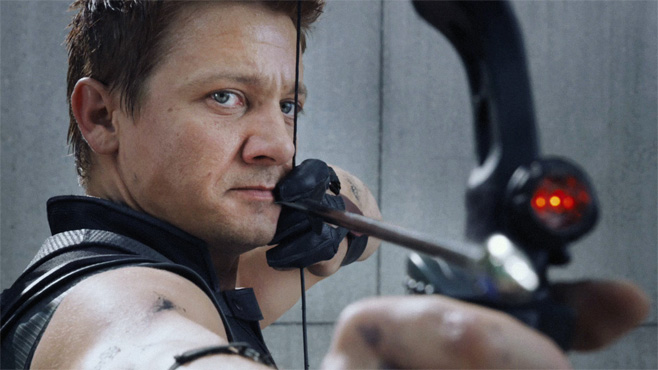 At the Los Angeles all media screening of The Avengers, several batches of 3D glasses were broken so that many viewers could not even see the screen. ...
The Problem
The Arclight, a premium movie theater in Los Angeles, uses a 3D system called XpanD, which creates the 3D effect with an active shutter. ...
“I hate to point fingers but it sounds like the theater wasn’t doing a good enough job on quality control of the glasses,” Schklair said. “After a screening, they are supposed to legally wash them and sterilize them, and they should also do a quality check on them and make sure the batteries are good and they’re working. It’s actually not normal to hear of a theater distributing broken glasses. They’re pretty good with their quality control.” ...
“If I could find anything to do, I would be out there doing it,” Schklair said. “I don’t have input into the theaters. I wish I did because it’s more than glasses. It’s on a technical level, the screen brightness in most theaters is so poor that 3D movies look terrible because they’re dim.”
See the full story here:
Silicon Valley – It’s in the Wrong Place!
 [Philip Lelyveld comment: This article articulates a small part of a vibrant, growing movement in LA. The author, Roy Taylor, currently serves as Executive Vice President and General Manager of MasterImage 3Dand his vision is to bring glassless 3D to our hands in the forms of tablets and smartphones.]
[Bright Side of News]
... Many Silicon Valley tech companies are now having trouble hiring. It's bad enough that would be employees are increasingly using Glassdoor to check out prospective employers and not liking what they find. This is why it's a surprise to me that not more tech firms are moving down south. LA is large, officerents are cheap but most of all there is a lot here for young and not-so-young engineers to enjoy. This is not just about being able to party either. It's a 100 miles from Hollywood to Big Bear to ski, from down town LA to Santa Monica is 40 minutes (OK its 2 hours during traffic but hey it's fine during weekends) for the beach.
LA has glamour, it has mountains, it has the beach, it has the restaurants, bars, better shopping and even easy access to airports (Burbank has valet parking!) For the cultured it has the LACMA. There is a move going on right now to rebrand Santa Monica as Silicon Beach but I think they might be missing an opportunity to sell it better. Instead of making it attractive on the basis of tax breaks and office rentals, etc. they should market tech in LA on the basis of how much more exciting it is than Palo Alto, Silicon Valley is wonderful, it's just in the wrong place!
The image above is taken from Alex Caps, CEO of Hyphos without his permission, I hope he will allow me to use it on the basis of promotion for his excellent website.
Read the full story here:
Portrait of The Queen given to the National Portrait Gallery by the people of Jersey
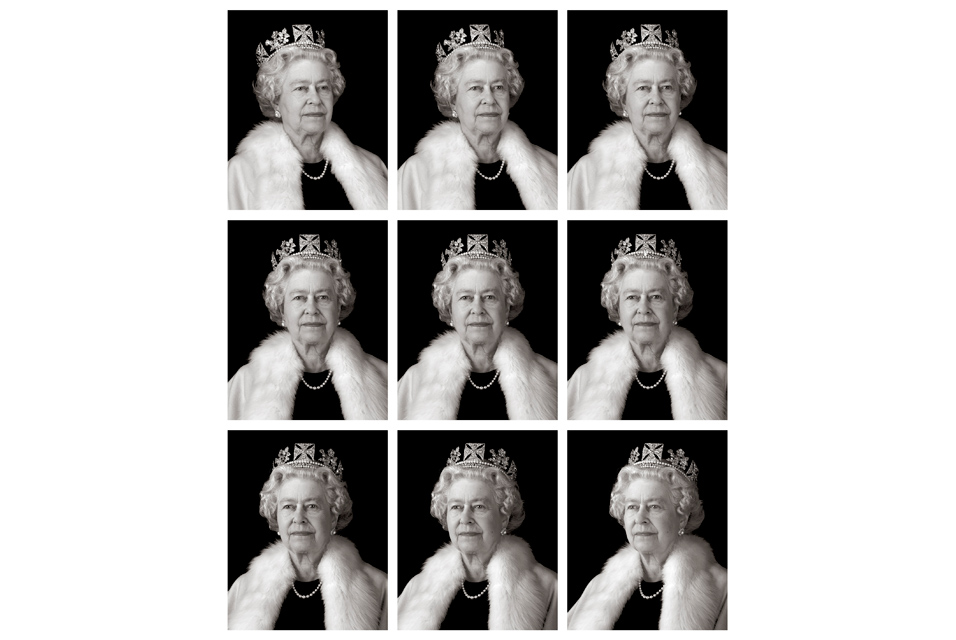 The first ever lenticular portrait of Queen Elizabeth II, Equanimity, has been presented to The National Portrait Gallery, London by the People of Jersey. The portrait, by artist Chris Levine and holographer Rob Munday, was commissioned in 2004 by the Jersey Heritage Trust to celebrate the island’s 800 year relationship with the monarchy. Lenticular images produce an illusion of spatial depth and movement, giving the appearance of three-dimensions. Equanimity will be on display as part of The Queen: Art and Image exhibition, opening at the Gallery on 17 May 2012. The work given to the Gallery is a new, more technically refined version of the original Equanimity, created in 2004 and will be seen for the first time at the Gallery. ...
See the full story here:
Is the glasses-free 3D laptop ready for prime time?
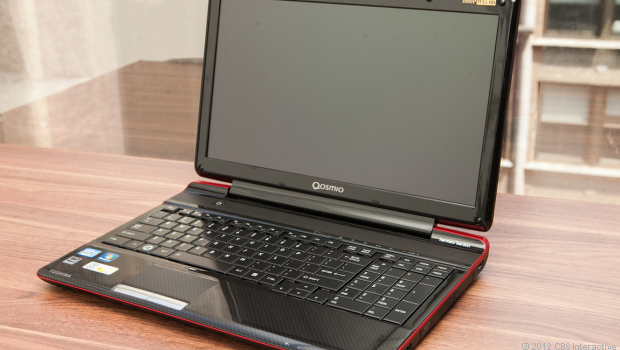 ... The 2012 update to the Qosmio F755 fares a good deal better. Its 3D Blu-ray player app felt snappier, the optimal viewing angles are still very narrow, but discs of 3D movies such as "Avatar" and "Tron: Legacy" presented themselves well.
Even more exciting, thanks to new Nvidia drivers, games now work in 3D, to a point. While nearly every PC game I tried worked in 3D, the lower-end Nvidia GeForce 540 GPU prevented most games from having playable framerates in 3D (performance was much smoother with the 3D effect turned off).
That's a real shame, as an autostereoscopic 3D gaming laptop could be a fun splurge for gamers. ...
See the full story here:
Dolby and Nokia putting Hollywood magic in your hands – and ears
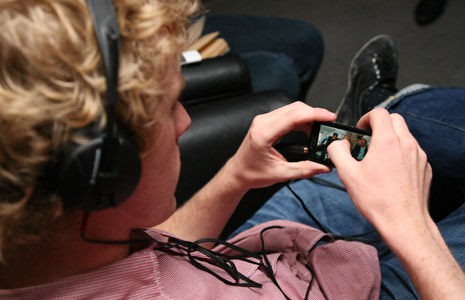 ... Dolby brought Dolby Stereo sound to A Star is Born in 1976, Dolby Digital 5.1 surround sound to Batman in 1992, and Dolby 3D to Beowolf in 2007. ...
This year, at Mobile World Congress, Dolby and Nokia announced a partnership with movie service Voddleras the world’s first ever mobile service delivering Dolby Digital Plus. Dolby also announced Dolby Digital Plus in more devices, including theNokia PureView 808 and the Nokia 700, Nokia 701 and Nokia 603.
“We’re taking it to the next level,” Dowell says. “These devices not only decode Dolby Digital Plus, they addDolby Headphone technology to give you an amazing surround sound experience for personal listening.”
At the moment Nokia supports 5.1 channel surround sound, but is working with Dolby to increase that even further.
Press the Dolby button on your Nokia screen and you’ll hear the difference with normal stereo sound. ...
See the full story here:
Personalised Superhero Action Figures: We become Batman
[Philip Lelyveld comment: as I've said many times, 3D printing is the ultimate test of patents and trademarks]
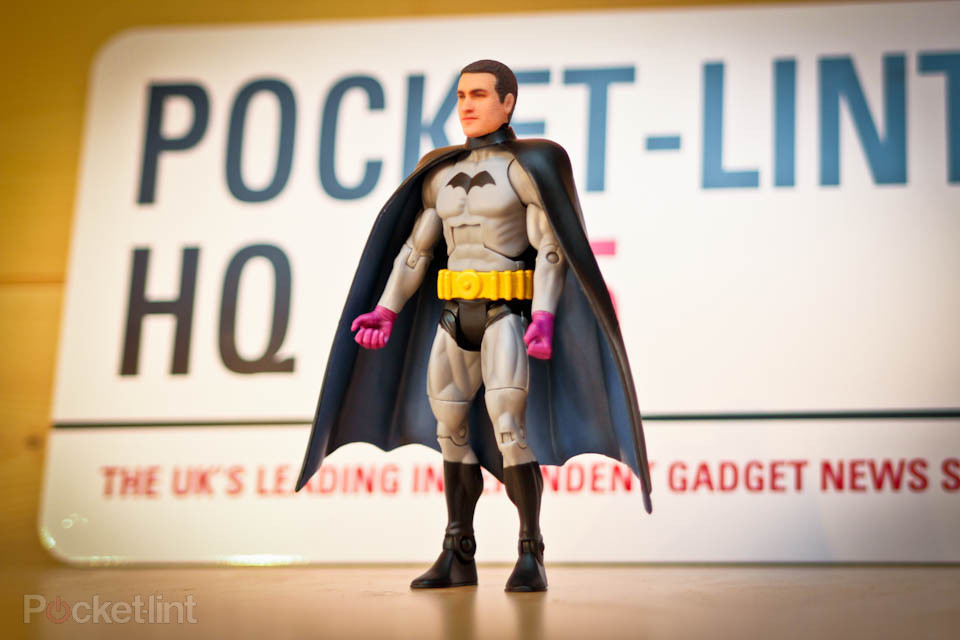
... Firebox, the UK's favourite online gadget shop, is offering customers the chance to become Batman, Superman, Batgirl, Iron Man, Thor or Captain America as long as you are willing to send it your photo and £80.
Dubbed the Personalised Superhero Action Figures you can pop your own head on their buff shoulders and show the world just how much you love yourself.
In practice, the whole process is incredibly easy. Snap two shots of your face - one from the front and one from the side - then upload the pictures to the site and confirm your order. ...
Three weeks later the finished model is returned allowing you to convince your kids you are something to be played with.
Using 3D printing technology - it's all the rage don't you know - your photographs will be turned into a fully-formed 3D version of your noggin – including eye colour, skin tone, hair style (or as close as possible) and hair color. ...
See the full story here:
MasterImage 3D’s 3D Tablet: Surprisingly Decent, and No Glasses Needed
 [Philip Lelyveld comment: 3D in the popular press]
[Time]
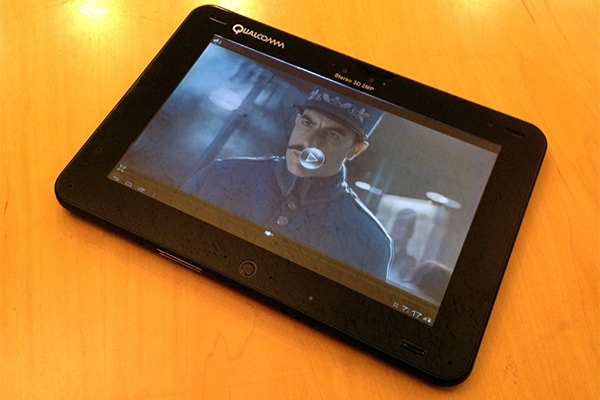
... The company’s technology is known as cell matrix parallax barrier, and it involves a layer on the LCD screen with barriers that let each of your eyes see a slightly different image. MasterImage 3D says that its system involves larger gaps between the barriers than competing approaches to glasses-free 3D, permitting a brighter image with no ghosting effect. I watched the trailers for Hugo and The Amazing Spider-Man and checked out a game and other samples, and as long as I was careful to hold the tablet at just the right angle, the 3D was surprisingly crisp and subtle. (I did notice a blocky pixelation effect from time to time; according to MasterImage 3D, that’s because the tablet is an alpha product that hasn’t been fully optimized.)
Cell matrix parallax barrier screens work best for small displays, which is why MasterImage 3D is focusing on tablets and phones rather than PCs, TVs and other big-screen gadgets. It’s working with chipmakers such as Qualcomm and Texas Instruments, LCD manufacturers and other component providers to make its 3D screens available to phone and tablet companies; it hopes that phones will reach consumers by the end of this year, with tablets following in the first quarter of 2013.
I still think of 3D as a gimmicky fad. But if MasterImage 3D’s technology ends up in consumer products and lives up to its potential, it could be a gimmicky fad that’s easy on the eyeballs — not the blurry, headache-inducing mess that I usually find it to be.
Read the full post here:
Toshiba finally launches glasses-free 3D TVs in Asia
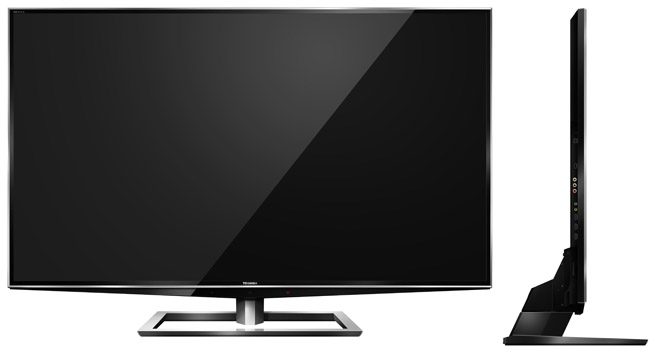 A new contender in the 3D TV market has arrived with the official launch of the Toshiba Regza 55RZ1. This 55-incher is possibly the world's first large-screen glasses-free 3D TV, which displays 3D content without additional active shutter or passive 3D glasses. Moreover, it is also a 4K TV boosting a staggering 3,840 x 2,160-pixel resolution that is four times higher than a typical full-HD model.
As far as 3D is concerned, the 55RZ1 employs a powerful Regza Engine Cevo Duo S engine and lenticular lenses to deliver up to nine effective viewing zones. An inbuilt face-tracking system is available to adapt these sweet spots to the sitting positions of the viewers at the touch of a remote button. Onscreen 3D resolution has also been bumped up to HD (720p) quality compared with its predecessors, thanks to 4K technology.
Another highlight is the panel's 4x Super Resolution+ function, which converts and optimizes 2D content to leverage on its 4K screen. These include standard-definition DVDs, as well as high-definition Blu-ray Discs. However, users can only view 4K photo files directly through the TV's USB media player, while an external A/V input box such as the THD-MBA1 is required to play native 4K videos. ...
Read the full article with product technical specifications here: