Tony DeRose, Pixar’s senior scientist, gave a lecture on “Math in the Movies” at New York’s Museum of Mathematics. His job consists of translating principles of arithmetic, geometry and algebra into computer software that can render objects or power physics engines. He gave the talk in part to explain why aspiring animators and game designers need to have a solid base in mathematics.
 DeRose has far more than just a basic understanding of math. He earned a PhD in computer science, focusing on computational physics and spent a decade as a professor of computer science and engineering at the University of Washington.
“Computer animation, DeRose says, frequently deals with modeling objects at greater scale and detail than even physicists typically deal with in their computations,” ... Thus, most of his work revolves around finding better algorithms to create that type of scale efficiently.
See the full story here: http://www.theverge.com/2013/3/7/4074956/pixar-senior-scientist-derose-explains-how-math-makes-movies-games
At the RSA security conference in San Francisco last month, Mayank Upadhyay, a principal engineer at Google who specializes in security, became the first person at Google to speak in public about that research. He said that using personal hardware to log in would remove the dangers of people reusing passwords or writing them down. He also thought people would feel some familiarity with the approach. “Everyone is familiar with an ATM. What if you could use the same experience with a computer?”
See the full story here: http://www.technologyreview.com/news/512051/google-wants-to-replace-all-your-passwords-with-a-ring/?utm_campaign=newsletters&utm_source=newsletter-daily-all&utm_medium=email&utm_content=20130312
[Philip Lelyveld comment: Bruce literally wrote the books on a) cryptography and b) why it gives a false sense of security. In this brief article he gives his informed assessment of what is real and what is manufactured in the current cyber-attack / espionage environment.]
Cyber-espionage is old news. What’s new is the rhetoric, which is reaching a fever pitch right now.
Unfortunately, both the reality and the rhetoric play right into the hands of the military and corporate interests that are behind the cyberwar arms race in the first place. There is an enormous amount of power at stake here: not only power within governments and militaries, but power and profit amongst the corporations that supply the tools and infrastructure for cyber-attack and cyber-defense. The more we believe we are “at war” and believe the jingoistic rhetoric, the more willing we are to give up our privacy, freedoms, and control over how the Internet is run.
See the full story here: http://www.technologyreview.com/view/512386/danger-lurks-in-growing-new-internet-nationalism/?utm_campaign=newsletters&utm_source=newsletter-daily-all&utm_medium=email&utm_content=20130312
 Sunglass enables this collaboration by giving a cloud-based environment to design firms to where the designers can logon to work and manage a model.
Coming together, DIYROCKETS and Sunglass are announcing a partnership to launch an open source competition to create 3D printed rocket engines through collaborative design where Sunglass will be providing the collaboration platform. The competition opened for registration at South by Southwest (SXSW) on March 9, and challenges makers, designers and space entrepreneurs to create open source rocket engines that will serve the growing market for small payload delivery into low earth orbit and ultimately, disrupt the space transportation industry.
“We were told that people would never give us money, that we priced it way too expensively … the fact that it was leaky was viewed as silly, the fact that you could do a workaround was viewed as silly. We did that on purpose. If you like it so much that you’re willing to do a hack around a URL just to get a peek under our dress … eventually you’re going to give us some money.”
See the full story here: http://paidcontent.org/2013/03/10/finding-out-who-your-real-friends-are-how-david-carr-views-paid-content/?utm_source=General+Users&utm_campaign=db5aa8f2c9-c%3Amed+d%3A03-12&utm_medium=email
Digital Cinema Distribution Coalition announced that it has reached agreements with five movie studios to provide digital delivery services to theaters in North America. The DCDC satellite and terrestrial digital distribution network will deliver feature, promotional, pre-show and live digital cinema content from Lionsgate, Universal Pictures, Disney, Warner Bros. and Paramount Pictures.
“DCDC is creating a technological superhighway,” added Cinemark CEO Tim Warner. “It’s one port access to thousands of screens, for both movies and alternative content, from all content providers.”
See the full story here: http://www.hollywoodreporter.com/news/five-studios-sign-satellite-movie-426659
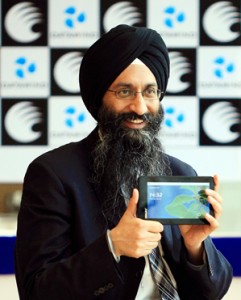 DataWind began winning attention last year when it struck a deal to supply India’s government with 100,000 of its Aakash 2 tablets, for roughly $40 each, by this March 31. That tablet works only near Wi-Fi points, but DataWind also sells an $83 commercial version called Ubislate 7C+, which comes with an unlimited mobile data plan for around $2 per month. Within 18 months, Tuli says, he hopes to bring the price of a basic tablet down to $25 and make the Internet connection free.
Hardware has gotten cheap enough that restaurants or resorts should be giving customers tablets to walk away with for free. Hardware is becoming a customer-acquisition tool.
Our assessment was that when the cost of purchasing PCs fell to within 20 percent of monthly salary, you started to see them in every home. In a place like India, there are about billion people for whom $50 meets that criterion.
Nobody focuses on the problem of creating apps for somebody whose monthly income is $200. Those people are not part of the computer age or the Internet age; most of them are not literate. So we run app competitions in India to try to get people thinking from that perspective.
 For the last six months, Cody Wilson and his non-profit group Defense Distributed have worked towards a controversial goal: Tomake as many firearm components as possible into 3D-printable, downloadable files. Now they’re seeking to make those files searchable, too–and to make a profit while they’re at it.
In a talk at the South By Southwest conference in Austin, Texas Monday afternoon, Wilson plans to announce a new, for-profit spinoff of his gun-printing project that will serve as both a repository and search engine for CAD files aimed at allowing anyone to 3D-print gun parts in their own garage. Wilson says the startup, hosted at Defcad.com, will be a redesigned version of a website Defense Distributed already maintains at Defcad.org for uncensored printable gun component files. But Defcad, which launches next month, will also host its own search engine for all types of 3D printable files, displaying search results as rotatable and zoomable three-dimensional models on a single page.
See the full story here: http://www.forbes.com/sites/andygreenberg/2013/03/11/3d-printable-gun-makers-announce-plans-for-a-for-profit-search-engine-startup/?partner=yahootix
Berlin-based startup iversity, founded in 2011 to offer online collaboration tools for learning management, has relaunched itself as a platform for massive open online courses. Its first batch of MOOCs are due to go live around September/October, at the start of the winter study term, with a view to steadily expanding the number of courses offered on its platform and ramping up student numbers from the initially expected six-digits.
In order to encourage institutions and academics to kickstart its platform business, iversity has launched a competition — under the grand title of MOOC Production Fellowship and in partnership with German education think tank Stifterverband – asking for MOOC concepts to be submitted. The competition runs to the end of April. Ten winners will be chosen and will each receive a grant of €25,000 to produce their course in time for iversity’s inaugural winter term.
”We became convinced that the MOOCs phenomenon is not just your regular hype but a very substantive trend or new business that’s emerging.”
According to Riecke, iversity is looking at three likely business models:
- certification fees for students — these won’t be implemented this year, says Riecke, but will be coming to iversity in 2014
- licensing fees — where physical universities pay iversity to license courses to replace some of the classes they conduct (likely for introductory courses, freeing the university’s staff up for more in-depth teaching)
- recruiting fees — generated by providing a “recruiting intelligence” service to employers based on students’ performance in relevant classes
See the full story here: http://techcrunch.com/2013/03/11/iversity-moocs-pivot/?ncid=tcdaily
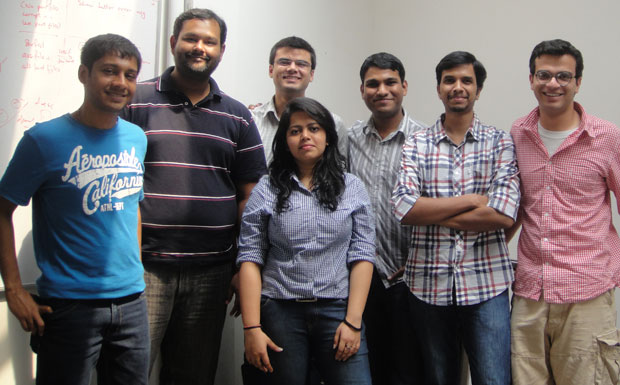 Sunglass enables this collaboration by giving a cloud-based environment to design firms to where the designers can logon to work and manage a model.
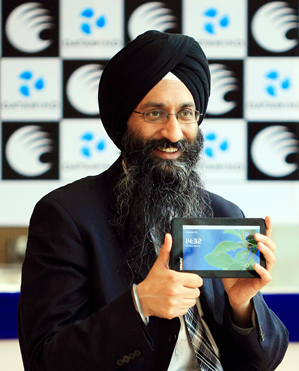 DataWind began winning attention last year when it struck a deal to supply India’s government with 100,000 of its Aakash 2 tablets, for roughly $40 each, by this March 31. That tablet works only near Wi-Fi points, but DataWind also sells an $83 commercial version called Ubislate 7C+, which comes with an unlimited mobile data plan for around $2 per month. Within 18 months, Tuli says, he hopes to bring the price of a basic tablet down to $25 and make the Internet connection free.
 For the last six months, Cody Wilson and his non-profit group Defense Distributed have worked towards a controversial goal: Tomake as many firearm components as possible into 3D-printable, downloadable files. Now they’re seeking to make those files searchable, too–and to make a profit while they’re at it.