Using the whole chicken: Warner looks to monetize movie audio clips
 Seattle-based Hark, which bills itself as a kind of YouTube for audio clips, is currently pitching the majors on a concept it calls “derivative content.” The company just announced a deal with Warner Bros. to stream sound files on its site from nearly 100 of the studio’s movies.
The plan works this way: Movie fans searching for, say, Laurence Fishburne’s memorable description of the Matrix in Warner’s 1999 eponymous sci-fi classic will be directed to apage that not only has a streamed audio file of that quote, but also has a national advertising component the studio shares revenue in. It also has links to direct the user to Amazon and the Warner studio shop so that they can rent or buy the movie. ...
So how much monetization are we talking about at this point? Well, the money isn’t going to replace DVD anytime soon, but based on the performance of the pilot partnerships with studios, Hark CEO David Aronchick told paidContent, ”We are generating value in the six-figure range trending to seven figures on an annualized basis.” ...
See the original post here:
Google testing heads-up display glasses in public
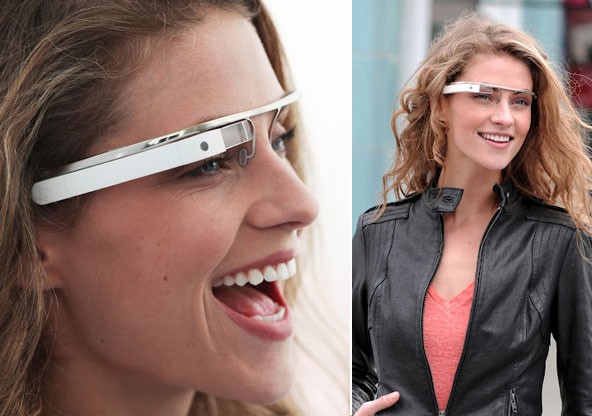
[Philip Lelyveld comment: this looks like the near-screen technology that I saw the Vusix people demo to Sergy Brin at CES.]
The good news: Google has started testing those augmented reality glasses we heard about earlier in the year. The bad news: if the artsy shots of the test units are to be believed, they won't make you look like some '80s cinematic anti-hero. In fact, the things wouldn't look too out of place in a New York Times style story. The software giant let it be known that, while it hasn't quite got a sale date on the wearables, it's ready to test ProjectGlass amongst the non-augmented public. The company is also looking for feedback on the project, writing in a post today, "we want to start a conversation and learn from your valuable input." Want some idea of what ProjectGlass might offer the public? Sure, it's not quite as good as strapping a pair on your own eyes, but interested parties can check out a video of Google's vision after the break.
See the full story here:
Jim Chabin believes 2012 will be a good year for 3D
 ...Chabin acknowledged the downturn in 3D film box office sales in 2011 ...
Perhaps most interesting was Chabin’s news that China will be splitting its 10 upcoming 3D channels into themes such as arts, entertainment and drama, but the surprise announcement was that a3D news channel will be part of the line-up. The Chinese government has committed to launching the ten 3D channels over the next 5 years under the CCTV brand who launched their first 3D channel in January.
Chamblin said that 3D was still very popular amongst the public with the term “3D" being searched on Google 88 million times a month. ...
See the full article here:
Jeffrey Sanker Talks About the White Party 3D Experience (3D AUDIO)
Jeffrey Sanker, the premier producer of gay extravaganzas, is the founder of L.A.-based White Party Entertainment, Inc. I talked with Jeffrey about the White Party 3D Experience, which takes place April 6 through April 9 in Palm Springs, Calif., with Grammy-winning superstar Mary J. Blige as the headliner. ...
"White Party 2012 is going to be a 3D experience," said Sanker. He described "bigger and bolder LED and visual displays and immense stage and platform structures designed to stretch the limits of your imagination. The only lenses needed are your shades." ...
See the full story here:
To 3D Or Not To 3D: Buy The Right Titanic Ticket
[Cinema Blend]
Final Verdict: 23 out of 35. It's a good score, but not a great one. Cameron's team did put an incredible amount of work into adding a new dimension to his epic tale of romance and tragedy, but the results can't truly compete with features planned for 3D. Still, Titanic is amazing on the big screen, and the 3D does make some scenes absolutely stunning. When buying your ticket it really just depends on what you want from your viewing experience. Because some things—like Billy Zane's wonderfully campy performance as the villain millionaire—cannot be improved upon by 3D, but some of the spectacle certainly is, and the rest really needs no improvement.
See the full story here:
A Look At Titanic’s 3D Makeover And Early Box Office Estimates
The video below, courtesy of iTunes, features writer/director James Cameron, producer Jon Landau, Stereo D president William Sherak, and Stereoscopic Service Supervisor Mike Hedayati discussing the process of turning Titanic into a 3D movie, and aiming to set the "gold standard of conversion." We also get a few glimpses behind the scenes...
As of today, Titanic 3D is available at 2,674 theaters. ...
See the original story here:
Cheaper 3D Boasts Titanic Entertainment
 It's an occasion to look back at this once-hyped and overpriced technology, which has now morphed into a more low-key and accessible form. For sure, some 3D is still an exotic toy — spawning $18 movie tickets and Cadillac home-theater bundles. But it's also trickling into cheaper TV setups and humbler devices, such as phones and cameras.
Television
TVs capable of showing 3D content are still expensive. But it's really just a bonus that comes in sets with more compelling features, such as high-quality screens, slick design and Internet connections for accessing online video such as Netflix and audio such as Pandora, said Paul Semenza of analyst firm NPD DisplaySearch. Those will probably be your reasons to spend more for a set. ...
Cameras
As with TVs, 3D is slipping in as an extra in higher-end cameras. You would probably buy models such as the Sony HX7V ($280) and Nikon S6300 ($200) for features such as 10X optical zoom, full HD video and panorama photography. But it so happens they also capture 3D photos ...
Phones and game consoles
Oftentimes, the phone is your camera, and a few models throw in 3D, as well. ...
Along for the ride
... But unlike the real Titanic, 3D doesn't have to sink a fortune.
See the full story here:
Netflix Could Undermine UltraViolet As Low Cost Rentals Trash Studio Profits: Report
 Moguls will need a stiff drink nearby when they read Morgan Stanley analyst Benjamin Swinburne’s bracing report today about the state of the home video business — and Hollywood studios. He says that film operations at Universal, Disney, Paramount, Fox, and Warner Bros are worth about $19.3B, down from $40.2B in 2007. And a big reason for the 52% drop is that studios’ annual home video profits from each TV household fell to $100 last year from $127 in 2007 — and will continue to slide to $93 in 2015. Sales and high-priced rentals of DVDs and Blu-ray discs from retailers such as Blockbuster are simply falling too fast as consumers discover that they can do just fine paying $1.20 a night to rent a disc at a kiosk — or less to watch a movie from Netflix. The analyst says it’s possible that studios will boost sales of discs with the UltraViolet initiative, which gives buyers opportunities to stream the movies to mobile and other digital devices. But probably not: Swinburne figures that Netflix users, who pay about $8 a month for a subscription, in effect pay just 48 cents for each movie that they stream. As a result, “the incentive to rent a film at $4-$5 or buy a digital copy at $10-$15 goes down considerably,” he says. “It suggests Netflix film deals are potentially an impediment to the success of UltraViolet.” Meanwhile, DVD sales are falling much faster than Blu-ray disc sales are growing. ...
Read the full story here:
Scanner Will Capture Your Room, Give You 3D Replica [VIDEO]
When the Xbox Kinect came out in 2010, most people drooled over its ability to read gesture-based commands.
Matterport founder Matt Bell, however, was more excited about the prospect of low-cost, high-quality 3D imaging.
As a co-founder of a company that makes gesture-based interactive display advertising (such as virtual soccer balls that can be controlled by a kick), Bell spotted an opportunity to create a new visual technology.
He ended up using Kinect to make Matterport, a handheld device that instantly creates 3D renderings of any space.
Seconds after pointing the device around a room, you can browse a 3D replica on your laptop.
Here’s the simplified version of how it works: The Kinect creates millions of individual images as it scans the room. Bell’s software stitches those photos together in real-time in order to create one 3D mesh image that can be tilted, rotated and annotated.
“You can think of it as a giant 3D jigsaw puzzle with millions of pieces that needs to be solved in real time,” Bell tells Mashable.
He pitched his latest protoype, which no longer includes an actual Kinect, at startup accelerator Y-Combinator’s demo day last month. ...
Read the full story with video here
Masterclass: James Cameron And Jon Landau Teach Bleeding Cool The Dos And Donts Of 3D Conversion
 ...
Jon Landau: You can say to a movie studio “Let me pay the bill” at dinner and they’ll say “No” because that’s what they do. Studios are in the business of saying no. They were sceptical about this conversion.
It cost $18 million dollars plus the cost to open and market the movie because in my mind, it’s not a re-release, it’s a new release. When people go back to see this in the theatres, it’s going to be a new experience for them.
But we did our due diligence. We took one minute of film from 5 different scenes in the movie and had 15 different companies convert it, and we stood back and watched all the versions. We found a company, Stereo D that we found we could work with, and we could improve what they were doing so that the end result would be something acceptable to us and creatively we’d feel comfortable. If we can say “Jim Cameron is proud of this” then we’re happy.
James Cameron: Stereo D had their in house artists and then their supervisors, and then there was my team who would receive the shots as works in progress and they would kick them back and turn them around five or six times before they ever came to me and I’d say what’s not working, and where we needed more or less depth or volume.
Shots were converted all out of order, then we’d view complete scenes, then compete reels. Sometimes it would bump a little bit as we went along so we’d adjust.
I found that in wide angle shots it was ...
See the full story here: