... At a live podcast taping titled “Generative AI: Oh God What Now?” two technologists pondered how many creativity-driven jobs will get taken over by machines. In a “Shark Tank”-esque pitch session, entrepreneurs proposed new ways to integrate AI into entertainment, such as by splitting audio stems or visualizing film scripts automatically. ...
Santa Monica-based Flawless has focused on using deep-fake-style tools to edit actors’ mouth movements and facial expressions after principal photography has wrapped. Playa Vista’s Digital Domain is bringing the technology to bear on stunt work. ...
But for all the hype, some remain skeptical, wondering how much of the excitement is venture capital-fueled froth.
It was only a year ago, at SXSW 2022, that technologists seemed all in on crypto. But soon enough, crypto values plummeted, regulators cracked down and industry mainstays imploded. Even the metaverse — the other “next big thing” Silicon Valley’s been pitching in recent years — has thus far proven underwhelming. ...
The rise of AI in writing has also raised concerns by unions representing screenwriters, who fear studios might replace experienced TV and film scribes with software. This year, the Writers Guild of America will demand studios regulate the use of material produced by artificial intelligence and similar technologies as part of negotiations for a new pay contract this year. ...
“That doesn’t mean that AI will never be able to produce a truly funny sitcom script or a masterfully moving film score,” she said. “But it will have to be a different kind of AI. We’re not there yet, and I don’t think we will be soon. In my opinion, anyone who claims to know when and how that will happen is engaging in either deception or wishful thinking.” ...
“I bet sometime in the next handful of years that there becomes this horrible industry practice where you have to have multiple variations before things are greenlit,” Webb said in an interview. “And then there’s a, like, predictive algorithm that tries to determine which version has the highest likelihood of grossing the most [money].” ...
... In this moment of AI hype and uncertainty, Harris and Raskin are breaking the glass and pulling the alarm. It’s not the first time they’re triggering sirens. Tech designers turned media-savvy communicators, they cofounded the Center to inform the world that social media was a threat to society. The ultimate expression of their concerns came in their involvement in a popular Netflix documentary cum horror film called The Social Dilemma. While the film is nuance-free and somewhat hysterical, I agree with many of its complaints about social media’s attention-capture, incentives to divide us, and weaponization of private data. These were presented through interviews, statistics, and charts. But the doc torpedoed its own credibility by cross-cutting to a hyped-up fictional narrative straight out of Reefer Madness, showing how a (made-up) wholesome heartland family is brought to ruin—one kid radicalized and jailed, another depressed—by Facebook posts.
This one-sidedness also characterizes the Center’s new campaign called, guess what, the AI Dilemma. (The Center is coy about whether another Netflix doc is in the works.) Like the previous dilemma, a lot of points Harris and Raskin make are valid—such as our current inability to fully understand how bots like ChatGPT produce their output. ...
Instead, they warn of a world where the use of AI in a zillion different ways will cause chaos by allowing automated misinformation, throwing people out of work, and giving vast power to virtually anyone who wants to abuse it. The sin of the companies developing AI pell-mell is that they’re recklessly disseminating this mighty force. ...
But there’s another side to that coin—one where AI is humanity’s partner in improving life. This experiment also shows how AI might help us crack the elusive mystery of the brain’s operations, or communicate with people with severe paralysis. ...
What’s most frustrating about this big AI moment is that the most dangerous thing is also the most exciting thing. Setting reasonable guardrails sounds like a great idea, but doing that will be cosmically difficult, particularly when one side is going DEFCON and the other is going public, in the stock market sense. ...
It’s good business to disseminate innovations to the public, whose lives will be improved and even become more fun. But when the technologies are released with zero concern for their negative impact, those products are going to create misery. Holding researchers and companies accountable for such harms is a challenge that society has failed to meet. ...
In front of an empty DJ booth at an East London nightclub, partygoers danced to AI-generated beats in a unique experimental rave that sought to test whether an app can match the vibe of real-life records and a mixer. ...
Powering the night’s pulsating techno and rhythmic drumbeat was Mubert, the app created by a team of Ukrainian and Russian developers. ...
Mubert uses human-made loops and samples to generate brand-new tracks. Users can like or dislike the app's generative music, and the app adapts accordingly.
Musicians who created the samples then get a cut when their sounds are used. ...
"We want to save musicians' jobs, but in our own way," Zgordan told Reuters via videolink from the Armenian capital Yerevan. ...
But they are also a potentially predatory technology that can easily take advantage of the human propensity to project personhood onto objects – a tendency amplified when those objects effectively mimic human traits.
If the deal closes, it would be the DAO’s first golf course purchase.
The DAO is still “working through the details” of the course membership structure and hasn’t confirmed what benefits would be provided to LinksDAO token holders who wish to access the golf course.
As for the state of the golf course right now, Besvinick described it as “playable.” ...
... Kicking off the April 17 Content Protection Summit at NAB (CPS@NAB) at 1 p.m. at the SAHARA Theater in Las Vegas, Schilowitz will take the stage again, this time with the keynote presentation “Behind the Magic of NAB’s Legacy and Future.”
As the NAB Show marks its 100-year milestone, Schilowitz and a well-known Vegas legend will celebrate the art and science of TV and movie magic and look forward at what’s coming around the next few corners of how technology intersects and drives the entertainment experiences in many forms forward.
He’ll discuss just how complex our M+E ecosystem is getting with the convergence of transmedia products across our global customer base (theatrical, streaming, broadcast, gaming, music, etc). ...
... “If we choose, we can all become the creators of our own self-generated sound and light show, which, using some smart AI, we could learn to design ourselves to serve our needs at any time. Bringing AI into the musical mix will allow us to turn our own brain activity in the self-generated music: less deejay, more ‘me’-jay.” ...
He says he’s “still trying to explore” his 1974 idea of a biofeedback-powered concert, during which he would “get three outputs from each musician — one, their music; two, their body; three, their brain — and those could control the images. So, for instance, there's one song, we may have people's faces like the hall of mirrors at the fairground, and we could have big notes that stretch their faces or fatten them. Or if they're thinking deep thoughts, maybe they fade away and become more ghost-like or spirit-like. … You would measure whether they're leaving sort of a beta state and going into alpha gamma waves, or whatever.” ...
... Google has been active in VR and AR for years, making its first foray into sales of smart glasses in April 2013 with the release of Google Glass. However, the $1,500 headset was largely seen as expensive and invasive, and Google stopped selling its first Glass edition in January 2015. ...
... Though Google said it would stop selling the headset as of Wednesday, it plans to continue supporting the glasses until Sept. 15. Google said the glasses will continue to work after Sept. 15, but it doesn't plan to issue any software updates and its preinstalled Meet the Glass app may stop working after that date. ...
... What is hardest to appreciate in A.I. is the improvement curve.
“The broader intellectual world seems to wildly overestimate how long it will take A.I. systems to go from ‘large impact on the world’ to ‘unrecognizably transformed world,’” Paul Christiano, a key member of OpenAI who left to found the Alignment Research Center, wrote last year. “This is more likely to be years than decades, and there’s a real chance that it’s months.” ...
Since moving to the Bay Area in 2018, I have tried to spend time regularly with the people working on A.I. I don’t know that I can convey just how weird that culture is. And I don’t mean that dismissively; I mean it descriptively. It is a community that is living with an altered sense of time and consequence. They are creating a power that they do not understand at a pace they often cannot believe. ...
The coders casting these spells have no idea what will stumble through the portal. What is oddest, in my conversations with them, is that they speak of this freely. ... They believe they might summon demons. They are calling anyway. ...
I cannot emphasize this enough: We do not understand these systems, and it’s not clear we even can. I don’t mean that we cannot offer a high-level account of the basic functions: These are typically probabilistic algorithms trained on digital information that make predictions about the next word in a sentence, or an image in a sequence, or some other relationship between abstractions that it can statistically model. But zoom into specifics and the picture dissolves into computational static. ...
PhilNote: here is another approach to defining and recognizing intelligence.
… To address these limitations [of the Turing Test], there is an urgent and critical need to develop a more nuanced and comprehensive framework for evaluating AI capabilities across multiple dimensions of intelligence.
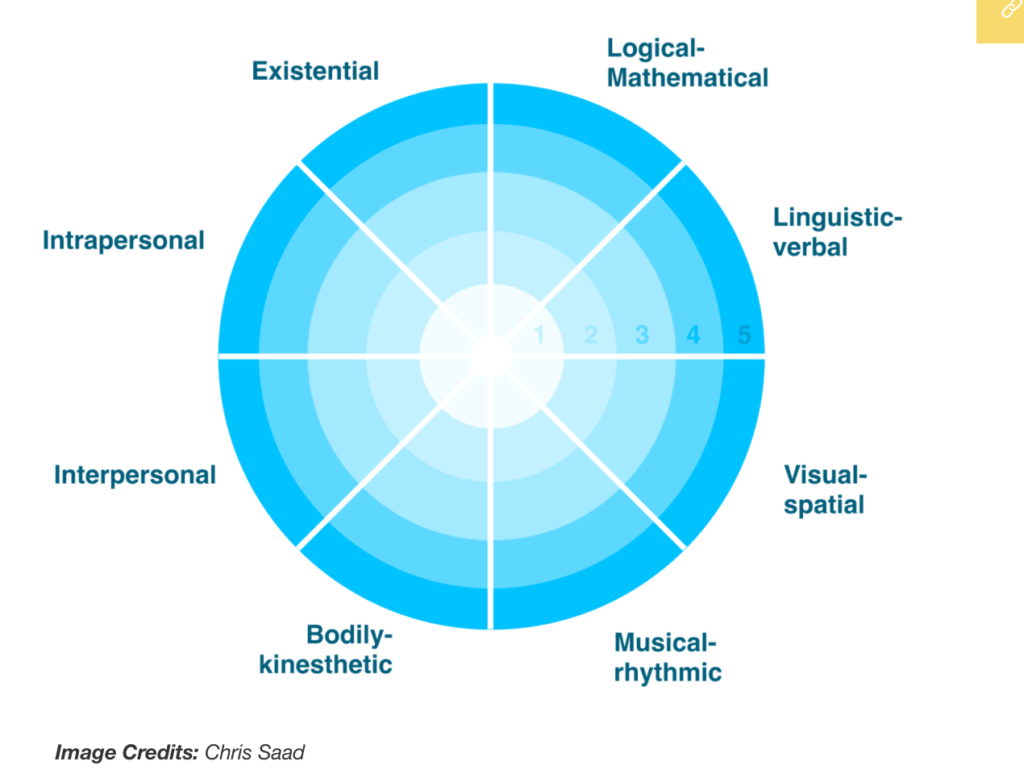
This insight led me to develop the “AI Classification Framework.” The ACF is a new approach to evaluating AI capabilities based on the Theory of Multiple Intelligences.
The Theory of Multiple Intelligences was first proposed by psychologist Howard Gardner in 1983. Gardner argued that intelligence was not a single, unified entity but rather a collection of different abilities that could manifest in a variety of ways. ...