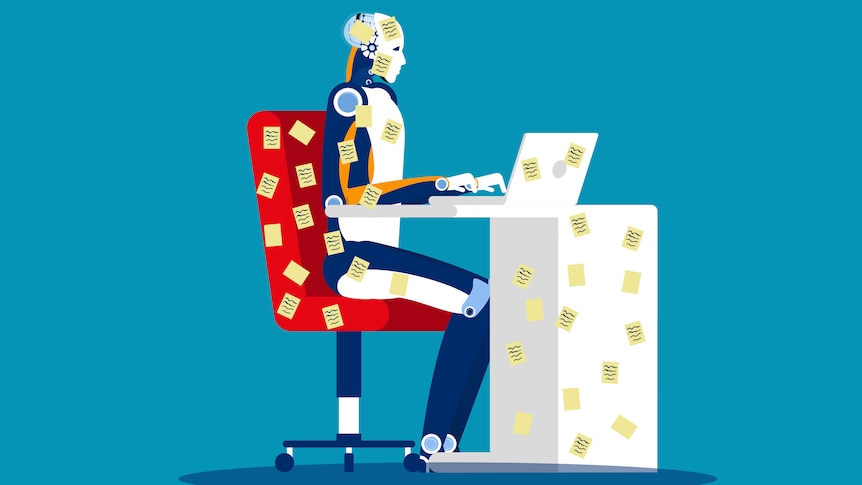
PhilNote: "the “Tamagotchi” generation" makes sense but has huge psychological and ethical issues. If you don't pay your subscription bill, could the service ethically kill it or just permanently hibernate it?
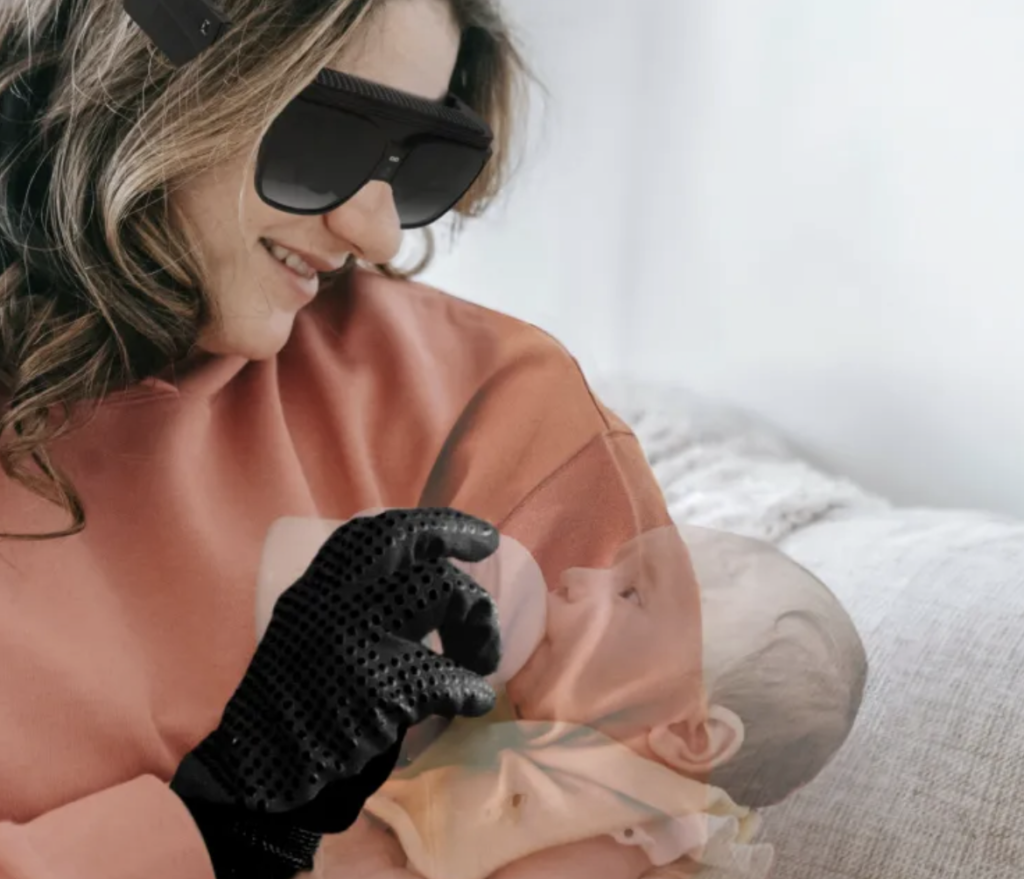
The overpopulation crisis could be solved within 50 years thanks to the evolution of “virtual children,” one of Britain’s leading artificial intelligence experts claims. Computer-generated babies that cost about $25 a month are likely to become commonplace by the early-2070s, according to Catriona Campbell.
In addition to her expertise in AI, Campbell is also one of the UK’s top authorities in emerging and disruptive technologies, and a former UK Government adviser. She says by 2070, augmented reality (AR) and haptic “touch-sensitive” gloves will make the experience potentially “lifelike.”
By that time, up to one-in-five parents may decide to opt for a digital baby over a real one, she believes. It will create what is being dubbed the “Tamagotchi Generation” – the first cohort of environmentally-friendly digital children who will not deplete the planet of any of its natural resources. Instead, they will exist only in the virtual metaverse...
A 2020 YouGov study into why couples choose not have children concludes that nearly 10 percent remain childless because of overpopulation concerns. Another10 percent choose not to start a family because of the cost of raising a child. ...
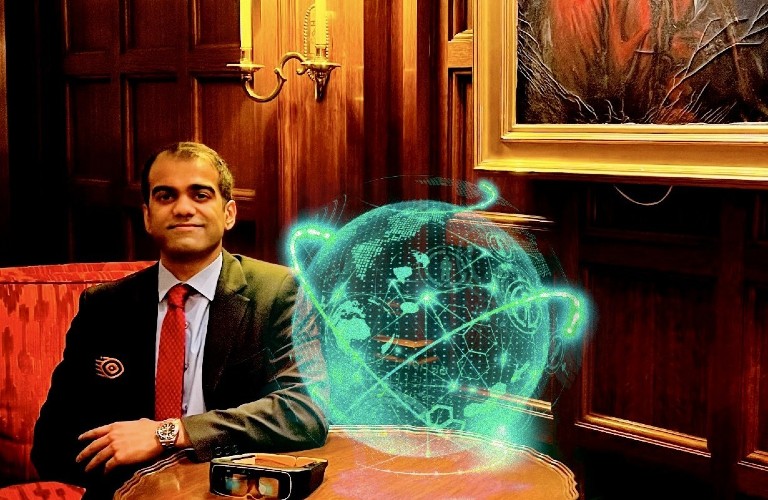
Princeton-based ThirdEye on Thursday announced the beta release of a fully decentralized augmented reality social media network for consumers. ...
The decentralized platform will allow users to have control over their own user data and not be owned by a central entity.
Users will also be able to place virtual AR objects in the real world, upload AR data, create friend groups, have AR calls with virtual annotations among friends and a digital marketplace to buy/sell virtual goods/NFTs.
There will also be an app store for users to add and download third-party apps. The benefits over existing social media platforms are that there can be no banning/censorship, as this platform’s code will run transparently on the blockchain and the inclusion of AR/AI features for a more immersive social experience. ...
Computer vision uses a small-to-large image processing technique. It starts with detecting and analyzing simple features like pixels and colors, then more complex features like lines and objects. ...
Computer vision works with neural networks and other machine learning algorithms that emulate the human brain. ...
What we do know is that computer vision is all about pattern recognition. ...
COMPUTER VISION TECHNIQUES
While an image recognition software application may use one of the following techniques, advanced applications such as a self-driving car may utilize many of the following techniques simultaneously:
The object identification technique detects a specific object in an image. Advanced versions can identify multiple objects in a single image.
Image classification is the technique of grouping images into categories. It is also called the process of assigning labels to images.
Image segmentation is a technique used to examine an image separately by breaking it into parts.
Pattern detection identifies patterns and continuities in visual data.
Edge detection detects the corners of an object to identify the image’s components better.
Feature matching is a pattern detection technique that matches similarities in images for classification purposes.
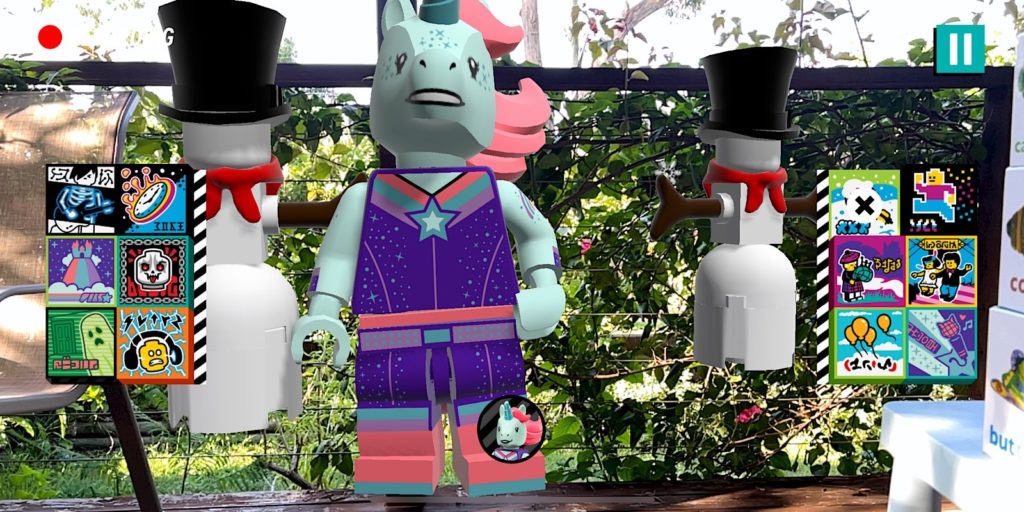
There’s Dr Karl’s Surfing Safari Through Science and Dr Karl’s Random Road Trip Through Science, each of which are supported by an app for iOS (iPhone and iPad) and Android, and only need to be aimed at the opening pages for each section to see a digital Dr Karl Kruszelnicki appear on the page through the device and explain stuff.
Two years ago this weekend, GPT-3 was introduced to the world. ...
the technology is changing how we think about what has been considered a uniquely human activity.
And we have no idea how the AI models are doing it.
Cheaper, faster, more productive
Danny Mahoney's workmate never leaves, sleeps, or takes a break.
Day after day, the AI writing assistant churns out blog posts, reviews, company descriptions and the like for clients of Andro Media, Mr Mahoney's digital marketing company in Melbourne. ...
"You can get the same quality of content using AI tools. You just get it faster."
How much faster? About three times, he estimates.
He still has to check and edit the AI-generated text, but it's less work and he's cut his rates by half. ...
In Perth, Sebastian Marks no longer bothers with content agencies at all. ...
This week, Google's DeepMind released its most impressive AI yet, called Gato, which is designed to be good at lots of tasks. ...
"We used to say that artificial general intelligence and the replacement of humans would be like 2045," Dr Thompson says.
Influencers in social media are often perceived as a trusted source for many people which is why companies increasingly promote their products through them. However, influencers can also cause reputational damage for a brand. Virtual (computer-generated) influencers can be used to minimize these risks and to better tailor content to a target group of a company. As trust is one success factor of online marketing, we examine differences in the perception of trust in human and virtual influencers. In a first online survey study, we presented N = 112 participants the content of human and virtual influencers, published on Instagram. Preliminary findings reveal that although participants were often unsure whether the presented influencer was human or computer-generated, perceived trust, social presence, and humanness was consistently rated higher for human influencers. To gain deeper insights into potential, unconscious decision conflicts which can determine trust evaluations, a follow-up neuroimaging study is discussed.
... Most of VRChat’s environments or worlds—which can range dramatically from a faithful recreation of someone’s hometown in summer to a rave where a bunch of Pink Panthers sniff an anime girl’s sweaty feet—are user-created, and the game also allows users to inhabit whatever avatar they choose. The end product is a bizarre but generative digital environment where people make whatever they can think of. Even the game’s social code is completely incomparable to real life. ...
“mutes,” or people who don’t speak in the game. ... According to the VRChat wiki, “because of how common mutes have become, the term is generally accepted in VRChat culture and is not considered an insult.” ...
“Mutes” tend to be softer than their vocal counterparts and instead form relationships by being very expressive and taking advantage of their emote arsenal. They are active participants in social events and games in this way, expressing the shit out of their avatars, rather than their voices. ...
In VRChat, she typically visits a sign language world that helps people learn VR sign adaptations...
ASL is a completely different language to English and uses a separate grammar, method of word formation, and inflections, so CailanVR has difficulty with it in real life. But “in VRChat, we have adapted many sign languages to use the base seven VRChat gestures, as well as Valve Index controls,” she said. VRChat’s seven gestures, which include some basic handshapes like pointing your index finger or making a peace sign, are helpful in modifying some handshapes used in IRL ASL. You can use the fist gesture to nod your dominant hand to say “yes” or twist two pointing hands facing each other to say “hurt,” both like you would sign in reality (shout out to my ASL minor). ...
VRChat’s seven gestures are still limited, however, and widely available VR technology doesn’t allow for the salient facial expressions and mouth movements that makes in-person ASL intelligible. But this VR adaptation makes it possible for Deaf and Hard of Hearing people to communicate in their preferred language, and its simplification can prove useful to the people new to it. ...
... The AirRes Mask works in two ways. The first approach, and the one less likely to traumatize users, leverages the mask as a way to monitor their breathing and incorporate it into a VR experience to enhance the feeling of immersion. Applications include simple everyday acts like blowing out a virtual candle, inflating a balloon, or even playing an instrument such as a harmonica using their own breath. The mask can also be used to adapt how the VR experience behaves based on the user’s respiration rate. Hitting the target when firing a virtual arrow from a bow, for example, is made a lot easier when the user holds their breath and steadies themself. ...
The other approach leverages the mask’s ability to add resistance to the wearer’s ability to breathe. Suffocation doesn’t seem like a particularly fun way to escape one’s own reality, but the researchers believe the AirRes Mask could also be used as a more realistic training tool. Firefighters could physically experience the lack of oxygen in a room as a raging fire consumes it, including the simulated side effects of the human body not getting enough oxygen, like the onset of tunnel vision, but without the added risks of a real fire. ...
as horrifying as it seems, it does help further demonstrate the unique potential of VR ...
Google Has Banned the Training of Deepfakes in Colab
Sometime in the last two weeks, Google has quietly changed the terms of service for its Colab users, adding a stipulation that Colab services may no longer be used to train deepfakes. ...
Of the two popular deepfake-creation distributions, DeepFaceLab (DFL) and FaceSwap, both of which are forks of the controversial and anonymous code posted to Reddit in 2017, only the more notorious DFL appears to have been directly targeted by the ban. According to deepfake developer ‘chervonij’ at the DFL Discord, running the software in Google Colab now produces a warning:
‘You may be executing code that is disallowed, and this may restrict your ability to use Colab in the future. Please note the prohibited actions specified in our FAQ.’
However, interestingly, the user is currently allowed to continue with the execution of the code. ...
Since deepfake training is a VRAM-hungry pursuit, and since the advent of the GPU famine, many deepfakers in recent years have eschewed home training in favor of remote training in Colab, where it’s possible, depending on chance and tier, to train a deepfake model on powerful cards such as the Tesla T4 (16GB VRAM, currently around $2k USD), the V100(32GB VRAM, around $4k USD), and the mighty A100 (80GB VRAM, MSRP of $32,097.00), among others.
The ban on Colab training seems likely to reduce the pool of deepfakers able to train higher-resolution models, where the input and output images are larger, more suited to high-resolution results, and capable of extracting and reproducing greater facial detail. ...
... Coral reefs have a complex soundscape - and even experts have to conduct painstaking analyses to measure reef health based on sound recordings. ...
In the study, University of Exeter scientists trained a computer algorithm using multiple recordings of healthy and degraded reefs, allowing the machine to learn the difference. ...
The computer then analysed a host of new recordings, and successfully identified reef health 92 per cent of the time. ...