Fortnite’ Is Building The Metaverse Whether You Realize It Or Not
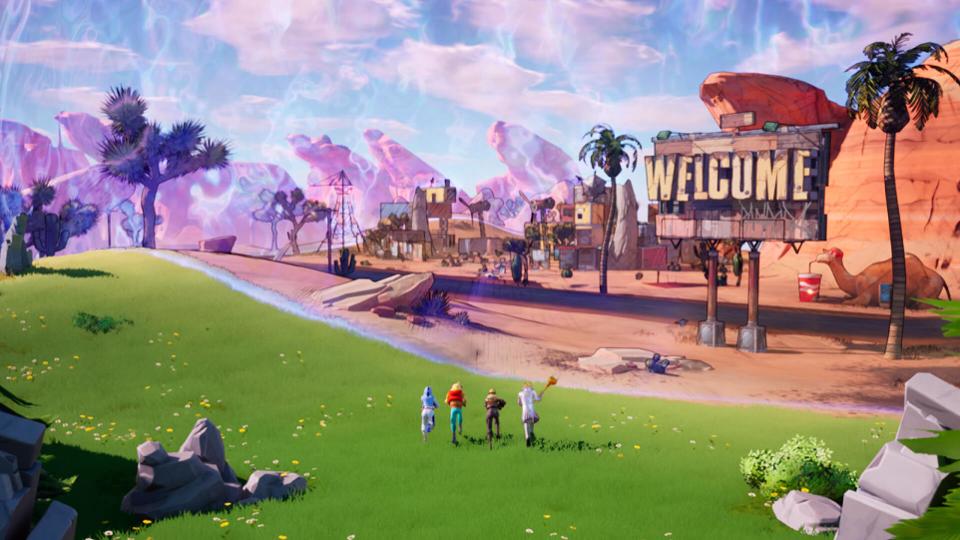 This month, Fortnite had an event where they debuted a new Star Wars clip in-game. The clip itself was not significant, and was kind of terrible. The big deal was the rest of it. The clip was introduced by a soaring TIE vs. Falcon fight players were invited to attend. The clip was presented by JJ Abrams himself, complete with a custom avatar. And at the end, there was a message from Emperor Palpatine itself of such significance to the movie, it was actually in the opening crawl. And you could only hear it in Fortnite.
Fortnite is building something here. Something much, much bigger than a battle royale game.
Call it the Metaverse if you’re a Snow Crash fan. Call it the Oasis if you’re more into Ready Player One. But I fully believe that this is what Fortnite is building, a shared virtual world where players and brands and IPs all collide and coexist in a myriad of ways. For playing games, yes, but also for…everything.
Observe any kid playing Fortnite and they’ll reveal that the game already exists as a sort of interactive social network, a bit like Minecraft before it. Yes, you play, but you are there to spend time with your friends.
In Ready Player One, players travel to different planets to play different games. Maybe the Epic Store becomes an entirely virtual space where instead of just clicking a button, while you’re hanging out on Planet Fortnite, you board a rocket to take you to Pandora to start playing Borderlands. You get the idea.
See this full story here: https://www.forbes.com/sites/paultassi/2019/12/27/fortnite-is-building-the-metaverse-whether-you-realize-it-or-not/#590032f356f6
Teslasuit’s new VR gloves let you feel virtual objects and track your pulse
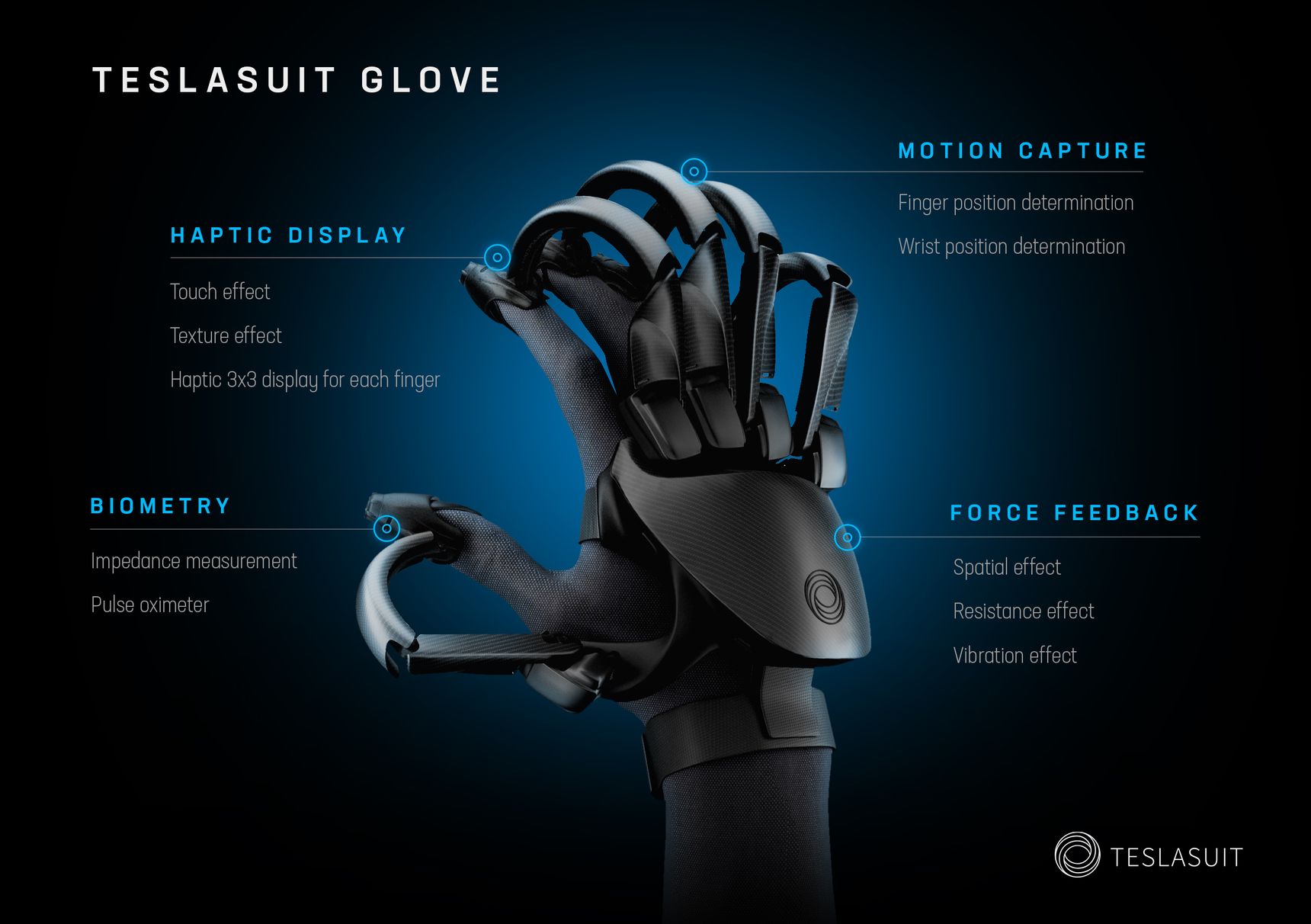 Teslasuit — known for its full-body haptic feedback suit — is introducing a glove that can let users feel virtual textures and gather biometric data. The device is called simply the “Teslasuit Glove,” and it will debut at CES in January, with the goal of shipping by the second half of 2020.
Teslasuit is one of several haptics and motion control companies that launched during the mid-’10s VR boom, appealed initially to consumers, then shifted to business customers. It launched the suit on Kickstarter in 2016, but it canceled that campaign and officially announced its first product in 2018. It’s since demonstrated potential applications in astronaut training, emergency evacuation drill practice, and other simulation scenarios. The creators aren’t ruling out gaming and entertainment possibilities, but at around $5,000, this isn’t a home headset accessory.
See the full story here: https://www.theverge.com/2019/12/26/21037855/teslasuit-glove-vr-haptic-feedback-glove-announce-pricing-release-date-ces-2020
Machine Learning Reveals Hidden Geology
Leila Donn, a doctoral student at the University of Texas at Austin studying environmental geoscience, wasn’t necessarily looking for a computer model to help her find the location of ancient Mayan caves last year. Mostly, she just was hot and tired and the work was going slowly.

“In summer the of 2018 I went to the ancient Maya site of El Zotz in the Petén Department of Guatemala to help a colleague look for caves. Each evening we’d sit down and take a look at the LIDAR hillside, looking for depressions surrounded by steep areas,” she said.
“While hard tropical forest hikes actually are my idea of fun, looking for caves in this manner wasn’t particularly efficient,” she said.
She had an idea.
“It occurred to me that it would be tremendously useful if we could develop a computational method of predicting likely locations of caves,” she said.
...she was surprised to find that no one had actually applied machine learning for searches like hers.
She did this by using Python and ArcGIS to make raster layers to capture morphologic characteristics that were associated with cave entrances, such as the fact that they are frequently located in areas of very steep topography.
Donn, whose master thesis at UT Austin was on the “Human-Environment Impact on Geomorphology and Flood Recurrence of the Belize Rover Valley,” now wants to expand her work to predict caves more accurately.
“I’d like my program to identify only caves versus small cave-like voids. It would also be tremendously helpful if I were able to acquire an additional training dataset from an area of similar geomorphology,” she said.
See the full story here: https://explorer.aapg.org/story/articleid/55296#CommentForm
Devil’s in the details in Historic AI debate
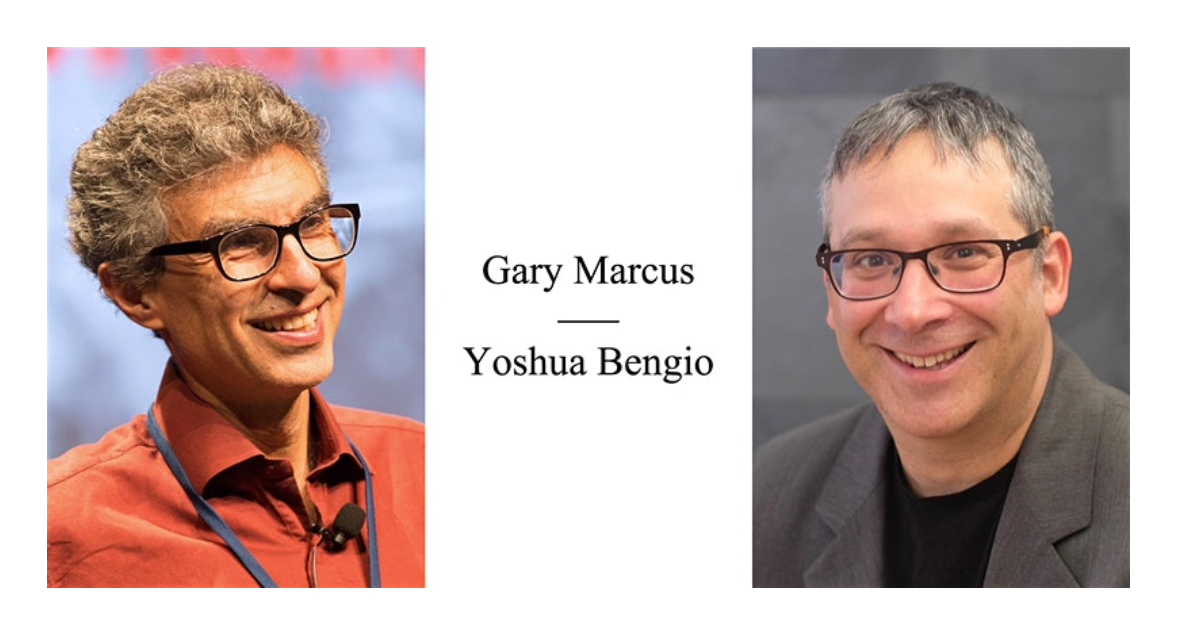 Marcus started with a recap of his career, noting he had done the first work on big data with early childhood learning studies, as a cognitive scientist. What struck him about neural nets, all the way back in the 1990s, was that "classic connectionism couldn't learn universals outside training space." The failures of neural nets in some cases are an argument for "richer innate priors," he said, things that seem to be built into organisms through evolution, not merely that which is learned.
Marcus clarified that he has never said deep learning should be abandoned, but that that it should be "re-contextualized as a tool among many." He said he and Bengio at one time were far apart in their thinking because Bengio "relied too heavily on black boxes," meaning, neural nets. "Recently he has taken a sharp turn to positions I've long argued for," said Marcus, meaning, the notion of "hybrid" AI systems that would combine some machine learning with some form of symbol manipulation.
Bengio summarized his main interest these days as being about how neural nets can respond to data that is "out of distribution," or OOD, the problem of how to generalize beyond training data. He made reference to a paper recently published, and accepted at next year's ICLR conference, "A meta-transfer objective for learning to disentangle causal mechanisms."
Bengio quickly went into articulating what might be a manifesto of how he views all AI problems. Deep learning, with which he is most associated, is "not a particular architecture or a particular training procedure," said Bengio. "It's something that's moving, it's more a philosophy as we add more principles to our toolbox."
See the full story here: https://www.zdnet.com/article/devils-in-the-details-in-bengio-marcus-ai-debate/?fbclid=IwAR2vSX64KtwtPujoEMiHkOlTf6TWtP8zr9BP3oqtbRZMfkDNvjIF-b6gNxI
Thinkware to showcase Augmented Reality navigation device at CES
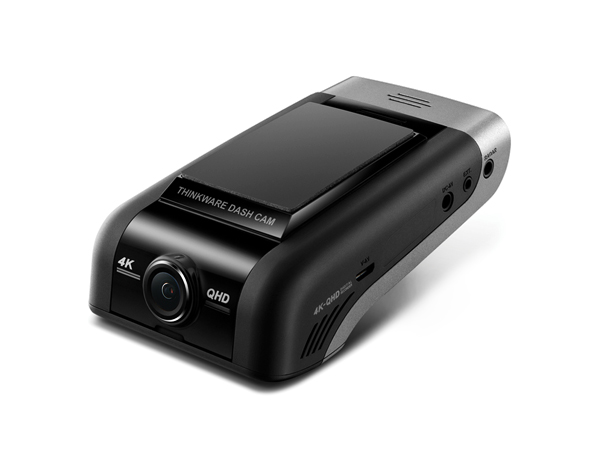 Dash cams are becoming one of the latest must have pieces of tech for your car as they help lower insurance premiums and in the unfortunate event of a collision, they can help prove who was at fault. Thinkware has taken its years of experience in the dash cam market and is finding new ways to use the technology.
The new device comes equipped with a heads-up display and uses the latest local map data to ensure drivers are safe and informed. The Augmented Reality navigation device also features an advanced user interface and a library-type solution that uses maps of locations around the world, while game engines can display AVN, CLUSTER, HUD and other information on the device.
See the full story here: https://www.kitguru.net/channel/generaltech/james-dawson/thinkware-to-showcase-augmented-reality-navigation-device-at-ces/
Abu Dhabi uses world’s largest augmented reality screen to promote UAE
 Abu Dhabi used the world's 'largest augmented reality (AR) screen' to promote the UAE capital as a world-leading holiday destination. The Department of Culture and Tourism - Abu Dhabi (DCT - Abu Dhabi) bagged a Guinness World Record after its marketing campaign utilised the famous 40-foot digital billboard known as Piccadilly Lights in the heart of London and transformed it into an interactive AR experience.
Aside from breaking a world record, the screen was designed to allow passers-by to play a starring role in the experience. Al Shaiba said: "By standing near the fountain in the square, people are captured by the hi-tech, on-site audience camera, transporting them to some of Abu Dhabi's most famous attractions - think family-friendly indoor theme park Ferrari World Abu Dhabi, wildlife haven Sir Bani Yas Island, and the stunning Sheikh Zayed Grand Mosque - on the screen. Each one of the capital's landmarks has been brought vividly to life in London using innovative 3D AR overlays."
The interactive activation played at 10 minutes to the hour, every hour, for two weeks until December 8. The campaign also offered people a chance to win a trip to Abu Dhabi with Etihad Holidays.
See the full story here: https://www.khaleejtimes.com/uae/abu-dhabi/abu-dhabi-uses-worlds-largest-augmented-reality-screen-to-promote-uae-
Augmented Reality Is Helping Undo the Euro-Centric Version of U.S. History
 When Glenn Cantave was in first grade, his teacher asked the class to color in an illustration of Christopher Columbus’ three famous ships: the Niña, the Pinta, and the Santa María.
Like so many other schoolchildren, he memorized the names of the boats and learned that Columbus first set sail for the so-called New World in 1492. But it wasn’t until many years later that he would learn what happened once Columbus landed off the coastof the island that is now Haiti and the Dominican Republic. Columbus acted as a cruel dictator, enslaving countless indigenous inhabitants and forcing them to work on plantations and in gold mines. Those who resisted were brutally killed. Cantave — whose family is from Haiti — didn’t learn anything about Columbus’ brutal legacy in his Long Island public school classroom. Whoever wrote the curriculum apparently didn’t think it was important.
That’s part of the reason Cantave and Idris Brewster later co-founded an educational advocacy group called Movers and Shakers NYC. The nonprofit “uses augmented reality to highlight underrepresented narratives." One of their first efforts was creating augmented reality (also known as AR) content that reveals the full scope of Columbus’ legacy.
The New York City-based company develops AR material to bring tech and history directly to the public by working with communities, museums, and schools. They offer a range of programming, from a project depicting alternative monuments to one that allows young people to experience a holographic protest. All of their work focuses on lifting up marginalized voices and bringing important, often overlooked, history to life, especially the stories of people of color, women, and queer and trans people.
...
With support from Verizon's Innovative Learning initiative, Movers and Shakers is slated to introduce its 5G AR programming to 100 under-resourced schools by 2021. They kicked off the effort this school year in Cleveland, Ohio.
See the full story here: https://www.teenvogue.com/story/augmented-reality-history-movers-shakers