Doctors go to TikTok to talk to teens about vaping, birth control and how celery juice won’t cure cancer
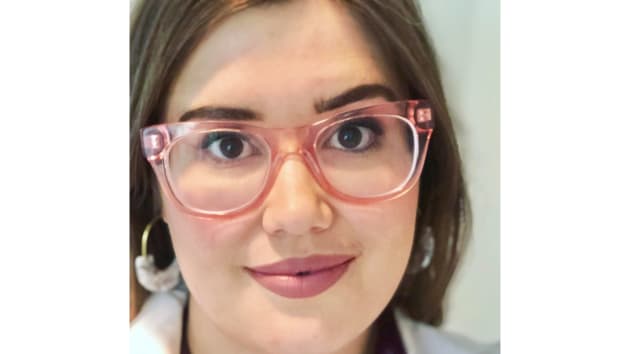
- Doctors are starting to use TikTok to talk to teens and young adults about health issues that matter to them.
- That includes vaping, birth control and medical misinformation.
- They’re gaining huge followings, and doctors like Rose Marie Leslie are convinced they’re making a difference.
Pagoto notes that medical experts need to meet teens where they are, rather than sticking to the older methods of advertising on television or Facebook.
 See the full story here: https://www.cnbc.com/2019/11/29/doctors-use-tiktok-to-talk-to-teens-about-vaping-birth-control.html
https://www.tiktok.com/embed/6748416878852443397
The 8 Best Augmented Reality Games for Kids
[PhilNote: some of these are lame and derivative, but it is a list. Short descriptions and videos at the link.]
1. Magical Park

2. Thomas & Friends Minis
3. Angry Birds AR: Isle of Pigs
4. Avo
5. Color Quest AR
6. Pokémon GO
7. AR Sports Basketball
8. AR Dragon
See the full story with descriptive videos here: https://www.makeuseof.com/tag/best-augmented-reality-games-kids/
Be At One launches AR menu alongside Bacardi
 Be At One has partnered with Bacardi to launch an augmented reality (AR) menu as part of its ‘Be in The Know’ campaign, enabling customers to use the bar’s app to scan physical menu pages to reveal ‘secret’ cocktails that they can purchase.
The AR experience, created by marketing and communications agency Clarity, features secret menus, cocktail insights from Be At One bartenders, and access to three limited edition cocktails. The functionality has launched with the Be At One Christmas menu.
See the full story here: https://mobilemarketingmagazine.com/be-at-one-bacardi-clarity-augmented-reality-ar-christmas-menu
Board of Regents OKs new major at UMD focused on virtual reality design
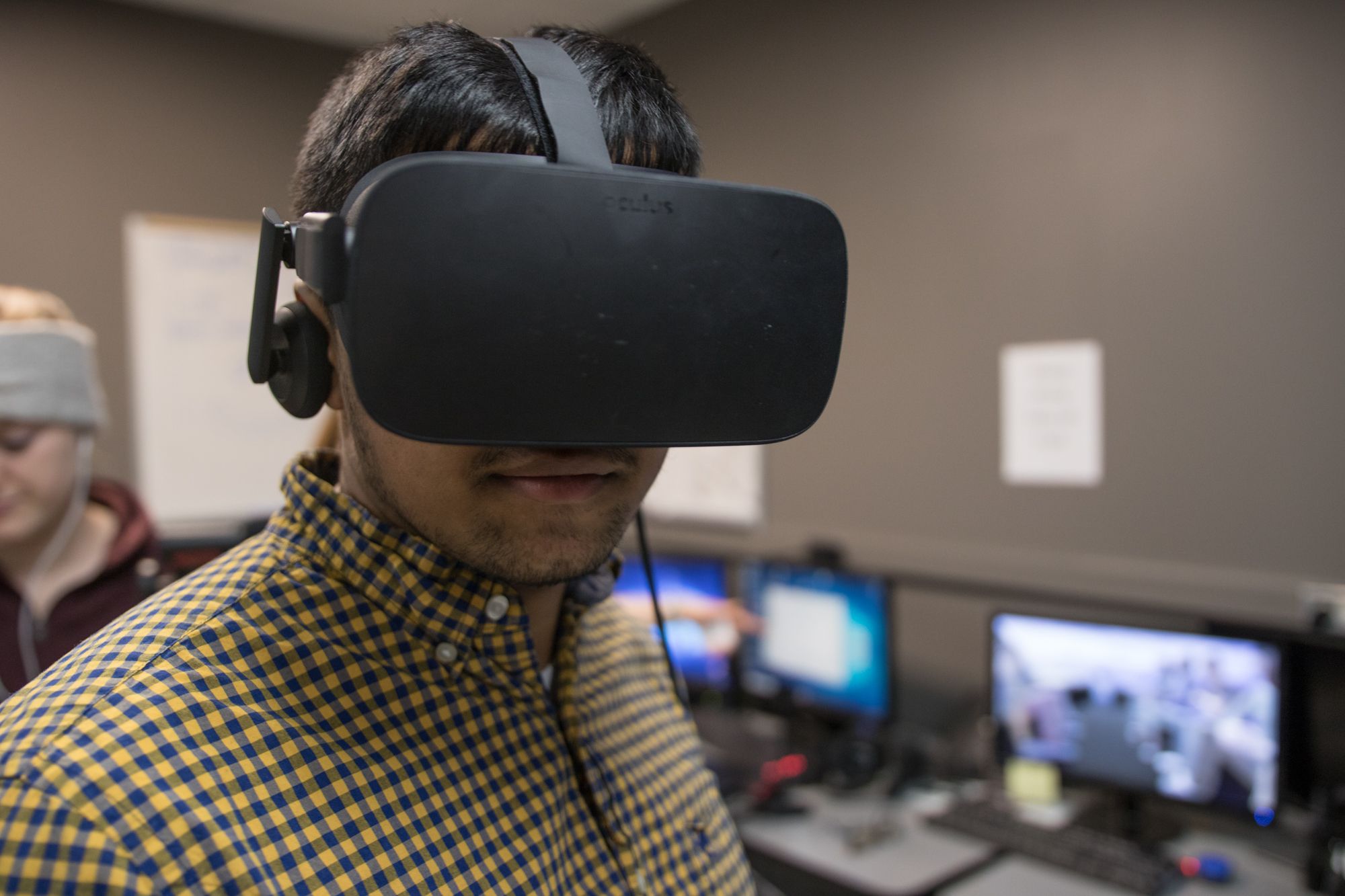 The major is planned to help students develop design skills and apply them to interactive digital projects. It offers two tracks — “Innovative Coders” and “Emerging Creatives” — allowing students from both fields to adapt their pre-existing talents to new demands from the tech world.
“We’re not trying to make computer scientists into artists, or artists into computer scientists,” said Bonnie Thornton Dill, the arts and humanities college dean.
But rather than isolate students with different skills, the major aims to facilitate collaboration across disciplines. Each year, students would be required to work together on projects demanding design techniques and coding languages learned in class.
Upon graduation, students will be equipped for careers in animation, computer games and software development, among others, said Amitabh Varshney, the computer, mathematical, and natural sciences college dean.
He added that companies such as Pixar, Facebook and Adobe have expressed interest in hiring students who complete the major.
See the full story here: https://dbknews.com/2019/12/02/umd-virtual-reality-major-board-of-regents-approval-immersive-media-design/
(Defense Contractor) CAE launches new virtual reality trainer
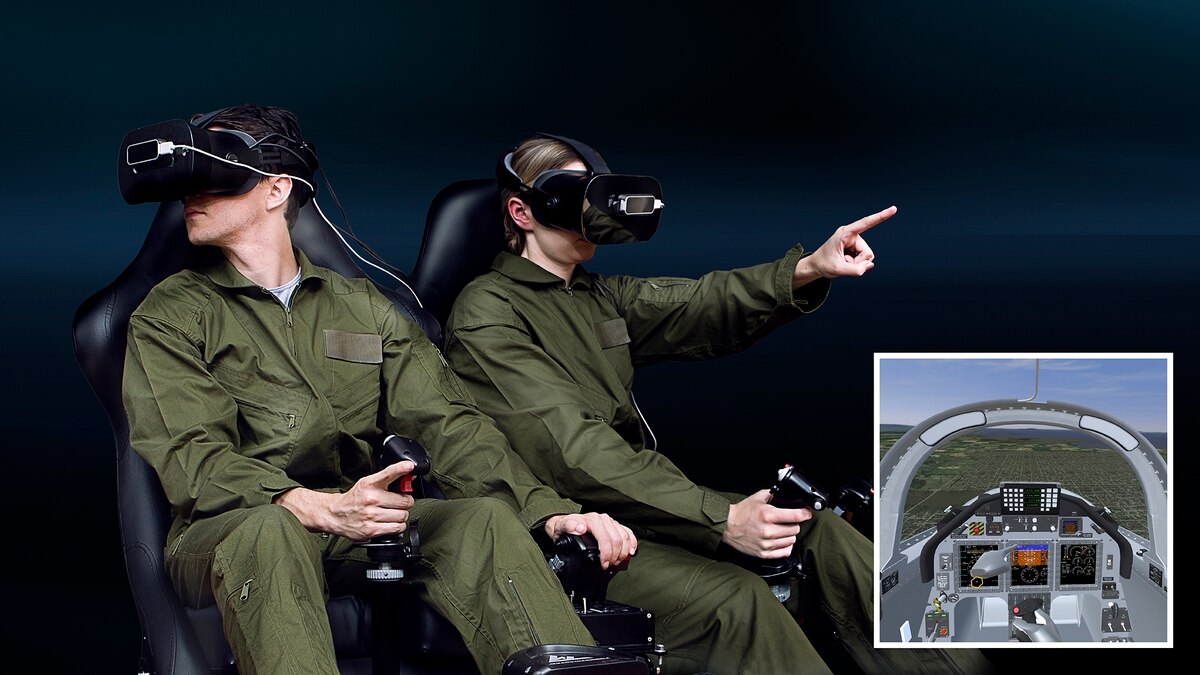 CAE was inspired by the U.S. Air Force’s Pilot Training Next program, which uses virtual reality and other cutting-edge simulation technologies to immerse new pilots in flight training, allowing airment to move more quickly and effectively through training.
All of the Sprint virtual reality trainer’s hardware — including the Varjo VR-2 headset — are commercial off-the-shelf products and can be modified or swapped with a different device to meet the customer’s needs. The real value, Perey said, is the software and courseware of TRAXX Academy, in which students progress from mobile apps and VR trainers to a higher fidelity flight simulator.
Secondly, the use of self-paced tools and virtual instructors decreases the need for human instructors that could be filling other needed functions within an air force, Perey said.
See the full story here: https://www.defensenews.com/digital-show-dailies/itsec/2019/12/02/cae-launches-new-virtual-reality-trainer/
Rutgers professor explains virtual reality in new book
 Dr. John Pavlik, a professor of Journalism and Media Studies at the School of Communication and Information, published his new book called “Journalism in the Age of Virtual Reality: How Experiential Media Are Transforming News” in September.
In his book, Pavlik discussed the idea of experiential news, an emerging kind of journalism which allows the public to virtually be immersed in the news and to experience it for themselves. Increasingly, news told through virtual reality (VR) or augmented reality (AR) gives the public the opportunity to experience the news from a first-person perspective, rather than the typical third-person perspective.
Pavlik credited Nonny de la Peña, a journalist, for coming up with the idea of allowing the public to be virtual eyewitnesses to news.
See the full story here: https://www.dailytargum.com/article/2019/12/rutgers-professor-explains-virtual-reality-in-new-book
What’s a Digital Bill of Rights Without Enforcement?
 More important, Sharpe says the Web Foundation is discussing with governments how to enshrine the principles into national and international laws and regulations; she declines to discuss any details. Some of the contract’s privacy requirements are already part of European privacy law, which Microsoft says it complies with globally.
Another potential issue is how to decide whether a company is contributing to human rights abuses.
See the full story here: https://www.wired.com/story/whats-digital-bill-rights-without-enforcement/
See the contract here: https://contractfortheweb.org