Facebook buys VR studio behind Beat Saber
 Virtual reality doesn’t have many hit games yet, but Facebook is buying the studio behind one of the platform’s biggest titles.
Facebook announced today that it will be buying Beat Games, the game studio behind Beat Saber, a rhythm game that’s equal parts Fruit Ninja and Guitar Hero — with light sabers of course.
Terms of the deal weren’t disclosed, but we’re sniffing around for a price tag. The studio will join Oculus Studios but will continue to operate independently at their HQ in Prague.
Beat Games had begun expansion by partnering with musicians to release their songs as levels in the game, partnering with artists like Imagine Dragons and Panic at the Disco to bring paid level packs to Beat Saber. One can imagine that Facebook will have a much easier time making conversations happen with top artists.
See the full story here: https://techcrunch.com/2019/11/26/facebook-buys-the-vr-studio-behind-beat-saber/
Apple Chief Tim Cook Calls For National Data Regulations
 Pew Research reports that of the 60 percent of U.S. adults who believe their data is being collected daily, “some 81 percent of the public say that the potential risks they face because of data collection by companies outweigh the benefits, and 66 percent say the same about government data collection.”
Seventy-nine percent of Americans “report being concerned about the way their data is being used by companies,” with 64 percent worried about the way the government uses their data.
Pew Research’s report also found that “79 percent of Americans say they are not too or not at all confident that companies will admit mistakes and take responsibility if they misuse or compromise personal information, and 69 percent report having this same lack of confidence that firms will use their personal information in ways they will be comfortable with.”
See the full story with more statistics here: https://www.etcentric.org/apple-chief-tim-cook-calls-for-national-data-regulations/
Researchers develop AI that distinguishes between satire and fake news
 How can you distinguish between satire and fake news? It usually comes down to semantic and linguistic differences, but the nuances can be tough to spot. That’s why researchers at George Washington University, Amazon AWS AI, and startup AdVerifai investigated a machine learning approach to classifying misleading speech. They say the AI model they developed, which outperformed the baseline, lays the groundwork for the study of additional linguistic features.
The researchers hypothesized that metrics of text coherence might be useful in capturing semantic relatedness between sentences of a story.
The researchers leveraged a statistical technique called principal component analysis to convert potentially correlated metrics into uncorrelated variables (or principal components), which they used in two logistic regression models (functions that model the probability of certain classes) with the fake and satire labels their dependent variables. Next, they evaluated the models’ performance on a corpus containing 283 fake news stories and 203 satirical stories that had been verified by hand.
The team reports that a classifier trained on the “significant” indices outperformed the baseline F1 score, a measure of the frequency of false positives and negatives.
See the full story here: https://venturebeat.com/2019/11/05/researchers-develop-ai-that-distinguishes-between-satire-and-fake-news/
A leaked excerpt of TikTok moderation rules shows how political content gets buried
 According to a whistleblower who spoke with Netzpolitik, controversial content on the app is divided into the categories of “deleted,” “visible to self” (meaning other users can’t see it), “not recommended,” and “not for feed.” Videos in these last two categories won’t be curated by the main TikTok discovery engine, and “not for feed” also makes a video harder to find in search.
According to the guidelines, most political content during election periods should be marked “not recommended.” Political content includes everything from partisan speeches to party banners. Police content—including filming inside a police station or jail—is marked “not for feed.”
The document also shows some changes that TikTok has made. Once, content about riots and protests—including reference to Tibet, Taiwan, Northern Ireland, and Tiananmen Square—would be marked “not recommended.” That category has now been replaced by a category covering content that might result in “real-world harm,” according to the guidelines. Moderators are told to mark this “not for feed.”
‘An Eye-Opener’: Virtual Reality Shows Residents What Climate Change Could Do

Juliano Calil prepares to launch his drone over Long Beach, Calif., for a virtual reality program he's creating to simulate the effects of sea level rise on the area.
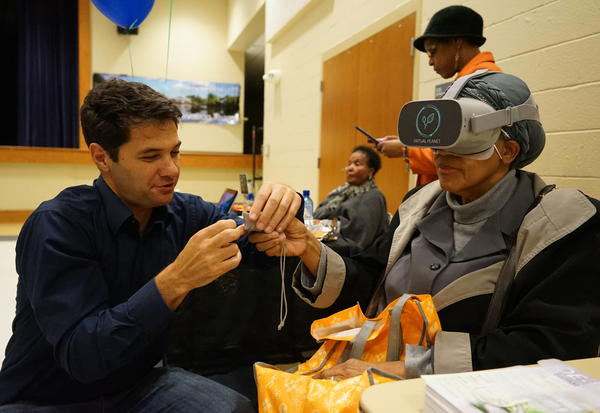
Climate researcher Juliano Calil helps a resident of Turner Station use the virtual reality program he created to show the expected impacts of sea level rise there.
See the full, lengthy article here: https://www.kosu.org/post/using-virtual-reality-communicate-immediacy-climate-change
Introducing New Yorker Cartoons in Augmented Reality
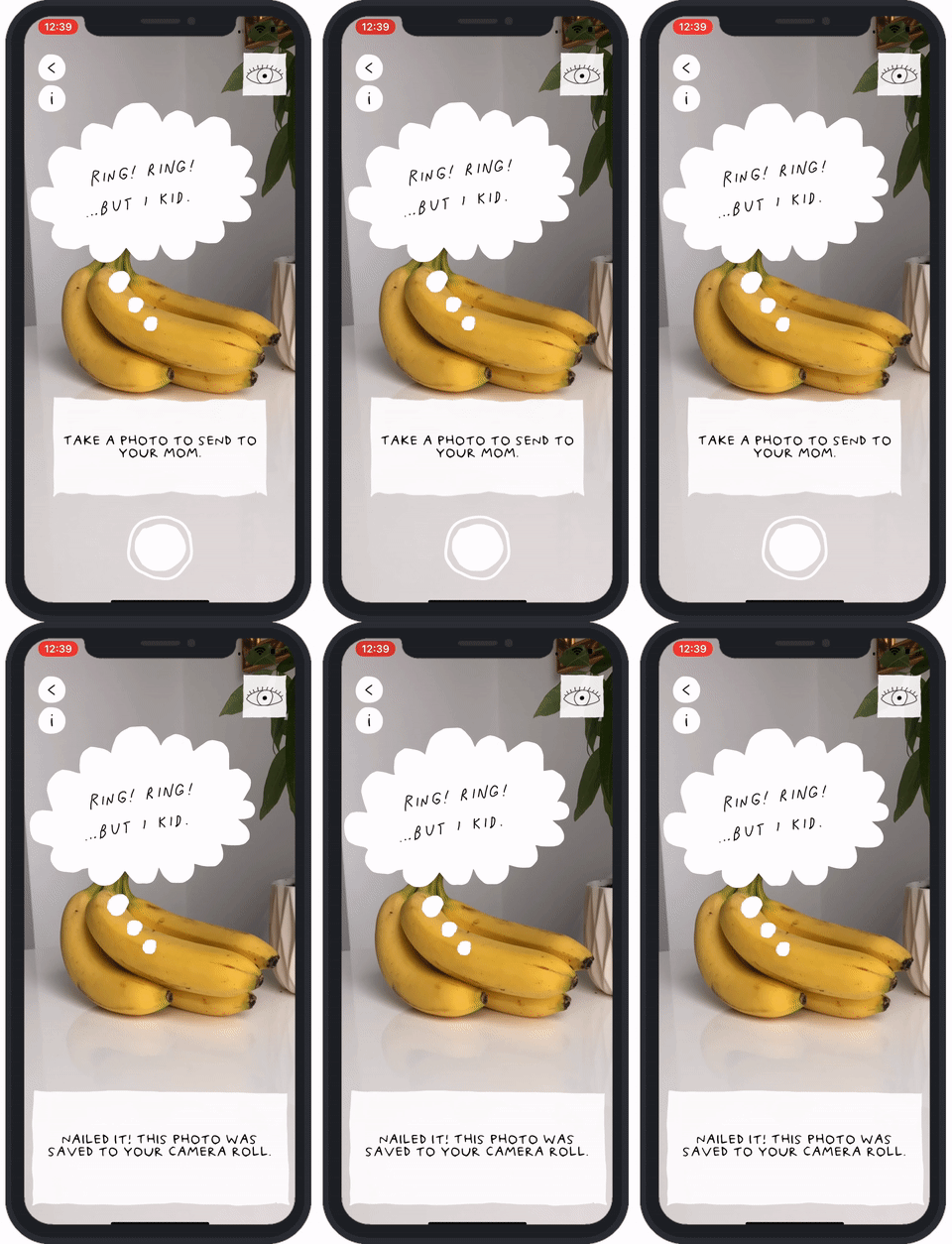 Ever been curious what your laptop really thinks about your browsing history? “Animate Objects” is an augmented-reality feature that allows you to discover the secret thoughts of everyday items, as drawn by the New Yorker cartoonist Liana Finck. While this is not The New Yorker’s first foray into A.R., it is the first time we are using A.R. to present our cartoons. Finck’s signature style and inimitable wit are embedded throughout the experience—from the handwritten interface to the imagined personalities of the objects around you. Download the latest version of the New Yorker Today app to access the feature now.
Go to the “Cartoons” tab and tap “Play” to enter the A.R. experience.
Turn up the volume on your device.
See the full story here: https://www.newyorker.com/cartoons/cartoon-desk/introducing-new-yorker-cartoons-in-augmented-reality
AI expert Stuart Russell to join TC’s Robotics+AI 2020 at UC Berkeley
 Computer scientist Stuart Russell, one of the world’s top experts on AI and author of the recently published “Human Compatible: Artificial Intelligence and the Problem of Control,” will join us at TC Sessions: Robotics & AI (March 3 at UC Berkeley’s Zellerbach Hall) ), to discuss how researchers and founders today will determine AI's ultimate impact.
At a time when the debate about AI seems to be polarized between the alarmists predicting the imminent “singularity” and those pooh-poohing the advent of human-level AI, Dr. Russell, a professor of computer science at UC Berkeley, cuts through the debate to argue that we still have time to ensure that the doomsayers are proven wrong. As Dr. Russell argues in “Human Compatible,” the key is to ensure that AI designs “will necessarily defer to humans: they will ask permission, they will accept correction, and they will allow themselves to be switched off.”
See the full story here: https://www.yahoo.com/entertainment/ai-expert-stuart-russell-join-220315784.html
Moscow-area cows enjoy summer year-round with new virtual reality glasses
 A dairy farm near Moscow has begun testing virtual reality glasses designed specially for cows. Agriculture officials are betting that the futuristically decked-out bovines will experience heightened moods, which will raise milk yields in turn. Each set of glasses is designed with the cows’ physiology and visual system in mind, enabling the animals to enjoy views of summer fields year-round.
In their first round of testing, the VR headsets decreased the Moscow-area herd’s anxiety and increased its average mood as expected. A group of veterinarians participated in the design and testing process for the new devices.
See the full story here: https://meduza.io/en/shapito/2019/11/26/moscow-area-cows-enjoy-summer-year-round-with-new-virtual-reality-glasses