AT&T Shape: Virtual Reality Has Potential, But the Skepticism Is Well-Earned
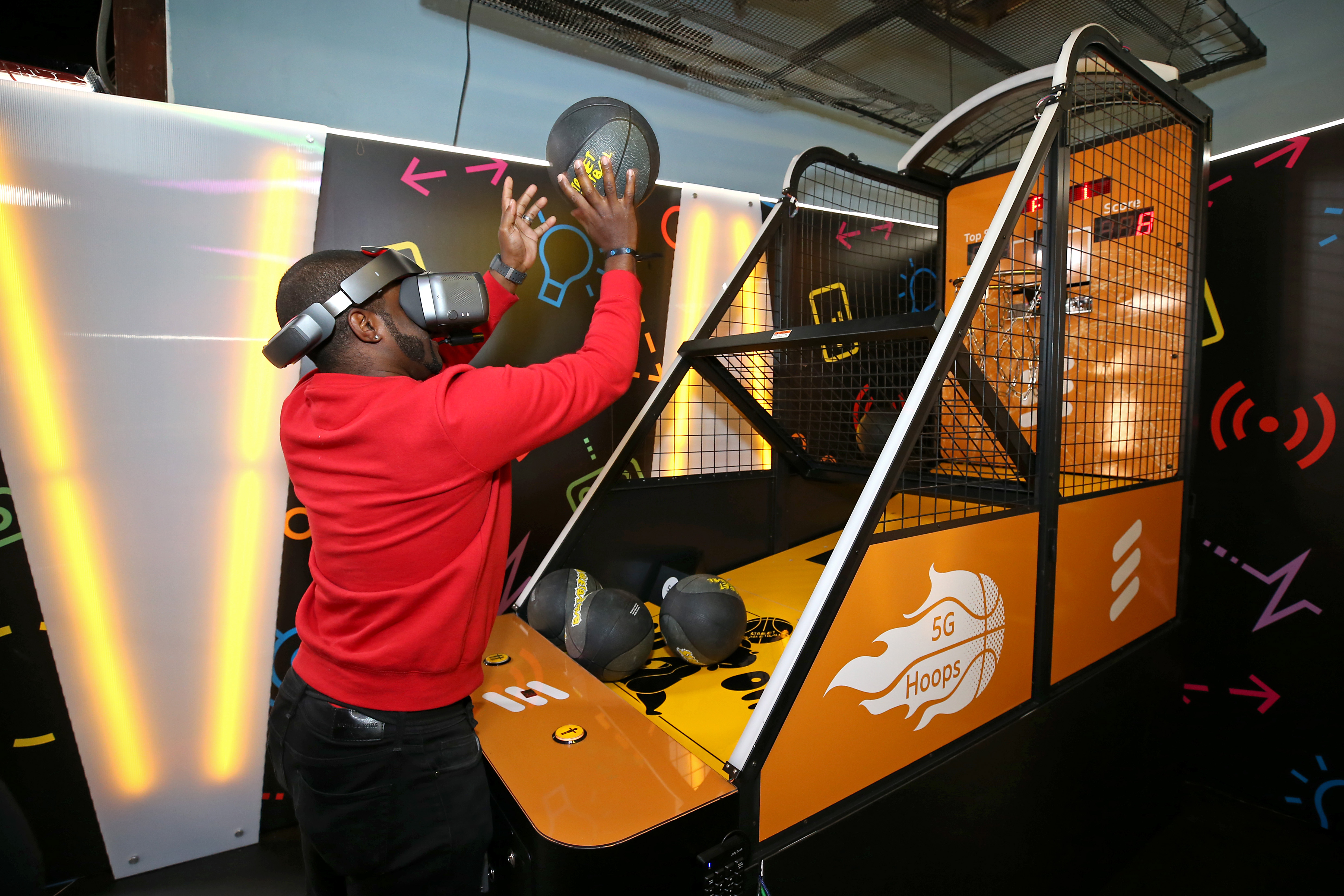
BURBANK, CALIFORNIA - JUNE 22: Guests experience the Ericsson: Arcade Games demo at AT&T SHAPE at Warner Bros. Studios on June 22, 2019 in Burbank, California. (Photo by Phillip Faraone/Getty Images for AT&T)
Also present at AT&T Shape was Wipro, a large Indian conglomerate, which presented a demo for virtual reality sports shows that served as the event’s best example of virtual reality’s consumer potential. To use basketball games as an example, the finished product would allow users to view an NBA game from multiple perspectives, such as courtside seats, under the hoop, and even from the perspective of multiple players, according to a Wipro representative.
There’s no denying that that sounds incredible, and is one of the most obvious examples of how virtual reality could create a cinematic experience genuinely unlike anything else available. But this was also a tightly-controlled tech demo for a product that is a long way off from being completed. Wouldn’t sports organizations and stadiums have to agree to accommodate this kind of technology at every one of their games? Wouldn’t watching the game from a player’s perspective require players to agree to wearing some sort of performance capturing device?
Questions upon questions, but still, the potential is palpable.
See the full story here: https://www.indiewire.com/2019/06/att-shape-virtual-reality-1202152646/
How E-Commerce Sites Manipulate You Into Buying Things You May Not Want
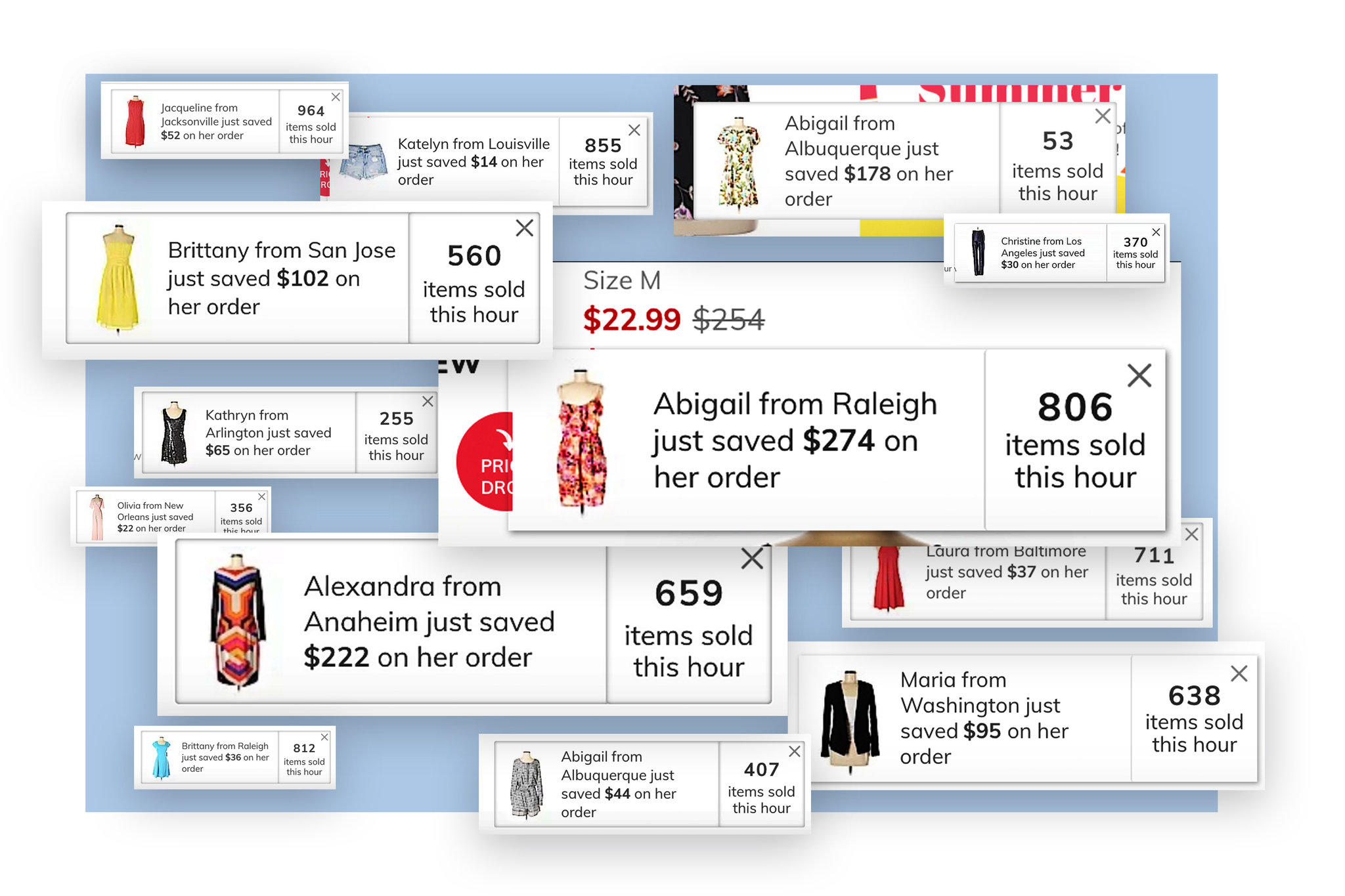 “Alexandra from Anaheim just saved $222 on her order” says one message next to an image of a bright, multicolored dress. It’s a common technique on shopping websites, intended to capitalize on people’s desire to fit in with others and to create a “fear of missing out.”
But “Alexandra from Anaheim” did not buy the dress. She does not exist. Instead, the website’s code pulled combinations from a preprogrammed list of names, locations and items and presented them as actual recent purchases.
The fake messages are an example of “dark patterns,” devious online techniques that manipulate users into doing things they might not otherwise choose to. They are the digital version of timeworn tactics used to influence consumer behavior, like impulse purchases placed near cash registers, or bait-and-switch ads for used cars.
Jessica Brillhart Named Director of USC ICT Mixed Reality Lab
 Former Google Principal Filmmaker for VR and Vrai Pictures Founder to lead University of Southern California Institute for Creative Technologies MxR Lab.
Since its creation in 1999, the Institute for Creative Technologies (ICT) at University of Southern California has been an integral contributor to the development of virtual reality technologies -- dating back more than a decade before the Oculus Kickstarter reignited mainstream interest in the medium.
In fact, the ICT Mixed Reality lab (MxR) was where Palmer Luckey first began experimenting with ‘Franken-viewer’ head-mounted displays, which would ultimately lead to the creation of Oculus Rift.
Now, the Mixed Reality Lab is announcing a new director: Jessica Brillhart.
"I have had incredible respect for what ICT has been doing for a while now," Brillhart said in an interview with the author. "I feel that a lot of us in the immersive space owe a great deal to the research that has happened there and I'm honored to continue to lead that charge at MxR."
Augmented reality improves movie experience for the hearing impaired
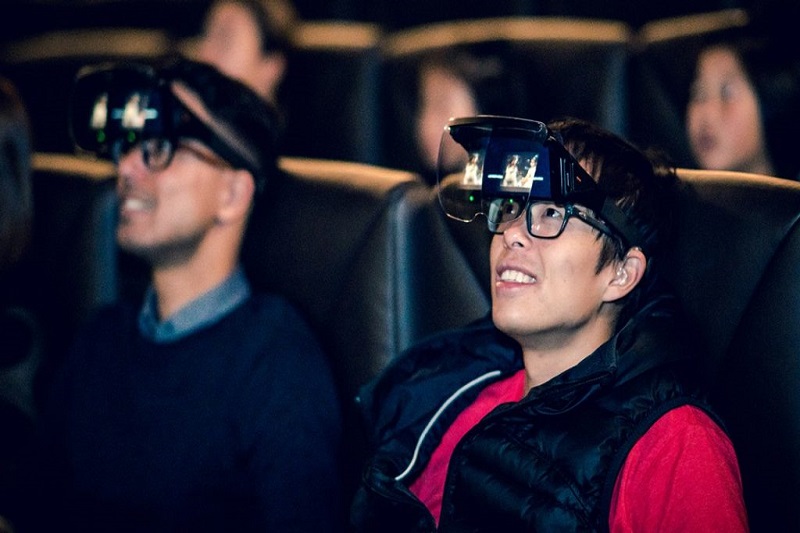 Subtitle data is included in most movies, but cinemas in New Zealand rarely use it, so cinematic options for the hearing-impaired are extremely limited.
One of the changes was finding a way to make the subtitles stay in place when people turned their heads, to talk to their neighbour, for instance.
The subtitles would follow the user, which can be annoying and distracting.
While their current prototype involved customising off-the-shelf headsets, they plan to build headsets from scratch, make them more aesthetically pleasing and lighter.
See the full story here: https://www.opengovasia.com/augmented-reality-improves-movie-experience-for-the-hearing-impaired/
Virtual Reality Takes A Leap Into Taste
 The fly hasn’t eaten for an entire day and it’s starving. Finally, it finds a pile of edible gelatinous goo. It begins eating when suddenly a green light appears, and the food, which was far from delicious a moment ago, becomes irresistibly sweet. The fly, excited by the sudden improvement, eats with increased vigor. But its enthusiasm quickly wanes when the green light disappears and the flavour of the food reverts to its original blandness.
“The fly’s experience was very real. It was a virtual taste created by directly manipulating its taste neurons”, says Carlos Ribeiro, head of the behavior and Metabolism lab at the Champalimaud Centre for the Unknown in Lisbon, Portugal. Together with his team, Ribeiro developed the optoPAD: a system that creates “virtual taste realities”, in a way that can be flexibly paired with the fly’s behavior. They describe this new technology in a scientific article published today June 21st in the journal eLife.
Creating virtual taste realities
The optoPAD combines two high-tech elements: the first is optogenetics, a powerful method that uses light to control the activity of neurons (quite literally to turn them “on” or “off”).
The second element of the optoPAD is an additional system, previously developed in the lab, called flyPAD. “The flyPAD uses touchscreen-type technology to monitor the fly’s feeding behavior. Just like your phone is able to detect the touch of your finger on the screen, flyPAD is able to detect whenever the fly touches the food”, explains José-Maria Moreira, one of the leading co-authors of study.
By combining flyPAD with optogenetics, the researchers were able to overcome one of the main challenges in the field of feeding research: precisely controlling taste sensations.
Taste and beyond
In this study, which shows that the optoPAD is able to effectively pair active feeding with optogenetic manipulations, the researchers demonstrate that these virtual tastes have a very real effect on the behavior of the flies.
The team is now gearing up to start a series of new experiments, and they are already freely sharing this exciting new technology with the scientific community by making all the blueprints and software freely available here: http://ribeirolab.
See the full story here: https://bioengineer.org/virtual-reality-takes-a-leap-into-taste/