AI SpaceFactory Wins NASA’s 3D-Printed Mars Habitat Challenge
MARSHA was praised for its smart use of materiality, constructed from a biodegradable and recyclable basalt composite derived from natural materials found on Mars. After withstanding NASA’s pressure, smoke, and impact resting, the material was found to be stronger and more durable than its concrete competitors.
Built from a novel mixture of basalt fiber extracted from Marian rock and renewable plant-based bioplastic, MARSHA’s vertical shape, and human-centric design marks a radical departure from previous Martian designs. AI SpaceFactory describes MARSHA as a first-principles rethinking of what a Martian habitat could be — not another low-lying dome or confined half-buried structure, but an airy, multi-level environment filled with diffuse light. This innovation challenges the conventional image of “space age” architecture by focusing on the creation of highly habitable spaces tuned to the demands of a Mars mission.
See the full story here: https://www.archdaily.com/916888/ai-spacefactory-wins-nasas-3d-printed-mars-habitat-challenge
How Virtual Reality Can Improve The Quality Of Life For People With Dementia
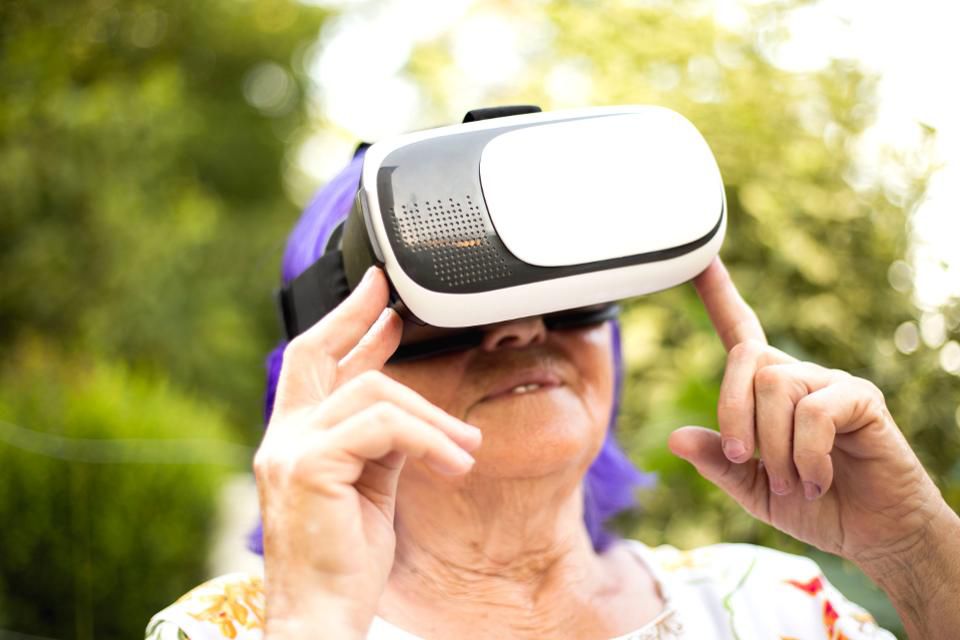 Their study was recently published in the Proceedings of the SIGCHI Conference on Human Factors in Computing Systems, and was presented at the ACM CHI Conference on Human Factors in Computing Systems taking place in Glasgow, May 4-9.
The small study, conducted at St Andrew's Healthcare in Northampton, involved 8 patients (ages 41 to 88) who were living with dementia. (Alzheimer's disease and Huntington's disease).
The study equipped each patient with a VR headset to 'visit' one of five virtual environments (VEs): a cathedral, a forest, a sandy beach, a rocky beach, and a countryside scene. Each patient underwent 16 monitored sessions and response and feedback was recorded among patients and their caregivers.
One important finding from the study was that VR helped patients retrieve old memories by incorporating novel stimuli difficult to access as a result of poor and declining health and inability to reach from their limited and secure environment.
See the full story here: https://www.forbes.com/sites/robertglatter/2019/05/09/how-virtual-reality-can-improve-the-quality-of-life-for-people-with-dementia/#637c84ae7f1c
Army, NPS Embrace Virtual and Augmented Reality
 “The largest use has been in training. Maintenance is second — for example, goggles that allow a worker to have access to records and pictures of parts when he’s in the belly of an airplane.”
VR Lets Users Experience Historic Sites
Other agencies are turning to creative methods — and outside help — to develop AR/VR programs that enhance the customer experience.
The American Battle Monuments Commission created a smartphone app that allows people to take a virtual tour of the Normandy American Cemetery near Omaha Beach in northern France, the burial site for 9,387 Americans who died in the D-Day invasion. The app also gives tourists physically at the site more information about what they’re seeing.
The tiny agency, which maintains 26 cemeteries and 30 memorials around the world, outsourced production of the app, says Tim Nosal, ABMC chief of external affairs.
“The complexity of the technology is likely beyond the capability of most government agencies,” Ollig says. “We can give the public something they’ve never seen before when we find a partner who’s willing to work with us in a way that fits with our mission.”
See the full story here: https://fedtechmagazine.com/article/2019/05/army-nps-embrace-virtual-and-augmented-reality
Epson’s new augmented reality BT-30C glasses can plug into your phone
 Epson has a new pair of augmented reality glasses on the market — and while they’re not meant for everyday wear, they’re still supposed to be more convenient than their predecessors. The Moverio BT-30C glasses connect to an Android smartphone or a Windows PC over USB-C, unlike earlier Epson Moverio products, which plugged into a custom Android controller box. They cost $499, and they’ll ship in June of this year.
The glasses feature a 23-degree FOV, which is small even by those standards.
See the full story here: https://www.theverge.com/2019/5/8/18535912/epson-moverio-bt-30c-augmented-reality-glasses-announce-pricing-release-date
Review: The Oculus Quest Is Virtual Reality’s Best Bet Yet
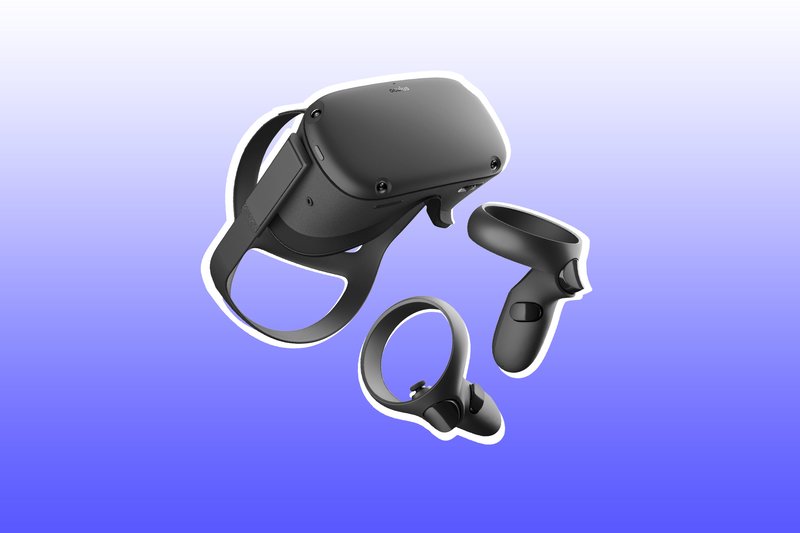 That’s not true of the Oculus Quest. The Facebook subsidiary’s newest portable headset ditches the wires and expensive hardware found on other high-end VR hardware, cramming it all into a self-contained headset with motion-tracking controllers. If the Quest is able to build up a library of quality VR games and experiences, it could turn into the coolest game console you’ll ever own. But it could also be the most painful game console you’ll ever own.
The $399 Oculus Quest ($499 for the 128GB version) is the company’s third major attempt at nailing virtual reality. Its first, the polarizing Oculus Rift, brought VR to high-end PCs, requiring users set up stationary sensors to play. Its second, the smaller, self-contained Oculus Go, ditched the PC for some newfound freedom, but its single controller, limited degrees of freedom, and underwhelming experience eventually left many bored of the entire affair.
Like the Go, the Quest is a self-contained VR headset — it has no wires to get tangled in and no cameras to mount or position for tracking purposes. The Quest supports six degrees of freedom: up, down, left, right, front, and back. Unlike the Go, the Quest’s integrated cameras and motion-tracking controllers do a great job of keeping you properly oriented, and allow you to move freely throughout a virtual environment with your actual body as long as you’ve got the space to do so.
There’s also the issue of space. After moving nearly every piece of furniture out of my way, and telling the Guardian where I planned on playing, I still felt cramped.
See the full story here: http://time.com/5584275/oculus-quest-review/