Fake news is an existential crisis for social media
 The funny thing about fake news is how mind-numbingly boring it can be. Not the fakes themselves — they’re constructed to be catnip clickbait to stoke the fires of rage of their intended targets. Be they gun owners. People of color. Racists. Republican voters. And so on.
The really tedious stuff is all the also incomplete, equally self-serving pronouncements that surround ‘fake news’. Some very visibly, a lot a lot less so.
....
As Zeynep Tufekci has eloquently argued: “The most effective forms of censorship today involve meddling with trust and attention, not muzzling speech itself.”
So we also get subjected to all this intentional padding, applied selectively, to defuse debate and derail clear lines of argument; to encourage confusion and apathy; to shift blame and buy time. Bored people are less likely to call their political representatives to complain.
Truly fake news is the inception layer cake that never stops being baked. Because pouring FUD onto an already polarized debate — and seeking to shift what are by nature shifty sands (after all information, misinformation and disinformation can be relative concepts, depending on your personal perspective/prejudices) — makes it hard for any outsider to nail this gelatinous fakery to the wall.
....
Every gun outrage in America is now routinely followed by a flood of Russian-linked Twitter bot activity. Exacerbating social division is the name of this game. And it’s playing out all over social media continually, not just around elections.
...
Really, the case for social media regulation is starting to look unstoppable.
But even with unfettered access to internal data and the potential to control content-sifting engines, how do you fix a problem that scales so very big and broad?
Regulating such massive, global platforms would clearly not be easy. In some countries Facebook is so dominant it essentially is the Internet.
So, again, this problem looks existential. And Zuck’s 2018 challenge is more Sisyphean than Herculean.
And it might well be that competition concerns are not the only trigger-call for big tech to get broken up this year.
See the full story here: https://techcrunch.com/2018/02/18/fake-news-is-an-existential-crisis-for-social-media/?utm_medium=TCnewsletter
How Magic Leap Wants to Help Publishers Bring Their Videos to Mixed Reality (Q&A)
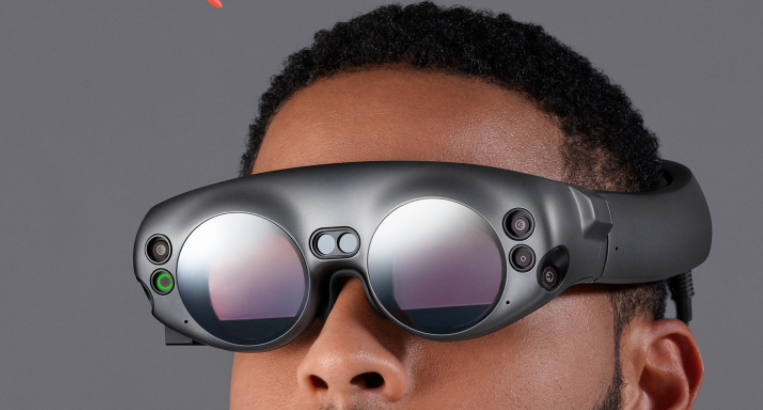 What exactly is the Magic Leap Screens platform?
Screens is a platform that traditional video publishers can use to distribute content on Magic Leap. We’ve created a special set of APIs that will be available to key early video publishing partners.
Is this primarily for 2D content, or also holographic video?
The Screens platform showcases both volumetric video and traditional 2D video content. We will have tools and plug-ins to enable volumetric playback of 3D-captured scenes, and there are third parties that can help with the capture and production of sophisticated volumetric video.
See the full story here: http://variety.com/2018/digital/news/magic-leap-screens-video-publishers-1202702269/
HOW AUGMENTED REALITY IS SHAPING THE FUTURE OF PLAY

 Now, Snyder acts as an AR ambassador to his friend group. Sometimes, when friends come over, they see Snyder's Merge AR/VR goggles, which he leaves on the dresser in his bedroom. He’ll slide in his phone, show them how it works, and let them take it for a spin. “Their eyes pop,” he says. “They always ask me, ‘Where can you buy this?’”
Jackie Marsh, a researcher at the University of Sheffield who studies digital literacy in children, says AR experiences can be beneficial for kids, especially when the apps help kids learn something or indulge in their own fantasy play. But research also warns that these types of games, toys, and apps can fail to engage kids meaningfully, or worse, mess with a child's sense of “reality testing”—understanding what's real, and what's not. It all depends on how the AR experience is designed.
See the full story here: https://www.wired.com/story/ar-toys-the-future-of-play/
Hands On Review: Knockout League VR Boxing Is The Best Virtual Reality Fist Fight You Can Have
 The VR Health Institute estimates that playing Knockout League burns 8-10 calories a minute. At some point, this calorie counting mechanism will get more sophisticated — adding in the option for gender selection, for example, as men and women tend to burn calories at different rates due to muscle mass.
See the full story here: https://www.forbes.com/sites/zarastone/2018/02/16/hands-on-review-knockout-league-vr-boxing-is-the-best-virtual-reality-fist-fight-you-can-have/#3219b7f46eeb
The DeanBeat: High Fidelity takes us dancing in a virtual reality club

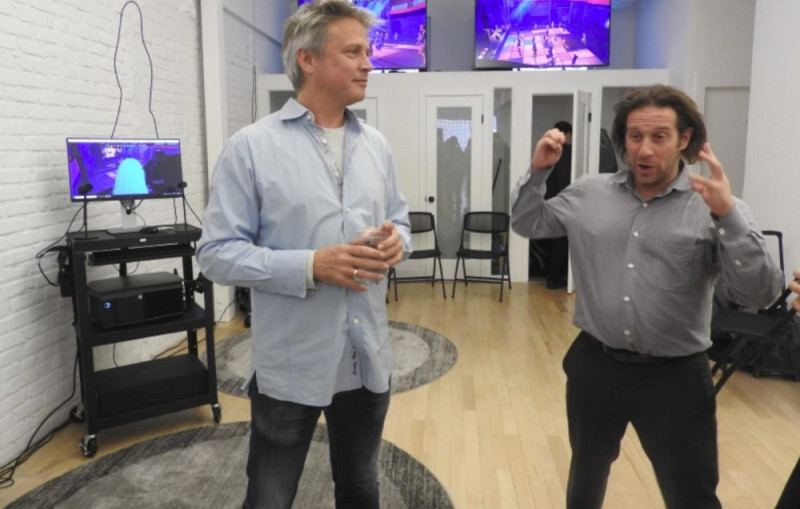 Yes, I went dancing in the dance club in VR, and talked to a bunch of people all at once. I even allowed strangers to touch my avatar in VR so that I could physically feel what it was like to have a sense of touch in the cyber world.
“‘We’re showing this for a little party today, and it’s just the beginning,” said Philip Rosedale, CEO of High Fidelity, in an interview, pointing at the room with a couple of dozen VR headsets and computers. “In a short while, we’ll bring in teachers and a class on a field trip here. We’ll start going on virtual trips with tour guides, so the teacher can take you through the pyramids in Egypt. They could send kids out to look in the environment for a hieroglyphic of a jackal and then come back. This is the start of social VR experiences. Games are fun, but it’s the social experiences that will bring people together and make a lasting impact.”
The experience felt real, as the movements of the real dancers were in sync with their virtual characters. High Fidelity made it possible by bringing down the latency, or interaction delays, to about a tenth of a second. The quick interaction, combined with the lights and the sound of music and voices, made the dancing experience more believable in VR, Rosedale said.
“You can test a lot of things in VR to see how they compare to real life,” said Jeremy Bailenson, a VR expert and communications professor at Stanford University, in an interview.
After I got out of it, Bailenson said that over time, you’ll be able to hire people who are experts at moving your body around, such as dance gyrations, and you can concentrate on things like talking to people. It will be one more aspect of a vast virtual economy, and it will be fun because it will be more intimate.
See the full story here: https://venturebeat.com/2018/02/16/the-deanbeat-high-fidelity-takes-us-dancing-in-a-virtual-reality-club/