SMPTE: Industry Leaders Gather to Discuss the Future of AI
October 25, 2017
SMPTE kicked off its 2017 Annual Technical Conference & Exhibition on Monday with an all-day symposium on artificial intelligence and its emerging role in entertainment production and distribution. Among the day’s presentations, SMPTE’s Richard Welsh presented a compelling primer on AI, Google’s Jeff Kember discussed the differences between supervised and unsupervised systems, Hitachi Vantara’s Jay Yogeshwar addressed using machine learning and AI for production workflow, Yvonne Thomas of Arvato Systems looked at the value of effective data analytics, Greg Taieb of Deluxe addressed language localization for multilingual distribution, and Aspera co-founder Michelle Munson examined next generation network design.
Richard Welsh, SMPTE’s VP of education, began the day with an excellent 30-minute primer on AI. The term AI is used to describe three very different levels of computational capabilities.
Machine learning (ML) involves algorithms that are trained to do a specific task. Deep learning (DL) involves regenerative algorithms; they can learn through unsupervised feedback loops, but are cognitively constrained to one area of expertise. General artificial intelligence (GAI) involves free learning networks.
GAI is what most people think of when they think of AI, but GAI does not yet exist in the commercial arena. Most of what people and marketing calls AI is really a machine learning implementation.
There are two forms of machine learning algorithms, regressive algorithms (decision trees) and classification algorithms (index and compare). Welsh cautioned the crowd not to anthropomorphize the technology. AI does not mimic the human mind. It is “necessarily incomprehensible” he said, which can lead it to come up with unexpected yet valid responses.
Jeff Kember from Google’s office of the CTO discussed the difference between supervised systems where you have a specific output in mind, and unsupervised systems in which reinforcement learning takes place and both the algorithm and the output are modified.
He described how machine learning will enhance the end-to-end production workflow, from adding content and technical metadata to camera raw through supporting multi-channel day-and-date distribution and long-term archiving.
Dr. Jay Yogeshwar, Hitachi Vantara’s director of worldwide media, broadcast and entertainment, explained how content intelligence would enable operational efficiencies throughout the workflow. Hitachi is involved in using machine learning and AI to optimize video compression, nonlinear editing and media asset management systems, better recommendation engines, and OTT contextual ad insertion.
Yvonne Thomas, product manager for Arvato Systems, explained how data analytics become both more valuable and more complex as you move down the descriptive, diagnostic, predictive, and proscriptive analytics chain.
She described how you train a machine learning algorithm this way. Once you input your starting data set, the algorithm outputs a decision, the system accepts feedback on that decision by comparing it to the established set of rules and goals, and the algorithm’s parameters are adjusted prior to the next round of input. She stressed that “using a media analytics service requires some sort of social responsibility.”
Greg Taieb, senior director of localization product development at Deluxe Entertainment Services explained that language localization for multilingual distribution of content requires four things: 1) adaptation, 2) context and tone, 3) chucking (e.g. pauses or natural text breaks), and 4) timing and specification-based restrictions.
He calls the language localization process “transcreation” because you are trying to recreate the sense of the dialog as you translate, taking culture, slang, and other elements into account.
He sees AI starting to play a role in all of this, especially with the rapid development of resources like Google Translate. He also sees a new job title developing, post editor, responsible for QC-ing the machine translation.
After lunch, Aspera co-founder Michelle Munson offered a deep dive into next generation network design. Machine learning applied to network design can dramatically reduce the network footprint (hardware requirements), optimize bandwidth, and more efficiently adapt to changes in network load in real time.
Martin Wahl, principal program manager for Microsoft’s Azure Media Services group described the company’s Cognitive Services bundle. It includes visual language, speech knowledge, and most interestingly video indexing on a frame-by-frame level.
In response to a question from a Library of Congress archivist, Wahl noted that they use their own metadata nomenclature, so any merging into a standardized database would require transcreation processing.
Konstantin Wilms, principal solutions architect at Amazon Web Services, said that one of AWS’s clients is already offering personalized linear content streaming experiences. CNN is using AI to finish rendering animations.
Videos of the SMPTE presentations should be available free to SMPTE members on www.smpte.org in a few weeks.
See the original post here: http://www.etcentric.org/smpte-industry-leaders-gather-to-discuss-the-future-of-ai/
Sony to Unleash Pet Robot (and new VR tech)
 Sony is also expanding into VR. The company said Tuesday that it has developed an experimental vehicle that eliminates windows and is packed with image sensors. The technology could enable drivers to steer without lights in the dark because the sensors can see better than human eyes, and theme parks could use a mixed-reality function to layer digital images over real-world scenery, Sony said.
See the full story here: https://www.wsj.com/articles/sonys-pet-project-a-new-robot-dog-to-be-unleashed-soon-1508830008
Learning To Design Virtual Reality For Accessibility
 When Southern Rehab approached us to ask about researching how a player on the higher end of the disability scale would be able to handle such a game, we jumped at the chance to collect real user feedback as the design progressed.
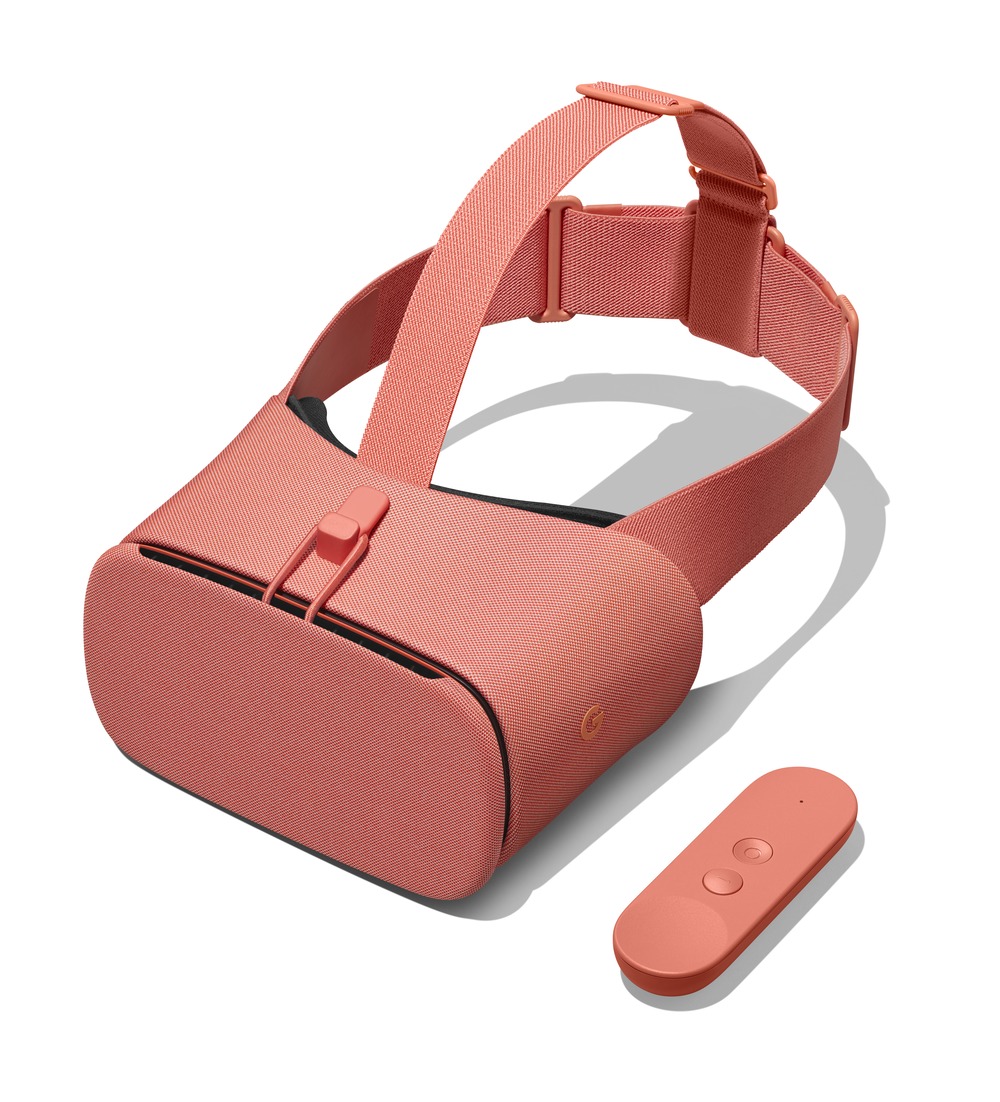
Physical barriers were the first we needed to tackle. The Daydream controller’s design, with its simple three degrees of freedom, immediately makes the game more accessible for people with limited movement in the arms and hands especially. In that sense the hardware gave us the foundation to build the design on.
This then forced us to focus on the simplest way to control gameplay and move around within the game. This has required us to make some compromises to the traditional “big room” movement the wider public have come to expect of VR gameplay. In our game the player moves by clicking on a ground spot to move there. Similarly, clicking the controller left or right enables them to turn . This opened full body movement using just one hand with the controller through the environment. We felt the trade-off was worth it, if it meant the experience could be more widely accessible.
One tester who was a wheelchair user explained she suffered regularly from motion sickness when driving. She had played some VR and had experienced motion sickness there as well. So we looked at how the in-game movement was cognitively processed, compared to the experience of moving in the real-world, and made sure she wouldn’t get motion sickness.
We also looked at the sensory issues for a player on the autism spectrum to see if the VR audio triggered anxiety in the same way as real-world audio does.
It’s all too easy for us as developers to design for the world we are accustomed to living in, in the way we are used to experiencing it. It takes effort to go beyond that. We believe it’s worth it. Audiences will benefit and VR itself will benefit.
See the full story here: https://uploadvr.com/accessibility-vr-design/
VR As An Empathy Machine: With Great Power Comes Great Responsibility
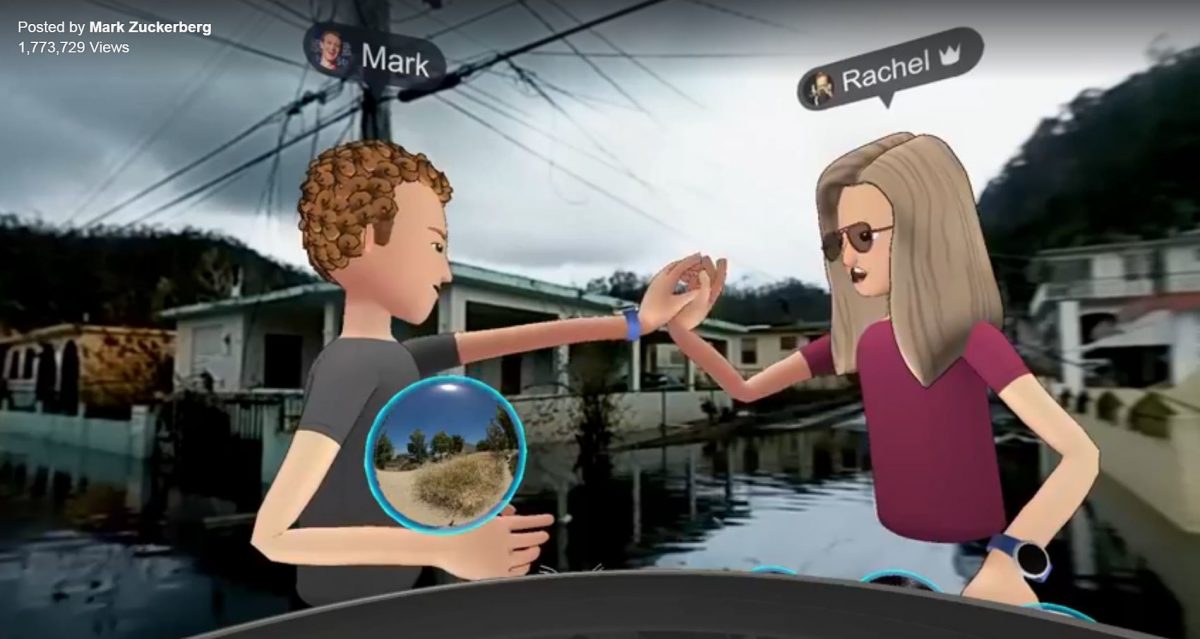 I have no doubt there will be AR apps that will become literal rose-colored glasses to erase homeless people from view on the streets and make dilapidated dwellings appear to be sparkling, grand mansions, but we can’t let technology disconnect us from real societal issues; that’s not a cure, it’s a curtain. Technology can be fantastic and magical, but it can also be horrifying, and it’s the responsibility of creators to understand the implications of their designs.
See the full story here: https://uploadvr.com/vr-empathy-responsibility/
With Tiny Stereoscopic 360-Degree Camera, Live Planet Aims To Succeed Where Others Failed
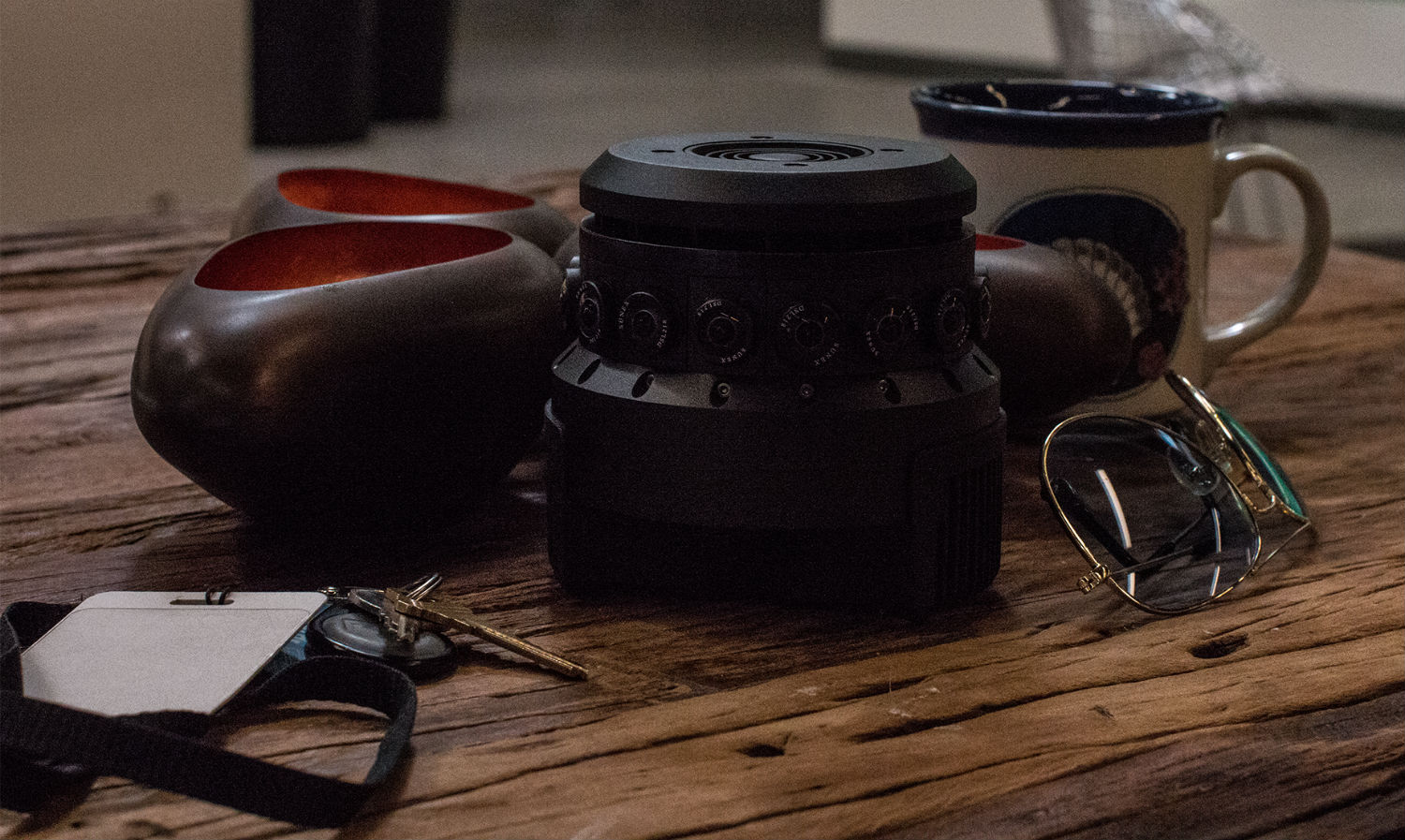 Startup Live Planet plans to deliver its first cameras in December as part of an end-to-end stereoscopic 360-degree video platform aimed at making it easier for creators to stream live high-quality content.
Live Planet is led by serial entrepreneur Halsey Minor, who largely self-funded this company after a long track record at the start of businesses like CNET, Salesforce and GrandCentral (which later became Google Voice).
The Live Planet system starts with a tiny 360-degree camera equipped with 16 lenses capturing stereoscopic video, with NVIDIA silicon on board powering it. The system is aimed squarely at the professional market just vacated with Nokia’s decision to end development of the OZO camera. The Live Planet camera costs around $10,000, which is a fraction of OZO’s price. And because the Live Planet camera is so small — a little larger than a coffee cup — Minor believes it will be able to be placed in tighter spots closer to the action.
The camera stitches footage on-board and streams a finished stereoscopic file over Wi-Fi, ethernet or USB. It can be operated locally or through the Web, allowing for its settings to be easily adjusted through a Web page.
Live Planet’s cloud tools include adaptive streaming techniques...
The camera shoots at 30 frames per second and is said to provide a 4K stereoscopic view with USB to support accessories, an SD card slot, Toslink and HDMI.
See the full story here: https://uploadvr.com/live-planet-360-video-platform/
Swing and a miss: Why virtual reality is striking out with sports fans
 I hate to say it, but even with all of its failings, VR still has immense potential to revolutionize how we watch sports. One way to do that is to truly leverage the immersive technology of VR to deliver engaging content you can’t get anywhere else. ...
The Fox Sports VR app took a huge step toward social VR by allowing people to watch a game in a virtual lounge while talking to floating avatar heads that represent people sharing the experience. In the app, you can virtually hang out with either Facebook friends of yours or complete strangers.
Mobile VR is also on the precipice of a revolution with the introduction of standalone VR headsets. Mobile headsets like the Gear VR and Google Daydream provide you with only three degrees of freedom (3DOF), allowing you to look horizontally and vertically, but not move in a 3D space. Standalone VR headsets that require no phone, such as the upcoming Oculus Go, offer six degrees of freedom (6DOF) allowing you to move up, down, left, right, backward, and forward in a 3D space. NextVR co-founder and CEO David Cole is bullish on the potential such standalone VR headsets can have on sports. “For instance, you are watching our center court camera feed and something obstructs the camera — like if a ref stands in front of the camera — you can physically move your body and look around it,” Cole told Digital Trends in June.
See the full story here; https://www.digitaltrends.com/features/virtual-reality-sports-failures/
Virtual Reality Makes Real Gains Across Africa
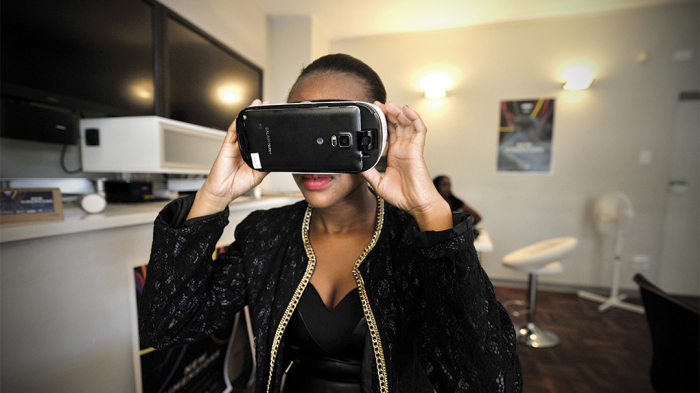 South Africa has already gotten a taste of what VR can offer in sectors like healthcare, real estate and tourism. Developers are optimistic that the technology will have a transformative effect in classrooms across the continent, too. “It’s such a natural way to bring things alive,” says Gillis.
“As proofs of concepts and well-funded VR campaigns have come out globally, we’re seeing a sustained interest from corporations,” he adds. “As a company we have quadrupled our staff base in the last year.”
That hasn’t necessarily trickled down to widespread adoption at the consumer level, where hardware is still out of the reach of most South Africans.
One of the goals in Johannesburg this week is “demystifying VR for filmmakers,” according to producer Steven Markovitz, CEO of Big World Cinema, which last year helped to launch “New Dimensions,” a pan-African narrative VR collaboration featuring artists from five countries.
“With VR, we’re right at the beginning of [creating] a film language,” he says. “The more people who are participating and experimenting, the more we can move that along.”
See the full story here: http://variety.com/2017/tv/festivals/virtual-reality-makes-real-gains-across-africa-1202596308/