In the ultimate pursuit to discover the impact of social media interaction on viewers’ engagement, MEC and Seven recently united to undertake a neuroscience study with Neuro-Insight, with the study revealing that when TV viewers interacted with social media while watching a program, there was a 9% increase in program engagement.
Participants were monitored though hidden cameras as they examined a live broadcast of the Seven Network’s reality show X-Factor late 2012, with the results flying in the face of the theory that second-screen usage during TV viewing negatively impacts audience engagement.
Strategic Polymers’ technology is a polymer that dramatically and rapidly changes its shape under an applied electric field. The letters on the company’s haptic keyboard vibrate to confirm that they’ve been pressed; that vibration can also be used to create sound waves, so the keys can click, or even play music. The advantage of the haptic keyboard over one with physical buttons, says Ramstein, is that it’s just 1.5 millimeters thick, and it’s flexible. Ramstein says the company, which has manufacturing facilities in State College, Pennsylvania, plans to ship the keyboards to equipment manufacturers in 2014.
The company is also working on a fully transparent keyboard with buttons that would physically pop up from the surface of a touch screen when activated, and then return to a smooth state.
This week, Adafruit Industries launches an educational series aimed at kids, report Hackaday and others. And it’s about time.
Discussions of modern technology often evokes the word “magic.
Some people say the episode is too talky. But even if Adafruit’s offering isn’t the Sesame Street for makers, it’s clear that we need one. The United States lags in STEM (science, tech, engineering, and math) education; President Obama has made strengthening it a priority. If people are passionate about the future technological competence of our nation, they could do worse than to take a page from Adafruit and launch a program like this into the mainstream.
“This bill would instead require any business that has a customer’s personal information, as defined, to provide at no charge, within 30 days of the customer’s specified request, a copy of that information to the customer as well as the names and contact information for all 3rd parties with which the business has shared the information during the previous 12 months, regardless of any business relationship with the customer.”
“What people want is, ‘You ask a very simple question and you get a very simple answer,’” said Oren Etzioni, a professor at the University of Washington who has co-founded companies for shopping and flight search. “We don’t want the 10 blue links on that small screen. We want to know the closest sushi place, make a reservation and be on our way,” he added.
Google and others are attempting to remain ahead of the curve. The search giant now shows answers in addition to links as results for online searches and took its “biggest step” last year when it introduced the Knowledge Graph, which uses semantic search to understand “the meanings of and connections among people, places and things,” adds the article.
The research team, led by Gerald Buller, a professor at Heriot-Watt University in Edinburgh, Scotland, describes a ToF imaging system that can gather high-resolution, 3D information about objects that are typically very difficult to image, from up to a kilometer away.
The system can resolve depth on the millimeter scale over long distances using a detector that can “count” individual photons.
The scanner is particularly good at identifying objects hidden behind clutter, such as foliage. However, it cannot render human faces, instead drawing them as dark, featureless areas. This is because at the long wavelength used by the system, human skin does not reflect back a large enough number of photons to obtain a depth measurement. However, the reflectivity of skin can change under different circumstances. "Some reports indicate that humans under duress—for example, with perspiring skin—will have significantly greater return signals,” and thus should produce better images, McCarthy says.
“One of the reasons these services are popular is they’re hearkening back to a time when the context was all that mattered,” says Lee Rainie, director of Pew Research Center’s Internet & American Life Project. “You’re just having a little shared thing that goes away after it’s been shared.”
Jeremy Liew, a partner at Snapchat investor Lightspeed Venture Partners, explains its rapid ascent as a result of people’s growing discomfort with sharing their lives on Facebook, Instagram, and Twitter.
Snapchat isn’t the only startup benefitting from this apparent change in attitude.Wickr, a startup cofounded and led by security expert and Defcon organizer Nico Sell, is also gaining users for its own disappearing-message app.
Disappearing messages could prove popular beyond social sharing, and could also be profitable, if businesses can be persuaded to pay for the services. Another company, Gryphn, which released a free Android app in February (an iPhone version is coming out shortly), is seeing a lot of interest from paying enterprise users—including hospitals, a police department, and a financial institution.
On Android, Gryphn’s app replaces the stock SMS texting app and encrypts outgoing messages and decrypts incoming messages. The app doesn’t allow users to take screen shots, and encryption can prevent a message recipient from saving or forwarding a message or set a picture message to disappear shortly after being viewed.
If ephemeral messaging startups gain in popularity among both consumers and business users, it’s more likely that this kind of capability will bleed into other apps and services, too. “I do believe ephemeral data’s the future. Every single messaging, social, communications app in the future will have ephemeral capabilities,” Sell says. “Now that we’ve done it, it’s really obvious.”
[Philip Lelyveld comment: ESRI, founded 40? years ago, is the mother of all computer mapping / GIS companies. This deal may breath new life into this privately held company.]
Redland-based geographical information systems and mapping software developerEsri has tied with social media and location analytics firm Geofeedia, the two announced today. According to the two, the deal will help public safety professionals monitor, analyze, and visualize live emergency data in real time.
We're out to build the Alexandria Library of 3D heritage data," said Tom Greaves, executive director of CyArk. Greaves is giving a presentation on the project at the SNW conference here this week.
Other sites around the world for which CyArk has already created digital images include the Leaning Tower of Pisa, the ancient Hindu temple complex at Angkor Wat, Easter Island's head statues, Inca ruins in Peru, and Thebes, the capital of ancient Egypt. Of course, not all the sites are all that ancient. Next week, CyArk will be in Australia generating a 3D digital image of the Sydney Opera House.
Greaves said changing to tape has also addressed latency and availability issues. CyArk makes two copies of its data, one to a tape drive it stores locally, and the other that gets shipped off to Iron Mountain's underground storage facility. Greaves said the locally stored tape drives can be accessed for restoration in less than 24 hours. "And frankly, we don't need 50 millisecond recovery time for most data we use," he said.
CyArk's website has been relatively popular, with 1.5 million hits since going live. CyArk also has an iPad app for viewing the historic sites.
"Visitors to our website can navigate it in 3D," Greaves said.
The website also provides a historic tour of sites, such as the Japanese-American confinement camps that were set up in California during World War II.
These guys asked about 11,000 Galaxy Zoo volunteers to fill in a quick online survey that asked them about their age, sex, location and what motivated them to take part, giving them 12 options to choose from.
The results are curious. Unsurprisingly, Galaxy Zoo volunteers are overwhelmingly male with 82.1per cent being men. There is also a particular over-abundance in the 50-60 age group. Overall, the volunteers have an average age of 43 and over 60 per cent come from the US and UK.
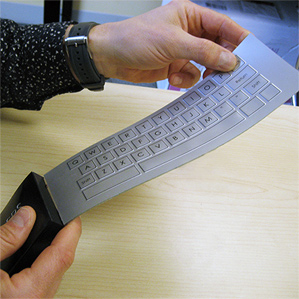 Strategic Polymers’ technology is a polymer that dramatically and rapidly changes its shape under an applied electric field. The letters on the company’s haptic keyboard vibrate to confirm that they’ve been pressed; that vibration can also be used to create sound waves, so the keys can click, or even play music. The advantage of the haptic keyboard over one with physical buttons, says Ramstein, is that it’s just 1.5 millimeters thick, and it’s flexible. Ramstein says the company, which has manufacturing facilities in State College, Pennsylvania, plans to ship the keyboards to equipment manufacturers in 2014.
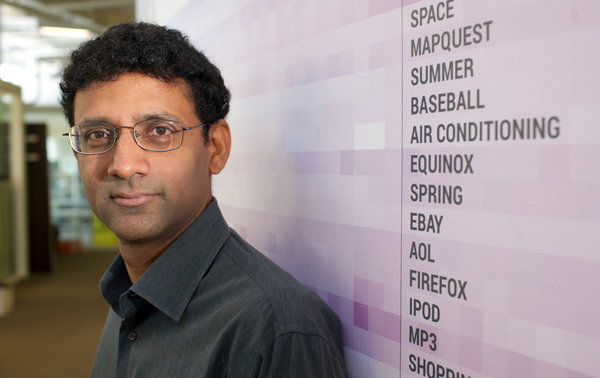 “What people want is, ‘You ask a very simple question and you get a very simple answer,’” said Oren Etzioni, a professor at the University of Washington who has co-founded companies for shopping and flight search. “We don’t want the 10 blue links on that small screen. We want to know the closest sushi place, make a reservation and be on our way,” he added.
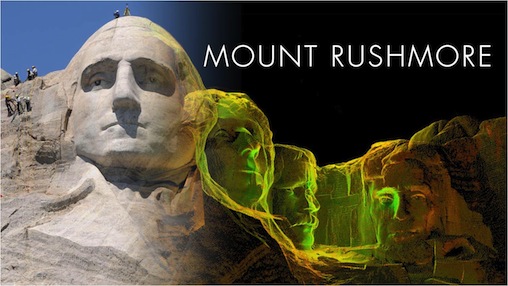 We're out to build the Alexandria Library of 3D heritage data," said Tom Greaves, executive director of CyArk. Greaves is giving a presentation on the project at the SNW conference here this week.
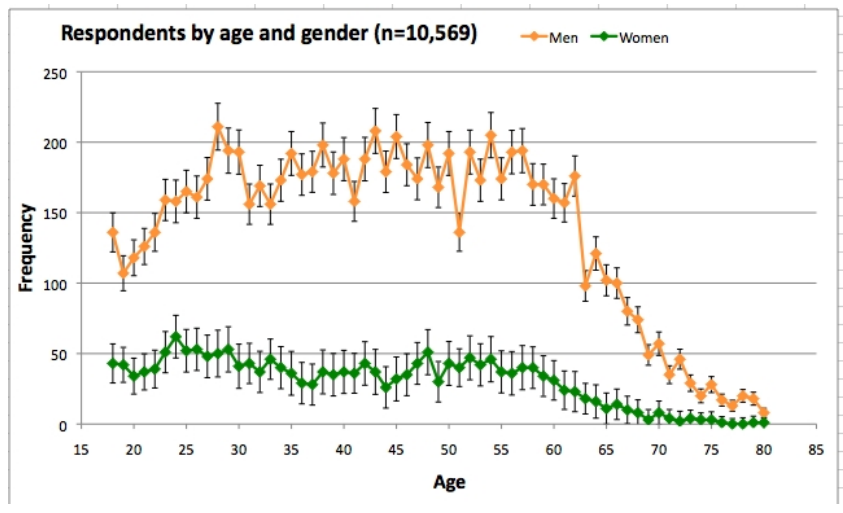 These guys asked about 11,000 Galaxy Zoo volunteers to fill in a quick online survey that asked them about their age, sex, location and what motivated them to take part, giving them 12 options to choose from.