Behind the lens of the camera which took the iconic first colour picture of Earth from space
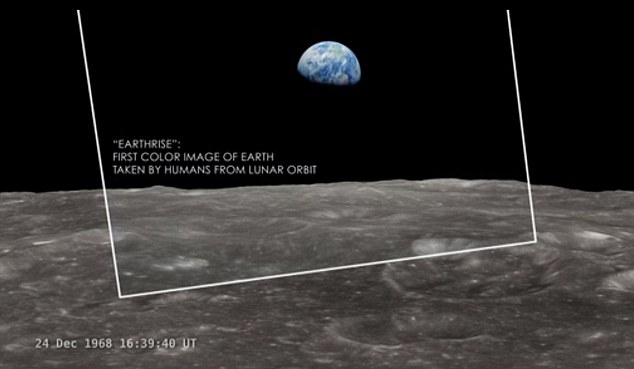 Philip Lelyveld comment: apparently the Earthrise photo was cropped from the original image! Read about it and the camera that took it here:
Flexible Displays Landing in 2012, But Not in Apple Gear
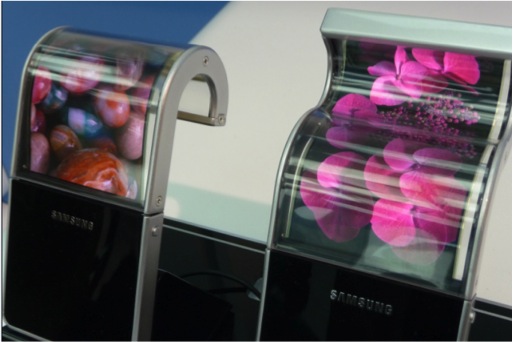 ...In early March, Samsung announced it would be mass-producing its flexible OLED displays, like the one seen above, by the end of this year. Now flash-forward to this Monday: According to a report from the Korea Times, Samsung is seeing “huge” orders for this display, and Apple is “likely” to be one of the major players.
Such a display could be useful in a number of applications, such as in a device with a gently curved screen. Ultimately, the display could even be deployed in a flexible, bendable phone or tablet. But that’s probably not on the horizon — especially Apple’s horizon — anytime soon. ...
Samsung’s flexible OLED display certainly has some advantages over current display tech. For one, it’s basically unbreakable because it doesn’t use glass, but rather a type of plastic called polyamide. ...
Colegrove said there are two reasons why Samsung’s flexible OLED is attractive to device manufacturers. First, the display is thin, lightweight and difficult to break — this offers immediate design benefits. Second, any type of new, novel technology offers marketing benefits. You can hear the commercial spiel now: “We have the first flexible AMOLED display devices in human history!” ...
And if you’re looking to find a flexible display in an iDevice, you’ll probably have to wait until the 2013-2014 time frame, says Colgrove — with truly bendy iDevices appearing in 2015 at the earliest.
See the full story here:
Augmented Reality escapes apps for mobile browser
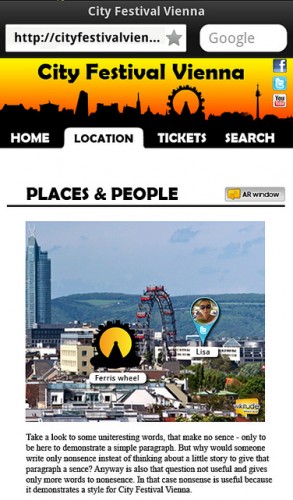 Augmented reality is set to escape apps and arrive in the browser, according to industry stalwarts, Wikitude, which has a new version of its AR technology that does away with siloed apps. Wikitude AR Window allows webpage developers to access the camera on a smartphone or tablet and display a live view from it, complete with real-time overlays of relevant information, something that would previously have required a separate download.
Although augmented reality apps are beginning to flourish, with a number of different systems from Wikitude, Qualcomm and others competing to power the market, so far each deployment has required its own, individual app. AR window, however, opens up mediation apps in the browser to the device’s camera and sensors, meaning webpages know where the user is, what they’re facing and when, and can insert new information accordingly. ...
Augmented reality has made headlines in recent weeks after Google demonstrated its Project Glass research, a wearable computer that can overlay digital information on top of a real-world view. More on AR in our full round-up.
See the original post here:
Perfume-puffing robot sniffs out social media mentions
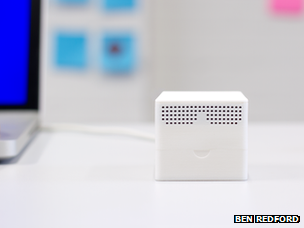 The old saying that your ears go red when people are talking about you is getting a 21st Century update.
Now your nose can tell you when you are being talked about on social networks thanks to a net-connected robot.
Called Olly, the robot watches the millions of messages passing through social networks and spots when its owner is mentioned. ...
Olly (short for olfactory) has gone through several versions since its initial design. The latest plans are for a gadget much smaller than the original. ...
Once finished, Olly can keep an eye on Twitter, Facebook or almost any other online account. The software that controls Olly can be tuned to emit a puff of perfume for a few different types of online interaction such as a retweet, posting a comment, a mention by name or a specific text search. ...
See the full story here: http://www.bbc.co.uk/news/technology-18059740
Project Glass: Google unveils its geeky augmented reality glasses
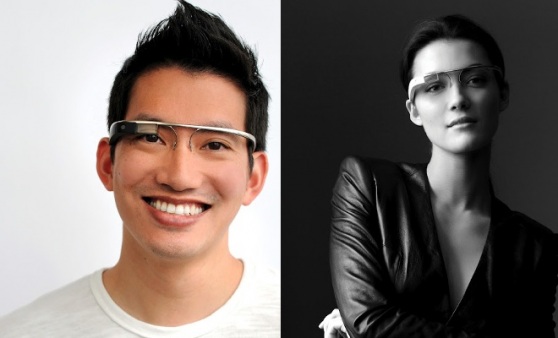 [Philip Lelyveld comment: why do journalists feel compelled to call any piece of tech-related eyewear "geeky"?]
...Dubbed Project Glass, the glasses will allow you to do many of the same things you do with your smartphone without whipping out a separate device. It’s still unclear when the glasses will be for sale, but Google says employees will begin testing them in public.
In a concept video released today, Google showed how the glasses could take pictures, give you directions, check-in to locations, and even perform video chats.
“We’re sharing this information now because we want to start a conversation and learn from your valuable input,” Google’s Babak Parviz, Steve Lee, and Sebastian Thrun wrote on a new Google+ page for the project. “So we took a few design photos to show what this technology could look like and created a video to demonstrate what it might enable you to do.” ...
See the full story here:
Want to reinvent TV? Don’t forget the TV
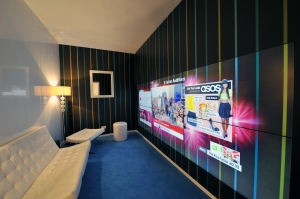
...[NDS] The Israel-based TV services provider, which Cisco acquired for $5 billion in March, has been exploring what the actual TV set will look like five years from now. Company executives came to San Francisco this week to showcase some of their research, and the results are pretty intriguing.
To sum it up briefly, NDS was showcasing a big matrix of six bezel-less flat screen TVs that were combined to form a huge, almost overwhelming TV wall. NDS CTO Nick Thexton then went on to demonstrate big displays like these can be broken up, showing a video of varying sizes somewhere in the middle, with personalized and content-relevant widgets off to the side. And once you get some cinematic 4k content, you might even want to use the whole screen. Check out Christina Bonnington’s story over at Wired.com for more details about the demo, which was neat.
But what I found fascinating was the points that Thexton and NDS Chief Marketing Officer Nigel Smith raised about the future of TV. The real question, Smith told me, is, If you have a TV the size of a wall, how are you going to interact with it? ...
Instead, Thexton thinks that TVs may become modular and actually consist of much smaller displays that can be combined to fit the room. Think of 6-inch to 8-inch bezel-less squares that you can buy individually and then mount to the wall next to one another, gradually growing the size of your display to fit your needs. These displays would automatically work together, making sure your Saturday night movie runs on all of them at once. ...
One of the main points of the NDS demo was that huge displays don’t always equal huge videos. Instead of watching your morning news in theater mode, you’re going to watch clips with a much smaller size and use the rest of the screen for other information. In fact, sometimes you might not be watching TV at all but will still find it useful to leave the large screen wall on. For example, it could display cover art for the music you are listening to while giving you access to your calendar reminders, a wall-sized clock and your Twitter feed. Home automation and security-camera footage are also applications that could be useful to run all day, or fade in and out as needed.
But with that big ambient screen also comes a unique new challenge: You really don’t want to turn it off. ...
NDS ran its demo off an iPad, allowing me to change the immersion level — and display size — of a video with simple sliders. ...
A TV that consists of many little displays working together, a TV that’s always on, a TV the size of your living room wall and a TV that obeys you like a well-trained dog: That’s a lot to swallow, especially if you’ve thought of the next wave of apps as innovation in the TV space.
However, it may be time to think bigger, and leave some of the assumptions of what TV is — and what TV sets are — behind. “TV has to start defining a future for itself,” Thexton told me. And that future may not fit into a 60- or 70-inch bezel.
See the full story here: