Raspberry Pi takes aim at the education market
 "For $25 we can give you a 700MHz ARM, we can give you more graphical performance than an Xbox One, we can give you the ability to play 1080p Blu-ray - this thing can even be used to replace your Apple TV," he told attendees over an early prototype board. "For $35 we can add to that another 128MB of RAM, we can add the network option - and based on the feedback we've had online, we suspect that most of our business is going to be in that $35 point.
See a video and read the full story here
Steve Jobs’s greatest legacy: persuading the world to pay for content
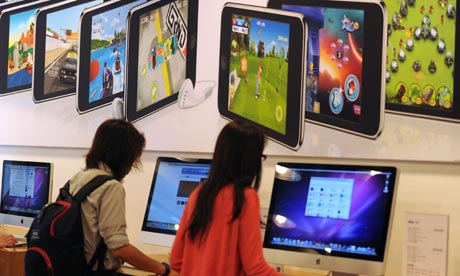
Ten years is, of course, a long time in media. Ten years ago, if you wanted to download some music, your best bet was Napster or one of the filesharing systems such as LimeWire or KaZaA. There were legal services, but they were so dire they wouldn't pass much muster today: there was PressPlay and MusicNet (from rival groups of record companies), which required $15 a month subscriptions for low-quality streaming (when most people had dialup connections, not today's broadband). You couldn't burn to CD. They were stuffed with restrictive software to prevent you sharing the songs.
What happened? Steve Jobs happened, mainly. The hardware and design team at Apple came up with the iPod (initially intended to be a way to sell more Macintosh computers), and then followed the iTunes Music Store – a great way to tie people to Apple by selling music. In 2003 Jobs persuaded the music companies – which wouldn't license their songs to bigger names like Microsoft – to go with him because, he said, Apple was tiny (which it was, at the time). The risk if people did start sharing songs from the store was minimal, he argued. ...
Jobs pried open many content companies' thinking, because his focus was always on getting something great to the customer with as few obstacles as possible. ...
Read the full story here.
[Patent Filing] Apple invents privacy eyewear for confidential information, gaming
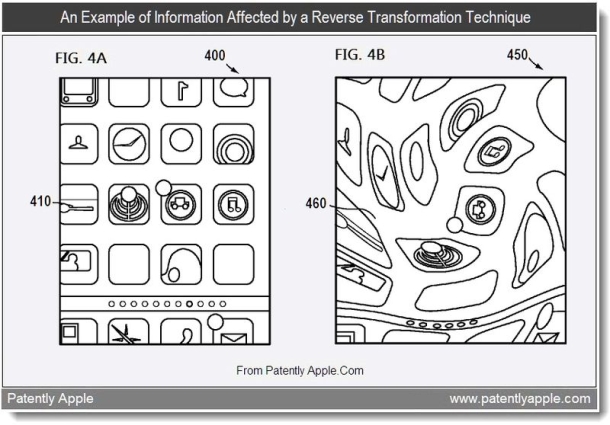
Apple has applied for a patent to cover a great new invention that would allow users to wear specially designed eyewear to view confidential information while using their mobile devices. ...
The gist of how this is works is that a user can set the device, be it an iPhone, iPad, or notebook, to privacy mode, wherein the software would allow the option of obfuscating the information displayed on the screen. The glasses would decipher the display so that any potential onlookers would only see a scrambled mess, whereas the user would see the entire message. ...
Gamers may get the most out of this invention, though. The patent application suggests that not only are these privacy glasses good for concealing information, they can also be used to initiate 3D technology as well as allow multiplayer games to be viewed by several competing players, processing different information from each. ...
Read the full story here
Sony ‘subtitle glasses’ could be a hit with deaf moviegoers

Sony’s Tim Potter, who is helping with the design of the ‘subtitle glasses’, explained what they’re about.
“What we do is put the closed captions or the subtitles onto the screen of the glasses so it’s super-imposed on the cinema screen, [making it look] like the actual subtitles are on the cinema screen,” he said.
Read the full story here.
3 Growing Expectations for the Future of Tech, According to Kids [Infographic]
 The research consultancy Latitude recently completed a multi-phase innovation study, Children's Future Requests for Computers and the Internet, which was published in collaboration with ReadWriteWeb.
The study asked more than 200 kid-innovators across the world, ages 12 and under, to draw the answer to this question: "What would you like your computer or the Internet to do that it can't do right now?"
By and large, kids indicated that they'd like future technology to fulfill three primary functions:
1. Serve as an extension of themselves, with more fluid and intelligent modes of interaction
2. Seamlessly integrate digital objects, places and experiences with the real, physical world
3. Empower users by conferring new knowledge or abilities and unlocking new experiences
Read the full story here
New 3D Imaging System Developed At MIT

The new device could help provide manufacturers with a way to inspect products too large to fit under a microscope and could also have uses in medicine, forensics and biometrics.
The GelSight acquires surface textures and shapes by pressing a block of clear rubber onto them, revealing high-resolution 3D details.
Once an object is pressed against the rubber, its reflective skin on one side distorts to determine the shape of the object.
A camera images the distortion multiple times through the other side of the rubber to help produce 3D images.
See the full story here
An Office on Every Surface
 How Microsoft's chief strategy officer views the future of our work spaces.
If you look at Kinect and all the machine-vision stuff, that came from seven groups in three labs—Beijing; Cambridge, U.K.; and Redmond. For more and more projects, the research is blended together on a more global basis to create these next steps. I don't perceive any dramatically different way that knowledge workers work in China than they do here.
Read the full story here.
Microsoft figures out how to make a nearly perfect 3D model of the human face
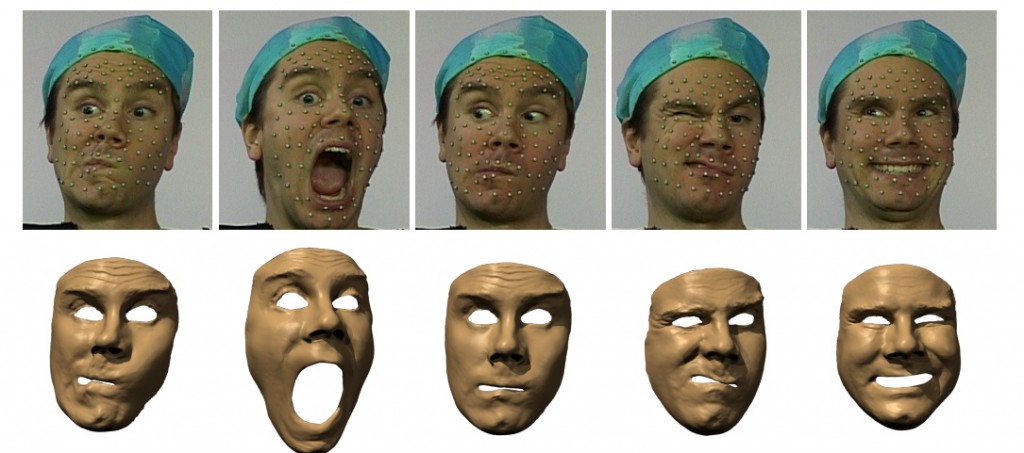 Philip Lelyveld comment: As consumer tools for creating special effects become increasingly sophisticated, I suspect movie and TV content producers will need to return their focus to story.
Read the full story here.