The Foundation Model Transparency Index
Key Findings
- The top-scoring model scores only 54 out of 100. No major foundation model developer is close to providing adequate transparency, revealing a fundamental lack of transparency in the AI industry.
- The mean score is a just 37%. Yet, 82 of the indicators are satisfied by at least one developer, meaning that developers can significantly improve transparency by adopting best practices from their competitors.
- Open foundation model developers lead the way. Two of the three open foundation model developers get the two highest scores. Both allow their model weights to be downloaded. Stability AI, the third open foundation model developer, is a close fourth, behind OpenAI.
See the study here: https://stanford.us10.list-manage.com/track/click?u=b24b85d83de44fe3afadcfca1&id=ffd42a9f3f&e=53ccdfe1ae
The experts are divided on AI’s future. For now, that’s good
... Ultimately, the most unassailable takes came from the speakers who took pains not to have a take, such as DeepMind cofounder Shane Legg. “I don’t believe the people who are sure it’s going to go very well, and I don’t believe the people who are sure it’s going to go very, very badly,” he said. ...
Ilya Sutskever, OpenAI’s chief scientist, ended his TED AI talk by saying he expects that the potential for AI to go badly wrong would result in “people [starting] to work in unprecedented collaborative ways out of their own self-interest.” I can’t quite tell whether that sentiment is utopian or dystopian. ...
I won’t try to convince you to stop worrying about what could be ahead—some of it, I worry about myself—but any analysis that fails to consider the ways AI is already a boon to humanity is incomplete. ...
See the full story here: https://www.fastcompany.com/90968556/ted-ai-andrew-ng-max-tegmark-shane-legg
At TED AI 2023, experts debate whether we’ve created “the new electricity”
... University of Southern California professor Phebe Vayanos also spoke about the need to prevent AI-powered decisions from disadvantaging marginalized communities. ...
Boeree spoke about the so-called "Moloch problem," a well-known parable in some AI communities, which pulls from the Biblical story of Moloch as a metaphor of sacrificing long-term consequences for short-term gain. She spoke about the unhealthy competition that comes from "crappy incentives," as she put it, that drive AI companies to rapidly and perhaps recklessly seek advanced systems because everyone else is doing it. Her talk earned one of the rare standing ovations of the day. ...
Aviv Regev, executive vice president at Genentech Research and Early Development, talked about the promise of using AI for drug discovery. Judging by audience reactions, these medical moments felt like cathartic vindication of AI as a positive force in society amid prevalent nervousness and skepticism over AI's potentially negative impacts. ...
So then, if TED AI 2023 might conclude one thing, it's that AI technology plus human ingenuity may replace a human working alone. ...
See this full story here: https://arstechnica.com/information-technology/2023/10/ted-ai-2023-a-historic-symposium-on-benefits-risks-and-applications-of-ai/
Captions Debuts AI Lipdub with Translation and Gen Z Slang
... Lipdub’s translations not only duplicate what the company says is “the subject’s exact voice,” but also syncs lip movements to match. It also incorporates dialects and idioms, with options like Gen Z and Texas slang. ...
Among those currently using the Captions creative studio are “Disney-owned sports network ESPN and its commentator Omar Raja, ‘Mr. Wonderful’ of ‘Shark Tank’ fame, Twitch’s founder Justin Kan and the influencer Unnecessary Inventions,” according to VentureBeat. ...
See the full story here: https://www.etcentric.org/captions-debuts-ai-lipdub-with-translation-and-gen-z-slang/
DARPA SEEKS TO PROTECT VIRTUAL REALITY AGAINST “COGNITIVE ATTACKS”
... Such attacks can include information flooding to increase equipment latency and induce physical illness, planting real-world objects to overwhelm displays, subverting a personal area network to sow confusion, injecting virtual data to distract personnel, using objects to overwhelm a user with confusing false alarms, assessing user status through an eye tracker, and other potential attacks. ...
See the full article here: https://futurism.com/the-byte/darpa-vr-cognitive-attacks
Meta’s new AI assistant ‘Billie’ is creeping Kendall Jenner fans out
Kendall's AI double is here https://www.instagram.com/p/CyBuBdaPkfi/
... The hyper-realistic Jenner-active AI is part of a recent initiative by Meta — which owns WhatsApp and Instagram — in which they’re paying celebrities millions of dollars for their likenesses so they can create AI assistants to connect to their audience.
In accordance, these bots answer queries and engage the user in naturalistic, real-time conversations using responses based on their celeb’s personality.
Billie is just one member of the AI assistant roster, which includes Paris Hilton as a “forensic specialist who solves crimes,” Tom Brady as Bru, the wisecracking “sports debater,” Dwayne ‘The Rock’ Johnson as a trainer, and Snoop Dogg as a red cape-wearing “Dungeon Master” who encourages the user to “get medieval.” ...
See the full story here: https://www.news.com.au/entertainment/celebrity-life/celebrity-photos/metas-new-ai-assistant-billie-is-creeping-kendall-jenner-fans-out/news-story/a4ae27e6a8c990bc3ab2f4d6f7fafc91
Microsoft’s Visionary Leap: The Future of Augmented Reality Glasses
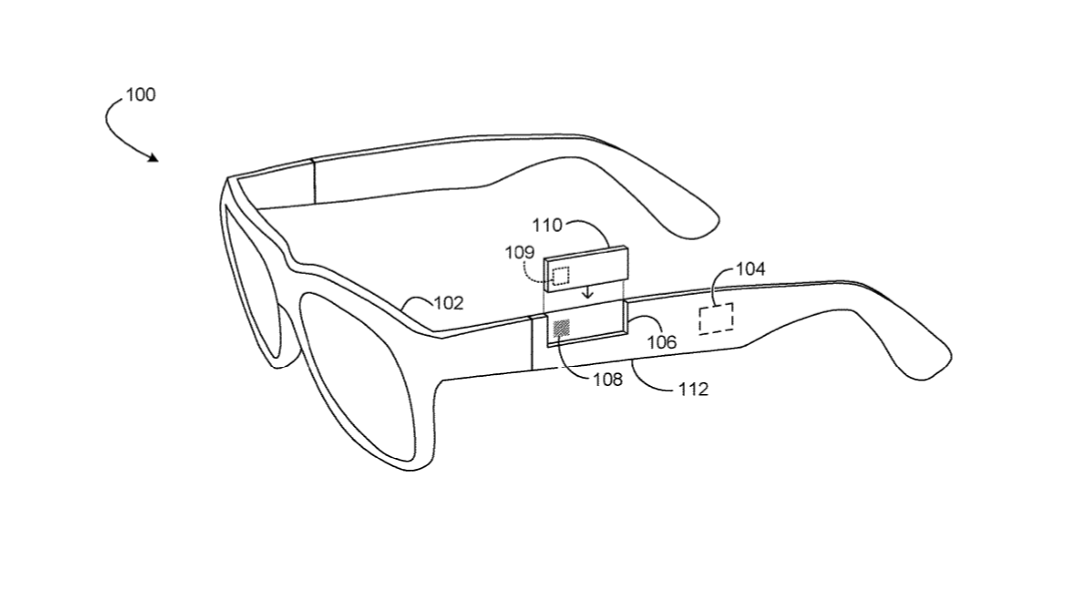
... On October 5th, they unveiled a patent for an augmented reality (AR) pair of glasses. This isn’t just another tech gadget; it’s a vision of the future where smartphones might become obsolete. ...
One of the standout features? A swappable battery design coupled with an internal charge storage. This ensures that users can enjoy extended usage, even when a charging source isn’t within reach. ...
See the full story here: https://medium.com/antaeus-ar/microsofts-visionary-leap-the-future-of-augmented-reality-glasses-307500bc5d8c
Introduction To Artificial Intelligence (AI) In State Government
... To date, there are no overarching federal regulations on the responsible development and use of AI. In practice, states are leading the way on new AI guidance. Much of the current focus at the federal level is about the impact of AI on jobs and the economy, equity in AI and maintaining the U.S.’s competitive edge. ...
Gallagher described these recent federal-level activities:
- White House: In October 2022, the White House released a Blueprint for an AI Bill of Rights around principles that people should be able to expect from automated systems such as requiring entities to disclose when they use AI, giving individuals the ability to opt out, putting into place legal protections where the use of AI may cause someone harm, and ensuring individuals have agency over how their data is used and how it may affect equity.
- Commerce/NIST: The U.S. Commerce Department’s National Institute of Standards & Technology (NIST) influences and sets standards for AI use in the federal government. In 2019, NIST issued the first tools for mitigating bias. In January 2023, the agency released a voluntary AI Risk Management Framework with a focus on governance and consideration of the entire AI life cycle when measuring, mapping and managing risks.
- FTC, CFPB, DOJ, EEOC: In April 2023, the Federal Trade Commission (FTC), Consumer Financial Protection Bureau (CFPB), U.S. Department of Justice’s (DOJ) Civil Rights Division and Equal Employment Opportunity Commission (EEOC) jointly issued a statement on enforcement efforts against discrimination and bias in automated systems. In 2023, the FTC began new investigations into inaccuracies stemming from the use of generative AI.
- Congress: U.S. Senate majority leader Chuck Schumer of New York is leading a bipartisan effort called the Safe Innovation Framework for AI with three other senators. First announced in June 2023, the bipartisan AI framework has five themes for AI legislation: safety, innovation, accountability, alignment with democratic values, and transparency.
See the full story with video here: https://www.nga.org/webinars/introduction-to-artificial-intelligence-ai-in-state-government/
The cult of Obsidian: Why people are obsessed with the note-taking app
...
Milo has since become one of Obsidian’s most outspoken users, with a popular YouTube channel and e-course that calmly explains not just how to use Obsidian, but why. (A popular comment on his first video: “This wasn’t a product walkthrough. This was a guided meditation.”)
He’s not alone in seeing the light: Obsidian estimates that it has one million users, and its Discord channel has more than 110,000 members, who use the app for everything from task management and bookmarking to organizing their daily thoughts. On Reddit, Obsidian ranks in the top 5% of communities, with 94,600 members. All this happened without any venture capital backing or outside investment. ...
Hamas vows to broadcast hostage executions. Tech firms can’t stop them.
...
The threat harks back to videos nearly a decade ago from the Islamic State, which spread fear and won attention by posting videos showing the beheadings of journalists, aid workers and other civilian captives. But those videos were prerecorded and edited. Hamas’s pledge to record and air executions that have yet to take place is new and seems calibrated to incite fear over the barbarism to come.
“Hamas’s entire strategy is to inflict as much damage as possible and drive as much attention to that damage as possible, in order to incite fear for the broader public,” said Graham Brookie, a senior director of the Atlantic Council’s Digital Forensic Research Lab. “This is one of the first times we’ve seen this glossy propaganda content recorded in real time.” ...
See the full story here: https://www.washingtonpost.com/world/2023/10/12/hamas-hostage-video-threat/?mc_cid=ab85262db3&mc_eid=cf24d7da5b
HOW WRITING FOR VIRTUAL PRODUCTION HAS FLIPPED THE SCRIPT
... Virtual production technology has altered the writing process when it comes to writing for films and series that use the technology. “The difference – or at least in my singular experience working on 1899 – was that much of the rewriting in post is happening in pre-production or during production latest,” says Juliana Lima Dehne, who was Story Editor and wrote Episode 5 of the Netflix series, a show that relied on virtual production to create its vivid landscapes. ...
“One of the reasons for it is that locations – for example – are set. You can’t change your mind; nor will the controlled environment change once you start production. It’s all definitive,” Dehne adds. “The sets and the images projected onto the LED screens have already been designed, and the soundstage has already been dressed to match it. It’s like a game. You have to work with what’s there. You can’t decide to go off script in the middle of a game because you want to enter a door that doesn’t open because nobody designed what’s behind that door. ...
For Emma Needell, writer and director of the short film “Life Rendered,” virtual production greatly affected the writing process. “This was because I embraced the tools of virtual production for story development specifically. I first learned how to use Unreal Engine – which is free to download and use – then I created an animatic of my short film in the program, experimenting with pacing, cinematography and music all before we began pre-production in earnest,” Needell remarks. “As a filmmaker, the ability to iterate through ‘drafts’ of your film via an animatic is extremely advantageous. ...
See the full story here: https://www.vfxvoice.com/how-writing-for-virtual-production-has-flipped-the-script/
Pages
- About Philip Lelyveld
- Mark and Addie Lelyveld Biographies
- Presentations and articles
- Trustworthy AI – A Market-Driven approach
- Tufts Alumni Bio