... Something is going on -- or not going on, as the case may be -- in the training of artificial neural networks that is causing huge gaps in cognition. The neural networks will forget all their old information while learning new things -- and then they will proceed to freeze. ...
They eschewed a conventional neural network -- one that constantly adjusts its synapses (the links between neurons) until it is able to find a solution -- for a 'spiking' one that they thought most closely resembles the human brain.
A 'spiking' network sends an output only after receiving a whole bunch of signals over time and therefore shifts around much less data and uses much less power and bandwidth, according to the researchers. In doing so, it is able to re-activate neurons involved in learning old tasks. It seemed to work.
The spiking neural network was capable of performing both tasks after undergoing sleeplike phases. ...
Meanwhile, more recently, researchers from Ohio State University steered clear of sleep while tackling the same problem of catastrophic forgetting in deep-learning neural nets. ...
In what may just be one of the more curious ironies of our times, Shroff and his colleagues found that algorithms, much like humans, were able to remember much better when fed with very different tasks in succession instead of a series of similar tasks. ...
The Ohio State researchers discovered that dissimilar tasks should be introduced very early in the continual learning process for the AI to learn new things as well as tasks similar to old ones. ...
The Themed Entertainment Association (TEA), a non-profit representing compelling places and experiences worldwide, has announced details of the Artificial Intelligence and Experience Creation session which will be taking place at the Storytelling, Architecture, Technology, and Experience (SATE) conference in North America.
The event is taking place 12 – 14 October in Kansas City, Missouri. The theme for 2023 is Origins and Influencers: The people, places and ideas that shape our industry....
The session will ask questions such as: Is artificial intelligence an exciting new tool for designers and makers of immersive worlds? Or is it merely a means to shortcut creativity? And how will all of this affect the real visitor experience? What are the long-term repercussions, and how can we protect (and foster) original concepts? ...
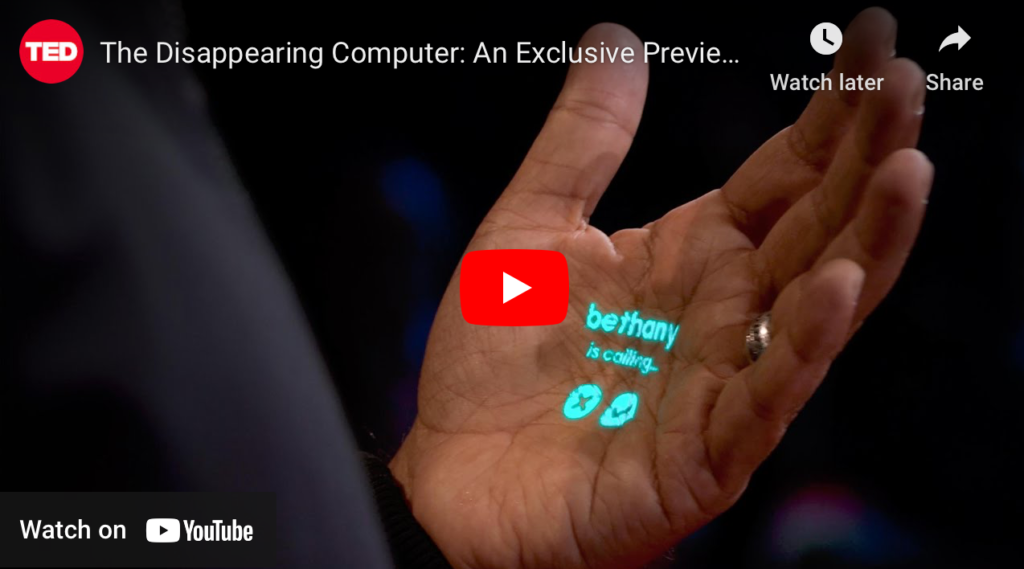
... The company describes the device as a "screenless, standalone device and software platform built from the ground up for AI." It's powered by an "advanced" Qualcomm Snapdragon platform and equipped with a mini-projector that takes the place of a smartphone screen, along with a camera and speaker. It can perform functions like AI-powered optical recognition, but is also supposedly "privacy-first" thanks to qualities like no wake word and thus no "always on" listening." ...
In any case, we'll learn more when it's fully unveiled next month on November 9.
... “Robert Basiuk from Borneo Adventure (Sarawak), during WiT Indie, said that while bookings for his company’s experiences changed from fax machine to online booking, his best-selling product fundamentally did not change for the last 30-40 years. It is still experiencing the heart of Borneo in all its splendour. Likewise for breakfast in the wild by Mandai Zoo, no change except for the different animals.”
What’s changed is how consumers search and take in information which has gone from words to pictures to videos – “from Google to Facebook to TikTok”.
“As content creator operators to content delivery people (OTAs), we cannot ignore the changing trends and the various platforms that our customers are choosing to discover us. The fortunate thing is that consumers now want authenticity which means it’s much easier to create the videos. There are also plenty of tools outside to help you with videos.”
So Lowenthal and his team in Israel and the US came up with their platform – using a proprietary algorithm to allow potential home renters and buyers to furnish the property they were standing in, in real time and in front of their eyes. ...
According to international website HomeAdvisor, staging could cost a private seller up to $2,800, while US real estate professionals say that realtors could pay that sum every month for their listed properties. ...
“Thanks to SparX patented technology, users can immersively visualize a space’s potential and change the design by functionality, style and budget,” Lowenthal says.
While other companies do offer technology used to show house listings, including digital imagery to furnish an empty home, none use AR to recreate a fully furnished apartment or house while actually standing inside the property, he explains. ...
... Not everyone is skeptical of the opt-out mechanism, which has also been implemented for future versions of the popular image-generating model from Stability AI. Problems identifying copies of images or challenges with enforcement will exist with any policy, Jason Schultz, the director of the Technology Law and Policy Clinic at NYU, told me, and might end up being “edge case–ish.” Federal Trade Commission enforcement could keep companies compliant. And he worries that more artist-friendly alternatives, such as an opt-in mechanism—no training AI on copyrighted images unless given explicit permission—or some sort of revenue-sharing deal, similar to Spotify royalties, would benefit large companies with the resources to go out and ask every artist or divvy up some of their profits. Extremely strict copyright law when it comes to training generative AI, in other words, could further concentrate the power of large tech companies.
The proliferation of opt-out mechanisms, regardless of what one makes of their shortcomings, also shows that artists and publishers will play a key role in the future of AI. To build better, more accurate, or even “smarter” computers, companies will need to keep updating them with original writing, images, music, and so on, and originality remains a distinctly human trait.
The Iki store, based in Vilnius, is an Iki Go store that operates without staff for approximately 95% of its houses, requiring only restocking. The store offers over 200 items, from hot drinks to essential noon-food items.
Customers take what items they want from the shelves while cameras and shelf sensors compile a virtual shopping basket. Customers then tap the same payment card to exit the store, without any checkout process required and receive a real-time receipt which can be printed upon leaving.
Iki is the second-largest supermarket chain in Lithuania. ...
... While the capabilities of AI technology have spearheaded innovation, its widespread use has also led to the development of dangerous tech such as deepfakes-as-a-service. ...
AI and Large Language Model (LLM) generative language applications can be used to create more sophisticated and evasive fraud that is difficult to detect and remove. ...
The AI threat landscape is constantly evolving and teams need to be equipped with technology that can quickly and easily adjust and implement new techniques.
Some opportunities in using AI with identity verification technology include:
Examining key device attributes
Using counter-AI to identify manipulation: To avoid being defrauded and protect important data, counter-AI can identify the manipulation of incoming images.
Treating the ‘absence of data’ as a risk factor in certain circumstances
Actively looking for patterns across multiple sessions and customers
These layered defenses provided by both AI and identity verification technology, investigate the person, their asserted identity document, network and device, minimizing the risk of manipulation as a result of deepfakes and ensuring only trusted, genuine people gain access to your services.
AI and identity verification need to continue to work together. ...
Companies need to widen their defense landscape, and cannot be afraid to invest in tech, even if it adds a bit of friction. ...
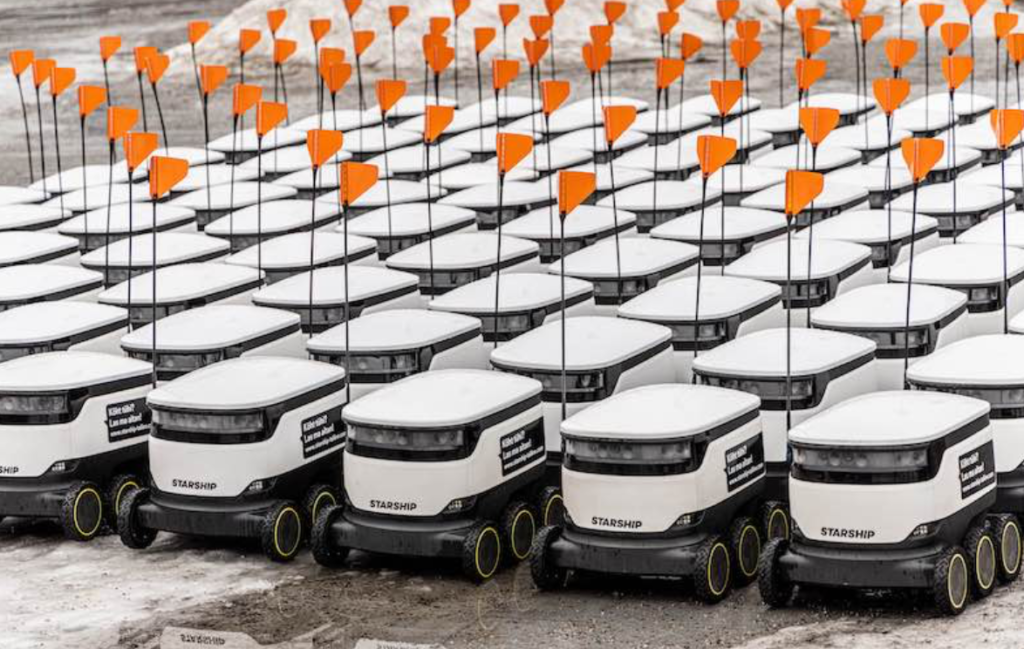
Starship Technologies, which claims to be the world’s leading provider of autonomous delivery services, says it is now offering its service to 50 college campuses across the US.
This includes several new schools launching services, including Wichita State University, Boise State University and The University of New Orleans. ...
The character voices include Sunshine (for a dose of positivity), Harry (British accent for a proper butler experience) and Asher (keeping it cool and casual).
Students can alternatively continue the popular option of having the robot play a song from a pre-selected list. All options are available in the app (iOS and Android) and can be selected when placing an order. ...
Snap Inc (SNAP.N) is shutting its division focused on making augmented reality (AR) services for businesses within months of its launch, as the ad-dependent social media company struggles in a tough economy. ...
CEO Spiegel said rising adoption of generative artificial intelligence made it hard for Snap to differentiate its offering that allowed customers to use its AR tech on their sites as companies created their own experiences. ...