...Data collection: AI-powered cryptocurrencies gather information from a variety of sources, including news articles, social media and market patterns. Then, to find trends and forecast market behavior, this data is examined using machine learning algorithms.
Trading strategy: The AI system develops a trading plan, including when to purchase, sell or hold the cryptocurrency, based on the analysis. Without human input, this decision-making process is carried out automatically.
Execution: Once the AI system has chosen a trading strategy, it uses smart contracts to carry out trades on the blockchain network. When specific criteria are met, these automated agreements self-execute and run autonomously.
Continuous learning and improvement: Machine learning algorithms are used by AI cryptocurrencies to continuously learn and enhance their performance. The system can review the outcomes of previous transactions and modify its tactics as necessary to enhance success in the future. The AI crypto tokens aim to become efficient because of this process of ongoing learning and development.
... I started Sony Pictures VR, which is a label. It’s a group. It’s a business inside of Sony Pictures. The mission was to take our franchise IPs, expand those worlds into this new platform, give audiences a chance to engage with their favorite IPs like Ghostbusters, do new things, and monetize them. We’d work with PlayStation, work with Meta, work with any partner out there to distribute content and help build this business. We’ve been doing it ever since. We have a bunch of stuff coming. ...
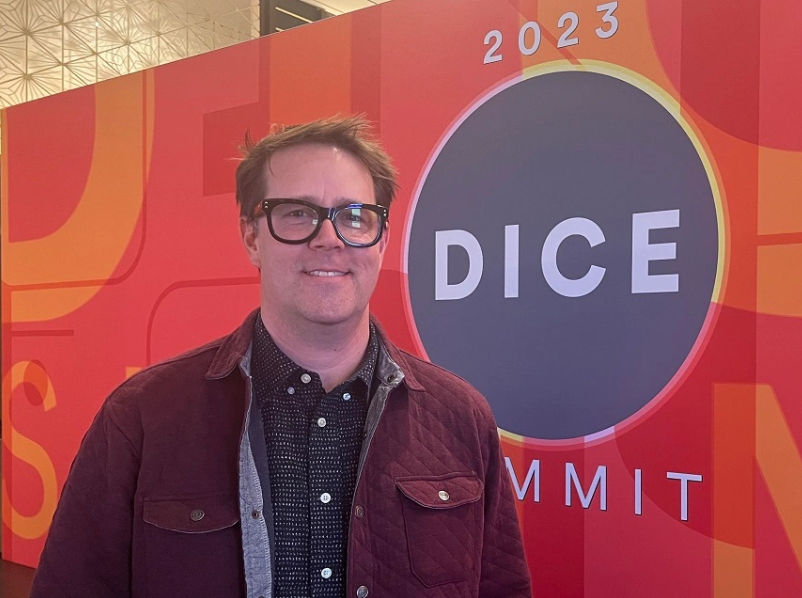
GamesBeat: Who do you rely upon for your game developers? Are they in-house at Sony Pictures?
Zim: No, this is what DICE is all about for me. We bring financing and distribution and marketing, but we outsource all of the development. ...
What I think is so exciting about the moment that we’re living in right now is that maybe for the first time – someone might debate me on this at some point – there’s a real path to see how these worlds–The Last of Us is a world. Uncharted is a world. Ghostbusters is a world. They can be expanded on different platforms while still staying true to the innate core DNA of what made the project exciting at the beginning. Neil Druckmann hasn’t lost his story by translating The Last of Us to HBO. He gets to sit in that room and make decisions. Even when the TV show diverges from the game story, it’s still part of the canon and the ecosystem. For me it’s the opposite path. How do I take a linear product, a Ghostbusters or a TV show, or even an original story, and expand it into this very immersive, deeply interactive world of VR? ...
... “Our study reveals how holographic haptic displays, which are a promising new technology for virtual reality and telepresence, require new knowledge in acoustics innovations in design,” Visell said. “By understanding the underlying physics of ultrasound-generated shear shock waves in the skin, we hope to improve the design of haptic holographic displays and make them more realistic and immersive for users. ...
The team’s discovery of the previously unknown shock wave phenomena that underlie haptic holography provides an important step forward in creating haptic holographic displays that may enable users to more realistically and immersively interact in the future metaverse.
... MARZ, which stands for Monsters Aliens Robots Zombies, isn’t interested in being a onetime solution in Hollywood. The company has used its proprietary AI technology on 27 projects so far, including Stranger Things, Jack Ryan, Being the Ricardos, Umbrella Academy, and No Way Home, where it focused its energies on Willem Dafoe. So far MARZ’s AI de-aging technology, called Vanity AI, has been offered as a service, but later this year the company plans to allow businesses and creatives to download the Vanity software for free and pay MARZ a fee based on the number of shots that are processed. ...
Vanity works by first “learning” the face of an actor or actress. “You literally upload five images of an actor; you tag it. Those five images teach the system who the actor is,” Panousis says.
“Once you’ve created that mask, Vanity is going to comb through every shot in your movie and find the actor and is actually going to stick the mask on the face automatically,” Panousis says. “So if you’re an artist going in to work on a shot, all you’re actually doing now is confirming that the mask is (fitted) correctly. ...
How do you dub film and TV projects in a more seamless and effective way than simply laying on new audio? The company’s solution, which is still in development, is called LipDub, and uses AI to re-create the bottom portion of an actor’s face so that it synchs with the dubbed language. ...
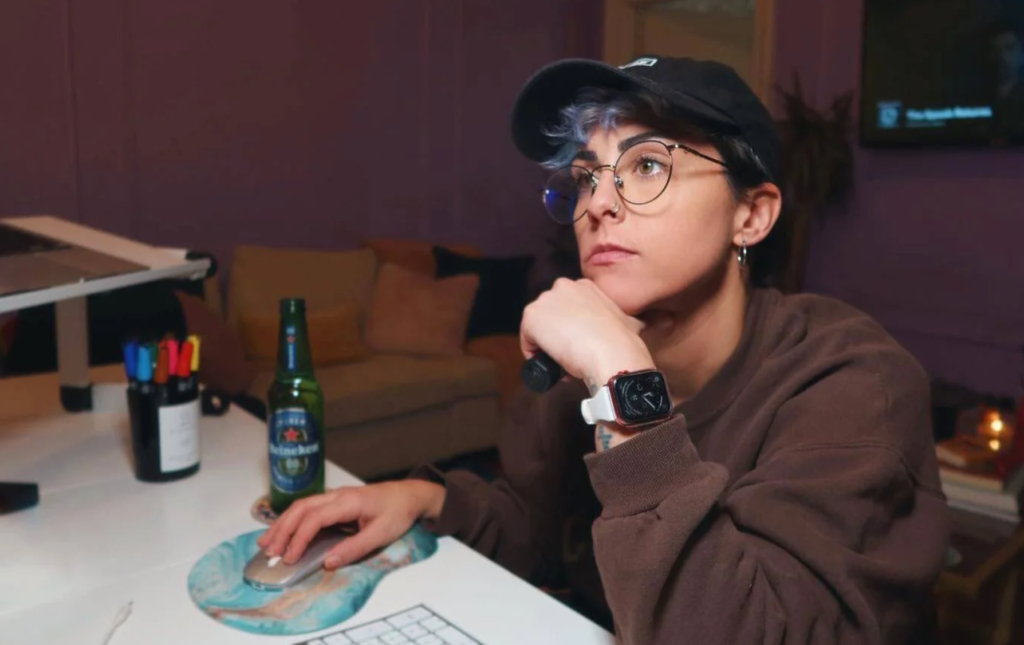
... She’s doing both at the same time, live streaming herself working from home to an audience ranging from hundreds to thousands of viewers.
She usually starts work at 9 a.m. and goes live an hour later. Onyia’s TikTok live videos, which she calls “work alone together,” have earned her 100,000-plus followers. She has an aesthetic desk setup with ambient music, and she stops working from time to time to answer questions in her comments section from viewers who work alongside her.
Onyia is body doubling, or parallel working—a new term for an old strategy: doing work in the presence of others. Traditionally done in the same room, the trend is now taking over TikTok live and Zoom as remote workleaves many people struggling to concentrate or looking for community. ...
The stranger in body doubling serves as an unbiased, accountable “other” that helps one to get out of their personal struggles, explains Campbell. She adds that it’s “completely changed the game” for her productivity and that of other people with ADHD she’s worked with. ...
LinkedIn has introduced a feature called collaborative articles, which uses “AI-powered conversation starters” to start discussions between “experts” that use the platform. In an announcement post on Friday, the company says it will “match each article with relevant member experts” based on its skills graph, and invite them to add context, extra information, and advice to the stories.
The company thinks the system will make it easier for people to contribute their perspectives because “starting a conversation is harder than joining one.” People can judge the experts’ contributions with an “insightful” reaction. ...
... To meet this need, my research group turned to an old idea from education: Bloom’s Taxonomy. First published in 1956 and later revised in 2001, Bloom’s Taxonomy is a hierarchy describing levels of thinking in which higher levels represent more complex thought. Its six levels are: 1) Remember — recall basic facts, 2) Understand — explain concepts, 3) Apply — use information in new situations, 4) Analyze — draw connections between ideas, 5) Evaluate — critique or justify a decision or opinion, and 6) Create — produce original work. ...
Thus, Bloom’s Taxonomy allows us to draw more nuanced assessments of the AI technology than raw human versus AI comparison. ...
Using Bloom’s Taxonomy we can see that effective human-AI collaboration will largely mean delegating lower-level cognitive tasks so that we can focus our energy on more complex, cognitive tasks. Thus, instead of dwelling on whether an AI can compete with a human expert, we should be asking how well an AI’s capabilities can be used to help foster human critical thinking, judgment and creativity. ...
... The Misalignment Museum imagines a future in which AI starts to take the route mapped out in countless science fiction films—becoming self aware and setting about killing off humanity. Fortunately, in Kim’s vision the algorithms self-correct and stop short of killing all people. Her museum, packed with artistic allegories about AI and art made with AI assistance, is presented as a memorial of humankind’s future near-miss with extinction. ...
As we talk, we watch passersby peer into the gallery space—fittingly located eight blocks from the offices of OpenAI—that has a prominent “Sorry for killing most of humanity” sign along one wall. ...
At its developer conference in May 2022, Niantic formally launched its “Lightship Virtual Positioning System,” a virtual map of the world that allows AR developers to anchor 3D graphics to physical places. For example, a developer might hide a digital prize near a well-known statue as part of a scavenger hunt game. ...
7. RENDEVER
For using VR to help seniors
Rendever is using VR to promote engagement and mental fitness among senior citizens. The Somerville, Massachusetts–based VR content company operates a platform that delivers customized 3D immersive experiences to nursing homes and other senior living facilities. The content lets people relive moments from the past (weddings, for example) and virtually visit bucket-list destinations. ...
8. ARCHER’S MARK
For reliving history through VR
Archer’s Mark‘s “On the Morning You Wake (to the End of the World): Take Cover” debuted at the Sundance Film Festival’s New Frontiers program in January 2022. The production studio’s narrative VR work lets participants relive the horrifying morning in Hawaii on January 13, 2018, when residents began getting text messages saying that a nuclear attack on the island was underway. ...
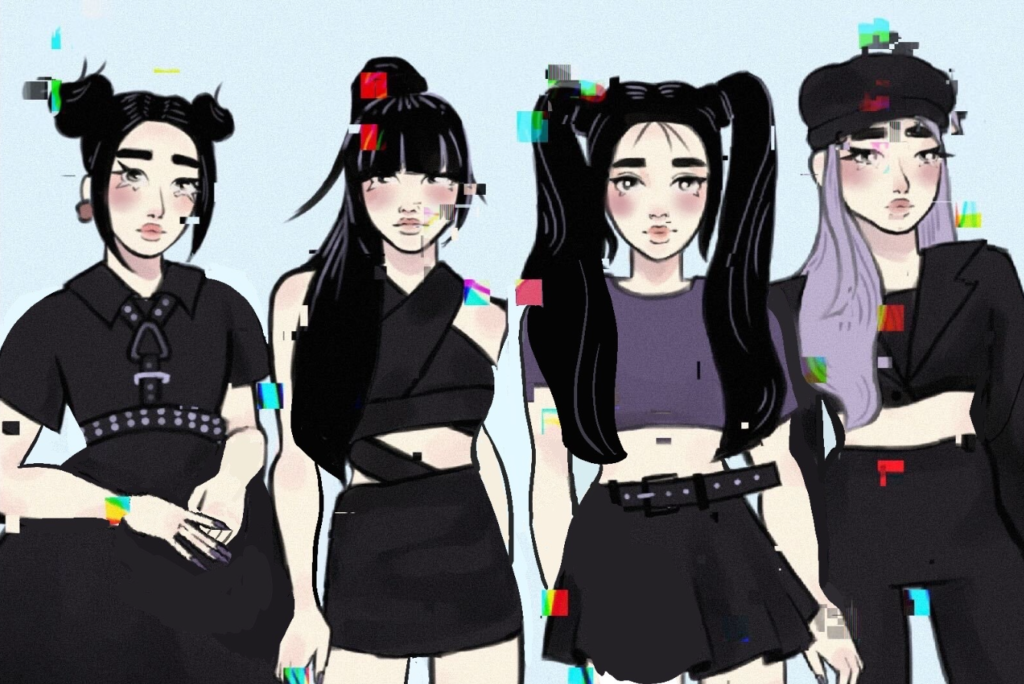
... For some reason, this new trend in K-pop makes my blood absolutely boil, and the fact that people are promoting MAVE on social media and following and liking their content upsets me greatly. These girls are programmed to be perfect; they have no human emotion, no story, no inherent talent and no personality. And yet, rather naively, people are falling in love with their “originality.” ...
I usually love to tote K-pop because of its performative value and adherence to perfectionism (before it becomes toxic). Similarly, you often can’t help but fall in love with the idols and their personalities, their abilities and even their imperfections. You just don’t get that with artificial intelligence.
On a more serious note that diverts from the standard engagement issues, there are rising concerns about the idols’ safety as well, and how this AI technology and its wide-scale availability can inadvertently hurt the real performers it aims to encapsulate. As virtual sex crimes and deepfake porn continue to rise online, controlling their spread and identifying problematic sites in the first place is becoming more and more difficult. ...
There is a real issue with artificial technology that replaces humans in the entertainment industry. In my eyes, it’s ridiculous, and should stop before it gains any traction, if it hasn’t already. It’s honestly an embarrassment to the K-pop world and a slap in the face to all the idols who trained for so many years only to be surpassed by a blank stage.