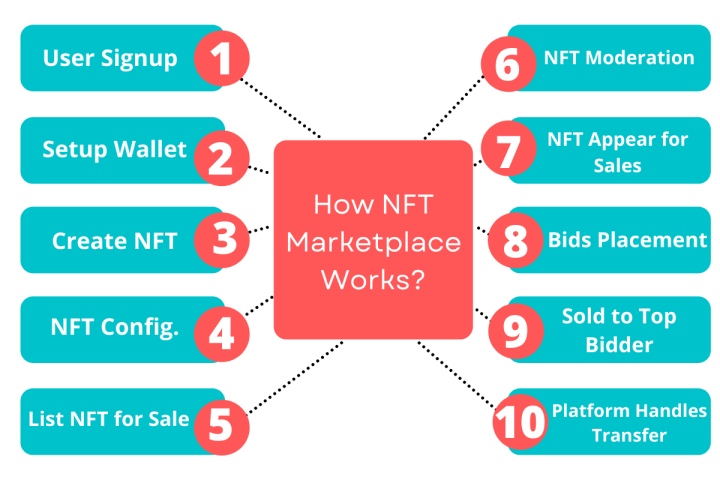
A Detailed Guide on NFT Marketplace Development: Use cases, Prerequisites and Features
See the full story here: https://readwrite.com/a-detailed-guide-on-nft-marketplace-development-use-cases-prerequisites-and-features/
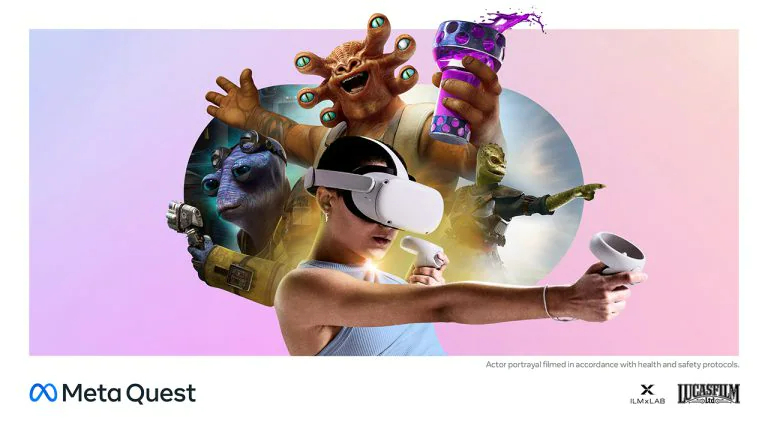
Meta Quest Virtual Reality Experience featuring ILMxLAB’s Star Wars: Tales from the Galaxy’s Edge Coming to Disney Springs May 2 to July 21
... Meta Quest, ILMxLAB – Lucasfilm’s award-winning immersive entertainment studio – and Disney Parks are excited to continue their collaboration by bringing the Meta Quest 2 preview of Star Wars: Tales from the Galaxy’s Edge to Disney Springs West Side from May 2 through July 21. ...
The hands-on preview will showcase a short version of ILMxLAB’s virtual reality experience Star Wars: Tales from the Galaxy’s Edge, which expands the world of Batuu like never before! Once inside the Quest 2 headset, you’ll be immersed within sweeping 360 views of the Star Wars galaxy. The adventure takes place on the outskirts of Black Spire Outpost on the planet of Batuu, which you may be familiar with from Star Wars: Galaxy’s Edge, the immersive epic lands at Disneyland Resort in California and Walt Disney World Resort in Florida.
The story features both new and iconic characters from the Star Wars galaxy. Gameplay was designed for a variety of players – from Star Wars fans to VR gamers – at home on Quest 2. ...
See the full story here: https://wdwnt.com/2022/04/meta-quest-virtual-reality-experience-featuring-ilmxlabs-star-wars-tales-from-the-galaxys-edge-coming-to-disney-springs-may-2-to-july-21/
Fuzzle NFT Game is Landing on Planet Earth
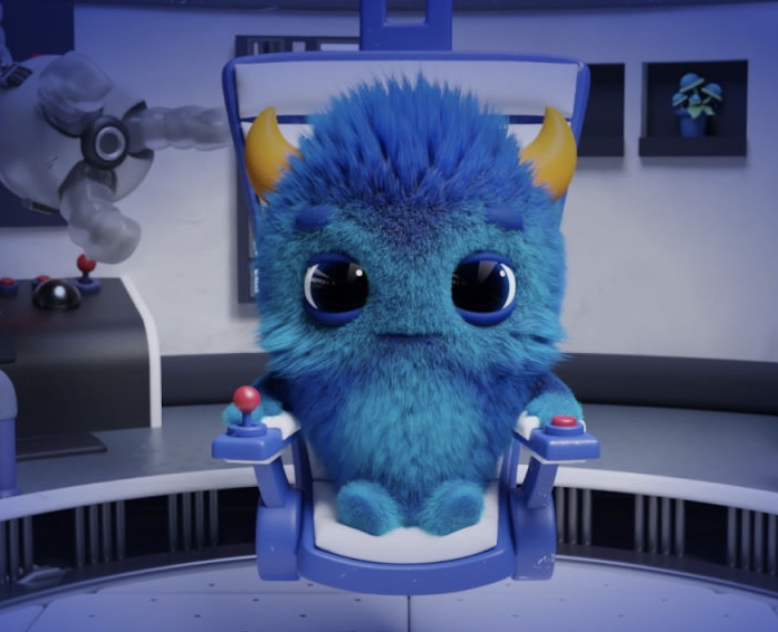
Gala Games has teamed up with Endless AI to introduce Fuzzle– a first-of-its-kind “living” NFT collectable, simultaneously pushing the boundaries of conversational AI and blockchain gaming through a groundbreaking interactive entertainment experience with loads of utility. ...
“The first time my Fuzzle told me he was developing methods to turn me into human-meat meatballs, I knew we had a project like the world has never seen before,” said John Osvald, President of Games at Gala Games. “Fuzzles are right on the bleeding edge of AI, gaming, and blockchain and we can’t wait to see how people interact with them.” ...
See the full story here: https://news.bitcoin.com/fuzzle-nft-game-is-landing-on-planet-earth/
Internet communities are battling over pixels
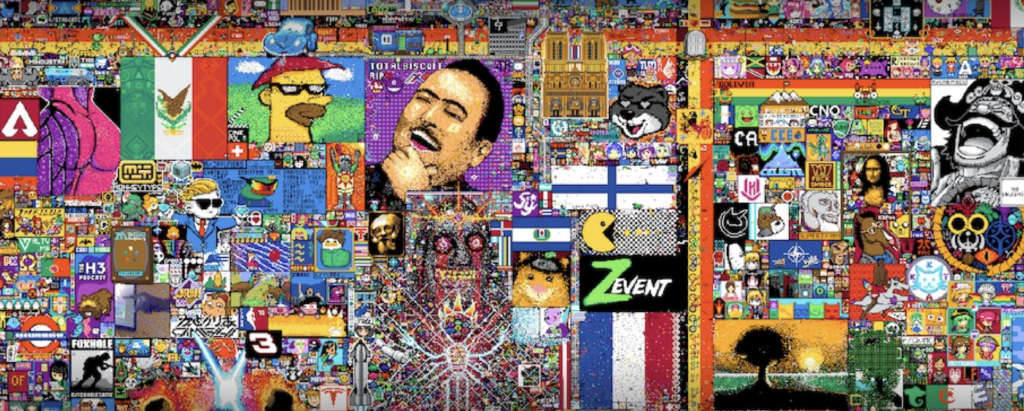
Reddit’s r/Place shows that to have a voice online, you must be part of a group ...
If Place says anything about the Internet, it’s a testament to the rising power of communities online. Since its last iteration, online platforms have experienced great fragmentation. ...
Now more users, especially younger ones, are seeking to connect with others in closed communities or online groups like Discord or a similar platform called Geneva, rather than on big, open social media sites. ...
But that trend toward groups and more contained social experiences online can also leave people craving engagement with the masses. Place has turned into Reddit’s de facto public square for the past few days, Brian Lynch, a lawyer and Reddit moderator in San Diego, said. “Even though the Internet is going through this fracturing with communities, I think that these groups are still looking for that central town hall or that central space,” he said. ...
It’s notable that Place has never been about all users working together, but more of a space for communities to exert their influence. ...
The hope of the Internet was that it would connect humanity in a way that would allow everyone to coordinate and build things at scale, but in reality, while massive networks of bubbles and groups sometimes form alliances to create, they also compete and fight. “Maybe the disappointment of the Internet is that there aren’t more examples people can point to of large-scale human coordination to create something,” Wei said. ...
Much of the imagery that emerged on Place reflects the values of the communities participating. The Ukrainian flag loomed large on the canvas throughout Saturday, as did the trans flag and various LGBT flags. People used Place to express anti-NFT sentiment; others, like Wall Street Bets, pumped meme stocks. ...
The fact that Place hasn’t been completely overrun with trolls posting hate symbols is a testament to the dedicated communities focused on keeping radicalized factions in check. ...
See the full story here: https://www.washingtonpost.com/technology/2022/04/04/reddit-place-internet-communities/
Intelligence agency takes over Project Maven, the Pentagon’s signature AI scheme
The National Geospatial-Intelligence Agency will take operational control of part of the Pentagon’s signature artificial intelligence program, the agency’s director announced April 25.
Project Maven is the Department of Defense’s most visible artificial intelligence tool, designed to process imagery and full-motion video from drones and automatically detect potential targets. ...

“That includes responsibility for labeled data, AI algorithms, test and evaluation capabilities, and the platform,” said Sharp. ...
See the full story here: https://www.c4isrnet.com/intel-geoint/2022/04/27/intelligence-agency-takes-over-project-maven-the-pentagons-signature-ai-scheme/
Are DAOs About to Revolutionize the Film and TV Industries?
... “Will 2022 be Hollywood’s Year of the DAO?,” VentureBeat asks, noting that “the potential to democratize and decentralize decision-making and support, through the utilization of the DAO structure, will empower anyone, not just powerful producers and studios, to possibly tap the next Spielberg or Tarantino on the shoulder.” ...
... A DAO is “a group of people who agree to abide by certain rules for a common purpose,” and those rules “are written into the code of the organization via smart contracts — algorithms that run when certain criteria are met,” PC Magazine explains. ..
The Harvard Business Review says “instead of working from a central office all year long and having two to four weeks off, most DAO contributors will likely work remotely, bond in virtual social spaces such as Cryptovoxels or The Sandbox, and for several days or weeks a year, get together in real life for inspiring conferences and retreats.” ...
See the full story here: https://www.etcentric.org/are-daos-about-to-revolutionize-the-film-and-tv-industries/
Source article: https://venturebeat.com/2022/04/24/the-golden-age-of-indie-cinema-will-be-spelled-d-a-o/
Source article: https://hbr.org/2022/04/how-daos-could-change-the-way-we-work
... As DAOs proliferate, instead of having one employer and a 40-hour workweek, we might contribute several hours a week to several DAOs. This is already typical amongst early adopters to the space. Today’s creator economy, populated by vloggers, bloggers, and podcasters, can give us a glimpse into what the Web3 working world might look like, with the typical creator earning income from a variety of projects such as coaching, consulting, and content monetization on various platforms such as YouTube, SubStack, and Patreon. ...
Traditional organizations that demand that their employees go into the office for two to three days a week effectively anchor their employees to life in one place — usually close to a central business district. Firms with such archaic and mobility-limiting positions will likely find it increasingly difficult to win the battle for Millennials and, in particular, Gen-Z talent. ....
Some might argue that DAOs, like many gig economy companies, threaten labor rights, but DAOs themselves are looking to address this. For example Opolis, a digital employment cooperative, helps DAO contributors and contractors get their health insurance and 401K retirement plans in order. ...