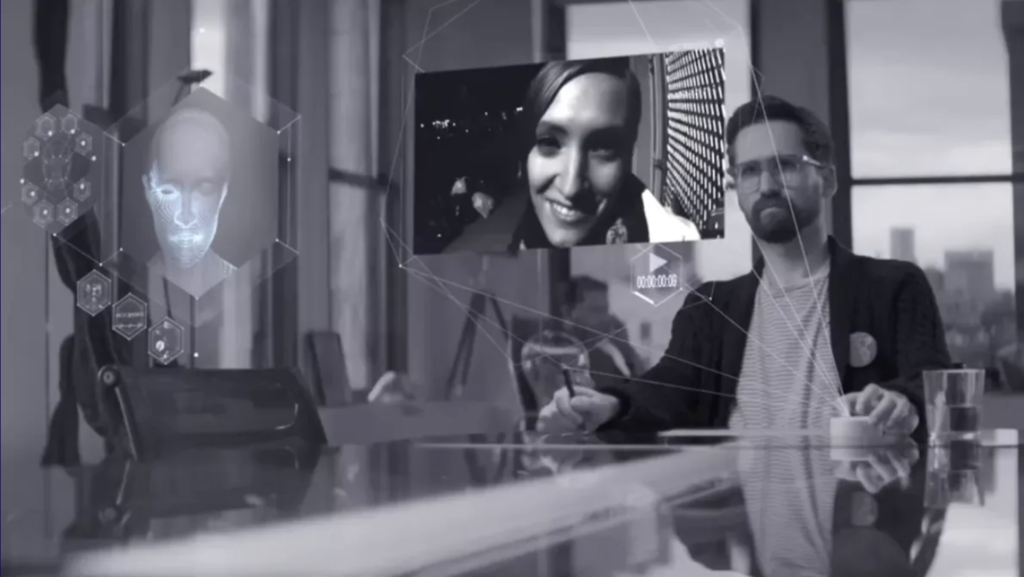
Creative Control – YOU NEED TO WATCH THE MOST FASCINATING SCI-FI MOVIE ABOUT AUGMENTED REALITY ON AMAZON PRIME
Anyone looking to avoid a movie about insufferable people could easily stay away from Creative Control, but the movie is more than that. It’s working on themes that would later be fully realized in the Safdie brothers’ ecstatic Uncut Gems, most notably a conversation about the suffering needed to create the technologies that people take for granted.
But while Creative Control’s characters are hollow shells, the movie itself is earnestly interested in their fates. Technology can spin out universes all of its own, and it’s easier than ever to get wrapped inside them. Creative Control asks if people can pull themselves back once they’ve gotten sucked in.
See the full story here: https://www.inverse.com/entertainment/sci-fi-movies-february-2022-amazon-prime-creative-control
AI in gaming, media and entertainment industries to take centerstage as future technologies emerge
Key takeaways:
- Content engagement is no longer a commercial paradigm; it is evolving into a social paradigm. Revenue from online and gaming will grow in the years to come; with entertainment moving from a linear channel to OTT platforms, everyone now has the power to create content.
- Five years ago, cookies allowed businesses to exchange marketing metrics from Facebook and YouTube advertising. However, with the degradation of cookies in recent years, enterprises are turning back to probability approaches.
- Acquisition and retention are the two crucial grids of marketing. Retention is less expensive; however, if you cannot retain your existing customers, you will have to spend more on new ones.
- Diversity and Equality in gaming: It’s crucial to contribute to the communities that never got the chance to express themselves in the gaming space.
- AI in Media & Entertainment: The Future of TV: Content engagement relies on both implicit and explicit signals from the audience. Eliminating clustering in algorithms is critical for personal recommendation.
- Data Privacy: Data collection in gaming, media and entertainment businesses are crucial, and privacy is the intersection of data. When we drill down Data Privacy, we comprehend that knowledge accompanies reasonability.
- While reactive and proactive ML tools help establish a robust defense against toxic conduct, players have to look out for one another to protect the community.
- The Metaverse today is a virtual room primarily developed for interaction and communication. It is a leap, just like gaming and cloud, and we are all early adopters.
See the full story here: https://www.animationxpress.com/games/ai-in-gaming-media-entertainment-industries-to-take-centerstage-as-future-technologies-emerge/
Israel Reveals Military’s Artificial Intelligence Strategy
A senior Israel Defense Forces official, whose name could not be used due to the sensitivity of their position, noted that the IDF is undergoing a digital transformation in dealing with AI in all its branches and the commands. This will be the first time the IDF has a multi-branch and multi-command plan for use of AI.
For the IDF, the strategy is part of a belief that data and AI has a major role for winning future conflicts, processing the vast amount of data being generated by various sensors, transforming it into intelligible information and delivering it where it needs to go.
Reports indicate artificial intelligence played a key role in the Israel conflict with Hamas in Gaza in May 2021, and artificial intelligence is increasingly being incorporated into systems developed by Israeli defense companies, such as rifles, bombs and other systems, meaning the IDF now has an increasing array of platforms that use AI. ...
The IDF opted to release an unclassified version to foster engagement with its partners. ...
See the full story here: https://www.bollyinside.com/news/israel-reveals-militarys-artificial-intelligence-strategy

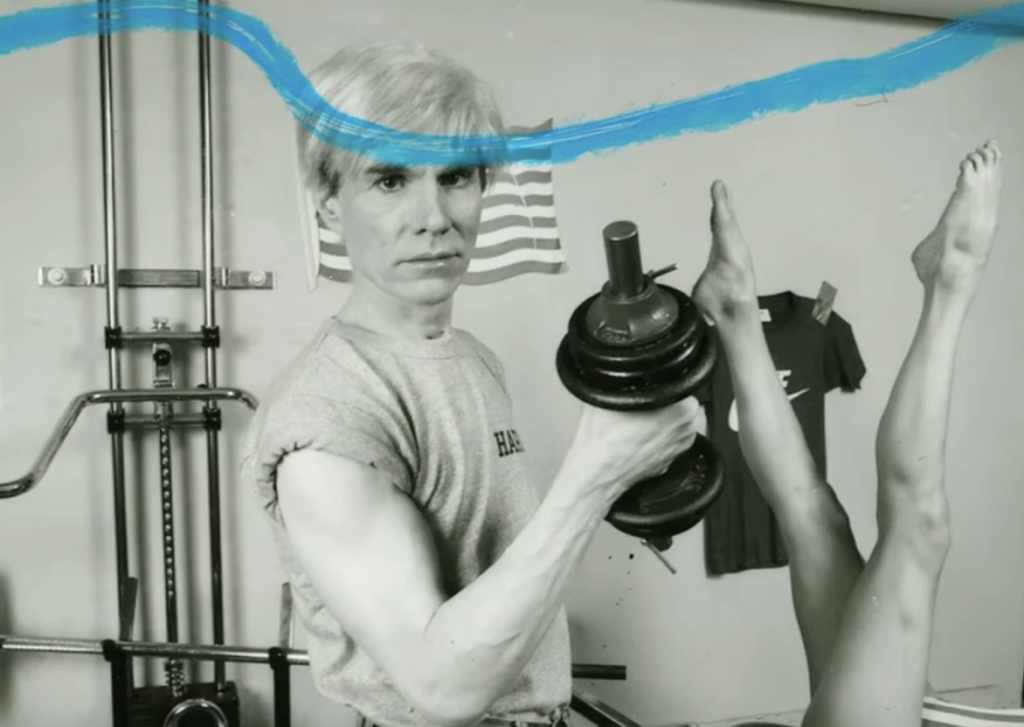
‘I’m just a freak’: Andy Warhol’s secret ‘longings’ exposed in ‘Diaries’
Titled “The Andy Warhol Diaries,” the six-parter vocally brings the pop art icon, who died in 1987, back to life — using cutting-edge artificial intelligence technology to narrate the most revealing moments from his legendary life. ...
The most intimate parts of the Superstar maker’s life will be brought to light through the use of the robot-like technology that will “honor two hallmarks of Andy’s life and artistic practice, stemming from his desire ‘to be a machine,’ ” director Andrew Rossi told Entertainment Weekly. ...
“Andy admired the fact that ‘machines have less problems,’ saying that, ‘I do have feelings, but I wish I didn’t.’ He even had himself made into a robot and a hologram during his lifetime, and he said, ‘the reason I’m painting this way is that I want to be a machine,’ ” Rossi said.
“So I thought that cloning Andy’s voice could function like a Warholian portrait, and the [Andy Warhol] Foundation approved.” ...
Remaking Warhol’s voice to personally confess these influential times — which was done by having actor Bill Irwin record the diaries’ entries before they were morphed in a newly created text-to-speech algorithm — was also the only fitting way to reveal the artist’s deep mysteries to the world, according to Rossi. ...
See the full story here: https://nypost.com/2022/02/23/andy-warhols-freak-romantic-longings-exposed-in-diaries/
Flies in Virtual Reality Arena Prove They’re Smarter Than We Thought
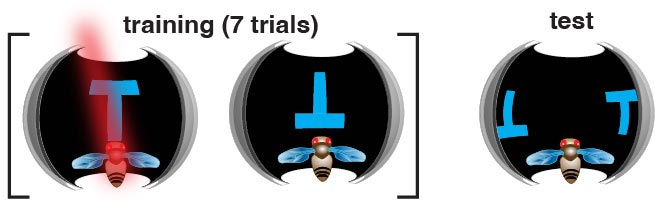
... “This work demonstrates not only that flies are capable of this higher form of trace conditioning, and that the learning is distractible just like in mammals and humans, but the neural activity underlying these attentional and working memory processes in the fly show remarkable similarity to those in mammals,” said Dhruv Grover, a UC San Diego KIBM research faculty member and lead author of the new study. “This work demonstrates that fruit flies could serve as a powerful model for the study of higher cognitive functions. Simply put, the fly continues to amaze in how smart it really is.” ...
See the full story here: https://scitechdaily.com/flies-in-virtual-reality-arena-prove-theyre-smarter-than-we-thought/
Manchester City Partners With Sony to Build the First Football Stadium in the Metaverse
... The football club has signed a partnership with Sony on a three-year initiative, and while the project is still in its early phases, teams of the company's specialists have already visited the Etihad Stadium — Manchester City's home ground — to map it digitally and construct a VR version of it. ...
The seven-time English Premier League champions are also exploring the possibility of fans meeting players in the metaverse and purchasing products unavailable in the physical world. It is likely that purchases will be made using cryptocurrencies. ...
See the full story here: https://gadgets360.com/cryptocurrency/news/manchester-city-sony-etihad-football-stadium-metaverse-epl-english-premier-league-2782873

Art Created By Artificial Intelligence Can’t Be Copyrighted, US Agency Rules
The U.S. Copyright Office refused to grant a copyright this month for an image made by an artificial intelligence program called Creativity Machine—ruling that “human authorship is a prerequisite to copyright protection.” The case will now head to federal court as the AI program’s owner, Stephen Thaler, plans to file an appeal, according to Ryan Abbott, a Los Angeles-based attorney representing Thaler.
Thaler, the founder of the Missouri-based AI firm Imagination Engines, tried to copyright “A Recent Entrance to Paradise,” a picture that was autonomously created by Creativity Machine’s algorithm without any human help. Thaler listed the program as the artwork’s author and sought a copyright as the machine’s owner. ...
In the most recent request for reconsideration, Abbott argued that the human authorship requirement was unconstitutional and unsupported by case law.
But in ruling against Thaler again, the Copyright Review Board’s three-person panel cited several cases in which courts refused to extend copyright protection to non-human creations. In 1997, a federal appeals court ruled that a book allegedly “authored by non-human spiritual beings” could only gain copyright if a human curated the revelations. Similarly, in a separate 2018 case, a monkey was not awarded a copyright for photos that it took with a camera. ...
Abbott said he plans to appeal the board’s decision in federal court in Washington D.C. ...
“Artists are using AI as a tool [in] the same way [that] artists are using the camera,” he said. “You cannot claim the camera is the artist. Artists are using cameras to create photographs, and that’s how photographs get copyrighted.”
See the full story here: https://dot.la/creative-machines-ai-art-2656764050/particle-2