Forget Meta’s Sleek Virtual Reality. Maybe The Metaverse Is Fun, Friendly, 8-Bit — And Already Here
Welcome to Gather Town, the $700 million low-res online universe spreading like wildfire across Silicon Valley, college campuses and, soon, a workplace near you.
When Phillip Wang was pitching Gather, his six-month-old startup, to VCs in late 2020, he would invite them up to the rooftop above his office. The space is a sweet spot to discuss a deal, illuminated by the neon green lights of a sprawling city framed by clouds in pink and orange hues. Best of all, he could brag to potential investors about the price. For a company Gather’s size—25 employees at the time—it ran just $175 a month to rent the entire building. That’s because the office is virtual, existing entirely inside the app the company created. These days, with new coronavirus variants delaying many employees’ return to physical spaces, 100,000 people make their daily commute by logging onto Gather’s website. More than 15 million people have used it at least once—many for virtual conferences but also for birthday parties, rock concerts and weddings.
“A lot of people think about the metaverse as sci-fi, like it’s five to seven years away,” says Wang, whose words come tumbling out at triple speed. “They imagine these dystopian worlds owned by large tech companies.”
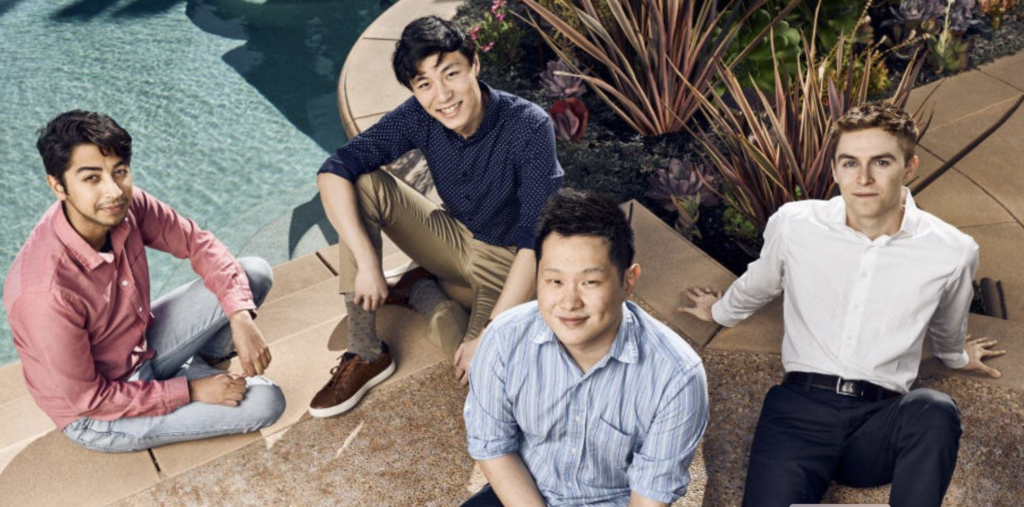
To the spiky-haired 23-year-old CEO, the metaverse is already here, and it’s rather friendly and welcoming. Instead of a sleek alternate reality, Gather’s virtual world is decidedly low-res, evoking the nostalgic feel of a 20-year-old Pokémon video game. Users move their 2D avatars around with the arrow keys on their keyboard, panning into and out of video chat conversations as they stroll past other folks. Whether it’s simply a more interactive Zoom or a cornerstone of our collective future, Gather has the attention of Silicon Valley. Founded by four recent grads (all still 26 or younger) at the onset of the pandemic, the startup has rapidly grown to 75 employees and is backed by top-tier venture capitalists who have invested $77 million, most recently in November at a $700 million valuation. Gather declined to disclose revenue, but Forbes estimates it booked more than $10 million last year, its first full year of operation. ...
They released the first version in May 2020. It spread quickly across colleges. A University of Chicago professor and students recreated their school so that people could study together or meet up around campus; members of the physics faculty were soon discovered playing poker in a lounge. Silicon Valley leaders were quick to notice. ...
See the full story here: https://www.forbes.com/sites/kenrickcai/2022/02/02/the-future-is-low-res/?sh=45ba0ed24444