AI ‘ageism’ could seriously impact elderly health: WHO
... AI algorithms can solidify existing disparities in health care and "systematically discriminate on a much larger scale than biased individuals," the policy brief warned.
In addition, the brief pointed out that datasets used to train AI algorithms often exclude or significantly underrepresent older people.
Since the health predictions and diagnoses produced are based on data from younger people, they could miss the mark for older populations, it said.
The brief meanwhile stressed that there were true benefits to be gained from AI systems in the care of older people, including for remote monitoring of people susceptible to falls or other health emergencies. ...
See the full story here: http://philiplelyveld.com/wordpress/wp-admin/post-new.php
and from related coverage
The following eight considerations could ensure that AI technologies for health address ageism and that older people are fully involved in the processes, systems, technologies and services that affect them.
- Participatory design of AI technologies by and with older people
- Age-diverse data science teams
- Age-inclusive data collection
- Investments in digital infrastructure and digital literacy for older people and their health-care providers and caregivers
- Rights of older people to consent and contest
- Governance frameworks and regulations to empower and work with older people
- Increased research to understand new uses of AI and how to avoid bias
- Robust ethics processes in the development and application of AI
Spio is the heart and founder of CEEK, “an award-winning developer of premium social virtual and augmented reality experiences.”
The platform was created to place power back into the hands of creators. CEEK allows creators to launch new revenue streams from their work catalog. In addition, artists can cultivate unique experiences for their fans through virtual live concerts, sporting events, and never-before-seen experiences.
Users will be able to interact and connect with artists through 360 videos, True 3D, or 2D streaming. The immersive experience is heightened as users can participate alongside friends and interact in intimate settings with their favorite artists. CEEK successfully connects gameplay and social network, accomplishing its mission to ensure the Metaverse is accessible to all. ...
EEK Creates Balanced Creative Economy
According to a study, wealth is concentrated among the top one percent within the creative economy. CEEK recognizes systems currently value specific individuals and targetted demographics. The platform allows creators to participate in a balanced and fair economy. ...

CEEK Founder And Space Engineer Mary Spio Is On A Mission To Empower Creators Through Virtual Reality
Samantha DoriscaFeb 9, 2022
Years ago, a space exploration documentary was watched by a young and curious mind. The experience proved to be life-changing and would instill purpose into Mary Spio, who would eventually become a space engineer. Her heart longed to one day walk on the moon and with the help of an Oculus headset, her dream came true.
Now, Spio has become a huge contributor to the shift in innovation and technologies within the movie industry and beyond. She wants to imprint hope and purpose into the next generation of changemakers by making virtual reality accessible globally.
“I always go back to this documentary that had me thinking about what if and then led to me creating industry-changing technologies today that have already impacted the lives of so many and multiple generations thereafter. I just want to make these technologies more accessible,” Spio said exclusively to AfroTech.
What CEEK Offers
Spio is the heart and founder of CEEK, “an award-winning developer of premium social virtual and augmented reality experiences.”
The platform was created to place power back into the hands of creators. CEEK allows creators to launch new revenue streams from their work catalog. In addition, artists can cultivate unique experiences for their fans through virtual live concerts, sporting events, and never-before-seen experiences.
Users will be able to interact and connect with artists through 360 videos, True 3D, or 2D streaming. The immersive experience is heightened as users can participate alongside friends and interact in intimate settings with their favorite artists. CEEK successfully connects gameplay and social network, accomplishing its mission to ensure the Metaverse is accessible to all.
“There have been so many iterations of technology, whether it’s Web 1.0 or Web 2.0, which have skipped so many people. Now our focus is accessibility and alignment. We want to make the metaverse accessible to everyone no matter where they’re located on the globe. If people can access it, if they can play with it, if they can be exposed to it, who knows what they’re going to create in the future, just like myself,” Spio said.
Creators Can Take Control Of Their Revenue
Unlike other platforms, which embrace an advertising model as a main source of revenue, CEEK works to guarantee creators can profit directly off their content through paid experiences. This is timely as many creators are fighting a battle on two fronts — proper financial compensation and the ongoing pandemic. For example, artists previously had the opportunity of touring to earn an additional stream of revenue. However, the ability to tour was stripped away for many due to global shutdowns amidst the pandemic.
“Many artists, now that they are not touring, are realizing ‘Look, this model is broken and we need something that’s going to allow us to monetize directly through our fans,’” she said. “That’s what CEEK provides, a vehicle for them to directly connect and monetize their content with various channels that fans are paying to consume.”
CEEK Creates Balanced Creative Economy
According to a study, wealth is concentrated among the top one percent within the creative economy. CEEK recognizes systems currently value specific individuals and targetted demographics. The platform allows creators to participate in a balanced and fair economy.
“We find that the biggest need is for people who are global. YouTube may not have advertising in certain countries or oftentimes platforms may tell urban artists their work is not brand-safe so they are not monetizing it,” Spio said.
She continued: “You have these broken systems that favor certain people and certain demographics over others. There is no way to justify any of this. That is what we are here to fix. We want to ensure that the artist is monetizing directly through their user base. Why not have 10 million views that I get paid for every single one of those views because my users are actually paying for a ticket to watch that content?”
Creators Benefit More Through CEEK Smart VR Token
Alongside compensation in standard USD, content creators have the option to be compensated with the CEEK Smart VR Token.
According to a recent report, CEEK’s in-app currency is the leading crypto coin for virtual and augmented reality. ...
See the full story here: https://afrotech.com/ceek-founder-and-space-engineer-mary-spio-is-on-a-mission-to-empower-creators-through-virtual-reality?item=1

Who Wins the Unobtainium Prize: Singularity, AGI, Quantum Computing or Fusion Energy?
... It’s worse for singularity and technological singularity. This theory started in 20th-century works of fiction, and subsequent books advanced theories explaining why the fantasy may be true, as in Ray Kurzweil’s 2005 book “The Singularity Is Near.” Singularity is the point in time at which technological growth becomes uncontrollable and irreversible. This, in turn, creates unforeseeable changes to human civilization. An explosion of artificial intelligence capabilities enters a runaway reaction of self-improvement cycles, creating a superintelligence that far surpasses all human intelligence. ...
See the full opinion piece here: https://www.nasdaq.com/articles/who-wins-the-unobtainium-prize%3A-singularity-agi-quantum-computing-or-fusion-energy

This AR Lightning App Is Insanely Well-Made
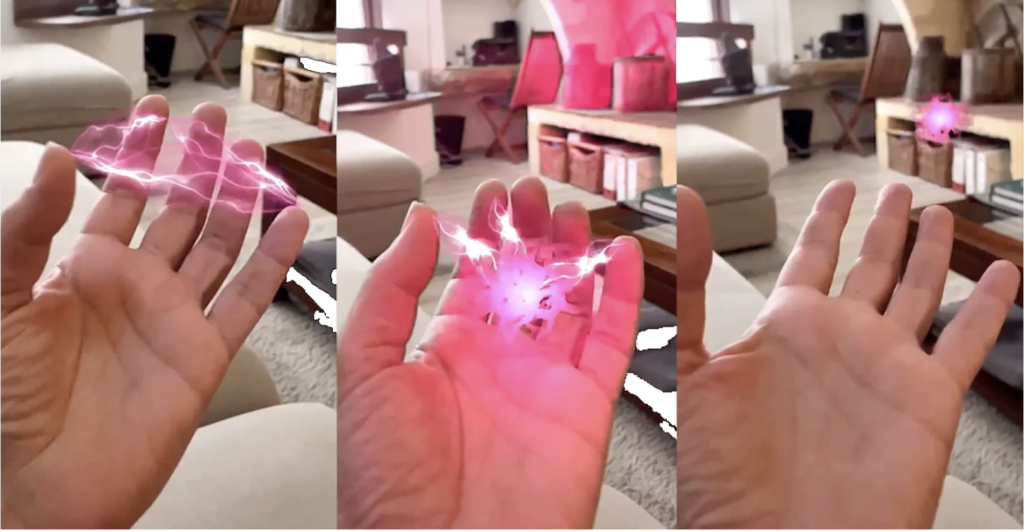
What would it feel like to wield the power of lightning? It’s a question we’ve all asked ourselves at some point in our lives (at least I have anyway). Well wonder no more as Olivier Goguel, CTO at HoloForge Interactive, has created an experimental demo that gives you the power to play with AR lighting using your bare hands.
The experimental demo was built using the Unity game engine and is powered by iPhone with LiDAR, which currently includes the iPhone 12 Pro, iPhone 13 Pro, iPad Pro 11-inch (2nd and 3rd gen), and iPad Pro 12.9-inch (4th and 5th gen). It appears that by tapping your fingers together you can create a ball of lighting which can be shot forward with a simple flick of the wrist. ...
Goguel’s experimental demo is free to download via Github.
See the full story here: https://vrscout.com/news/this-ar-lightning-app-is-insanely-well-made/
ACUTE ART PRESENTS ‘VISIONS’ EXHIBITION IN SINGAPORE
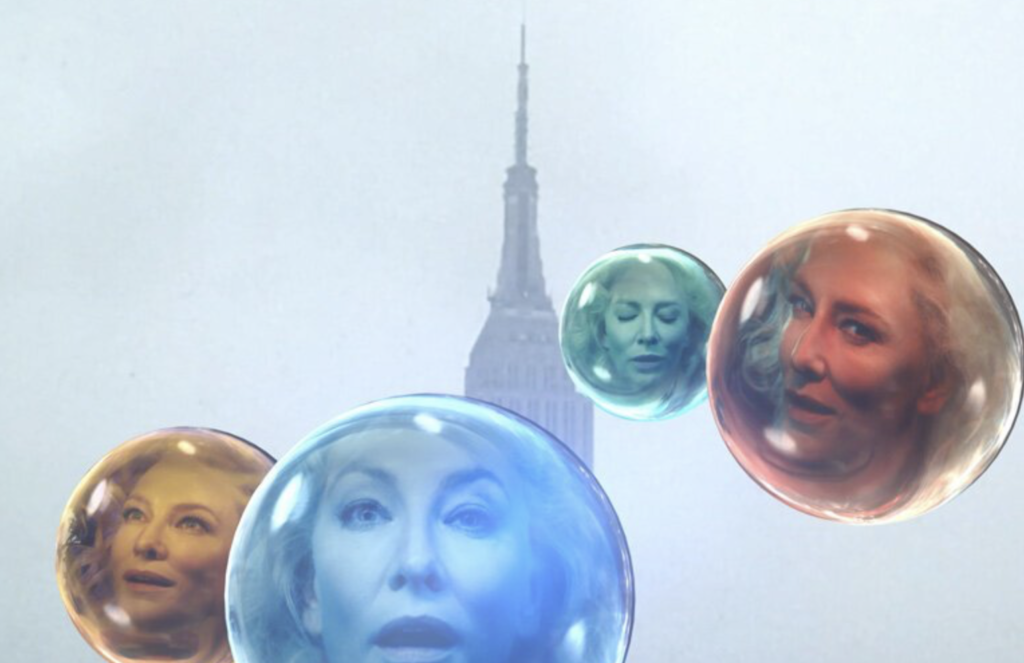
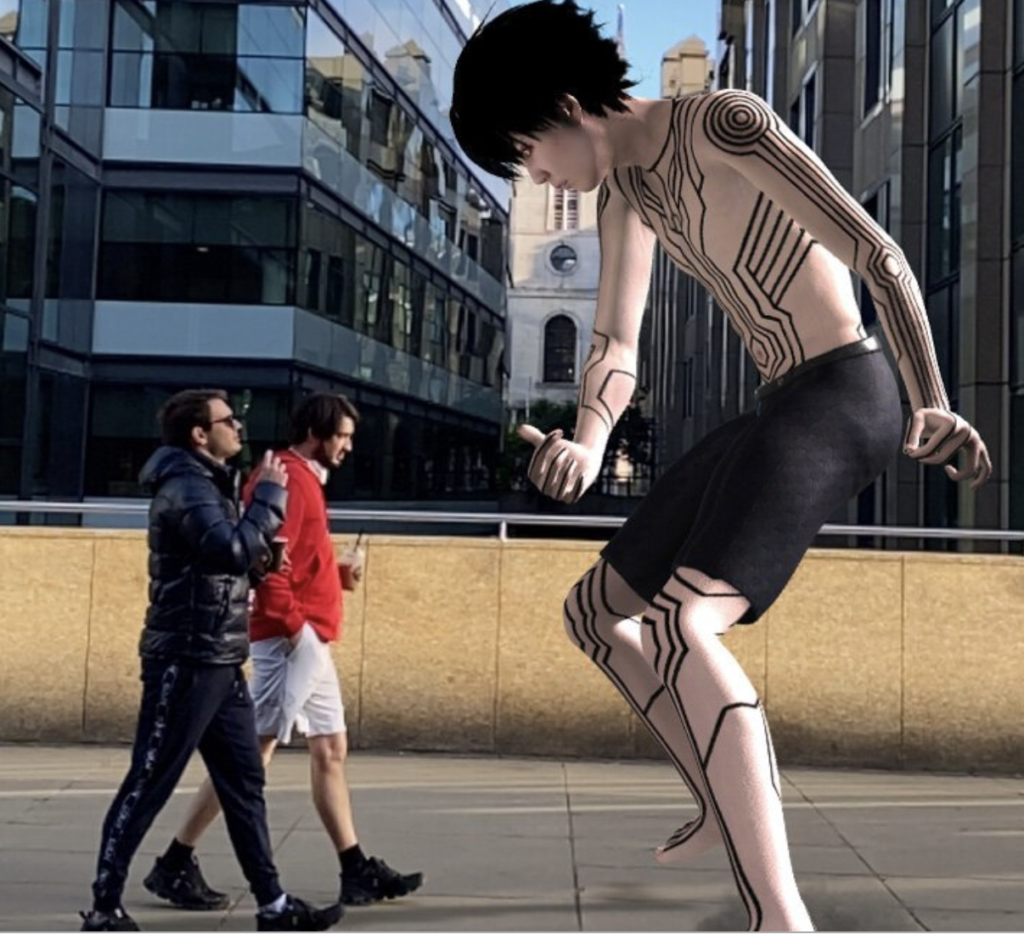
‘visions’, acute art’s ongoing outdoor exhibition in singapore, brings together augmented reality works by ten contemporary artists, including cao fei, olafur eliasson, KAWS, precious okoyomon and tomás saraceno, among others. curated by daniel birnbaum, artistic director of acute art, the interactive exhibition also features a newly-commissioned set of AR works by singapore artist ho tzu nyen titled ‘language’, which explores philosophical and political themes. ‘visions’ opened as part of the 10th annual singapore art week and the national gallery of singapore’s light to night festival, and will remain on view until march 31, 2022. visitors can explore the AR artworks with accompanying soundscapes along the gallery’s facade with the civic district as their backdrop.
‘the thematic thread in “visions” is the sense of wonder. there is something spectral, yes ghost-like, about the works,’daniel birnbaum tells designboom. ‘they remain invisible to the naked eye, but seen through the phone they can become quite overwhelming.’ previously the director of the moderna museet in stockholm, birnbaum has been director and curator of acute art since 2019. together, they translate the creative vision of renowned international artists into virtual reality (VR), augmented reality (AR) or mixed reality (MR) artworks that viewers can engage with from anywhere around the globe. ...
See the full story here: https://www.designboom.com/art/visions-interview-daniel-birnbaum-curating-acute-art-ar-exhibition-singapore-02-08-2022/
Sony and ‘Gran Turismo’ developer to showcase AI collaboration
... At a glance, this AI system might be something similar to the Forza Drivatar system at Xbox. This machine learning AI-system controls cars in player’s games by having them emulate their friends and other drivers from around the world, so players can race with people without having to physically have them in their game. ...
See the full story here: https://www.nme.com/news/gaming-news/sony-and-gran-turismo-developer-to-showcase-ai-collaboration-3156615

OPINION: Deepfakes are getting better and opening new possibilities
Many fans are already speculating why Luke looked so much better than in “The Mandalorian,” and many are turning to the possibility that Disney hired YouTuber Shamook. Shamook is famous for his deepfake fixes on YouTube and episode six looked much like his work.
Despite whether they hired him or not, Disney learned from last time and continued to push the boundaries of what was once thought impossible — which begs the question, will other companies continue to follow them? ...
Moments like these have the potential to be so emotional, that companies would be fools to not consider it. We have seen deepfake and CGI technology evolve so much over the years, that it now becomes a question of when the right time is to resurrect or de-age our favorite characters. ...
See the full story here: https://unothegateway.com/opinion-deepfakes-are-getting-better-and-opening-new-possibilities/

Virtual Reality Statistics 2022
PhilNote: lots of statistics in the article.
Nearly 1 in 3 consumers own an AR/VR device, and 15 percent will buy such a device in 2022: As per a 2022 GroupM Annual Survey on Consumer Attitudes Towards Technology, 32 percent of respondents said they own an AR or VR device, and another 15 percent added they were looking to buy a device in this category in the next 12 months.
More than 1 in 3 US consumers would rather buy AR/VR devices from Apple: Even though Apple is yet to launch a VR headset, it has a large number of loyalists. Roughly 33 percent of respondents to an said the preferred an Apple-provided headset as their first choice, followed by Google at 20 percent. Meta’s Quest is still the first choice for less than 10 percent of buyers.
Social VR users spend over 3 hours a day in VR: According to a Social VR Lifestyle Survey 2021 survey, those engaging in social VR experiences spend over 3 hours a day in virtual reality. Interestingly, 75 percent said they maintain less physical distance between themselves and those they meet in VR than in real-world surroundings.
See the full story with more statistics here: https://www.xrtoday.com/virtual-reality/virtual-reality-statistics-2022/
Foo Fighters to Perform Virtual Reality Concert on Super Bowl Sunday
The Foo Fighters are going virtual.
The band is set to perform a virtual reality concert after the Super Bowl on Sunday at 11 p.m. ET — or whenever the football game finishes — on Horizon Venues, a VR app available on the Meta Quest headsets. ...
Though listeners will be able to watch the concert on the Foo Fighters’ and Meta’s social media pages, users who access the concert from their Meta Quest headsets on the Horizon Venues app will be able to create their avatars, customize their outfits, interact with other fans and play games in the virtual concert lobby. ...
See the full story here: https://www.billboard.com/music/music-news/foo-fighters-vr-concert-super-bowl-sunday-1235028323/