The FTC is reportedly investigating Meta’s VR division for antitrust violations
Regulators have reportedly asked developers if the Oculus app store discriminates against third-party apps whose features overlap with its own offerings, and they’ve apparently questioned Meta’s strategy of selling the Meta Quest (formerly Oculus Quest) headset at a $299 price point that heavily undercuts the price of other VR headsets. The FTC declined to comment on Bloomberg’sreport.
See the full story here: https://www.theverge.com/2022/1/14/22884198/ftc-state-ag-investigating-meta-facebook-vr-oculus-antitrust

Second Life joins the metaverse discussion with the return of its founder — and some key patents
A strengthened “commitment to growing an innovative, inclusive, and diverse metaverse” includes Second Life founder Philip Rosedale rejoining the project as a strategic adviser. After launching Second Life, he’s been involved in a number of other efforts, popping up with a virtual marketplace for people to sell their skills and a neuroscience collaboration,
However, his VR project High Fidelity, a telepresence-focused experiment that took a step back from developing its tech for head-mounted displays, will invest in Second Lifeowner Linden Research with cash and “distributed computing patents.” Speaking to CNET, Rosedale said High Fidelity is shifting seven people to work on Second Life. The deal also includes patents, like two covering community moderation in decentralized environments. As we’ve seen with companies like TiVo and Nokia, an early presence in a space could include ownership over technology that becomes much more valuable later on.
...Besides skepticism of NFTs and pie-in-the-sky ideas about interoperable platforms, he suggests that making Second Life usable via phone or using your webcam to animate your avatar’s facial animation would help it grow more than anything that requires users to wear a virtual reality headset.
See the full story here: https://www.theverge.com/2022/1/13/22881864/metaverse-second-life-decentralized-moderation-patent-virtual-reality?fbclid=IwAR1Sgfup6W2xUWqSbO21J7LA1QGJuMcsiuFzCQt9QGOnj_UlRZZmy--xtUc
Reality Check: Looking Back at Augmented Reality in 2021
Tom Emrich's 2021 annual AR roundup.
See the full story here: https://www.linkedin.com/pulse/reality-check-looking-back-augmented-2021-tom-emrich/?trk=eml-email_series_follow_newsletter_01-hero-1-title_link&midToken=AQG9gi1ZLqruRw&fromEmail=fromEmail&ut=2RNYqyQrYWAq41
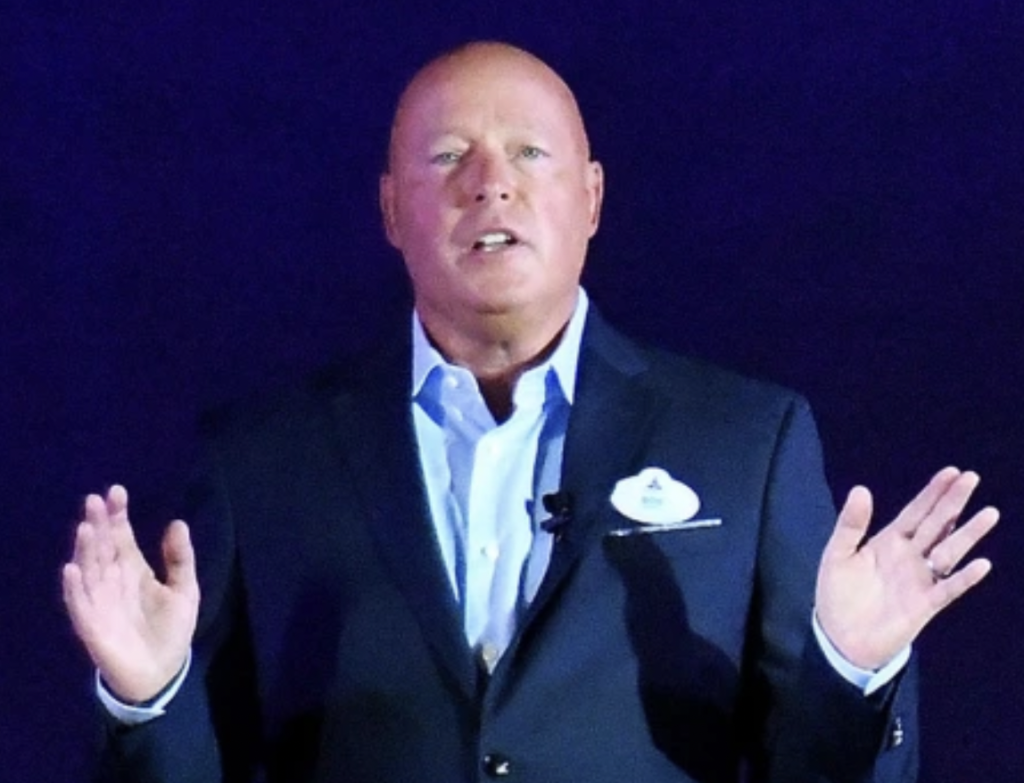
Bob Chapek’s Memo to Staff: Disney Has Three “Strategic Pillars” Moving Forward
Walt Disney Co. CEO Bob Chapek outlined three “strategic pillars” for the company going forward in a memo to staff Monday. Chapek’s memo comes as Disney prepares to celebrate its 100th anniversary in 2023.
The first pillar is “storytelling excellence,” which Chapek called the “Disney Magic” in his memo. Storytelling and creative was Bob Iger’s focus after he stepped down as CEO in 2020, and Chapek’s memo makes it clear that he intends to be engaged in the process.
The second pillar is “innovation,” which Chapek writes should leverage the company’s “franchise ecosystem.”
The final pillar is a “relentless focus on our audience,” and placing consumers as the company’s “North Star.” Disney’s evolving theatrical and streaming strategy appears to play a critical role in that area (most recently, the company revealed that Pixar’s Turning Red will go direct to Disney+)
The CES 2022 trends we’ll all be talking about this year
4. Smart glasses could have an iPad moment in 2022
When the iPad was announced in April 2010, it was one of the worst-kept secrets in tech. Before it even launched, lots of other tech companies had announced their own tablets -- and afterwards, the stampede only got more crowded.
Augmented reality glasses could be approaching an iPad-like moment in 2022 with supply chain leaks linking Apple to the launch of AR glasses or an AR/VR headset later this year. The competition doesn't intend to get caught flat-footed. CES 2022 saw a tidal wave of AR, virtual reality and metaverse announcements.
TCL unveiled both its vision for future AR smart glasses and its NXTWear Air glasses that work as an external display that is the equivalent of watching a 140-inch TV. Sony showed off the PlayStation VR 2. Mojo Vision came with its latest prototype for smart contact lenses. Qualcomm and Microsoft told the world that they will partner on chips for future AR glasses. Panasonic demonstrated a pair of $900 SteamVR goggles with a steampunk look. And "metaverse" became the hottest and most ridiculous buzzword at CES 2022, as this wonderful Twitter thread from @NimaZeighami demonstrates.
Expect a lot more hype around AR glasses this year, even though the products released are likely to be little more than clunky prototypes. At least they'll give us all stories to entertain the grandkids in a couple decades.
See the full story here: https://www.cnet.com/tech/the-ces-2022-trends-well-all-be-talking-about-this-year/

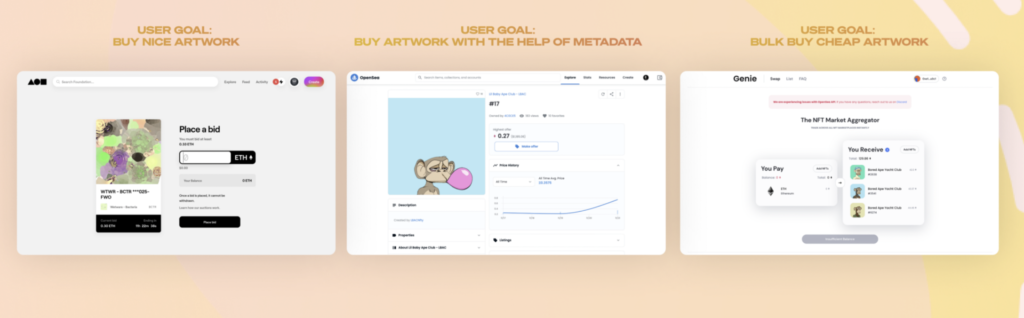
The user experience of buying NFTs on the Blockchain
In this article we will explore three similar users goals and provide real-world examples with screenshots:
- Buy nice artwork
- Buy artwork with the help of metadata
- Bulk buy cheap artwork
See the full story here: https://uxdesign.cc/the-user-experience-of-buying-nfts-on-the-blockchain-6f320f4d7334
CES: TV, Audio and Drone Tech Make a Splash at Central Hall
ETC’s George Gerba and Don Levy spent Thursday navigating the Las Vegas Convention Center’s Central Hall looking for unique products from major exhibitors at CES 2022 that would be of special interest to the entertainment industry. They found a Hisense ultra-short throw projection TV, a Samsung TV with an adjustment capability that would be useful in-camera as well, Fraunhofer tech for adjusting the volume of dialog separately from other audio in a consumer device, a winged drone with impressive flight duration and speed, and a few other products of note.
Hisense is showing a 120-inch ultra-short throw projection TV that utilizes three laser technology (RGB) and delivers 100 percent BT 2020 coverage (good for HDR), and 4000 ANSI lumens (screen brightness up to 430 nits). One attendee described the colors as “insane!” The projector has a built-in Harman Kardon customized audio solution with rollable speakers and a separate wired subwoofer. We take this as evidence that Hisense is now designing products that compete with the top tier of consumer electronics brands.
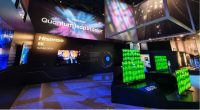
Even more impressively, the projection TV has built-in blending projection display technology that supports NxN multi-screen blending. Hisense showed two 120-inch projection TVs side-by-side that seamlessly blended into one ultra-wide display.
Hisense also showed a ULED 8K display (model U800) with quantum dot color, full array local dimming, and Dolby Atmos. The company’s 8K variant of the TriChroma TV is powered by an 8K imaging chipset with embedded artificial intelligence that combs through every visual scene pixel by pixel to optimize the picture, and also hosts 20,000 mini-LED partitions to enhance definition and contrast. This display is probably more for the professional market than the consumer market.
One of the new extras in Samsung’s 2022 Neo 4K and 8K QLED line is Shape Adaptive Light Control, which reduces stray illumination by analyzing on-screen objects and shaping the light to match. Another, called Object Depth Enhancer, employs more processing to further distinguish the objects from the background. (For more details, check out the CNET coverage.) We believe that this ability to micro-correct the image could be extremely useful to the professional community if it becomes available in-camera or in post applications.

Samsung has noticed a new emerging market, and is pitching its 8K panels as good platforms for showcasing your NFTs. “The platform, which will be available on Samsung’s MicroLED, Neo QLED and The Frame models, allows users to browse and buy NFTs directly from their sets,” reports Engadget. “The platform pulls in NFTs from several marketplaces, so users can preview the art and see other relevant details, like who created the work, as well as relevant blockchain metadata.”
Fraunhofer demonstrated a capability that consumers have craved for years, the ability to adjust the volume of dialog separately from music and background audio. The MPEG-H Audio technology will allow consumers to choose from presets or create their own settings for both broadcast and streaming audio. It is now possible, for example, to switch between different languages, adjust the volume of a sports commentator, enhance the dialogue, and choose from several audio description options.
Autel Robotics showed its Dragonfish Series of vertical takeoff winged drones. The drone is modular, waterproof, smart and reliable. It can stay aloft up to 180 minutes — far longer than quadcopters — and travel up to 180 km per hour. It has powerful AI tracking capabilities, a built-in 4K video and 50X optical zoom, an 18 mile range, and a multitude of modular payload options.

Shenzhen Lochn Optics Technology is a leading Chinese manufacturer of optical waveguide and diffractive waveguide components for AR glasses manufacturers. At CES, the company showed 14 form factors of waveguides, up from six form factors in the current catalog. We take this as an indicator that the industry is gearing up for rapid growth and adoption of AR products in the near future.
As was widely reported prior to CES 2022, top TV manufacturers such as LG, Sony, Panasonic and others have a greatly reduced presence on the show floor. In a clever move, LG Electronics virtually presented its new consumer electronics products in the 2,000-square-foot eco-friendly booth constructed of recycled and recyclable materials.
Visitors download an app at the entrance of the booth that enabled them to take a self-guided tour. Using QR codes positioned on cubes where kiosks would have been, the visitors could see AR versions of the products that would have been displayed.
See the original post here: https://www.etcentric.org/ces-tv-audio-and-drone-tech-make-a-splash-at-central-hall/