Metaverses with top in-house rules will be the most successful ones as people look for where to live their best virtual lives, a crypto boss says
- Metaverse companies that set solid codes of conduct will likely attract the most users, CoinFlip's CEO said.
- Ben Weiss said any new regulations for crypto are unlikely to hold back the growth of the metaverse.
- Tax regulations and other rules that apply in the real world will also apply in virtual worlds, Weiss told Insider.
See the full story here: https://markets.businessinsider.com/news/currencies/metaverse-crypto-regulations-best-platforms-virtual-reality-successful-laws-2022-1

This is how the metaverse can become a breeding ground for terrorists
Although the arrival of a full-fledged metaverse is still some years in the future, the potential threats posed by the metaverse require attention today from a diverse range of people and organizations, including academic researchers, those developing the metaverse, and those tasked with protecting society. The threats call for thinking as much, or more creatively, about the metaverse as those with malevolent intent are likely to do. Everyone needs to be ready for this new reality.
Joel S. Elson is an assistant professor of IT innovation at the University of Nebraska Omaha, Austin C. Doctor is an assistant professor of political science at the University of Nebraska Omaha, and Sam Hunter is a professor of Psychology at the University of Nebraska Omaha.
See the full story here: https://www.fastcompany.com/90711507/this-is-how-the-metaverse-can-become-a-breeding-ground-for-terrorists

CES 2022: Kura Technologies received the Innovators Award for its revolutionary AR hardware and software solutions
...The Kura Gallium surpasses rival AR headsets with a 150-degree field of view (FoV), 95 percent transparency to seamlessly superimpose images on the real world, a compact, 80g form factor, as well as an 8K resolution and brightness 100 times that of competitors. ...
Rivals have comparatively reached 52 degrees of FoV, 25 percent transparency, and a fraction of brightness, respectively, according to figures from the firm.
Kura also achieved hardware advancements for its flagship device with proprietary designs, leading to an included a full-colour MicroLED display, a custom MicroLED display driver for an application-specific integrated circuit (ASIC), as well as custom pinhole waveguides, the company said. ...
The news comes after Silicon Catalyst, the only semiconductor startup incubator in the world, accepted Kura Technologies for its programme. Kura Technologies hosts a roster of prestigious Massachusetts Institute of Technology (MIT) graduates among over half of its leadership.

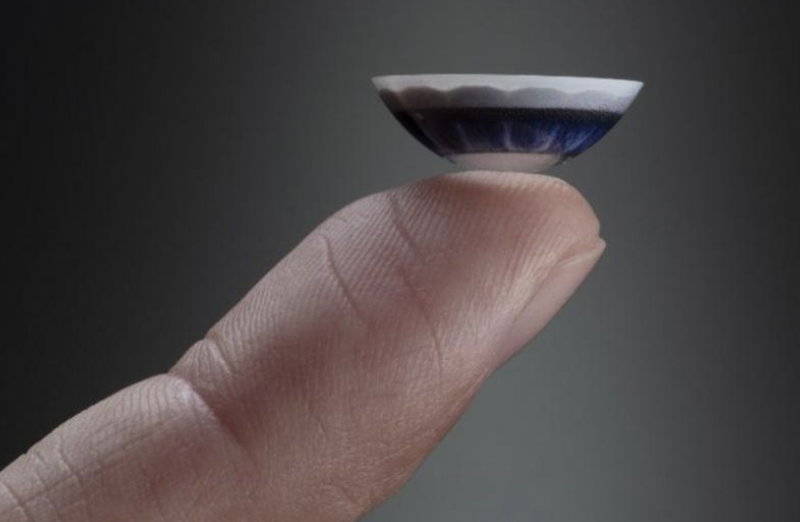
Mojo Vision Raises Additional $45M to Put Smart Contacts in the Eyes of Athletes
Mojo Lens is ostensibly years away from commercialization, however the company announced at CES 2022 that it’s taking a step forward by partnering with a number of fitness brands to explore how to better integrate its smart contact lenses into sports and training. Mojo Vision has partnered with Adidas Running, Trailforks, Wearable X, Slopes and 18Birdies. ...
Much like Elon Musk’s brain-computer interface (BCI) startup Neuralink, Mojo Vision sees early applications first targeting those afflicted with bodily impairments; in Mojo’s case, it aims to use Mojo Lens to create enhanced image overlays to alleviate certain visual impairments. ...
See the full story here: https://www.cnet.com/tech/computing/ditch-the-smart-glasses-mojo-visions-smart-contact-lenses-want-to-track-your-fitness/
Cinedigm Agrees to Acquire Streaming and Entertainment Company Digital Media Rights Adding 10 New Channels and 7,500 Titles
Deal scales up Cinedigm with more than 30 streaming services, 46,000 hours of content, 40 million monthly viewers, 18.5 million social subscribers, and 4+ billion views
Cinedigm enters Ad Network Business via DMR's Ad Network & Marketplace which garners more than 100 million connected TV impressions a month
First, the company is a leading global distributor of feature films and television series for the streaming ecosystem, with more than 7,500 titles under distribution.
Secondly, DMR has developed and operates 10 channels focused on enthusiast audiences. Six of these proprietary streaming services are available as free ad-supported streaming television (FAST) channels and/or video-on-demand apps (all apps have ad-supported VOD and premium, subscription VOD options):
- AsianCrush (asiancrush.com): The one-stop portal to the latest Asian entertainment featuring premium movies and shows.
- Midnight Pulp (midnightpulp.com): The perfect late-night channel to end all boredom, offering an expertly curated selection of cult programming with a twist of millennial irreverence.
- RetroCrush (retrocrush.tv): Dedicated to the Golden Age of anime.
- Cinehouse (www.cinehousetv.com): both a standalone channel with apps available across all major devices, as well as a Linear TV streaming bundle, curating niche, enthusiast channels focused on the best movies and TV shows from around the world. Among the linear FAST channels available in Cinehouse's lineup are 24/7 streams of AsianCrush, RetroCrush, Midnight Pulp and KMTV, with more being announced in 2022.
- Cocoro (cocoro.tv): The ultimate destination for kid-friendly shows designed to educate and entertain.
- KMTV (kmtvnow.com): Features all things K-Pop, from music videos of the newest releases to variety show highlights, to all things in between.
Third, through its DMR Social unit, DMR curates social video channels for most of the above brands, as well as four others, with more in development:
- C-Crush: A community for fans of the best Chinese TV and movies.
- Cinehouse Romance: A curated selection of romance-focused movie clips from DMR's library of arthouse and indie films.
- K-Crush: A community for Korean cinema, TV and pop culture addicts.
- QTTV: A community for fans of queer cinema.
See the full story here: https://www.streetinsider.com/Accesswire/Cinedigm+Agrees+to+Acquire+Streaming+and+Entertainment+Company+Digital+Media+Rights+Adding+10+New+Channels+and+7%2C500+Titles/19430520.html

Multimodal AI Modeling is the Future, But It’s Also Pandora’s Box
The discipline of building or teaching a neural net to have this kind of multifaced awareness is called multimodal modeling. Tools like DALL-E are designed to generate images based on text descriptions, while CLIP (Contrastive Language-Image Pre-training) is intended to associate text and images more robustly than current AI models. ...
Values matter to this bias problem, in a concrete sense. It’s such a low-tech part of the solution to a high-tech problem. Deepfakes are here, and to get software to identify deepfakes reliably, we are going to have to teach computers how to identify and understand us better — and there’s no putting that back in the box. As AI progresses, we’re going to leave our comfort zone over and over. It’s an inevitable consequence of making tools with near-human capabilities. What matters is how our values are reflected in the intelligent systems we create. Maybe we don’t need to worry about a robot uprising. Maybe the dystopia is coming from inside the house.
See the full story here: https://www.extremetech.com/extreme/330247-multimodal-ai-modeling-is-the-futurebut-its-also-pandoras-box

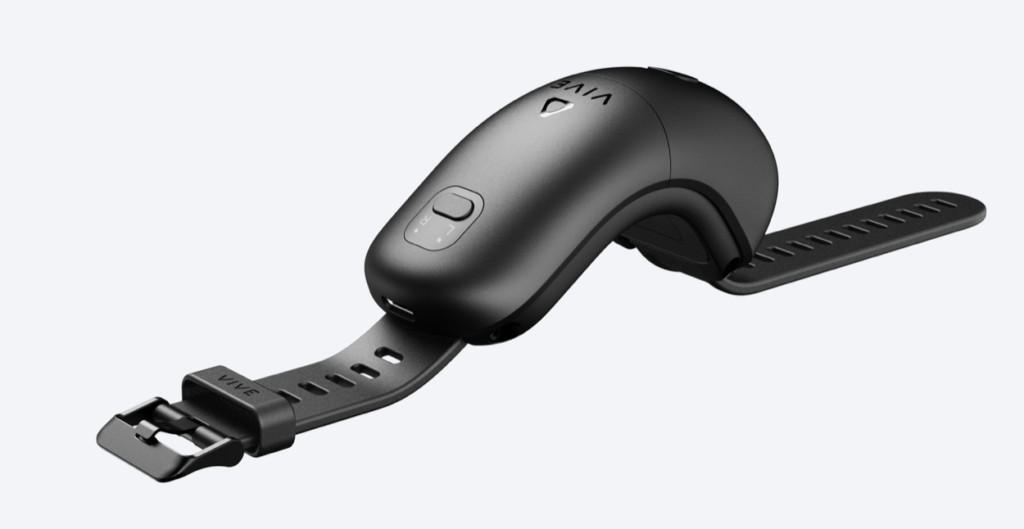
HTC Vive Wrist Tracker Could Solve One of VR’s Big Problems
The device, announced today at CES 2022, is designed for use with HTC’s all-in-one Vive Focus 3 headset, which tracks the location of a user’s hands using onboard cameras. That approach can fall short for a number of technical reasons, including that it’s hard to tell if a hand is small and close to the camera, or large and far away. Invisible LEDs on the Vive Wrist Tracker add more points of reference and exact scale to the equation, allowing the headset to calculate precise location and movement through a 3D space.
The Vive Wrist Tracker is about the same weight as a smartwatch, even though it’s more bulbous, and it’s 85% smaller and 50% lighter than a Vive Focus 3 controller. ...
The new Vive Wrist Tracker will available in the first quarter of 2022 for $129.
See the full story here: https://gizmodo.com/htc-vive-wrist-tracker-could-solve-one-of-vrs-big-probl-1848306450?fbclid=IwAR3tJAHl13NYf3RSSLnwUYt4XP1V1WMpm9sMRmlO4hjZrn6Vs1xFHMFj1pU