USC Students Compete in Second ETC Metaverse Challenge
By Phil Lelyveld
October 19, 2021
University of Southern California students were invited to participate in the second of two scheduled Metaverse Experience Challenges, hosted by ETC@USC. Making use of current and emerging tools, students were tasked with developing original ideas for compelling metaverse experiences. Ten teams started work at 1:00 pm on Friday, October 8 and presented their ideas to judges from Epic Games, Universal Pictures, Disney Studios, Microsoft Azure and Google Cloud at 3:00 pm on Saturday, October 9. Each member of the winning teams — MetaversEdu and MetaMall — received a Nintendo Switch “Fortnite” Edition, courtesy of Epic Games.
The ETC@USC Metaverse Experience Challenge was organized by ETC’s Phil Lelyveld and Danny Bilson, chair of the Interactive Media and Games Division, USC School of Cinematic Arts. The goal was to see what interesting, engaging and repeatable physical and storytelling ideas this next generation of creators could imagine building in the near term using existing and rapidly emerging technologies and techniques.
Students were instructed to think broadly and consider mixed reality, “Fortnite,” NFTs, linear storytelling, game engine capabilities, social media and anything else that came to mind. The instructions stressed that there were no boundaries and that tangential thinking was encouraged.
Teams were given a template to follow. They were told to prepare a deck and a 3-minute presentation that addresses the concept and its key features, why it will engage the user, what differentiates it, what current technology and resources it leverages, and why people will love it.

Judges were looking for ideas or elements that were original, repeatable or repurposable, and would engage today’s users.
The judges were Miles Perkins, industry manager, film & television at Epic Games; Evan Goldberg, manager of technology innovation research at The Walt Disney Studios; Buzz Hays, global lead entertainment industry at Google Cloud; Hanno Basse, CTO of Microsoft Azure’s Media and Entertainment business; and Greg Reed, VP of technology partnerships at Universal Pictures.
The following are brief summaries of the ten ideas:
Choose OUR Own Adventure — Platform for alternative reality gaming (ARG) that welcomes players with no Alt Reality experience. Players learn new technologies and go outside their comfort zones while still feeling safe. There is both cooperation and competition among players, providing a good framework for emergent storytelling. Most importantly, players are given tools and materials to create their own technology for shaping and advancing the experience.
Freeflow — Interactive VR world in which users have control over five senses and four dimensions. Users can visit and modify simulations of any place in the real world. Freeflow uses EMG electrodes to track where the user is walking, haptic tactile rendering to simulate touch and texture, and smell synthesis for a fuller environmental experience. It is intended to augment the experiences in people’s lives.
The Future of Franchise Management — Game in which every object is an NFT that unlocks new quests, in-game content, and AR content. The NFTs can be unlocked either by completing tasks or through a purchase. The NFTs are something that you can show off to others.
Haptics Based Tonal Delivery (honorable mention) — Players are “manifesting their role-playing personas in speech.” Players would be able to influence expressiveness and forcefulness, speed of speech, pitch and tone inflection, and strategy vocal delivery. The proposal differentiators are the use of formal elements such as dialogue wheels, controller triggers, and delivery gauges mapped to the player’s emotional state. Players will embrace the opportunity to roleplay ‘how’ they say things, not merely ‘what’ they say.
MetaMall (winner) — Integrates existing online shopping, streaming platforms, and food delivery services into a global virtual mall experience. People can shop, be entertained, and eat with anyone anywhere in the world. The technology needed for this already exists. It just needs to be integrated as an independent or corporate-sponsored experience.
MetaversEDU (winner) — Helping students and the world learn better by making labs, home school programs, online learning, and museum experiences more engaging through physical hands-on and interactive VR. There will be pre-made units as well as a sandbox for creating personalized resources and for student collaboration.
MovieScape — Immersive cinematic experience where you, the user, have agency. You can actively follow the plot, observe extra details, or explore the world as a bystander in the plot.
PatPet — Digital pet driven by and personalized by artificial intelligence. It has both a virtual pet and a robotic pet form factor that are synched together for one uniform and evolving relationship. The pet’s form can be customized to please the owner.
Project Blossom — Fully customizable VR game in which you watch a world blossom in your own hands. Players can design their own world by designing the world’s physics, ecosystem, geography and culture, and participate in other players’ worlds.
Vanguard — Game where the world changes through the players’ actions using AR, computer vision, projection mapping, and inflatable robotic peripherals. Guests choose their avatars and quest lines. The endgame is either defending or breaching a fortress.
The presentation videos for these projects, including the Q&A, will be posted on ETCenter.org later this week, along with the presentation videos from the October 1-2 Metaverse Experience Challenge (which we reported on last week).
See the original post here: https://www.etcentric.org/usc-students-compete-in-second-etc-metaverse-challenge/
Epic says it’s ‘open’ to blockchain games after Steam bans them
Epic tells The Verge that it’s “open to games that support cryptocurrency or blockchain-based assets” on its game store, unlike its competitor Valve which has banned games that feature blockchain technology or NFTs from Steam. When we asked about allowing games that featured NFTs, Epic told us there’d be some limitations, but that it’s willing to work with “early developers” in the “new field.”
Epic says that the games would have to comply with financial laws, make it clear how the blockchain is used, and have appropriate age ratings. It also says that developers won’t be able to use Epic’s payment service to accept crypto; they would have to use their own payment systems instead.
Currently, Epic’s self-publishing program is in closed beta, and Epic’s FAQ says it chooses who can join on a “case-by-case basis.”
See the full story here: https://www.theverge.com/2021/10/15/22729050/epic-game-store-open-to-blockchain-cryptocurrency-nft-games

SenseGlove begins worldwide shipping of its ‘Nova’ Haptic force-feedback gloves for professional VR/AR training and research
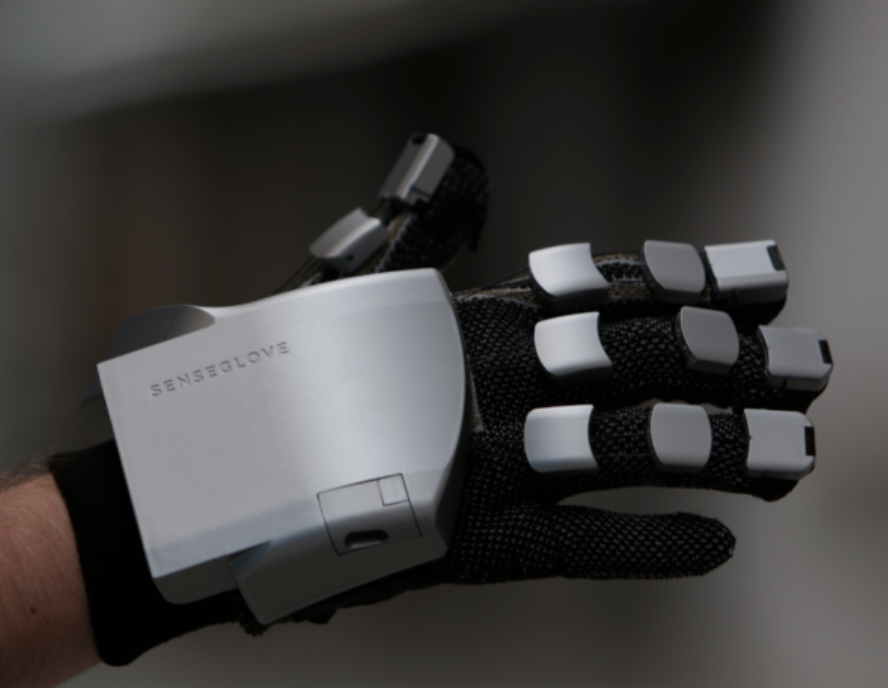
SenseGlove, a developer of force and haptic feedback gloves, has today announced that it has begun worldwide shipping of SenseGlove Nova, a new version of haptic force-feedback gloves designed specifically for professional VR training and research purposes.
Initially debuted as a prototype at CES 2021, SenseGlove Nova features an updated flexible form-factor in combination with haptic technologies and smooth hand tracking that enables users to feel shapes, textures, stiffness, impacts and resistance in virtual reality.
SenseGlove Nova features and specifications, include:
- Improved materials for durability and comfort. Nova consists of two main parts: the soft gloves created with a smart textile material that contains antibacterial fabric, and an electronic part attached to the soft gloves that is produced via injection molding;
- Available in three different sizes, the soft gloves can be detached from the electronics and washed as needed;
- A Getting Started Guide;
- Glove charger;
- Tracker mounts and tools to attach them (for hand detection). For Oculus Quest and HTC Vive headsets, users need to install their controllers/trackers on top of the gloves by using the mounts that come with the Nova gloves
SenseGlove Nova will retail for USD $5,000 for a set of two gloves. Bulk orders of 10 or more Nova gloves are available at a discounted rate of USD $3,500 per set of gloves. The gloves are now available for purchase on the company’s website.
Light Field Lab Unveils Modular Holographic Video Wall
PhilNote: In 2018 Lytro ceased operations. Some employees when to work for Google, while others formed Light Field Lab (wikipedia)
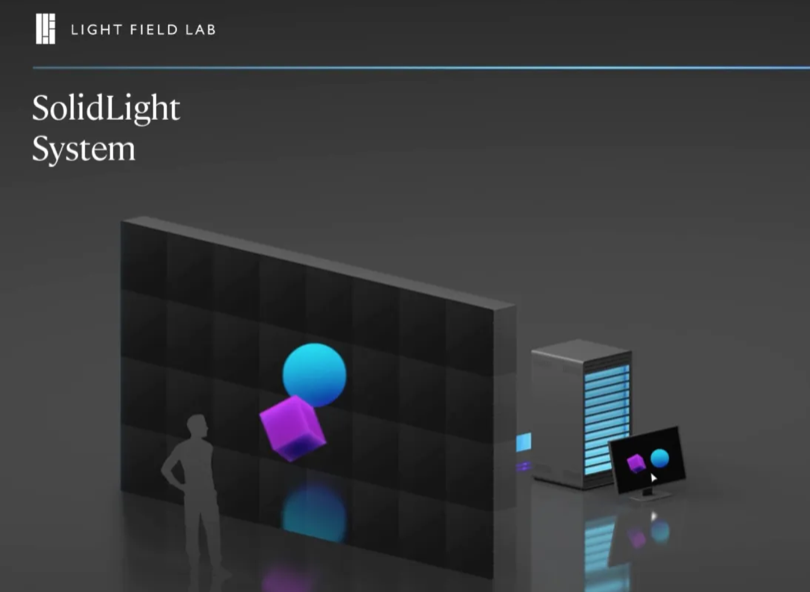
Once considered science fiction, holographic technology has evolved at a rapid pace over the last several years. Whether it be a personalized system such as the Looking Glass Portrait or more advanced experiences such as Microsoft’s multi-lingual mixed reality hologram powered by the HoloLens 2, it’s clear we’re entering a new era in immersive technology. SolidLight, Light Field Lab’s new holographic platform, is only further evidence of this.
Here’s what you can expect from the SolidLight platform (as provided by Light Field Lab):
- SolidLight Surface Panel – Bezel-less 28-inch building block that seamlessly enables nearly infinite scalability and customizability, contributing 2.5 billion pixels to the generated holographic object volume with an effective density of 10 billion pixels per square meter.
- SolidLight Relay – An additional featurethat allows the generated holographic object volume to be positioned within physical environments, incorporating real-world transparency/occlusion control.
- SolidLight WaveTracer™ – Proprietary real-time and offline rendering software and plugins for content development. Content may be created with any 3D scene in real-time, rendered offline or may leverage existing volumetric capture workflows or integrate with 2D converted assets.
- Computational Hardware – Includes the servers, GPUs, synchronization, and networking to seamlessly manage SolidLight Surface displays.
- Support & Maintenance – Service plans offer rapid on-site response, parts, labor and travel, and optional continuous support.
Duke University professor Cynthia Rudin won the $1M AAAI Squirrel AI Award for her work on socially responsible AI systems
Duke University professor Cynthia Rudin won the $1M AAAI Squirrel AI Award for her work on socially responsible AI systems. Rudin’s first applied project used machine learning to predict which manholes in NYC were most likely to explode due to bad circuitry. She also helped build a model that links commonalities between crimes to determine if they're committed by the same person, which became the basis for the NYPD's Patternizr algorithm.
More:
- The award, given by the nonprofit Association for the Advancement of Artificial Intelligence, recognizes achievements in AI that benefit humanity. Online education company Squirrel AI provides the $1M prize.
- Rudin, a professor of computer science, electrical and computer engineering, and statistical science at Duke, also helped design a system to predict which critically ill hospital patients are most likely to have a seizure following a stroke or other brain injury.
- She is a noted critic of so-called "black box" AI models for use in high-stakes areas. Instead, she advocates for interpretable models in areas where accuracy and lack of bias are critical.
See the full story here: https://pratt.duke.edu/about/news/rudin-squirrel-award

A real-life ‘Squid Game’ is being organized in Abu Dhabi
The Korean Cultural Center in the United Arab Emirates is organizing a reenactment of the games seen in the Netflix series for two teams of 15 participants.
Nam added that the event was being held to introduce Korean culture and the childhood games Koreans play to the people of the United Arab Emirates.
See the full story here: https://www.insider.com/real-life-squid-game-is-being-organized-in-abu-dhabi-2021-10

ETC Launches First of Two Metaverse Experience Challenges
By Phil Lelyveld
October 11, 2021
University of Southern California students were invited to participate in the first of two scheduled Metaverse Experience Challenges, hosted by ETC@USC. Making use of current and emerging tools, students were tasked with developing original ideas for compelling metaverse experiences. Six teams of randomly-grouped students started work at 1:00 pm on Friday, October 1 and presented their ideas to judges from Epic Games, Universal Pictures and Disney Research at 3:00 pm on Saturday, October 2. Each member of the winning teams — Meetaverse and Virtual Vinyl — received a Nintendo Switch “Fortnite” Edition, courtesy of Epic Games.
The ETC@USC Metaverse Experience Challenge was organized by ETC’s Phil Lelyveld and Danny Bilson, chair of the Interactive Media and Games Division, USC School of Cinematic Arts. The goal was to see what interesting, engaging and repeatable physical and storytelling ideas this next generation of creators could imagine building in the near term using existing and rapidly emerging technologies and techniques.

Students were instructed to think broadly and consider mixed reality, “Fortnite,” NFTs, linear storytelling, game engine capabilities, social media and anything else that came to mind. The instructions stressed that there were no boundaries and that tangential thinking was encouraged.
Teams were given a template to follow. They were told to prepare a deck and a 3-minute presentation that addresses the concept and its key features, why it will engage the user, what differentiates it, what current technology and resources it leverages, and why people will love it.
Judges were looking for ideas or elements that were original, repeatable or repurposable, and would engage today’s users. The judges were Kim Libreri, CTO of Epic Games; Markus Gross, VP research for Disney Research, Zurich; and Greg Reed, VP of technology partnerships at Universal Pictures.
The following are brief summaries of the six ideas:
Health Balance — Mixed reality app that uses in-app incentives, physical activity and nutritional literacy info to aid and enhance your journey to becoming more healthy. It uses computer vision to identify foods and help you make healthy choices, sensors to track your movements and AR/VR for motivational gameplay.
Meetaverse (winner) — Combines real-time biometric sensing with virtual reality to improve the first date and matchmaking experience. Biosensors record the person’s response to words and phrases, and natural language processors record which phrases trigger a positive brain response.
Metaportal — Immersive universal hub to explore user-generated universes within made-for-VR web browsers. The user can work with others to create new user-generated worlds and wander freely, unconstrained by the limits of walled-gardened ecosystems. Three.js is an example of a cross-browser programming interface, resource library and community that could be used to build Metaportal.
Metaversify — Pioneers storyliving in the metaverse. You embody a digital avatar in a physical space. You can customize your avatar, level up, and unlock shareable experiences. Key features are the customized and collectable avatar, a decentralized attraction experience, and a reward system with purchasable physical and digital products and capabilities.
Virtual Vinyl (winner) — Centralized, interactive and immersive music experience, combining the collectibles and the infinite possibilities of mixed reality. Virtual Vinyl leverages 3D scanning, NFTs and other technology to support three pillars: Ultimate Centralization (video, music tracks, lyrics, background stories), Immersive Interaction (watch the band perform from all angles, use an app to adjust the mix), and Unique Collection (QR codes on collectable physical cards, access to unique NFTs issued by the artists).
WorldBreaker — Socially conscious open world VR survival video game where the choices you make can either accelerate or slow down the apocalyptic rate of climate change our planet is experiencing. It uses brain computing interface and VR technology to change the gameplay based on the player’s in-game experiences and emotional responses.
The presentation decks for these projects, along with a highlight reel, will be posted in the near future. And stay tuned for results of the second ETC@USC Metaverse Experience Challenge.
See the full story here: https://www.etcentric.org/etc-launches-first-of-two-metaverse-experience-challenges/
The Army’s futuristic goggles near completion
Imagine getting a 3-D layout of a target building piped into your goggles on a heads-up display before you and your teammates kick the door in and clear the rooms.
That future could become reality with the Army’s Integrated Visual Augmentation System, basically a “do-it-all” goggle for troops.
The IVAS’ early versions were developed using Microsoft’s HoloLens augmented reality headset.
But a newly ruggedized system has been used by soldiers all the way up to company-level live fires as recently as last year.
The IVAS is how the Army will move situational awareness and targeting — like what jet pilots have had for years — into the eyes of dismounted soldiers roaming the battlefield.
Plans call for IVAS to include rapid targeting acquisitions, thermal and night vision capabilities, navigation headings, mapping, markers, data sharing and more.
The current IVAS prototype weighs 2.5 pounds, the same weight as the newly fielded Enhanced Night Vision Goggle-Binocular.
It also has recording capabilities for instant after-action videos and it uses the existing tactical assault kit — a smartphone-based app — as its off-board computer.
See the full story here: https://www.defensenews.com/news/your-army/2021/10/11/the-armys-futuristic-goggles-near-completion/