A Tech-Savvy Holocaust Memorial in Ukraine Draws Critics and Crowds
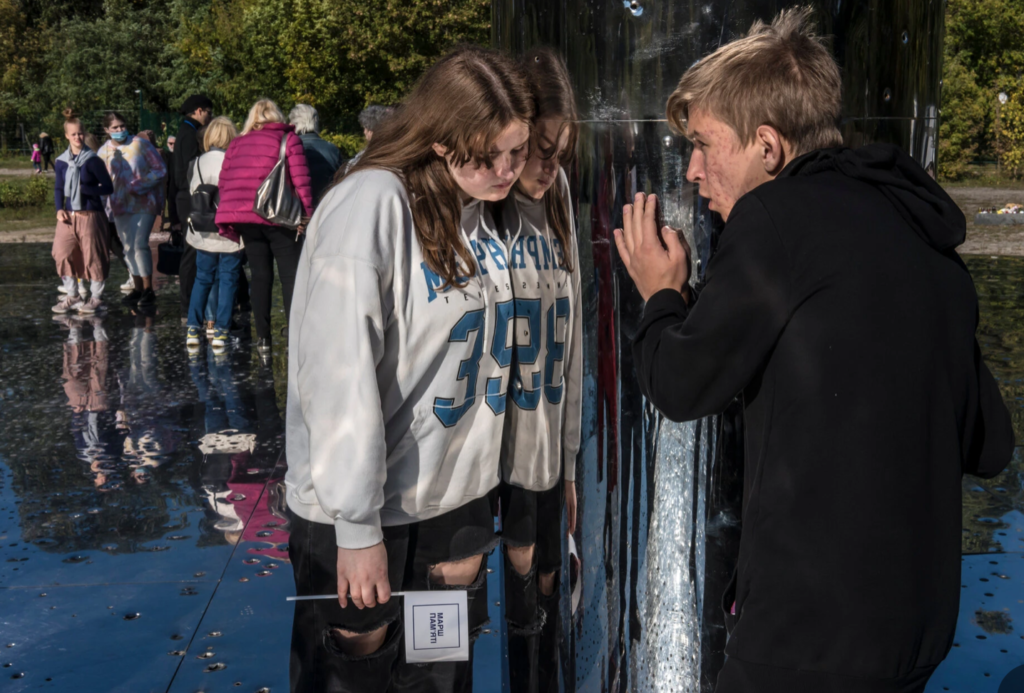
The exhibits that made it into the memorial are ones the organizers felt would engage a generation that, for the most part, has not heard firsthand accounts from older people. An art installation, Mirror Field, for instance, displays mirrored columns shot with bullets of the same caliber as those used in the World War II massacre. Visitors see their reflections pierced with bullet holes.
Another exhibit features a small synagogue inspired by the design of a child’s pop-up book. The structure opens and closes like a book, revealing the interior.
See the full story here: https://www.nytimes.com/2021/10/05/world/europe/ukraine-holocaust-babyn-yar.html

California Scientists Share Nobel for Work on Sense of Touch
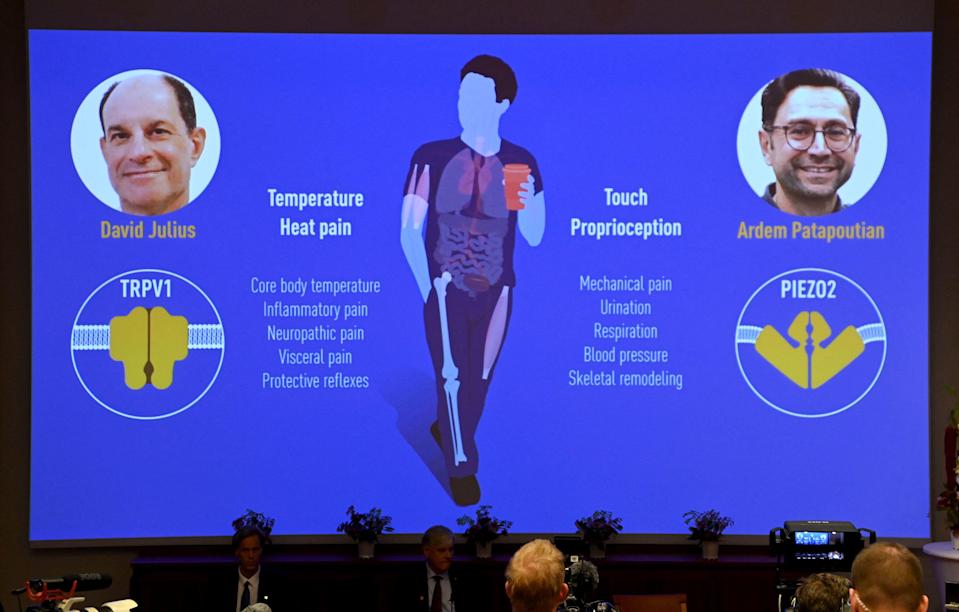
Two California scientists won the Nobel Prize in medicine for work on how the human body senses temperature through touch, which may have applications from pain management to virtual reality.
The scientists identified critical missing links that help understand the interplay between our senses and the environment, according to the Royal Swedish Academy of Sciences. The knowledge is being used to develop treatments for a range of health conditions including chronic pain. It could also help make virtual reality into a tactile experience.
See the full story here: https://finance.yahoo.com/news/california-scientists-share-nobel-sense-104110101.html
VR can help underserved patients, but reimbursement challenges stymie broader adoption, study finds
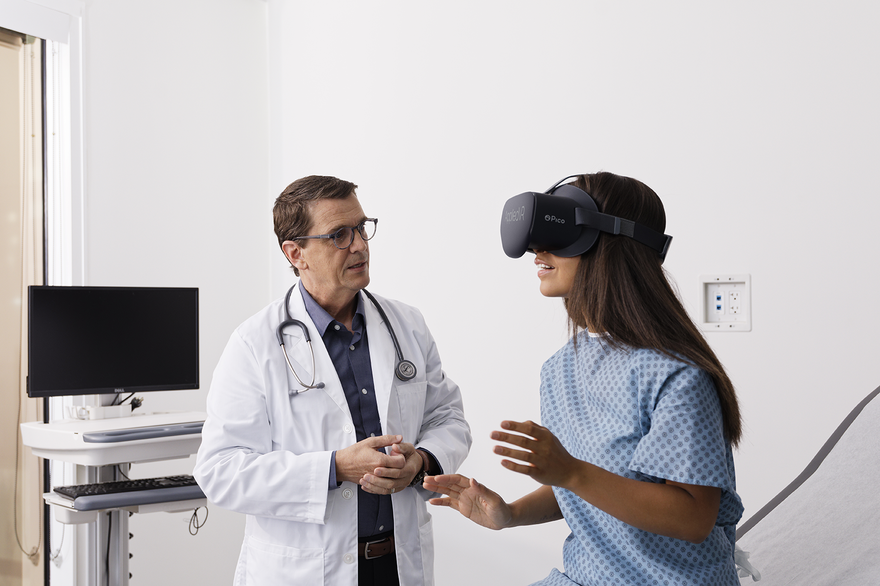
Healthcare providers, including users and non-users of VR, identified a lack of reimbursement for the technology as one of the biggest barriers for adoption, the UCSF-AppliedVR research found. More payers that support underserved populations will need to adopt reimbursement pathways to ensure VR can be prescribed by a provider and paid for by a payer, according to the researchers.
“There is a tremendous unmet need in the U.S. to deliver evidence-based digital therapeutics to the broader population, and virtual reality for pain management holds significant interest for front-line pain management clinicians and leadership in safety-net health settings,” said Urmimala Sarkar, M.D., UCSF professor of medicine and co-founder of S.O.L.V.E. Health Tech. “But, it will require collaboration across industries to overcome the hurdles that stand in the way of wider adoption, including commitments from payers for more reimbursement and adapted content that tailors to the needs of diverse populations.”
There is a huge supply issue with non-pharmacologic options for chronic pain sufferers, Josh Sackman, [ Los Angeles-based ] AppliedVR co-founder and president, told Fierce Healthcare.
See the full story here: https://www.fiercehealthcare.com/tech/virtual-reality-can-help-vulnerable-populations-chronic-pain-but-there-are-barriers-to-access
Public art project uses augmented reality to create virtual monuments in LA
"When we leave these voids and don’t fill those voids with like good stuff, then it just festers," Garcia said. "I feel responsible, following through with how this space gets used."
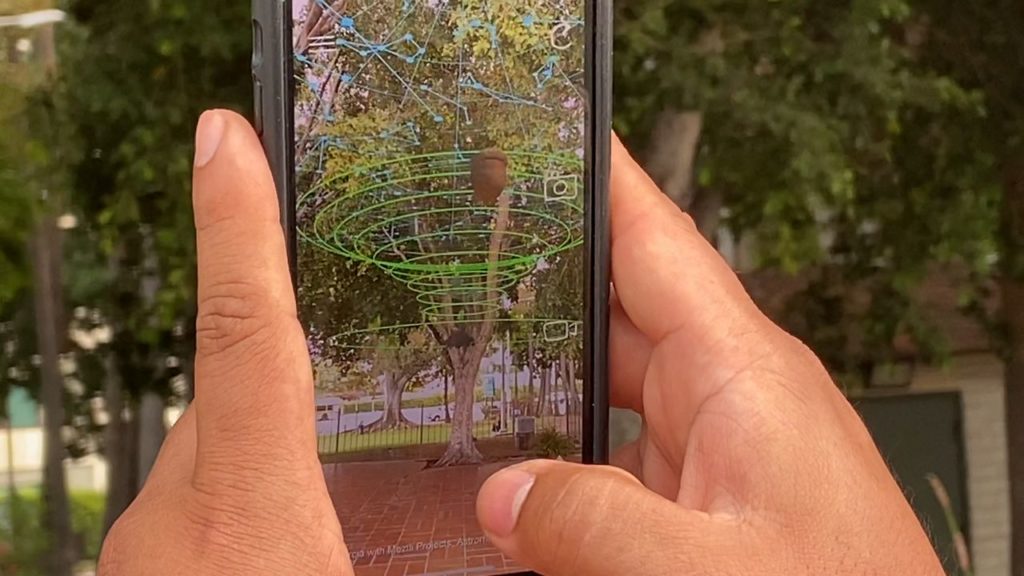
He was one of four artists commissioned by Oxy Arts to create original augmented reality pieces that could be viewed safely outdoors.
"So, not just creating another bronze and cement statue, but thinking about a totally different way to talk and think about monuments," said Frankie Fleming, Manager of Education and Community Engagement at Oxy Arts.
"It’s an oak sapling that is growing toward the stars and by bringing the stars a little closer to Earth. I’m also trying to reframe how we look at time and history," Garcia said as he described the images showing up on his phone.
His project also includes a chant from one of the Tongva’s tribal members.
See the full story here: https://spectrumnews1.com/ca/la-east/inside-the-issues/2021/10/01/public-art-project-uses-augmented-reality-to-create-virtual-monuments-in-la
Roblox-Focused Game Developer Supersocial Raises $5.2 Million From Investors Including Warner Music Group
Keeping the points in mind, Supersocial emphasizes off the bat that the “experiences” it’s building “are not merely ‘games’, they are worlds that illustrate our approach to living in the metaverse – worlds that power creativity, foster inclusivity, and drive prosperity.”
Furthermore, Supersocial says that its team members (who are based out of “over 20 cities in 4 countries and 6 time zones”) are “very excited to be building for Roblox,” notwithstanding the continued prevalence of “misconceptions” about what the digital universe “is and what it truly provides as en [sic] eco-system.”
On this front, Supersocial is currently creating “multiple titles for launch on the Roblox platform,” such as Ghostopia (“a multiplayer RPG set in a haunted world where life meets afterlife”). Plus, the startup has established “Supersocial Labs, an evolution of the ‘cell’ concept in mobile games tailored to metaverse platforms like Roblox.”
...WMG higher-ups are preparing to bring their “roster of artists to life as avatars,” including by producing and distributing “virtual beings that facilitate fan reach across immersive platforms and metaverses.”
See the full story here: https://www.digitalmusicnews.com/2021/10/01/warner-music-group-supersocial-raise/

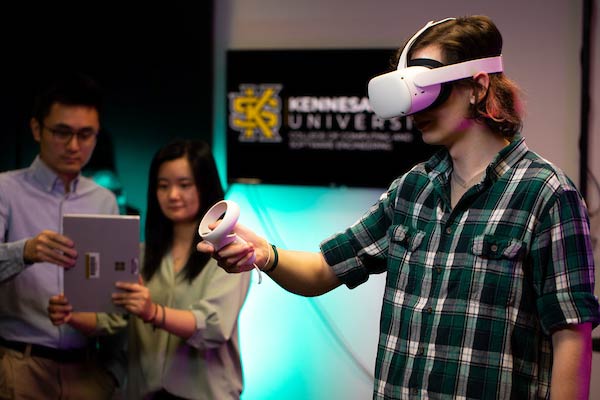
Kennesaw State professors develop virtual reality games to teach children cybersecurity basics
In order to teach school-age children the basics of cybersecurity, two Kennesaw State University professors are collaborating on a method to deliver lessons where K-12 students spend most of their time: playing video games.
Launched by Joy Li, assistant professor of computer game design and development, and Yan Huang, assistant professor of software engineering, the project is pegged as an alternative to traditional learning activities by teaching students the principles of cybersecurity in a immersive virtual reality (VR) environment. The program works by introducing students to 360-degree instructional videos and then testing their knowledge in a game setting using a VR headset.
Inside the VR headset users are transported to “Cybersecurity Park,” where they will have access to six education modules covering topics that range from ransomware to hacking ethics to phishing attempts. Each module has a unique theme and game associated with its lesson.
See the full story here: https://news.kennesaw.edu/stories/2021/virtual-reality-games-teach-cybersecurity-basics.php
AI Innovations In Media And Communications
Some of the top application areas used in this sector are: gaming, fake story detection, plagiarism detection, personalization, production planning and management, sales and marketing and talent identification.
One of the areas which is very exciting is understanding how AI is being used in news. AI is making major impacts in aggregating massive data analysis of the conversations across the world-wide web and classifying into themes to appreciate topics trending globally or even identify increasing risks of terrorism or even health risks, like a pandemic.
Companies like LeadSift in Canada are even analyzing all your searches on the world-wide web to draw relevancy to targeting the right buyer with the right interests to your products and services. This is an area called propensity to purchase signal detection.
Another company, Pesado for example analyzed over 18 million messages across 180 brands in 2019 to identify words that genuinely resonated with customers. These insights can help get closer to a buyer profile psychographic profile to increase their odds of engagement.
Continued dialogue between government, industry, citizens is needed to ensure AI is being developed for good vs harm. Fake news is one area where greater controls are needed.
Note: See The AI Dilemma for more info on the Media Industry.
See the full story here: https://www.forbes.com/sites/cindygordon/2021/09/30/ai-innovations-in-media-and-communications/?sh=236c38c3599d