How HTC Vive Accidentally Created Mo-Cap Tech 10 Times Cheaper Than the Industry Standard
Five years ago, when “Rogue One” was nominated for an Oscar for Best Visual Effects, the team at HTC Vive was surprised to find that they were part of the story. In a BBC documentary about the execution of the movie’s fast-paced space scenes, a member of the effects team from Industrial Light & Magic showed off the way they used a real-time virtual reality camera to explore the imaginary environment before staging shots within it. That camera took the form of an iPad with a Vive controller stuck on the back.
That was a shock to the developers of the virtual reality headset, which Taiwanese smartphone company HTC and video game developer Valve released one year earlier, but it opened a whole new potential to the technology that has only just started to take root — a cost-effective approach to motion-capture technology that could revolutionize the way stories are told.
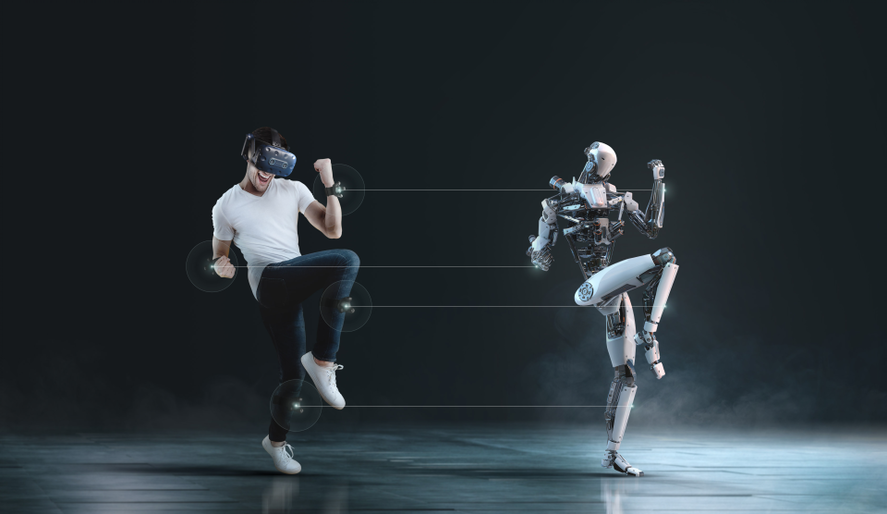
When the initial HTC Vive headset was released, the trackers existed only inside a pair of controllers used to track hand movements, but the company fast-tracked the release of the HTC Vive Tracker, a wireless tracking device that can be attached to any object and mimic its movement in virtual environments. While other VR companies have released trackers of their own since then, Vive remains the industry standard, and more recently has shown new potential as a cheaper version of motion-capture technology used by studios.
... Trackers can be attached to hands, feet, and the waist to fully encapsulate the range of human motion. ...
See the full story here: https://www.indiewire.com/2021/08/htc-vive-trackers-motion-capture-filmmaking-1234657119/
Lady Gaga Goes Behind the Scenes of ‘911’ in New Virtual Reality Video
Singer’s VR experience is available via the CEEK VR app
Lady Gaga takes viewers behind the scenes during the filming of her surreal video for Chromatica song “911” in a new virtual reality experience via the CEEK VR app. The release closely coincides with the one-year anniversary of Chromatica, which arrived in May 2020.
The 360-degree CEEK VR experience was captured on set during the filming of the Tarsem Singh-directed short film. The stylish, fever dream-like visual finds the pop star waking up in a desert and heading to a town where she stars in a series of vignettes featuring oddball characters. Things are not what they seem in the end as she later comes to after a bad accident and encounters the same characters in a different light.
See the full story here; https://www.rollingstone.com/music/music-news/lady-gaga-behind-the-scenes-911-virtual-reality-video-1210610/

To create AGI, we need a new theory of intelligence
This article is part of “the philosophy of artificial intelligence,” a series of posts that explore the ethical, moral, and social implications of AI today and in the future
In a paper that was presented at the Brain-Inspired Cognitive Architectures for Artificial Intelligence (BICA*AI), Sathyanaraya Raghavachary, Associate Professor of Computer Science at the University of Southern California, discusses “considered response,” a theory that can generalize to all forms of intelligent life that have evolved and thrived on our planet.
Titled, “Intelligence—consider this and respond!” the paper sheds light on the possible causes of the troubles that have haunted the AI community for decades and draws important conclusions, including the consideration of embodiment as a prerequisite for AGI.
...Raghavachary proposes in his paper that “intelligence is a biological phenomenon tied to evolutionary adaptation, meant to aid an agent survive and reproduce in its environment by interacting with it appropriately — it is one of considered response.”
The considered response theory is different from traditional definitions of intelligence and AI, which focus on high-level computational processing such as reasoning, planning, goal-seeking, and problem-solving in general.
...
“Brains are always housed in bodies, in exchange for which they help nurture and protect the body in numerous ways (depending on the complexity of the organism),” he writes.
Bodies provide brains with several advantages, including situatedness, sense of self, agency, free will, and more advanced concepts such as theory of mind (the ability to predict other the experience of another agent based on your own) and model-free learning (the ability to experience first and reason later).
...In a nutshell, the considered response theory suggests that suitable pairings of synthetic brains and bodies that directly engage with the world should be considered life-like, and appropriately intelligent, and — depending on the functions enabled in the hardware — possibly conscious.
See the full story here: https://venturebeat.com/2021/08/08/to-create-agi-we-need-a-new-theory-of-intelligence/
The Same Tech Used for Video Games Is Fighting Air Pollution
Video Games: A Focus on the Environment
Video game developers are noticing how prevalent environmental issues are today and are even incorporating those themes into their new games. Sims Eco Lifestyle and Minecraft Climate City are two examples of how video games revolve around climate change issuesand encourage users to live more sustainably.
Video games developers work tirelessly to create realistic worlds, and if the world is suffering from environmental consequences, they’ll want to mirror that on their gaming platform.
See the full story here: https://www.altenergymag.com/story/2021/07/the-same-tech-used-for-video-games-is-fighting-air-pollution/35589/

Photonics Shapes the Worlds of Augmented and Virtual Reality
... advancements in photonics are helping to expand the use of smart glasses in educational, medical, military, and industrial settings.
According to technologists and end users, what’s needed to sustain and accelerate this growth are brighter light sources, more efficient delivery optics, and better eye-tracking sensors. Also on the wish list are systems with lower weight, more compact form factors, and reduced cost. These requirements apply both to virtual reality (VR) headsets that immerse users in a digital world and to augmented reality (AR) glasses or displays that superimpose digital data over real-world scenes.
...
When it comes to light engine resolution, he said that a large field of view (for example, over 100°), with at least 40 pixels per degree, can produce a truly immersive experience for viewers. Such a light engine would require more than 4000 pixels on a side, while still being small and light enough for an AR/VR headset.
Light engines require a certain baseline intensity to account for losses along the optical path and, in the case of see-through AR systems, to overcome ambient light. But the ability to modulate and control brightness is just as relevant. Rapid head or eye movements can result in a smeared AR/VR image for viewers. “The only way to avoid that is that I have the light from the display on for only a portion of the frames,” Sculley said.
See the full story here: https://www.photonics.com/Articles/Photonics_Shapes_the_Worlds_of_Augmented_and/a67240
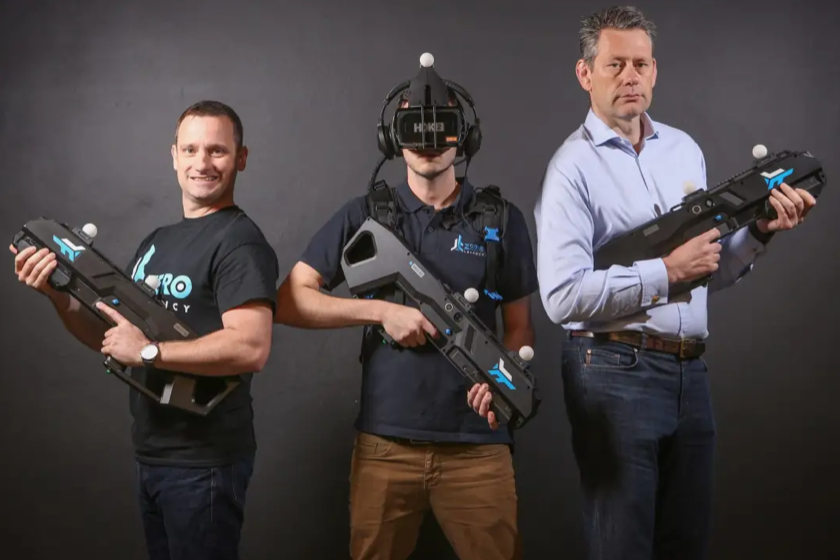
Advent Partners takes aim at virtual reality play Zero Latency
Advent is expected to use its experience in rollout strategies to significantly increase Zero Latency’s footprint, and says it could triple the size of Zero Latency’s network.
The Melbourne-based company already has 50 virtual reality gaming sites - effectively big sheds - across the Americas, Europe, Middle East and Asia Pacific, including seven company-owned sites in Australia and other licensed sites offshore.
See the full story here: https://www.afr.com/street-talk/advent-partners-takes-aim-at-virtual-reality-play-zero-latency-20210810-p58hk8
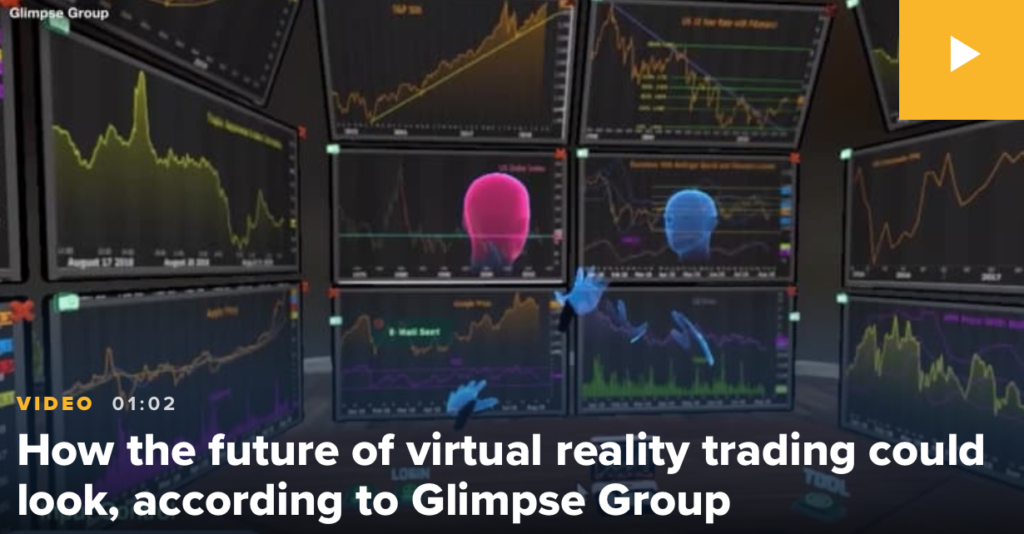
How virtual reality will change trading for pros and everyone else
... They’re also focused on stock trading through a business called D6 VR. It was developed by former Morgan Stanley analyst Andy Maggio who told CNBC in an interview, “I believe VR will be the most transformative technology in our lifetime.” While Maggio admits the technology isn’t quite ready for prime-time, he says the quality of the technology is rapidly improving. “The resolution is double what it was five years ago, the hardware is moving forward very quickly, it’s lighter and easier to use,” he said.
...While Glimpse Group tries to make a name for itself in the space, it isn’t the first to enter. FlexTrade, which specializes in creating software for financial companies, presented its first VR program for traders at a 2017 conference.
“Traders just don’t have enough real estate on their desk,” said Managing Director Andy Mahoney. “We can do better than a keyboard, screen and a mouse.”
See the full story here: https://www.cnbc.com/2021/08/08/how-virtual-reality-will-change-trading-for-pros-and-everyone-else.html
Technological Singularity: An Impending “Intelligence Explosion”
In 1983, Vernor Vinge popularized the theory in an op-ed piece for Omni magazine where he contended that rapidly self-improving AI would eventually reach a "kind of singularity," beyond which reality would be difficult to predict. It was also here that the first comparison to a black hole was made:
"We will soon create intelligences greater than our own. When this happens, human history will have reached a kind of singularity, an intellectual transition as impenetrable as the knotted space-time at the center of a black hole, and the world will pass far beyond our understanding. This singularity, I believe, already haunts a number of science-fiction writers. ...
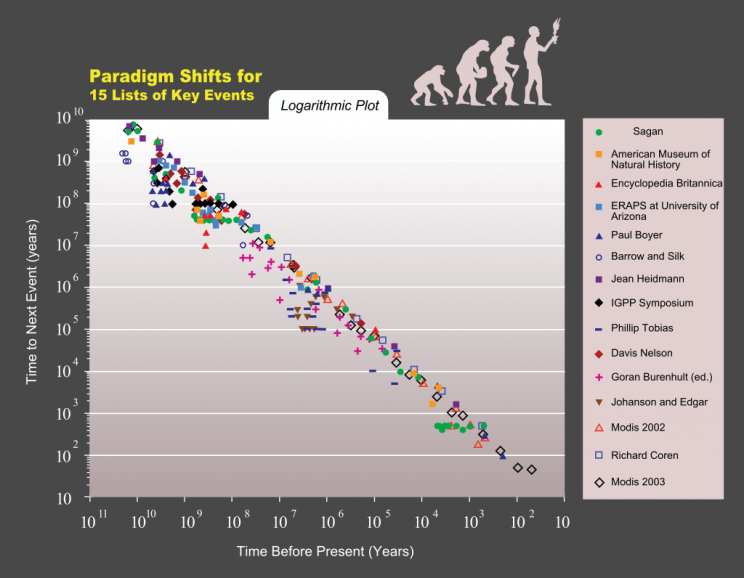
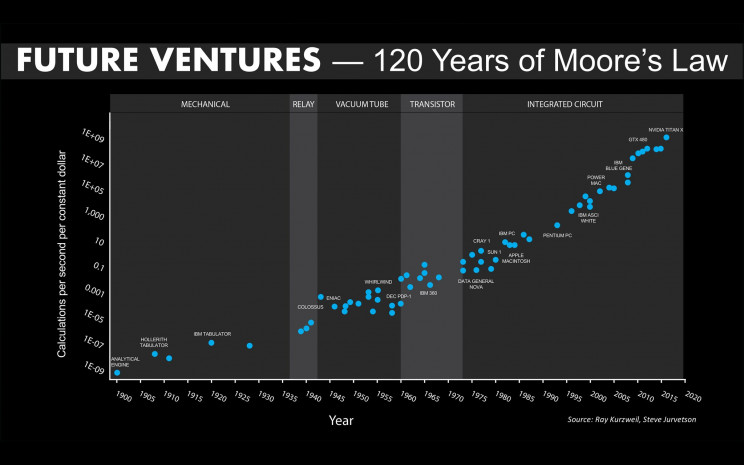
But perhaps the most famous proponent of the concept is noted inventor and futurist Ray Kurzweil. His 2005 book, The Singularity is Near: When Humans Transcend Biology, is perhaps his best-known work and expands on ideas presented in earlier books, most notably his "Law of Accelerating Returns."
This law is essentially a generalization of Moore's Law and states that the rate of growth in technological systems increases exponentially over time. He further cited how an exponential increase in technologies like computing, genetics, nanotechnology, and artificial intelligence would culminate and lead to a new era of superintelligence. ...
But of course, computing, information production, and the way advancements always appear to be coming faster are just a few of the pathways that could be leading us to the so-called Singularity. In part II, we will examine how advances in nanotechnology and medical technology are also leading us towards a point in time beyond which the future will be difficult to predict. ...
See the full story here: https://interestingengineering.com/technological-singularity-an-impending-intelligence-explosion
How Starlink’s Satellite Internet Stacks Up Against HughesNet and Viasat around the Globe
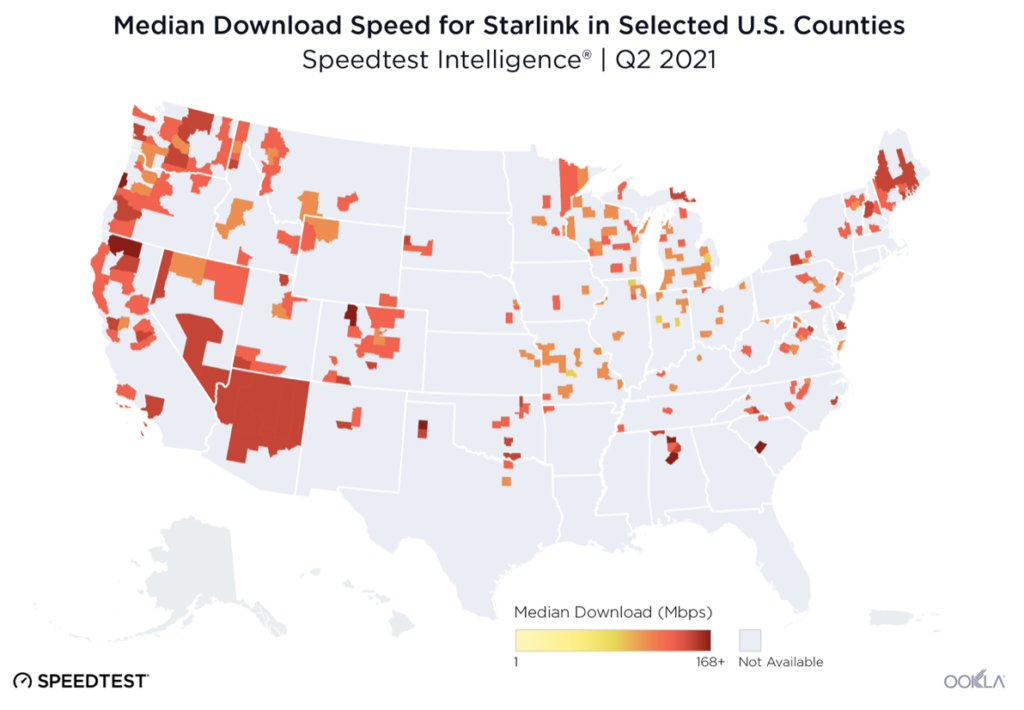
...Given that satellite internet is often the only solution for folks with little to no fixed broadband access, the Speedtest® results we saw coming from HughesNet, Starlink and Viasat during Q2 2021 were encouraging. However, Starlink was the only satellite internet provider in the United States with fixed-broadband-like latency figures, and median download speeds fast enough to handle most of the needs of modern online life at 97.23 Mbps during Q2 2021 (up from 65.72 Mbps in Q1 2021). ...
This data is changing rapidly as satellite internet providers launch new service locations and improve their technology. We’ll be excited to see if Starlink is still the satellite provider to beat next quarter and in what other countries satellite internet provides a viable alternative to fixed broadband.
See the full story with many charts here: https://www.speedtest.net/insights/blog/starlink-hughesnet-viasat-performance-q2-2021/