The Pentagon Is Experimenting With Using Artificial Intelligence To “See Days In Advance”
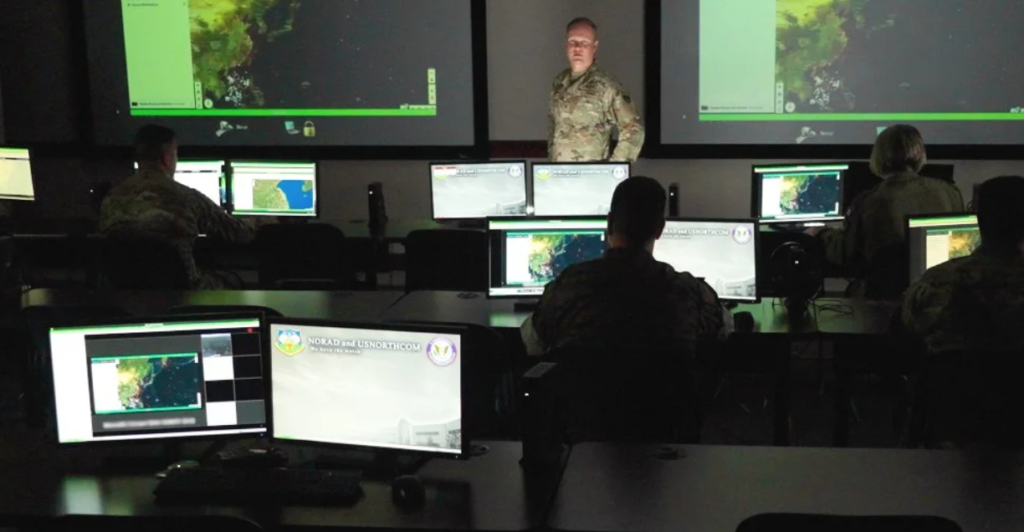
U.S. Northern Command (NORTHCOM) recently conducted a series of tests known as the Global Information Dominance Experiments, or GIDE, which combined global sensor networks, artificial intelligence (AI) systems, and cloud computing resources in an attempt to "achieve information dominance" and "decision-making superiority." According to NORTHCOMleadership, the AI and machine learning tools tested in the experiments could someday offer the Pentagon a robust “ability to see days in advance," meaning it could predict the future with some reliability based on evaluating patterns, anomalies, and trends in massive data sets. While the concept sounds like something out of Minority Report, the commander of NORTHCOM says this capability is already enabled by tools readily available to the Pentagon.
...The experiment largely centered around contested logistics and information advantage, two cornerstones of the new warfighting paradigm recently proposed by the Vice Chairman of the Joint Chiefs of Staff. A full transcript of VanHerck's press briefing is available online.
The machine learning and the artificial intelligence can detect changes [and] we can set parameters where it will trip an alert to give you the awareness to go take another sensor such as GEOINT on-satellite capability to take a closer look at what might be ongoing in a specific location.
[...]
[W]hat we've seen is the ability to get way further what I call left, left of being reactive to actually being proactive. And I'm talking not minutes and hours, I'm talking days.
...We're not creating new capabilities to go get data and information. This information exists from today's satellites, today's radar, today's undersea capabilities, today’s cyber, today's intel capabilities. The data exists. What we're doing is making that data available… and shared into a cloud, where machine learning and artificial intelligence look at it and they process it really quickly and provide it to decision makers, which I call decision superiority.”
See the full story here: https://www.thedrive.com/the-war-zone/41771/the-pentagon-is-experimenting-with-using-artificial-intelligence-to-see-days-in-advancehttps://www.thedrive.com/the-war-zone/41771/the-pentagon-is-experimenting-with-using-artificial-intelligence-to-see-days-in-advance
The Augmented Reality America’s Cup
In June 2010, the Oracle team hired the two of us to develop the tracking, telemetry, and augmented-reality system for the races. We are both electrical engineers, and one of us (Honey) is a professional sailor who competes in elite races. We have a long history in applying augmented reality to broadcast sports. Our past projects include the yellow first-down line now ubiquitous in televised American football, the tracking system now used in NASCAR and other motor races, and the ESPN K Zone system used to track and show a baseball’s path in the vicinity of the strike zone. ...
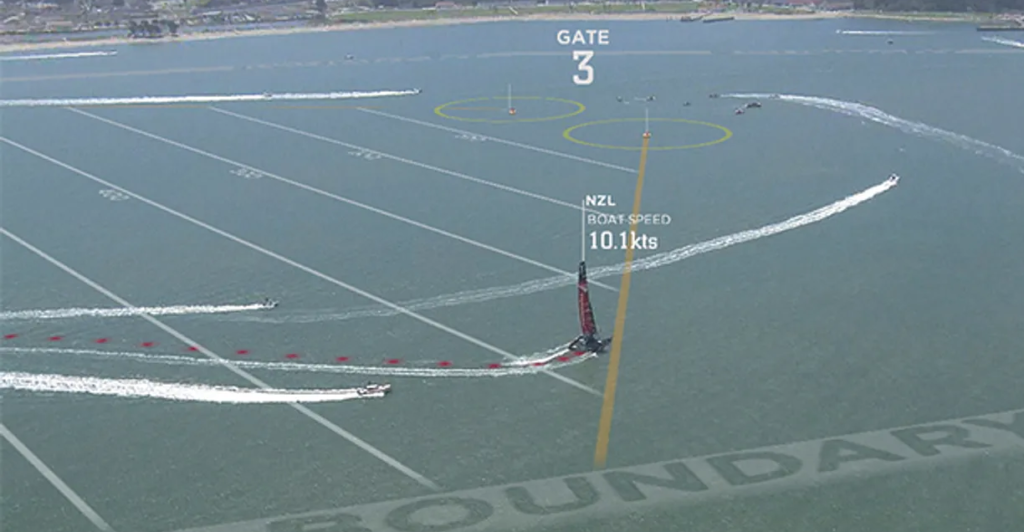
Making a sailing race as easy to follow as a football game starts with defining the playing field. On the live video, we’re superimposing lines that delineate the course boundaries along with a “ladder” of 100-meter lines. If two boats are on the same “rung” of the ladder, they have the same upwind or downwind distance to sail to the next buoy-marked gate or mark. With these lines as guidance, even a viewer new to sailing can quickly see which boat is in the lead. We’re also marking an area extending three boat lengths out from each gate with a yellow polygon. When boats enter this yellow zone, race rules aimed at defining which boat has the right of way determine which boat can take the shorter, inside turn through a gate. That’s why we’re identifying the entire zone, not just the gate itself.
...At a glance, a viewer will be able to tell not only which boat is in the lead but also by how much, whether and how fast another boat is gaining on the lead boat, and whether competitors are taking similar or different approaches to the next gate.
...If we tag a boat with a supplemental graphic, it must appear to travel smoothly with that boat. ...So we had to develop a system that could reliably give us location data to within 2 centimeters.
See the full story here: https://spectrum.ieee.org/the-augmented-reality-americas-cup
What are Vtubers and how are they sweeping the world

Kizuna AI, one of the most popular Vtubers
Credit: Kizuna AI
Kizuna AI, raise millions. Your fans do not hesitate to pay in the Super Chat feature to have your messages featured on their live broadcasts. Indeed, YouTube Playboard reported that seven of the top 10 The world’s Super Chat revenue generators were Japanese Vtubers.
But like many other business models, that of the Vtubers is extended under a transmedia strategy. This ranges from video games to merchandising through presentations in events, series and movies. As well as collaborating with different companies that act as sponsors.
While the content is generated in Japanese, it is generally translated by the fans themselves to aid global expansion.
See the full story here: https://www.cvbj.biz/2021/07/28/what-are-vtubers-and-how-are-they-sweeping-the-world/
75 Years of Innovation: augmented reality binoculars
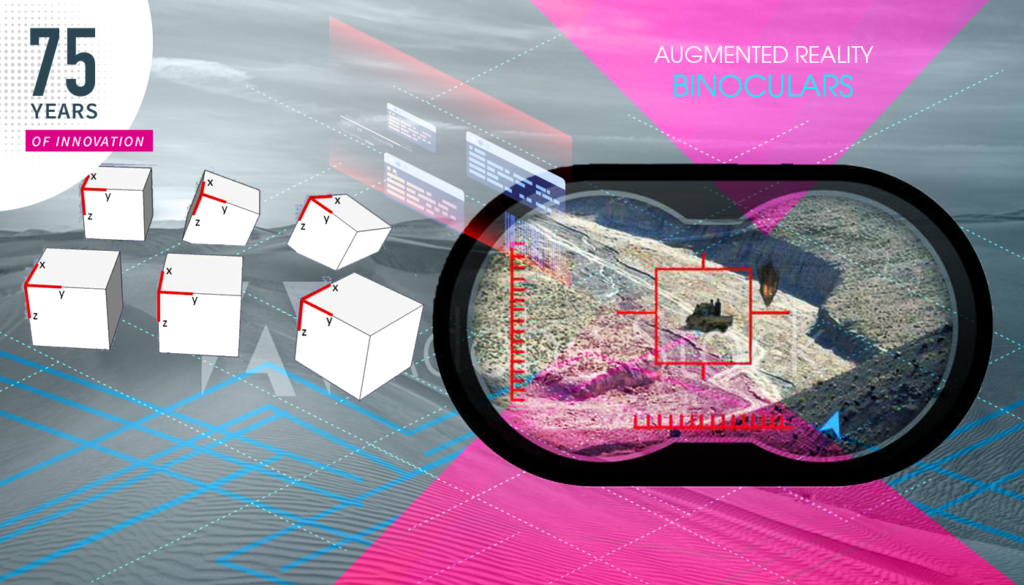
The AR binoculars were built from several components:
- Wide Field of View (FoV) Lens: used for context and to recover the 3D location and orientation of the binoculars
- Narrow FoV Lens: used for augmentation and improving tracking precision
- Inertial Measurement Unit (IMU): a microelectromechanical (MEM) system that tracks angular rate and acceleration
- Global Positioning System (GPS): a satellite-based location and navigation system for location estimation
- Magnetometer: measures the Earth’s magnetic field and used for measurements related to orientation estimation
- Barometric pressure sensor: measures atmospheric pressure and used for measurements related to altitude estimation
Two cameras were able to be seated in the lens bay of the binoculars.
See the full story here: https://medium.com/dish/75-years-of-innovation-augmented-reality-binoculars-a341086029ee
The Walt Disney Company Announces Participating Companies for 2021 Disney Accelerator Program
The Walt Disney Company today announced the companies that will participate in the 2021 Disney Accelerator, a program designed to accelerate the growth of innovative companies from around the world. Eight companies have been chosen for the three-month mentorship program that will connect them with the creativity, imagination and expertise of Disney, including by providing unique access to Disney's leadership team.
The companies selected for the 2021 Disney Accelerator program are:
Attentive: Attentive is a comprehensive mobile messaging platform that allows retail and e-commerce brands to connect directly with consumers through personalized communication experiences.
Bambuser: Bambuserisinnovating retail and social media with live streamed shopping.
Camp: Camp creates experiential retail stores and online media destinations for the whole family.
Holler: Holler uses artificial intelligence to deliver content that helps peer-to-peer messages be more engaging and effective.
Illumix: Illumix is an augmented reality company that allows brands to create immersive experiences across entertainment and e-commerce.
Miko: Miko creates adorable robots that are playful learning companions for children across 140+ countries and utilized by parents, educators and technologists.
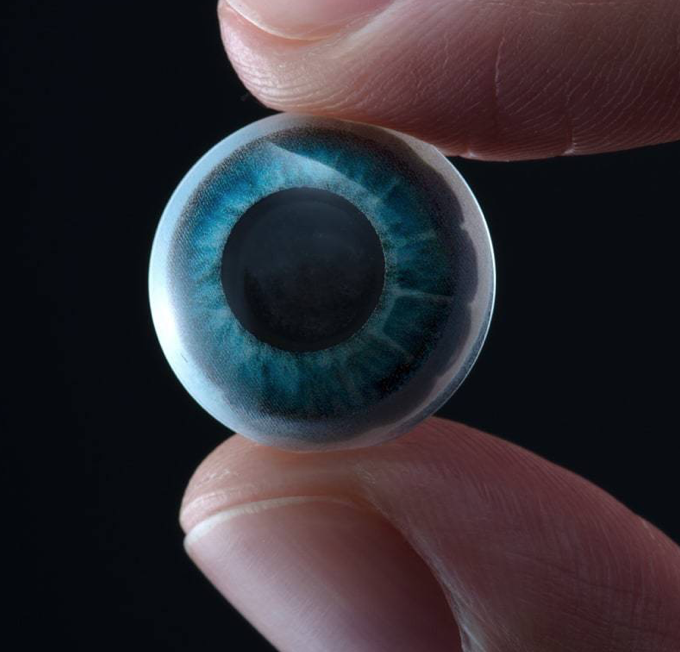
Mojo Vision: Mojo Vision is developing Mojo Lens, the world's first augmented reality smart contact lens with a built-in display that delivers "Invisible Computing."
Play On! Sports: Play On! Sports is the destination for fans across the country to watch live and on-demand high school sports and activities, streaming over 320,000 live events last year.
See the full story here: https://www.prnewswire.com/news-releases/the-walt-disney-company-announces-participating-companies-for-2021-disney-accelerator-program-301340906.html?fbclid=IwAR0pY6EwyCeuQcXI7HypW00FlIpMTqZ4ps5Y1TDcNOJWrBCgYerVmFwLOvA